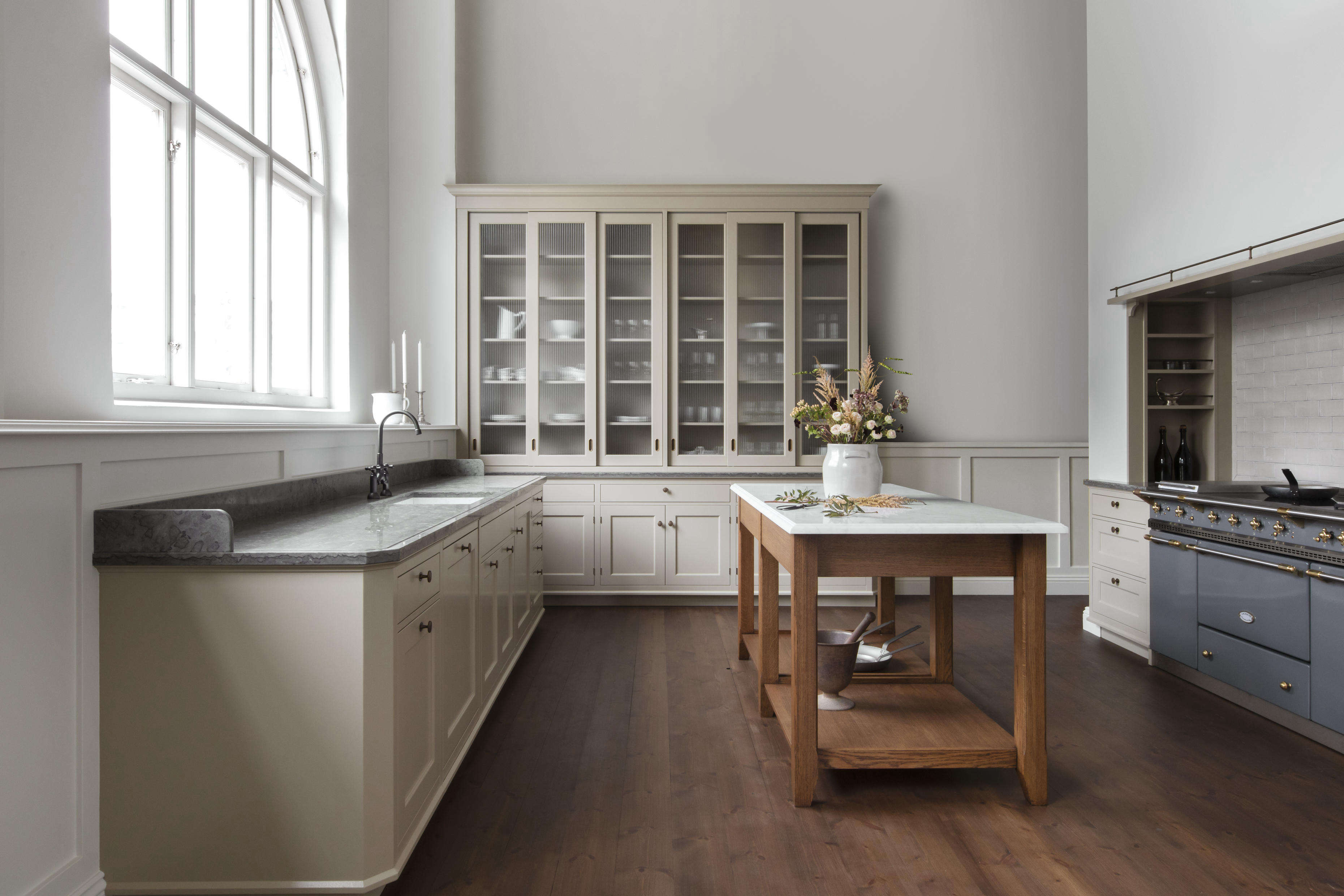

A traditional kitchen can easily become a costume drama: too many moldings, too much distressed paint, and enough antique hardware to outfit a small castle. Kvänum takes a more disciplined approach. Its old Swedish-style kitchen combines paneled cabinetry, natural stone, warm metals, and manor house detailing without sacrificing the practical needs of a modern cook.
The design is inspired by historic Scandinavian interiors, particularly the restrained elegance associated with Gustavian style. Yet this is not a museum kitchen where touching the marble feels vaguely illegal. Appliances work hard, storage is carefully organized, and decorative features often perform useful jobs. The result is a room that appears to have evolved over generationseven though every drawer knows exactly what it is doing.
What Defines an Old Swedish-Style Kitchen?
Old Swedish style is quieter than many European traditional styles. Instead of relying on elaborate carving, glossy finishes, and dramatic color contrasts, it emphasizes proportion, craftsmanship, light, and honest materials. Painted wood, muted neutrals, gray stone, aged bronze, and practical freestanding furniture create an atmosphere that feels elegant but approachable.
Gustavian Restraint Rather Than Royal Excess
Gustavian design developed in Sweden during the late eighteenth century under the influence of French Neoclassicism. Swedish craftspeople adapted those formal ideas to local materials, northern light, and a preference for simpler decoration. Symmetry remained important, but ornamentation became more controlled. Pale gray, cream, faded blue, and soft green replaced some of the richer colors associated with continental palaces.
Kvänum’s interpretation follows that tradition. Its cabinetry has depth and architectural presence, yet the visual language remains calm. A fine bead around a recessed panel supplies enough shadow to define the door without making it look as if the cabinet is wearing a ball gown.
A Room That Feels Collected, Not Installed
Many contemporary kitchens are designed as one continuous bank of identical cabinets. A manor-inspired Swedish kitchen feels more like a collection of built-ins and work furniture assembled over time. A tall glass cupboard may resemble an antique china cabinet, while a central worktable looks more like furniture than a standard island.
Changes in depth, material, and cabinet type create rhythm. Open shelves interrupt enclosed storage. Stone frames the sink rather than covering every available wall. These small variations make the kitchen feel rooted in domestic history instead of delivered in one extremely large cardboard box.
Inside Kvänum’s Karleby Almond Kitchen
The design most closely associated with this old-world look is Kvänum’s Karleby kitchen in Almond, originally developed for the restoration of Stora Ek, an eighteenth-century Swedish manor. Its cream and gray palette, painted ash cabinetry, limestone counters, and bronze fittings capture the atmosphere of an established country house while supporting modern cooking and storage.
Painted Ash Cabinetry with Furniture-Level Detail
The recessed cabinet doors are made from painted ash and finished in a warm shade called Almond. Unlike a stark white kitchen, this creamy tone absorbs light gently and allows the grain and joinery to remain visible. A subtle double-bead detail runs along the inner frame, adding definition without clutter.
Full-height cabinetry is integrated with paneled walls and wainscoting. A narrow ledge above the paneling can display framed artwork, pottery, or a modest collection of objects. The key word is modest. If every inch is occupied by decorative chickens, the Swedish restraint may pack a suitcase and leave.
Traditional construction also gives the doors visual weight. Inset fronts, carefully aligned rails, and framed panels resemble fine furniture. They produce delicate shadow lines that mass-produced overlay doors rarely achieve.
Gray Limestone and Carrara Marble
Gray limestone from Sweden’s Kinnekulle region brings an earthy counterpoint to the pale cabinetry. The material is used on counters and around the sink, where it forms a low architectural enclosure rather than a conventional full-height backsplash. Angled corners soften the heavy stone visually and reduce the number of sharp edges waiting to introduce themselves to passing hips.
A Carrara marble sink provides a lighter focal point. Marble’s natural veining prevents the palette from becoming flat, while its cool surface suits the room’s classical character. Because marble and limestone are porous, they require sealing and sensible care. Acidic ingredients can etch the surface, so lemon juice should go into the vinaigrette rather than spending the afternoon on the counter.
Bronze Hardware That Improves with Age
Dark bronze knobs, recessed pulls, rails, and a bridge-style faucet provide contrast against the Almond cabinetry. These elements are decorative, but they also reinforce the sense that the kitchen was built to be used. Bronze and unlacquered brass develop a patina through contact with hands, moisture, and air. Instead of looking damaged, the metal gradually records the life of the room.
Consistency matters more than perfect matching. Aged bronze can sit comfortably beside brass or pewter when the finishes share a warm undertone. The result should feel collected and coordinated, not as though the hardware aisle experienced a minor explosion.
The Range Niche as an Architectural Centerpiece
A Lacanche range occupies a tiled cooking niche flanked by limestone counters and drawer storage. Recessed shelves hold frequently used ingredients, while a rail on the opposite side keeps cooking tools within reach. Above the range, a narrow wooden ledge and bronze rail disguise the ventilation system with a manor house flourish.
This arrangement turns a large modern appliance into part of the architecture. The niche establishes symmetry, contains visual clutter, and gives the cooking zone a clear identity. It also demonstrates a useful traditional-kitchen principle: major appliances do not have to dominate the room simply because they contain impressive quantities of stainless steel.
A Worktable Instead of a Bulky Island
At the center of the kitchen stands a stained-oak worktable topped with Carrara marble. Its visible legs and furniture-like construction allow more floor to remain in view, making the room feel lighter than it would with a solid cabinet island.
The table supplies generous preparation space without pretending to be a breakfast bar, home office, cocktail lounge, and airport charging station at the same time. Its narrower purpose is part of its charm. In a large kitchen, a worktable can improve circulation and preserve the open character associated with historic service rooms.
Traditional Looks, Modern Storage
The most successful part of Kvänum’s traditional kitchen design may be what it hides. Behind pocket doors, a tall cupboard contains drawers and shelves for mixers, baking equipment, and other countertop-hungry appliances. When open, it functions as a compact work station. When closed, the visual calm returns.
Another cabinet uses reeded glass, sliding doors, recessed bronze handles, paneled interiors, and concealed LED lighting. The textured glass softens the view of dishes while still reflecting light. It provides display without demanding that every mug be arranged with military precision.
These features demonstrate that historical character and efficient kitchen storage are not opponents. Appliance garages, pullout trays, deep drawers, and concealed charging outlets can all live behind traditional fronts. The technology should support the room quietly rather than announcing itself with blinking lights from every direction.
Why the Design Still Works in a Modern Home
Natural Materials Create Visual Longevity
Painted ash, oak, marble, limestone, glass, and bronze respond to time differently, but none depends on a short-lived trend. Wood gains character, stone develops subtle wear, and warm metals acquire patina. These changes make the room feel better established rather than merely older.
Natural materials also introduce enough variation to keep a neutral kitchen interesting. Grain, veining, handmade edges, and changing reflections supply texture without requiring a complicated color scheme.
The Palette Works with Northern Light
Soft cream and warm gray are especially effective in rooms with cool or limited natural light. Pure white can appear blue or clinical under such conditions, while Almond and stone tones retain warmth. Dark bronze adds definition, and stained oak keeps the overall composition from floating away in a pale Scandinavian mist.
Before selecting paint, samples should be viewed on several walls throughout the day. A color that looks like refined Swedish parchment in the morning can become suspiciously peach by dinner.
Decoration Is Connected to Function
Open shelves provide access. Rails hold tools. Reeded glass conceals imperfectly arranged contents. A ledge supports artwork, while the range surround manages ventilation. This connection between beauty and utility prevents the kitchen from feeling theatrically “old.” It is traditional because of how its parts are designed and used, not because somebody placed a decorative butter churn in the corner.
How to Adapt the Kvänum Look to an American Kitchen
A full custom Kvänum installation is only one route to the style. The same principles can guide a renovation using locally made cabinetry, vintage furniture, or a carefully planned combination of custom and semi-custom components.
Begin with Architecture and Proportion
Preserve original trim, doors, flooring, and wall divisions when they contribute to the house’s character. In a historic property, new cabinetry should respond to existing window heights, baseboards, and moldings rather than covering them indiscriminately.
For a smaller room, simplify the manor detailing. Use one tall display cupboard, a paneled range hood, or a furniture-style worktable instead of applying decorative millwork to every surface. Traditional design needs breathing room. When every cabinet receives a special feature, none of them feels particularly special.
Plan the Work Zones Before the Decorative Details
Good looks cannot rescue an awkward layout. Keep the sink, range, refrigerator, and primary preparation surface within convenient reach, and avoid routing household traffic directly through the cooking zone. The National Kitchen & Bath Association recommends work aisles of at least 42 inches for one cook and 48 inches for multiple cooks.
A freestanding worktable should be sized to preserve those clearances. Tape its proposed footprint on the floor and live with the outline for a few days. If everyone begins walking sideways through the kitchen, the island is not “grand.” It is simply too large.
Choose a Restrained Material Palette
- Use painted inset or framed cabinetry in cream, mushroom, muted gray, or dusty green.
- Add one warm wood element, such as an oak worktable, pantry interior, or floor.
- Select honed limestone, soapstone, marble, or a quieter engineered alternative.
- Introduce bronze, pewter, or unlacquered brass through knobs, hinges, rails, and faucets.
- Use reeded or lightly textured glass for display cabinets that need a little visual forgiveness.
Layer the Lighting
Traditional atmosphere should never require chopping onions in the gloom. Combine ambient ceiling light with focused illumination over the sink, range, and worktable. Add concealed LEDs inside glazed cabinets and under shelves, choosing a warm color temperature that complements cream paint, wood, and bronze.
Decorative fixtures can provide character, but task lighting must do the actual work. A charming antique pendant that casts one heroic circle of light onto the floor is not a complete lighting plan.
Care and Maintenance for a Manor-Inspired Kitchen
Traditional materials reward regular, gentle maintenance. Clean painted wood with a soft, damp cloth and dry it promptly. Avoid abrasive pads that can polish or scratch hand-painted surfaces unevenly. Tighten knobs and hinges when necessary rather than allowing loose hardware to wear the surrounding wood.
Use manufacturer-approved cleaners on limestone and marble. Wipe spills quickly, especially citrus, vinegar, wine, and tomato sauce. Cutting boards and trivets are sensible daily tools, not admissions of design defeat. If natural patina is welcome but stains are not, decide where that boundary lies before selecting the stone.
Bronze and unlacquered brass may be left to age naturally or polished periodically. Either approach works; inconsistency is usually more noticeable than patina itself. Test any metal cleaner in an inconspicuous location before enthusiastically polishing half the kitchen into a different century.
The Lived Experience: What This Kitchen Style Feels Like Over Time
The real test of an old Swedish-style kitchen is not the installation-day photograph. It is an ordinary Tuesday morning, when coffee is brewing, toast crumbs are staging a rebellion, and someone needs the mixing bowl hidden behind three appliances. Kvänum’s approach succeeds because its visual serenity is supported by specific places for working and storing.
Morning Preparation Feels More Orderly
A dedicated appliance cupboard changes the experience of breakfast. The coffee maker, toaster, and mixer can remain connected and ready without permanently occupying the main counter. Pocket doors disappear while the station is in use and close when breakfast is finished. This turns cleanup into one simple gesture instead of a countertop relocation project.
The central worktable also encourages focused preparation. Because it resembles furniture, people tend to treat it as a shared surface rather than a wall of cabinetry. One person can roll dough while another arranges ingredients on the opposite side. The marble stays cool for pastry, and the open base makes conversation across the room easier.
Entertaining Becomes Relaxed Rather Than Formal
Although the kitchen borrows from manor houses, it does not have to feel ceremonial. Glass cupboards provide a natural place for serving pieces, while the worktable can shift from preparation to buffet duty. Guests gather around it without sitting directly in the cook’s path.
The patinated metals and softly colored cabinets also reduce the pressure to keep everything flawless. A fingerprint on bronze or a faint mark in limestone joins an existing pattern of use. The room becomes more handsome through familiarity, provided “patina” does not become a poetic excuse for never wiping up red wine.
The Details Become More Valuable with Use
Small choices reveal their usefulness gradually. Rounded or angled counter corners prevent daily bumps. Reeded glass disguises mismatched cereal bowls. Shallow drawers keep utensils from becoming an archaeological site. A rail beside the range puts a ladle exactly where it is needed, while the shelf above offers space for salt, oil, or a small object that makes the room personal.
After years of use, these details matter more than any trend-driven finish. They reduce friction during repetitive tasks and create pleasing rituals: opening a solid wooden drawer, reaching for a familiar bronze handle, or switching on the softly lit china cupboard in the evening.
Lessons Worth Carrying into Any Renovation
The most transferable experience is that atmosphere comes from relationships, not individual products. Cream cabinetry feels warmer beside gray stone. Bronze becomes richer against painted ash. A furniture-style table looks intentional because the surrounding cabinets are architectural and restrained.
It is also wise to live with natural material samples before committing. Place stone near cooking oils and citrus, test cabinet paint in morning and evening light, and handle the proposed knobs repeatedly. A pull can be beautiful in a photograph yet surprisingly annoying when opened 30 times during dinner preparation.
Finally, allow the kitchen to remain slightly imperfect. Old Swedish style depends on texture, subtle variation, and signs of craftsmanship. If every surface is flawlessly matched and every accessory is purchased on the same afternoon, the room may look themed rather than inherited. A few vintage bowls, a well-used wooden board, and art collected over time will do more than an entire cart labeled “European farmhouse décor.”
Conclusion
Kvänum’s old Swedish kitchen demonstrates that traditional design can be dignified without becoming stiff. Painted ash cabinets, gray limestone, Carrara marble, bronze hardware, paneled walls, and a furniture-like worktable create the atmosphere of a historic manor. Concealed appliances, organized drawers, practical work zones, and modern lighting ensure that the romance does not interfere with dinner.
The strongest lesson is one of restraint. Choose fewer materials, give architectural details room to breathe, and make decoration perform a useful task whenever possible. Done well, a Swedish manor house kitchen does not merely imitate the past. It borrows the past’s best manners and quietly teaches them how to use an induction-ready outlet.