“Can You Believe That?”: Kaley Cuoco Still Angry Over Confrontation When Flying With New Baby

Flying with a baby is less a vacation activity and more an airborne group project in which one participant cannot speak, another has not slept, and several strangers have already decided how the project should be managed. Kaley Cuoco learned that lesson during her daughter Matilda’s first flight, when a routine attempt to calm the crying infant turned into an uncomfortable confrontation with another passenger.
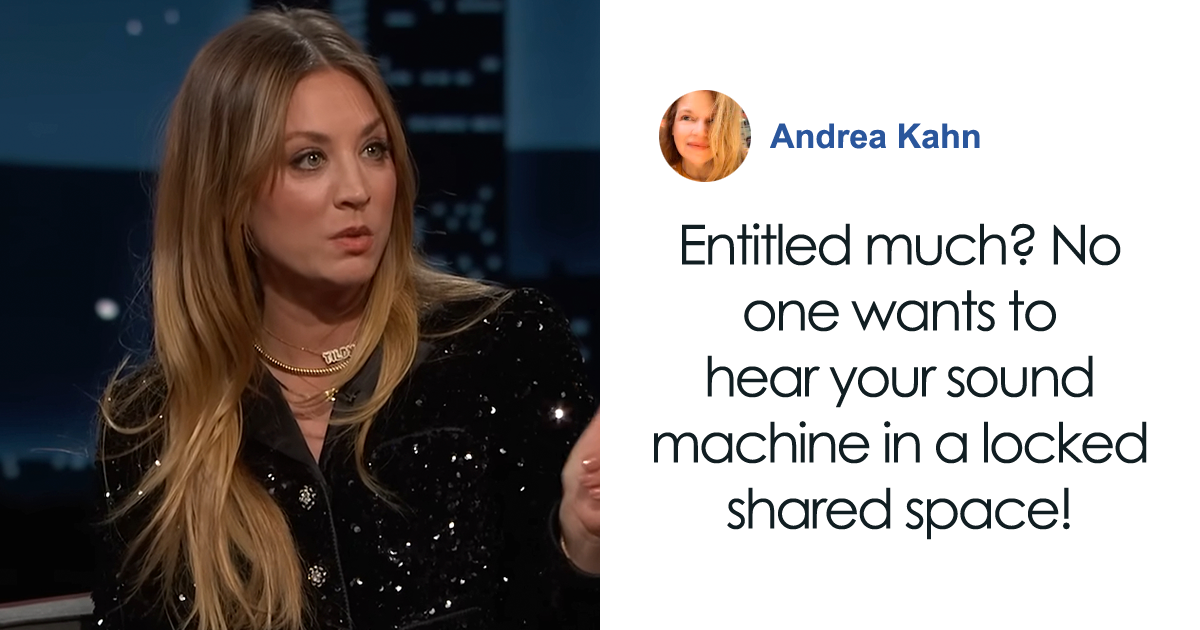
During a January 2024 appearance on Jimmy Kimmel Live!, Cuoco recalled traveling around Thanksgiving with her then-9-month-old daughter and her partner, actor Tom Pelphrey. The actress said she had been anxious about taking Matilda on an airplane for the first time, so the couple packed the sound machine their baby relied on for sleep.
What followed was a story that landed immediately with exhausted parents everywhere. Matilda cried, the sound machine came out, and the baby finally fell asleep in Pelphrey’s arms. Just as her parents began to relax, a flight attendant approached with a request from another traveler: Could they turn the machine off?
Cuoco’s reaction could be summarized by the phrase she repeated during the interview: “Can you believe that?” Apparently, the answer remains no.
What Happened During Kaley Cuoco’s Flight With Baby Matilda?
A stressful first flight became even harder
Cuoco described the trip as the kind of difficult flight people normally hear about from someone else. Matilda was upset and crying, while her parents were trying every reasonable method they knew to settle her. Their portable sound machine was not an attempt to turn the cabin into a luxury nursery. It was the tool that worked.
Once the steady noise helped Matilda fall asleep, the cabin presumably received the outcome everyone wanted: a calmer baby. However, the passenger seated in front of the family reportedly objected to the machine and asked a crew member to carry the complaint back to Cuoco and Pelphrey.
Pelphrey’s unspoken response, as Cuoco humorously reenacted it, was essentially that the complaining passenger was welcome to take over soothing duties if the machine had to be switched off. It was a fair point. Anyone requesting the removal of Plan A should ideally arrive carrying a fully tested Plan B, preferably one that includes snacks and magical baby-whispering abilities.
The awkwardness did not end when the wheels touched the runway. As passengers prepared to leave, the woman in front reportedly noticed a now-cheerful Matilda and made a sarcastic remark about the baby knowing how to smile. Cuoco joked that the comment produced the kind of anger usually followed by ominous music in a true-crime program. She also declared her support for parents dealing with public judgment and urged people to leave babies alone.
Why the Story Resonated With So Many Parents
Parents already know everyone can hear the baby
When a baby cries on a plane, the parents do not need a neighboring passenger to inform them. They are usually aware before everyone else, partly because the baby may be sitting six inches from their face.
They are also experiencing several pressures at once. They want to identify what their child needs, limit disruption to other travelers, obey crew instructions, find the missing pacifier, and ignore the tiny voice in their heads suggesting they should have traveled by covered wagon instead.
That is why visible irritation from other passengers can feel so personal. It assumes the parents are indifferent, even though most are working frantically to solve a problem that cannot always be solved on command. A baby is not a malfunctioning phone that can simply be placed on silent mode.
The Parents coverage of Cuoco’s experience connected the confrontation to the broader shame families often feel while flying. The article noted that even thoroughly prepared parents cannot control every reaction, illness, bout of turbulence, diaper emergency, or disrupted sleep schedule.
Celebrity status does not create a quiet-baby button
Cuoco may be famous for The Big Bang Theory, The Flight Attendant, and other major projects, but fame does not give a parent secret access to an infant control panel. Matilda did what infants sometimes do when placed inside a pressurized metal tube full of unfamiliar faces: she objected.
The story became relatable precisely because it did not feel like a polished celebrity anecdote. It sounded like a familiar parenting ordeal involving overpacked bags, nervous adults, a sleepy baby, unsolicited judgment, and one remark that remained irritating long after baggage claim.
Why Babies Cry on Airplanes
Infants can cry during flights for many ordinary reasons. Their feeding and sleeping schedules may be disrupted. Bright lights, voices, announcements, unfamiliar smells, and constant handling can become overwhelming. A baby may also be hungry, overtired, cold, warm, bored, frightened, or passionately opposed to the seat-belt sign.
Changes in cabin pressure can cause ear discomfort as the airplane climbs or descends. Adults can deliberately swallow, yawn, or chew to help equalize pressure, but infants cannot reliably perform those actions on command. Pediatric travel guidance recommends offering a breast, bottle, or pacifier during takeoff and landing because sucking and swallowing may help relieve the discomfort.
In other words, a crying baby may not be misbehaving. The child may be experiencing pain, confusion, exhaustion, or sensory overload without possessing the vocabulary to announce, “Excuse me, my middle-ear pressure appears poorly regulated.” Crying is the announcement.
Was the Passenger Wrong to Complain?
Shared spaces require compromise from everyone
Airline passengers are allowed to be uncomfortable. They may dislike a sound machine, crying, snoring, coughing, overhead-bin negotiations, or the person in 14B who removes both shoes before reaching cruising altitude.
A passenger may also politely raise a concern with the crew. The problem in Cuoco’s story was not simply that someone noticed the noise. It was the lack of empathy surrounding the request and the sarcastic comment after landing.
Good airplane etiquette is not based on the fantasy that every nearby person will remain silent for the entire journey. It is based on reasonable efforts. Parents should attempt to soothe their children and reduce avoidable disturbance. Other passengers should recognize that infants are members of the traveling public, not prohibited carry-on items.
The flight attendant was placed in the middle of the dispute, which Jimmy Kimmel noted was an unenviable position. Cabin crew members regularly mediate disagreements they did not create, while also managing safety, service, turbulence, medical concerns, and passengers who believe “airplane mode” is merely a suggestion.
The better question is whether everyone acted reasonably
Cuoco and Pelphrey were responding to an actively crying child with a familiar soothing method. The machine worked. A considerate approach might have involved checking whether it could be lowered slightly or positioned differently rather than demanding that it be shut off completely.
Likewise, parents using a sound machine in public should keep its volume modest and avoid placing it unnecessarily close to a baby’s ears. The American Academy of Pediatrics advises positioning infant sleep machines as far from a child’s head as practical, limiting their duration, and avoiding excessive volume. Research has found that some machines can produce potentially hazardous sound levels when used at maximum settings or very close to an infant.
That safety guidance does not establish that Cuoco used the device dangerously; the interview did not provide measurements of its volume or distance. It simply offers a useful reminder for any family packing a portable white-noise machine.
The Larger Problem of Mom-Shaming
Cuoco’s appeal to stop judging mothers addressed something bigger than one passenger complaint. Parents, especially mothers, are frequently criticized from opposite directions at the same time.
Comfort the baby too quickly, and someone may say the child is being spoiled. Wait a moment, and someone else says the parent is ignoring the baby. Bring a sleep aid, and it is disruptive. Do not bring one, and the crying is disruptive. Stay home, and parents are accused of isolating themselves. Travel, and they are accused of bringing children into adult spaces.
This no-win atmosphere makes ordinary parenting decisions feel like public examinations. It also overlooks a basic reality: children learn how to exist in shared spaces by being allowed to enter shared spaces.
Compassion does not require passengers to enjoy every second of a difficult flight. It requires recognizing effort. A parent rocking, feeding, changing, distracting, or comforting a distressed child is already working on the situation. An angry stare is unlikely to unlock a hidden solution.
How Parents Can Make Flying With a Baby Easier
Choose safety before convenience
The Federal Aviation Administration and pediatric safety experts recommend that young children travel in an approved child restraint system rather than being held on an adult’s lap. Although U.S. rules generally allow children under age 2 to fly without their own ticket, a properly installed, approved restraint provides better protection during turbulence or an emergency. Families should confirm seat dimensions and restraint policies with their airline before departure.
Build a small survival kit
A useful carry-on may include diapers, wipes, disposable bags, two changes of baby clothes, a spare shirt for each parent, familiar snacks, feeding supplies, a comfort item, quiet toys, and any necessary medicine. The spare adult shirt is essential because a baby’s digestive system can detect clean fabric from several rows away.
TSA rules permit reasonable quantities of breast milk, formula, toddler drinks, baby food, and cooling accessories in carry-on baggage, even when they exceed the normal liquid limit. Travelers should tell officers about these items at the checkpoint because additional screening may be required.
Protect the baby’s routine without expecting perfection
Parents can schedule flights near nap time, carry familiar sleep cues, and feed during pressure changes, but no strategy is guaranteed. Babies sometimes sleep through six-hour flights and then scream throughout a 40-minute connection. They have not read the itinerary.
Boarding strategy can help. When two adults travel together, one can board early with the car seat and bags while the other keeps the child moving in the terminal until later in the process. FAA family-travel guidance highlights this split-boarding approach as a way to reduce stress and aisle congestion.
What Fellow Passengers Can Do
The simplest step is to prepare for the reality of public transportation. Noise-canceling headphones, earplugs, downloaded music, a movie, or a podcast can provide more peace than silently attempting to intimidate an infant.
Passengers can also pause before assigning blame. A crying baby is not evidence of lazy parenting. A toddler kicking a seat should be addressed, but a newborn experiencing ear pain is a different situation. Context matters.
Those feeling generous might offer to lift a bag, retrieve a fallen toy, or simply give the parents a reassuring smile. No one is required to become an unpaid nanny at 35,000 feet, but basic kindness can lower the temperature in an already stressful cabin.
And when the baby finally smiles after landing, the recommended response is to smile backnot to deliver a sarcastic closing argument.
Related Experience: What Flying With a Baby Actually Feels Like
Anyone who has traveled with an infant recognizes that the experience begins long before boarding. It starts at home, where parents attempt to predict every possible need for the next several hours. The diaper bag gradually expands until it appears capable of supporting a small expedition. Diapers go in. Bottles go in. Snacks, wipes, toys, bibs, medicine, spare clothes, blankets, plastic bags, and a comfort object follow. By departure time, the baby has one bag and both adults are sharing a single toothbrush.
At the airport, ordinary tasks become tactical operations. One parent folds the stroller while the other removes liquids, shoes, electronics, and dignity. The baby, meanwhile, becomes fascinated by the security tray and attempts to lick something that has traveled through several international terminals.
Then comes boarding. The family enters the cabin aware that some passengers are watching them with the expression normally reserved for an approaching thunderstorm. The parents notice every glance. They silently promise the entire aircraft that their child will be quiet, despite lacking the legal authority to negotiate such an agreement.
For a while, everything may go beautifully. The baby studies the seat-back card. A toy produces fifteen minutes of joy. The parents exchange a look that says, “We may be exceptionally gifted at this.” Then the aircraft begins descending, pressure changes, and the tiny traveler realizes that crying is still available as a communication strategy.
The most stressful part is not always the sound. It is the feeling of being evaluated while trying to help someone who cannot explain what hurts. A parent may test a bottle, pacifier, toy, cuddle, song, diaper change, or walking motion while dozens of people witness each unsuccessful attempt. The cabin becomes a theater, except the performers have had no rehearsal and the smallest cast member is rewriting the script.
This is where empathy changes the entire experience. A passenger who rolls their eyes makes the parents’ anxiety worse. Anxiety can make it harder to think clearly, and babies often react to caregiver tension. By contrast, one friendly expression can remind the family that the whole cabin has not turned against them.
Experienced parents often remember unexpected allies: a traveler who played peekaboo across the aisle, a flight attendant who brought extra napkins, or an older passenger who quietly said, “You’re doing fine.” These moments do not stop every cry, but they reduce the shame surrounding it.
Parents also learn that preparation has limits. The toy that was irresistible at home may become offensive in row 22. The baby who always sleeps with white noise may reject it. A child who appeared cheerful at the gate may develop an urgent diaper situation immediately after the seat-belt sign turns on. Success is therefore not a perfectly silent flight. Success is responding safely, patiently, and respectfully to whatever happens.
Other passengers deserve consideration, but parents and babies deserve humanity. Everyone purchased transportation, not a guarantee of perfect silence. The cabin is a temporary community containing different ages, needs, fears, and tolerances. The best flights are not always the quietest ones. They are the ones where people resist making a difficult moment worse.
Kaley Cuoco’s story stayed with audiences because it captured that tension perfectly. She and Pelphrey were nervous new parents trying to calm their child. Their solution worked, yet judgment arrived anyway. The experience was funny in the retelling, but the frustration underneath it was unmistakably real.
Conclusion
The Kaley Cuoco baby flight confrontation was not merely a celebrity travel anecdote. It became a conversation about airplane etiquette, parental pressure, sound-machine use, and the way travelers respond when children behave like children.
Parents should arrive prepared, use soothing devices responsibly, follow crew instructions, and make reasonable efforts to limit disruption. Passengers are entitled to comfort and may communicate genuine concerns. Yet comfort should not be pursued through humiliation, sarcasm, or the assumption that a crying infant reflects careless parenting.
Matilda eventually slept, the plane landed, and everyone reached the destination. The lingering problem was not the baby’s behavior. It was the unnecessary confrontation surrounding it. The next time an infant cries on a flight, travelers might remember that the parents are probably more stressed than anyone elseand that kindness weighs nothing, requires no overhead-bin space, and never needs to be placed in airplane mode.
Note: This article is based on Cuoco’s publicly reported interview and established U.S. family-travel guidance. General safety information should not replace advice from a pediatrician, airline, or relevant transportation authority.