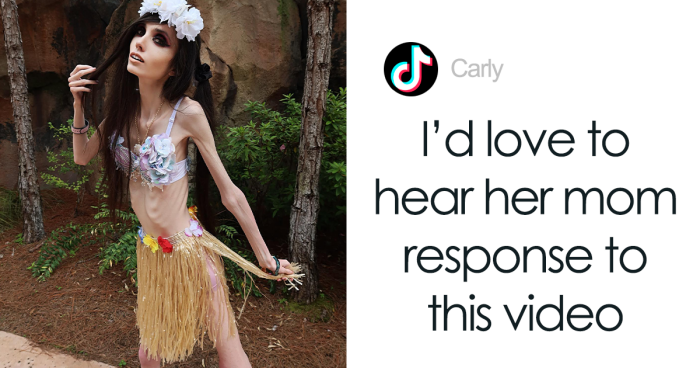
“Really Heartbreaking”: Cops Flooded With Calls Over Eugenia Cooney’s Alarming Appearance

Content note: This article discusses eating disorders, body image, mental health, and emergency welfare checks. It does not diagnose any person from photographs, videos, or physical appearance.
The internet is excellent at turning concern into a group project and terrible at appointing a qualified supervisor. That tension sits at the center of the Eugenia Cooney controversy, in which worried viewers contacted police after seeing videos that they believed showed an alarming decline in the influencer’s well-being.
The incident behind the headline occurred in October 2023, rather than being a newly confirmed emergency. At the time, reporting said the Greenwich Police Department in Connecticut received a wave of calls and emails from people around the world. The callers were asking officers to check on Cooney, a longtime YouTube and social media personality whose appearance has generated public concern for years. Police said then that they did not believe she was in immediate danger.
That official response did not end the debate. Instead, it opened a larger and more difficult conversation: What should viewers do when a creator appears unwell? When does concern become harassment? What responsibilities do social media platforms have? And how can news outlets discuss a sensitive health issue without turning a human being into a clickable medical mystery?
What Triggered the Flood of Calls to Police?
Concern intensified after Cooney posted short-form videos, including dancing clips, that drew widespread attention to her body rather than the content itself. According to media reports, Greenwich police received messages from as far away as Egypt and New Zealand. A police representative said callers also raised unverified theories that Cooney was being pressured by family members to create content. Authorities said those claims were not supported by what they knew.
Police also described having an established line of communication with Cooney and a way to recognize that she was safe. In the reporting available at the time, officers said previous checks had not produced legal grounds for forcing treatment. That distinction matters: a welfare check can establish whether someone is responsive or facing an obvious emergency, but it is not a remote diagnosis, a treatment plan, or a magic button labeled “fix everything.”
Who Is Eugenia Cooney?
Cooney built a large online audience through fashion videos, makeup tutorials, cosplay, livestreams, and personal vlogs. Her dark alternative style became part of her recognizable brand, but public discussion increasingly centered on her weight and health.
In early 2019, she stepped away from social media and said she was working privately with a doctor. Months later, she returned in a widely viewed documentary and publicly acknowledged that she had been dealing with an eating disorder. She spoke about treatment and recovery while emphasizing that a health condition should not become someone’s entire identity.
Her return was initially met with considerable encouragement. Over time, however, viewers again expressed concern, and online commentary split into familiar camps: people pleading for intervention, people demanding platform restrictions, people defending her autonomy, and people treating the situation as entertainment. Nuance, as usual, was asked to sit in the back while outrage drove.
Why This Story Feels So Personal to Strangers
Influencers create a peculiar kind of familiarity. Followers may watch someone for years, hear stories about their family, spend hours in livestream chats, and witness ordinary routines that once belonged only to close friends. This can produce a parasocial relationshipa one-sided emotional connection in which viewers feel they know the creator, even though the creator does not know most viewers individually.
That bond is not automatically unhealthy. It can create community, comfort, and genuine support. But when viewers believe a creator is in danger, the emotional distance between “audience member” and “concerned friend” can collapse. Thousands of people may feel personally responsible, and each person may assume that one more call, comment, tag, or viral post will finally cause a breakthrough.
Concern Can Quickly Become a Spectacle
Once health fears become viral, compassionate language often gets mixed with body shaming, graphic predictions, death rumors, amateur diagnoses, and accusations against relatives. Some comments may begin with “I care,” yet end by describing a person’s body in humiliating detail. That is not compassionate communication. It is public scrutiny wearing a concerned expression.
Cooney previously faced a false report claiming she was in cardiac arrest and close to death, according to reporting about a 2021 police interaction. False emergency claims are especially serious because they can distress the person targeted, consume public resources, and make it harder to distinguish a genuine crisis from another wave of internet speculation.
Appearance Alone Is Not a Medical Assessment
Eating disorders are serious illnesses, but they cannot be responsibly diagnosed from a screenshot. People with eating disorders can have many body types and sizes, and visible thinness can have multiple possible causes. Conversely, a person may be medically or psychologically unwell without looking the way the public expects illness to look.
Major medical organizations describe eating disorders as complex conditions involving physical health, mental health, behavior, biology, and social factors. They can be life-threatening, and early treatment can improve the chance of recovery. Those facts justify taking warning signs seriously. They do not justify declaring a stranger’s diagnosis, prognosis, motives, or private family dynamics as settled fact.
What Police Canand CannotDo During a Welfare Check
Many viewers assume that a visibly concerning appearance should automatically allow authorities to force medical care. In reality, adults generally retain the right to make decisions about their lives unless the facts satisfy the legal standard for emergency intervention in the relevant jurisdiction. Police do not have unlimited authority to order treatment simply because members of the public are worried.
A welfare check may help officers determine whether someone is conscious, communicative, threatened by another person, or facing an immediate emergency. Officers may request medical assistance when circumstances warrant it. Long-term eating disorder treatment, however, typically involves specialized medical monitoring, psychotherapy, nutritional support, and sustained cooperationnot simply a police visit prompted by a viral clip.
Cooney has also publicly discussed a previous involuntary mental-health hold in California and described the experience as traumatic. Her account does not settle every debate about when emergency intervention is appropriate, but it illustrates why “just force treatment” is not a simple or emotionally neutral solution.
The Social Media Algorithm Has No Bedside Manner
Platforms reward attention, and alarming content reliably attracts it. A video that prompts viewers to pause, replay, argue, share, or search for reaction clips can receive more distribution, regardless of whether the attention is supportive or harmful. The algorithm does not lean back thoughtfully and ask, “Is this conversation helping anyone?” It sees engagement and reaches for a larger serving spoon.
Research and clinical guidance have linked image-focused social media use with body dissatisfaction and disordered eating risks, particularly among vulnerable young people. The American Psychiatric Association notes that eating disorders arise from a mix of biological, psychological, and environmental factors; social media can be associated with their development, but it is not a single universal cause.
A 2026 community survey by the National Eating Disorders Association gathered responses from nearly 2,700 people with lived experience, professionals, and caregivers. Among respondents with eating disorders, 82% reported engaging in disordered eating behaviors after exposure to body-focused social media content, while 58% said such content was difficult to avoid.
Because this was a voluntary community survey, the results should not be treated as a population-wide prevalence estimate. They nevertheless highlight how strongly vulnerable users may experience repeated algorithmic exposure to body-focused material.
Are Platforms Doing Enough?
YouTube says it prohibits content that promotes or glorifies eating disorders and advises creators to focus on the impact of illness rather than potentially triggering behavioral details. TikTok has said it removes content promoting eating disorders and has expanded its rules to cover the promotion of disordered eating behaviors. Meta also maintains policies addressing content that promotes or celebrates eating disorders while allowing certain recovery, awareness, and support discussions.
The hard part is enforcement. A creator may never explicitly encourage harmful behavior, yet viewers may still use images as comparison material. A fashion video can become “thinspiration” within a different online community. A recovery discussion can contain details that trigger vulnerable audiences. A blanket ban based solely on appearance would create discrimination and privacy concerns, while doing nothing risks leaving harmful recommendation loops intact.
Better moderation requires context: age-appropriate controls, reduced recommendation of potentially harmful material, effective reporting tools, human review, crisis resources, and clearer distinctions between recovery education and content that glamorizes illness. Platforms must also examine incentives. It is difficult to claim safety is the priority while outrage, shock, and obsessive commentary remain excellent for watch time.
How Viewers Can Respond Responsibly
Feeling worried is not wrong. The question is how to turn worry into an action that is proportionate, useful, and humane.
- Do not diagnose from appearance. Describe a specific behavior or statement that concerns you rather than declaring a medical condition.
- Use platform reporting tools. Report content that appears to promote self-harm, eating disorders, harassment, or dangerous behavior.
- Contact emergency services only for a credible, immediate threat. A specific live emergency is different from generalized concern based on someone’s body.
- Avoid graphic comments and death predictions. They can intensify stigma, distress vulnerable viewers, and fuel rumor cycles.
- Protect your own mental health. Mute accounts, block keywords, reset recommendations, or step away when content is triggering.
- Use supportive language. Concern is more constructive when it centers dignity, safety, and professional helpnot shame or demands for private medical information.
Professional guidance similarly recommends raising specific behavioral concerns without focusing excessively on someone’s physical appearance. Offering assistance with finding qualified care is generally more constructive than shaming, issuing ultimatums in public, or repeatedly analyzing the person’s body.
What This Case Reveals About Influencer Culture
The Eugenia Cooney police-call episode is not only a story about one creator. It is a case study in the collision of mental health, celebrity, audience intimacy, platform incentives, and personal autonomy.
Creators are expected to be visible, but visibility can become surveillance. Fans are encouraged to feel connected, but connection can become entitlement. Platforms promote authenticity, yet the most intimate struggles can be transformed into monetized content for reaction channels, gossip accounts, and comment sections.
There is also an uncomfortable double standard. Society frequently tells people to speak openly about mental illness, then watches them with relentless suspicion once they do. Every outfit, pause, absence, facial expression, and camera angle becomes “evidence.” That atmosphere can make honest recovery conversations harder, not easier.
Experience-Based Lessons From Similar Online Health Scares
Across repeated online health controversies, a recognizable cycle tends to emerge. A creator posts something that alarms viewers. A short clip is removed from its original context. Reaction accounts add dramatic captions. Commenters search for older images and compare them side by side. Rumors become increasingly specific even as reliable information becomes increasingly scarce.
Eventually, authorities, relatives, or the creator may respondbut the response rarely satisfies an audience that has spent days building its own narrative. A simple statement that the person is safe is dismissed as suspicious. Silence is treated as confirmation. Any new photograph becomes material for another round of analysis.
Lesson 1: The First Viral Explanation Is Usually Too Simple
Online crowds prefer a single villain, a single diagnosis, and a single solution. Real health crises rarely cooperate. Eating disorders can involve biological vulnerability, trauma, anxiety, depression, compulsive behaviors, family stress, social pressure, and many other factors. Outsiders do not gain access to those facts merely by watching hours of livestreams.
The practical lesson is to separate observation from interpretation. “The creator appeared distressed and stopped speaking during a live video” is an observation. “This proves a particular organ is failing” is an unsupported medical conclusion. That distinction may sound basic, but it disappears remarkably fast when thousands of frightened people repeat one another.
Lesson 2: An Escalation Ladder Works Better Than a Panic Button
Responsible responses should match the evidence. Start with a platform’s safety and reporting systems when the concern is primarily content-based. Preserve a direct link and note the specific timestamp or statement that caused concern.
Escalate to emergency services when there is a credible sign of immediate danger, such as a direct threat, apparent loss of consciousness during a live broadcast, or another concrete emergencynot simply because a person looks different from a previous photograph.
This approach helps responders evaluate useful information instead of sorting through hundreds of identical calls based on the same viral rumor. More volume does not always mean more clarity. Sometimes it means the same uncertain claim has acquired a marching band.
Lesson 3: Public Pressure Can Produce the Opposite of Openness
When every appearance triggers thousands of comments, a creator may become more guarded, defensive, or isolated. Friends and relatives may also avoid speaking because any statement will be dissected, challenged, and turned into fresh content.
The audience may then interpret silence as proof of its worst theory, creating a loop in which speculation causes silence and silence causes more speculation. Rumors fill the information vacuum, and the most dramatic version usually travels farther than the most cautious one.
Supportive communities break that loop by accepting boundaries. The public can advocate for safer platform policies and accessible treatment without demanding private records, family explanations, daily physical updates, or proof of recovery. Health care is not a reality-show reunion episode.
Lesson 4: Viewers With Lived Experience Need Protection Too
Coverage centered on dramatic body images, numerical details, before-and-after comparisons, or predictions of death can be deeply triggering. Editors, creators, and commenters should ask whether an image or detail is genuinely necessary to understand the story. Often, the answer is no.
People in recovery can also curate their feeds: unfollow accounts that encourage comparison, use “not interested” controls, block recurring terms, avoid reaction compilations, and seek communities that emphasize recovery rather than competition. Stepping away is not indifference. It can be an act of self-preservation.
Lesson 5: Compassion Is a Practice, Not a Comment Style
Compassion means resisting the urge to turn someone into a symbol, cautionary tale, villain, or puzzle. It means acknowledging that viewers may be sincerely frightened while also recognizing that the person on screen deserves privacy and dignity.
It also means demanding better safeguards from powerful platforms without pretending that mass harassment is a form of treatment. Concern does not become more therapeutic merely because it is repeated in capital letters by ten thousand accounts.
The most helpful public conversation does not ask, “How do we make this person obey the internet?” It asks, “How do we reduce harm, encourage qualified support, protect vulnerable audiences, and avoid making a difficult situation worse?” That question is less dramatic, but it is far more useful.
Conclusion
The calls to police over Eugenia Cooney’s appearance reflected real fear, but fear does not automatically create reliable information or effective intervention. In the 2023 incident, police said they had communicated with Cooney and did not consider her to be in immediate danger at that time. That did not prove that every concern about her health was unfounded; it showed the limits of what strangers, viral clips, and welfare checks can establish.
Eating disorders deserve serious, informed attention. So do autonomy, privacy, accurate reporting, and the safety of vulnerable viewers. The responsible path lies between two harmful extremes: ignoring warning signs and turning a person’s body into a nonstop public emergency broadcast.
Editorial note: This article synthesizes public reporting, Cooney’s previously published statements, and guidance from U.S. medical organizations, eating disorder advocates, peer-reviewed research, and major social platforms. It makes no claim about her current private medical status and does not offer a diagnosis.