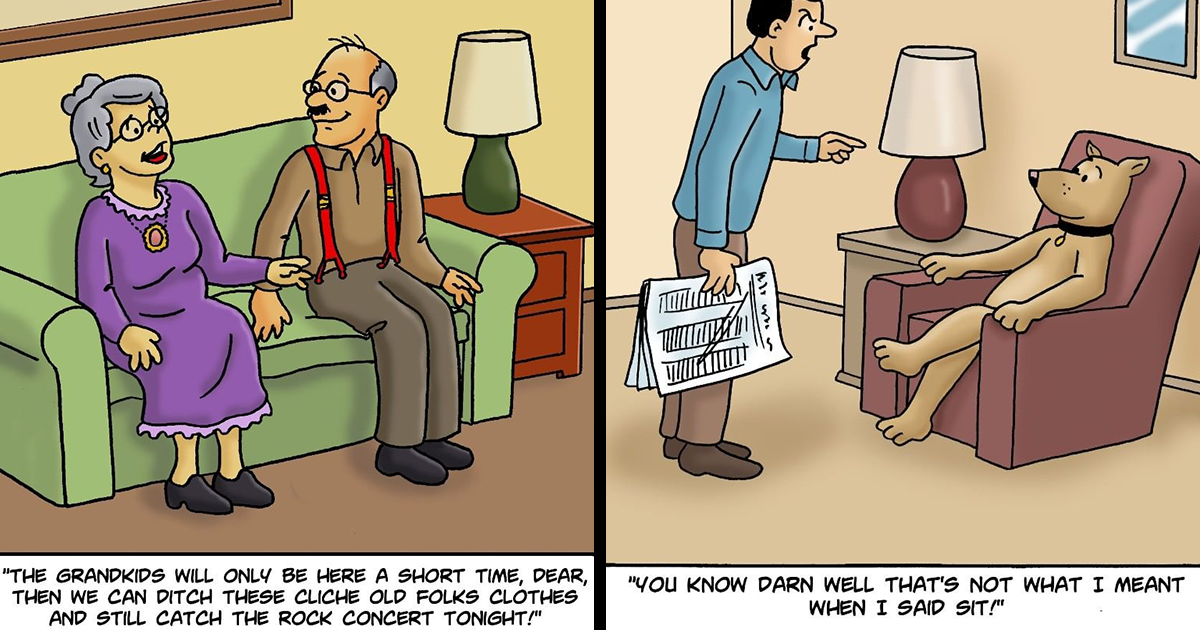

Some days need coffee. Some days need a nap. And some days need a cartoon so perfectly silly that your brain briefly stops worrying about emails, laundry, bills, and the mysterious Tupperware lid that has been missing since 2019. That is where Laughing Hippo Studio waddles in with a grin.
Created by cartoonist Doug Hill, Laughing Hippo Studio is known for the kind of one-panel comics that deliver a joke quickly, cleanly, and often with the comic timing of a banana peel placed by a philosophy professor. Hill’s work includes familiar series and styles such as Potpourri Cartoons, Bartoons, Off The Wall, and adult-oriented humor under related branding. His cartoons often feel like a modern nod to old-school newspaper funnies: simple setups, expressive characters, everyday situations, and a punchline that sneaks up wearing very quiet shoes.
The title “30 One-Panel Comics That Might Brighten Your Day By Laughing Hippo Studio” says exactly what readers can expect: bite-sized humor, visual storytelling, and a gentle invitation to laugh at the strange little corners of ordinary life. These are not sprawling comic epics with multiverse timelines and a villain named Lord Confusion. They are small, clever snapshots of human behavior, animal logic, social awkwardness, medical weirdness, family life, pop culture, and the daily nonsense we all pretend is normal.
Why One-Panel Comics Work So Well
A one-panel comic is a tiny stage. There is no room for long backstory, dramatic flashbacks, or a 42-page explanation of why the chicken crossed the road. Everything must happen fast: the image, the situation, the caption, and the joke all have to click together almost instantly. When done well, a single-panel cartoon feels effortless. In reality, it is more like trying to park a clown car in a thimble.
That tight format is one reason Laughing Hippo Studio comics are so easy to enjoy online. Readers can understand the scene in seconds. A doctor’s office, a living room, a bar, a dungeon, a dog’s suspiciously guilty face, or a fairy-tale character in a modern problemeach setup is familiar enough to enter quickly. Then Hill adds the twist. The result is the cartoon equivalent of a friendly elbow nudge: “See? Life is ridiculous. You noticed it too.”
The Laughing Hippo Studio Style: Simple, Familiar, and Sneaky
Doug Hill’s visual style is often described as simple and semi-realistic, with a newspaper-comic flavor. That simplicity matters. In one-panel humor, overly complicated artwork can bury the joke. Hill tends to give readers just enough detail to understand the setting and the characters’ reactions, then lets the gag do the heavy lifting.
The comedy often comes from unexpected endings, puns, wordplay, and ordinary scenes taken slightly out of context. A family conversation becomes absurd. A medical appointment turns into a comedy of discomfort. A fairy-tale figure behaves like someone you might meet at the grocery store. A cat acts like a tiny landlord with whiskers. A dog interprets reality with the confidence of a creature who once ate a sock and learned nothing.
That is the charm. Laughing Hippo Studio does not need explosions, dramatic action, or a dozen panels of buildup. The comics often work because they show the familiar world from one crooked angle. The joke is not that life is completely strange. The joke is that life is already strange, and the cartoon simply points at it with a tiny flag.
What Makes These 30 Comics So Easy to Share?
Online humor has to survive a brutal environment. People scroll quickly. Attention spans are under attack by notifications, autoplay videos, and the emotional damage of seeing “meeting moved up” in a calendar invite. One-panel cartoons fit perfectly into this fast-moving digital world because they are compact, visual, and instantly understandable.
A good Laughing Hippo Studio comic can be read during a coffee break, shared in a group chat, or saved for later when someone needs a small mood upgrade. The best ones also have a universal quality. You do not need to know every detail of the artist’s life or follow a long-running story arc. You only need to recognize the human situation: embarrassment, confusion, stubbornness, bad timing, weird family logic, workplace absurdity, or the eternal truth that cats believe every chair belongs to them.
Common Themes in Laughing Hippo Studio Comics
1. Everyday Life With a Twist
Many of Hill’s funniest ideas begin with ordinary life: families, restaurants, doctors, shopping, marriage, school, pets, and casual conversations. Then the cartoon bends the scene just enough to reveal the absurdity hiding underneath. It is not comedy from another planet. It is comedy from your kitchen, your waiting room, your couch, and possibly your neighbor’s garage.
2. Family Humor That Feels Familiar
Family jokes work because families are basically sitcoms with shared Wi-Fi passwords. Laughing Hippo Studio often plays with the small misunderstandings and exaggerations that happen between spouses, parents, children, grandparents, and relatives who somehow always have opinions about your thermostat settings.
3. Animal Comics With Human Problems
Animal cartoons are a strong part of the one-panel tradition, and Hill’s animal humor fits that legacy well. Cats, dogs, hippos, birds, and other creatures become little mirrors for human behavior. A dog might show loyalty, confusion, or complete emotional panic over a vacuum cleaner. A cat might behave like royalty while contributing absolutely nothing to rent. These comics work because animals are funny already; giving them human-style motives only adds seasoning.
4. Pop Culture and Mythical Characters Acting Too Normal
Another fun angle in Laughing Hippo Studio comics is placing recognizable characters, fairy-tale figures, mythical beings, or pop-culture archetypes in everyday situations. The humor comes from contrast. A character who belongs in legend suddenly has a boring modern problem. A magical figure deals with bureaucracy. A monster behaves like an awkward neighbor. The bigger the character’s myth, the funnier it can be when the problem is small and petty.
5. Medical and Workplace Awkwardness
Doctors’ offices, therapy sessions, business meetings, and workplaces are comedy gold because everyone is trying to behave professionally while secretly being confused, anxious, or hungry. Hill’s cartoons often make these settings funnier by exaggerating what people are already thinking. The joke may be silly, but the feeling underneath is recognizable: sometimes adult life is just a series of rooms where nobody knows exactly what is happening.
The Power of a Good Punchline
In one-panel comics, the punchline has to arrive with precision. Too obvious, and the reader gets there before the cartoon does. Too obscure, and the reader feels like they accidentally opened a tax form. Hill’s humor often lands in the sweet spot: clear enough to understand, odd enough to surprise.
Many of his jokes use the classic humor engine of incongruity. That means the comic sets up one expectation, then swerves into another. A character says something that reframes the entire image. A normal situation is revealed to have a bizarre explanation. A pun connects two meanings that should probably not be allowed to sit at the same lunch table.
This is why one-panel cartoons can feel so satisfying. The reader gets a tiny mental puzzle and a reward at the same time. First comes recognition. Then comes the twist. Then comes the laugh, smile, groan, or dignified nose exhale that counts as laughter during office hours.
Why Laughing Hippo Studio Feels Nostalgic Without Feeling Old
Many readers compare Hill’s work to classic newspaper cartoons, and that comparison makes sense. Before social feeds, smartphones, and reaction GIFs, newspaper comics offered a daily pocket of humor. A single panel could sit beside the crossword puzzle or weather report and give readers a small break from reality.
Laughing Hippo Studio brings that same compact charm into the digital age. The format feels nostalgic, but the subjects can be modern. Pets, relationships, healthcare, pop culture, social habits, and current frustrations all appear through a familiar cartoon lens. It is old-school delivery with contemporary weirdness sprinkled on top like comedy parmesan.
Why These Comics Can Brighten a Bad Day
Laughter does not solve everything. A funny comic will not fold your laundry, finish your taxes, or explain why your phone battery drops from 37 percent to 2 percent in nine seconds. But humor can interrupt a bad mood. It gives the mind a tiny reset. Even a quick laugh can make the day feel less heavy.
That is the real gift of these 30 Laughing Hippo Studio comics. They do not demand much from the reader. They simply offer a small comic window into a world where the awkward, strange, and ordinary become funny. Sometimes that is enough. A single joke can make a morning feel less gray. A silly animal cartoon can soften a stressful afternoon. A clever caption can remind us that everyone is stumbling through life with invisible clown shoes.
Reading the 30 Comics: What to Look For
As you move through a collection like this, notice how each comic uses economy. The best one-panel cartoons rarely waste visual space. The background tells you where you are. The characters’ expressions tell you how to feel. The caption or dialogue gives the final nudge. Nothing needs to shout.
Also look for recurring comic devices. You may notice wordplay, reversal, exaggeration, understatement, and role swapping. A serious character may be placed in a silly situation. A silly character may say something oddly serious. An animal may behave more logically than the human. A familiar phrase may be taken literally. That literal-minded twist is a classic cartoon move, and Hill uses it with a playful touch.
Why Readers Keep Coming Back to Doug Hill’s Humor
There is a warmth to Laughing Hippo Studio’s humor even when the joke is dark, dry, or slightly mischievous. The comics usually do not feel mean-spirited. Instead, they feel observational. Hill seems interested in the funny mistakes and strange assumptions people make every day. His cartoons laugh at human behavior, but they also invite us to laugh at ourselves.
That balance is important. Humor that only mocks can become tiring. Humor that observes can stay fresh because life keeps producing new material. Every doctor visit, family dinner, pet disaster, awkward conversation, and confusing headline becomes potential cartoon fuel. For a cartoonist, the world is basically one enormous joke notebook with traffic.
How Laughing Hippo Studio Fits Into Today’s Webcomic Culture
Modern webcomic culture is wonderfully diverse. Some artists create long emotional stories. Some build fantasy worlds. Some focus on dark humor, mental health, dating, parenting, office life, or surreal nonsense. Laughing Hippo Studio occupies a classic lane: the single-panel gag cartoon.
That lane remains powerful because it is flexible. A one-panel comic can be about anything. It can joke about a caveman, a therapist, a superhero, a dog, a skeleton, a restaurant server, a married couple, or a confused alien. The format is small, but the possibilities are huge. Like a snack-size candy bar, it may be tiny, but it still counts as emotional support.
Experiences Related to “30 One-Panel Comics That Might Brighten Your Day By Laughing Hippo Studio”
Reading a Laughing Hippo Studio collection feels a little like opening a drawer and finding thirty tiny joke machines. Each comic has its own rhythm. Some make you laugh immediately. Some make you pause for half a second before the punchline clicks. Some earn the classic comic response: a laugh followed by a head shake, as if your brain is saying, “I cannot believe I enjoyed that, but here we are.”
One of the best experiences with one-panel comics is sharing them with someone else. Humor becomes more fun when it travels. You see a comic about a cat behaving like a furry dictator and instantly know which friend needs it. You see a joke about doctors, office life, or marriage and think, “This belongs in the family group chat, where it will be ignored by three people and overanalyzed by one aunt.” That social quality gives the comics a second life beyond the page.
Another enjoyable part is how quickly these cartoons can change the mood of a moment. Imagine sitting in a waiting room, standing in line, or taking a break between tasks. A long article might feel like too much. A video might be too loud. But a one-panel comic asks for only a few seconds. It gives you a complete story, a complete joke, and a small emotional lift before your coffee even cools down.
Laughing Hippo Studio also reminds readers that humor does not have to be complicated to be clever. In fact, some of the funniest jokes are built from simple observations: people misunderstand each other, animals act superior, authority figures say absurd things, and ordinary phrases become hilarious when taken literally. The experience is not just about laughing at the final caption. It is about recognizing the small truth inside the joke.
For people who grew up with newspaper comics, Hill’s work may bring back the comforting ritual of checking the funny pages. For younger readers, the same format feels perfectly suited to social media. That cross-generational appeal is part of the charm. Grandparents, parents, office workers, students, pet owners, and casual comedy fans can all find something familiar in the cartoons. A good one-panel comic does not need a password. It just needs timing.
There is also a creative lesson hidden in the experience. These comics show how much can be done with restraint. One scene. One joke. One carefully chosen line. In a world full of loud content competing for attention, Laughing Hippo Studio proves that quiet, well-placed humor can still win. The punchline does not need fireworks. Sometimes it only needs a confused character, a familiar setting, and a caption that turns the whole thing upside down.
That may be why a collection like “30 One-Panel Comics That Might Brighten Your Day By Laughing Hippo Studio” feels so inviting. It does not ask readers to study, decode, or commit to a massive storyline. It simply says: take a break, look at this ridiculous little situation, and remember that the world is still funny in spots. Maybe not everywhere. Definitely not in your inbox. But in spots.
Conclusion
Laughing Hippo Studio proves that a single panel can carry a surprising amount of comedy. Doug Hill’s cartoons use familiar scenes, playful twists, expressive characters, and smart punchlines to create quick laughs with lasting charm. Whether the joke involves pets, family life, pop culture, medical awkwardness, or everyday absurdity, these one-panel comics offer exactly what many readers need: a short break, a clever surprise, and a reason to smile.
In an online world overflowing with noise, the simplicity of a good cartoon feels refreshing. These 30 comics are easy to read, easy to share, and easy to enjoy. They may not fix your whole day, but they can brighten a few minutes of itand honestly, some days that deserves a standing ovation from a hippo.
Note: This article is written as original SEO editorial content based on publicly available information about Laughing Hippo Studio, Doug Hill’s cartoon work, one-panel comic traditions, online humor trends, and the general benefits of laughter and visual comedy.