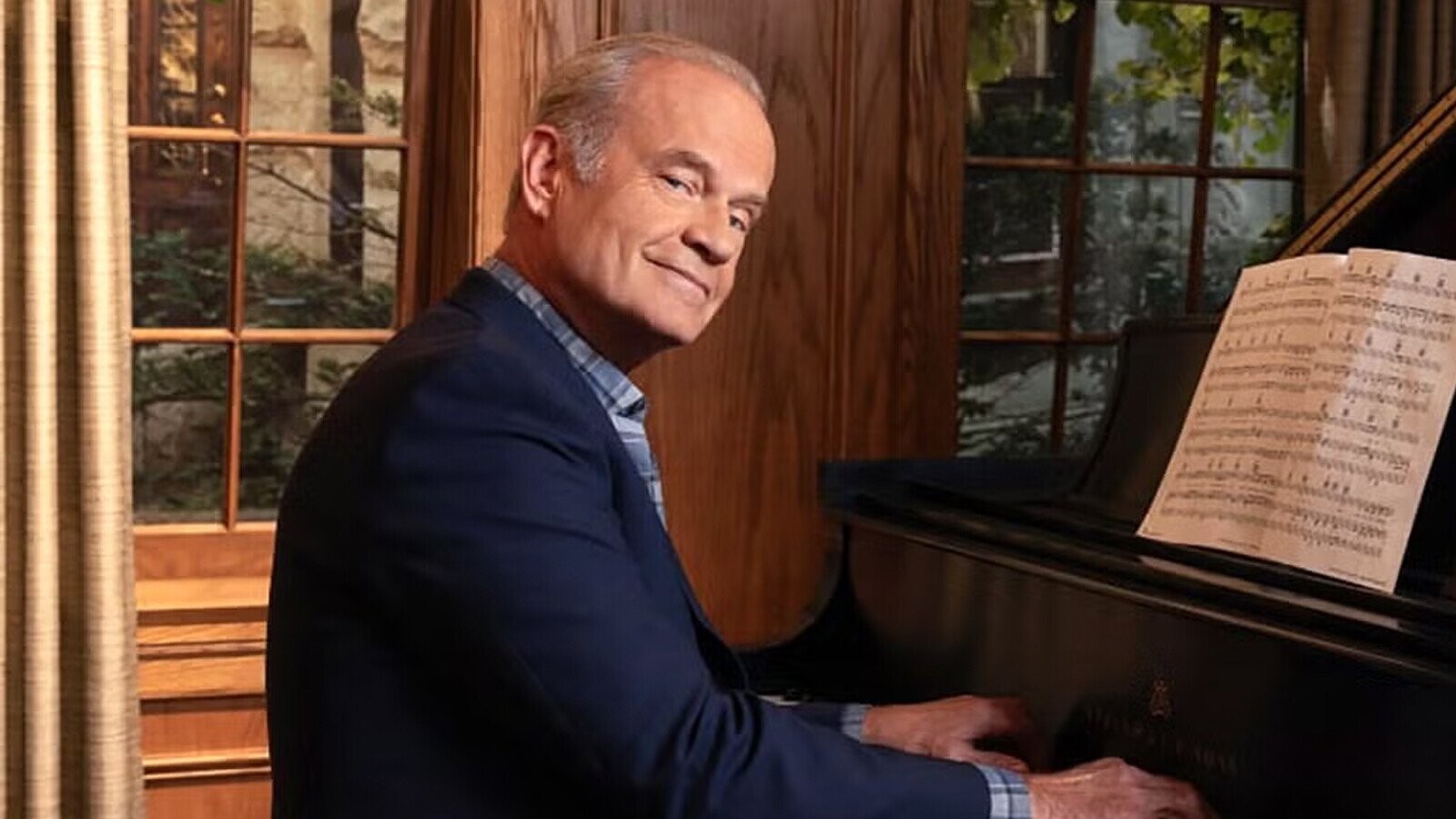
Kelsey Grammer Is Being Paid Way More for New ‘Frasier’ Than the One People Actually Liked

There are few television characters with a resume as polished as Dr. Frasier Crane’s. He survived the barstools of Cheers, conquered Seattle radio, won over Emmy voters, wore enough fine suits to frighten a tailor, and somehow made opera references feel like sitcom punchlines. Then came the revival: a new city, a new cast, a new streaming home, and, reportedly, a very large paycheck for Kelsey Grammer.
The headline practically writes its own sherry-soaked joke: Kelsey Grammer is reportedly earning more for the new Frasier than he made during the original series people still quote, rewatch, and defend at dinner parties like it is a misunderstood family member. According to entertainment reporting, Grammer’s reboot salary has been described as roughly $2 million per episode. That figure has not been formally confirmed by Paramount, so it should be treated as a reported number, not a notarized scroll from the Crane family wine cellar.
Still, the comparison is striking. During the final years of the original Frasier, Grammer was widely reported to have earned about $1.6 million per episode after a massive two-year deal. In normal human terms, that is “buy a house” money per episode. In Hollywood terms, it is “please continue being charmingly insufferable in a blazer” money.
Why the Salary Story Hits a Nerve
The issue is not simply that Kelsey Grammer is paid well. He is one of the most recognizable sitcom actors in American television history. He played Frasier Crane across multiple decades, beginning on Cheers, then leading Frasier, and eventually returning for the Paramount+ revival. If anyone can argue that one character became a personal franchise, it is Grammer.
The reason the reported paycheck gets people talking is that the original Frasier was not just successful. It was beloved, critically praised, and decorated like a Christmas tree in a fancy apartment where nobody is allowed to touch the ornaments. The NBC series ran from 1993 to 2004, delivered 11 seasons, and became one of the most awarded comedies in television history.
The revival, by contrast, arrived in a very different environment. Instead of dominating network comedy, it entered the crowded streaming marketplace, where every platform has a nostalgia project, a reboot, a sequel, or a “legacy continuation” that asks viewers to remember how happy they were before subscription fatigue became a personality trait.
The Original ‘Frasier’ Was Lightning in a Very Expensive Bottle
The original Frasier worked because it was more than Kelsey Grammer standing in a room saying clever things. The show had a rare ensemble rhythm: David Hyde Pierce as Niles, John Mahoney as Martin, Jane Leeves as Daphne, Peri Gilpin as Roz, and Eddie the dog quietly stealing scenes like a furry union negotiator.
Frasier Crane was pompous, brilliant, insecure, and ridiculous. Niles was somehow even more delicate and more chaotic. Martin brought warmth, bluntness, and a recliner that offended the apartment’s entire design philosophy. Roz cut through the pretension with perfect timing. Daphne added eccentricity, sweetness, and later, emotional depth. Together, they created a comedy machine that could turn a dinner party, a misunderstanding, or a doorbell into an Olympic sport.
That is why comparing the old show and the new show feels unfair but unavoidable. The classic series had chemistry that cannot simply be summoned by writing “legacy IP” on a whiteboard. The original was built on character tension: blue-collar father versus cultured sons, sibling rivalry disguised as intellectual debate, romantic longing, professional ambition, and the constant possibility that Frasier would ruin his own evening by being Frasier.
The New ‘Frasier’ Has a Different Problem
The Paramount+ revival brings Frasier back to Boston, where he reconnects with his adult son Freddy and begins another act of his already very long life. That setup is not a bad idea. In fact, it has a certain symmetry. Frasier once struggled to understand his father; now he struggles to understand his son. The old parent-child conflict has been flipped, polished, and placed under studio lights.
But the revival also faces a major challenge: it lacks much of the original emotional architecture. David Hyde Pierce did not return as Niles. John Mahoney, whose Martin Crane was the soul of the original show, died in 2018. Jane Leeves and other original regulars were not central fixtures. Peri Gilpin and Bebe Neuwirth appeared, giving longtime fans flashes of recognition, but the revival largely had to build a new ensemble around Grammer.
That is a tall order. Asking a reboot to recreate the original Frasier without the full Crane family dynamic is like asking someone to prepare a perfect soufflé without eggs, heat, or emotional stability.
Reportedly Bigger Pay, Smaller Cultural Footprint
This is where the reported salary becomes such a juicy entertainment-business story. If Grammer is indeed earning around $2 million per episode, that would be more than the roughly $1.6 million per episode he reportedly made during the final stretch of the original show. On paper, that sounds backwards. The older show was a giant. The newer one is a revival trying to prove it deserves space in a streaming catalog.
But Hollywood pay does not always follow audience affection. It follows leverage, brand value, ownership, executive strategy, and the belief that familiar names reduce risk. Grammer is not just the star of Frasier; he is the brand’s central asset. Without him, the show is not Frasier. It is just a comedy about academics, family tension, and probably some very nice furniture.
Streaming platforms often pay heavily for recognizable talent because subscribers are difficult to win and easy to lose. A famous title can cut through the noise. A known star can make marketing simpler. A reboot can offer comfort to viewers who are tired of scrolling through 900 thumbnails while slowly forgetting what joy feels like.
Was the Revival Actually Bad?
The answer is more complicated than the snarky headline suggests. The new Frasier was not universally hated. Some critics found it pleasant, familiar, and improved by Grammer’s still-sharp command of the character. Many viewers enjoyed seeing Frasier Crane back in action. Audience responses were warmer than some critical reactions, which is common for revivals with a loyal fan base.
Still, the revival did not land with the cultural force of the original. The classic Frasier was prestige sitcom television before everyone used the word “prestige” to describe shows where people whisper in expensive kitchens. It was literate, theatrical, farcical, emotional, and endlessly rewatchable. The revival often felt like a comfortable echo rather than a bold new composition.
That does not make it worthless. It simply means that nostalgia can open the door, but it cannot carry every box into the apartment.
Why Fans Miss Niles So Much
One of the biggest issues for longtime fans is the absence of Niles Crane. David Hyde Pierce’s performance was not merely a supporting role; it was a precision instrument. Niles made Frasier funnier by mirroring him, challenging him, and somehow being even more neurotic. Their sibling rivalry was one of the great comic engines of the original series.
Without Niles, the revival has to create new sources of friction. Freddy serves as a grounded counterpoint to Frasier, similar in function to Martin, but the dynamic is not identical. Nicholas Lyndhurst’s Alan Cornwall brings dry wit, and the new cast provides fresh energy, but television chemistry is mysterious. You cannot download it like an app. If you could, every reboot would be a masterpiece and network executives would sleep peacefully for the first time since 2007.
The Business Lesson Behind the Punchline
The reported Grammer salary highlights a larger truth about modern entertainment: Hollywood is increasingly willing to pay premium prices for proven intellectual property, even when the new product is not guaranteed to match the old magic. A familiar title is a shortcut. It tells audiences, “You already know this world.” Sometimes that shortcut leads to a warm reunion. Sometimes it leads to a nicely decorated cul-de-sac.
For studios and streamers, the math is tempting. A reboot brings built-in awareness. Journalists cover it. Fans debate it. Social media argues about it for free. The title does half the marketing before the trailer even drops. That kind of recognition is valuable, and stars who embody that recognition can command enormous paydays.
But there is a creative risk. When too much of the budget and attention rests on nostalgia, the new show may feel like it is asking for applause before earning it. Viewers want memories, yes, but they also want jokes that work now, characters who matter now, and stories that do not feel like a museum tour with a laugh track.
Why Kelsey Grammer Still Matters
To be fair, Grammer remains remarkably comfortable as Frasier Crane. His voice, posture, timing, and theatrical exasperation still fit the role. He can still make a small insult sound like it was aged in oak. He understands Frasier’s vanity and vulnerability, which is why the character has lasted so long.
That longevity is not accidental. Frasier is funny because he is both brilliant and foolish. He knows opera, psychology, and wine, yet he regularly fails at basic emotional honesty. He wants to be noble but often trips over his ego on the way to the moral high ground. That contradiction still works.
So, while the reported salary may seem outrageous, it is not random. Grammer is one of the few actors whose presence can justify reviving a title this famous. The problem is that a sitcom is never only one actor. It is rhythm, writing, casting, timing, history, and the strange alchemy of people in a room pretending not to wait for applause.
The Paramount+ Question
After two seasons, the revival did not move forward at Paramount+, though reports indicated CBS Studios could shop the show elsewhere. That development gives the salary conversation extra bite. If a show is expensive and not clearly essential to a platform’s future, even a famous title can become vulnerable.
Streaming has changed the old rules. In the network era, a sitcom could grow, rerun, syndicate, and become part of the weekly household routine. In streaming, shows can appear, trend briefly, vanish into menus, and then be judged by data the public never sees. A revival can be liked by some viewers and still fail to satisfy a platform’s internal expectations.
That makes the new Frasier a perfect case study in modern TV economics. It has a legendary character, a famous star, a recognizable title, and a loyal fan base. Yet those ingredients do not automatically create the same impact the original had in the 1990s and early 2000s.
Experience Notes: Watching the New ‘Frasier’ After Loving the Original
Watching the new Frasier after loving the original is a strange experience. It is a little like visiting your childhood home and discovering it has been turned into a boutique coffee shop. The bones are familiar. The address still matters. But someone moved the sofa, the lighting is different, and the dog is definitely not the same dog.
For longtime fans, the first reaction is often emotional rather than analytical. Hearing Kelsey Grammer’s voice again creates instant recognition. Frasier Crane enters a room, and part of your brain says, “Ah, yes, this man is about to make a simple situation dramatically worse.” That is comforting. There is pleasure in seeing an old comic rhythm return, especially when so many modern shows chase irony but forget warmth.
Then the second reaction arrives: comparison. You wait for Niles. You miss Martin. You remember Roz’s timing and Daphne’s odd little observations. You realize how much of the original show lived not in Frasier alone but in the spaces between the characters. The best episodes often felt like chamber music played by people who secretly wanted to throw the instruments at each other.
The revival can be enjoyable when judged on its own terms. It has gentle jokes, polished performances, and moments where Grammer’s old brilliance flashes through. But for viewers who grew up with the original, “fine” can feel disappointing when the memory is “fantastic.” That is the curse of revivals. They are not competing only with current TV. They are competing with the best version of themselves, preserved in reruns and nostalgia, where every favorite episode has already survived the test of time.
The salary story adds another layer to that experience. When audiences hear that Grammer may be earning more for the revival than he did for the classic, it sharpens the contrast. Fans are not angry because an actor got paid. Many would agree that Grammer earned his place in sitcom history. The reaction is more like comic disbelief: this version gets the bigger check?
That feeling reveals how viewers measure value differently from studios. Fans value emotional return. They ask, “Did this make me laugh like the old show did?” Studios value marketable assets. They ask, “Can this title attract attention?” Those two questions overlap, but they are not the same.
In the end, the new Frasier is not a disaster. It is a reminder that beloved television is hard to recreate because what people love is rarely one ingredient. It is the cast, the writing, the era, the theme song, the apartment, the arguments, the silences, and the feeling that everyone involved caught lightning while pretending to argue about wine.
Conclusion
Kelsey Grammer’s reported payday for the new Frasier is a fascinating symbol of modern television. It shows how much value Hollywood places on recognizable stars and beloved brands, even when the rebooted version does not command the same affection as the original. Grammer remains a gifted performer, and Frasier Crane remains one of TV’s great comic creations. But the original Frasier was never just a one-man show. It was an ensemble masterpiece, a writing triumph, and a rare sitcom that made pretension feel lovable.
The revival may have its fans, and it deserves credit for trying to move Frasier into a new phase of life. But the comparison is unavoidable: the old show was the one people adored; the new one is the one that reportedly costs more to put its star back in the room. Somewhere, Niles is probably fainting onto a tasteful chaise lounge.