American Living In Scotland Shames These American Tourists Who Think The Whole World Revolves Around Their Country

Note: This article is an original, SEO-focused synthesis based on real travel etiquette guidance, Scotland tourism information, U.S. travel resources, and public discussion around American tourists abroad.
There is a particular kind of travel embarrassment that makes your soul try to leave your body through the nearest emergency exit. It is not losing your luggage, mispronouncing “Edinburgh” with the confidence of a game-show host, or discovering that “chips” in Scotland may not mean what your American stomach hoped they meant. No, the deepest cringe comes when you are an American living abroad and you hear another American tourist loudly behaving as if the entire planet is simply the United States with older buildings and smaller coffee refills.
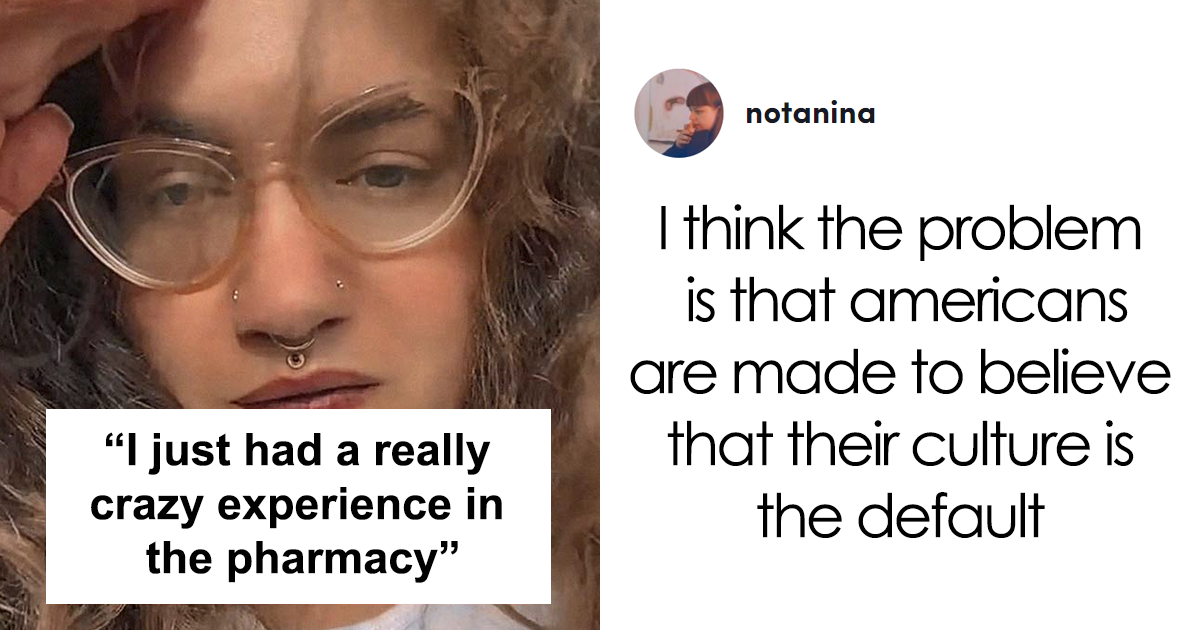
That is the deliciously awkward energy behind the viral story of an American living in Scotland who called out fellow American tourists for acting as if Scottish shops, pharmacies, accents, laws, holidays, and social rules should bend around U.S. expectations. The story spread because it touched a nerve. Many Americans travel beautifully: curious, polite, generous, and eager to learn. But a loud minority can make the rest of us want to whisper, “Please, we do not know them,” while slowly hiding behind a rack of shortbread tins.
This is not really a story about hating American tourists. It is about travel humility. Scotland is not a theme park, a movie set, or an alternate branch of New England with castles. It is a country within the United Kingdom with its own history, laws, healthcare system, languages, humor, landscape rules, social codes, and deep sense of place. When visitors forget that, the result is not just rude. It is embarrassing, especially when another American is standing nearby and silently evaporating from secondhand shame.
Why This Story Hit Such a Nerve
The viral discussion centered on a familiar travel problem: some visitors arrive abroad physically, but mentally remain at home. They expect familiar customer service scripts, familiar regulations, familiar holidays, familiar pharmacy rules, familiar tipping habits, and familiar levels of volume. Then they become surprised when Scotland continues being Scotland, instead of rearranging itself into an American convenience zone.
That is why the story resonated with so many people. It captured a real pattern seen in tourist-heavy places: travelers sometimes confuse being a customer with being the main character. In the United States, service culture often encourages speed, friendliness, personalization, and a cheerful “no problem!” attitude. In Scotland and much of the UK, politeness still matters deeply, but it often looks different. It may be quieter, more understated, more rule-based, and less performative. A Scottish pharmacist or shop worker is not being cold because they refuse to treat a visitor’s confusion as a national emergency. They are simply working within their own system.
That difference can create comedy. It can also create conflict. A tourist who says, “But in America we do it this way,” may think they are explaining. To locals, it can sound like, “Please stop being your country and become mine for the next five minutes.” That is not a great look. It is also a terrible souvenir.
Scotland Is Not America With Bagpipes
One of the biggest mistakes American tourists make in Scotland is assuming cultural similarity equals cultural sameness. Yes, English is widely spoken. Yes, there are familiar brands, modern cities, international restaurants, and plenty of friendly people happy to help. But shared language can be a sneaky trap. It makes travelers forget they are still abroad.
Scotland has its own legal and political systems, its own education and healthcare structures, its own road habits, its own expressions, and its own cultural rhythms. It also has languages and dialects that deserve respect, including Scots and Scottish Gaelic. A visitor does not need to master Gaelic before ordering coffee in Glasgow, but showing interest is very different from treating local language and pronunciation as a joke.
The same applies to place names. Edinburgh is not “Edin-burg” like Pittsburgh. Loch does not rhyme neatly with “lock” if you are aiming for the local sound. Glasgow has its own rhythm. The Isle of Skye is not just a fantasy wallpaper background. The Highlands are not a costume closet. These places are home to real communities, not props in someone’s ancestry-themed vacation montage.
The “But I’m Scottish Too” Problem
Many Americans visit Scotland because they have Scottish ancestry. That can be meaningful, and there is nothing wrong with wanting to explore family roots. In fact, heritage travel can be powerful. It can connect people to migration stories, old records, landscapes, and traditions that shaped their families. The trouble begins when a visitor announces, “I’m Scottish,” to someone who was born, raised, taxed, rained on, and possibly midged half to death in Scotland.
There is a more graceful way to say it: “My family has Scottish roots, and I’m excited to learn more.” That single sentence changes the entire mood. It shows curiosity instead of ownership. It invites conversation instead of correction. It also avoids the awkward moment where someone from Aberdeen has to smile politely while a person from Ohio explains clan politics based on one online genealogy result and a tartan scarf bought at the airport.
Scotland welcomes heritage travelers, but heritage is not a backstage pass to local identity. Roots are worth exploring. They are not a license to lecture locals about their own country.
Pharmacies, Healthcare, and the Shock of Different Rules
The pharmacy setting in the viral story was especially fitting because pharmacies expose one of the clearest differences between countries: systems. A medicine, prescription, or product that is easy to get in one country may be restricted, unavailable, differently named, or handled through another process in the UK. American visitors sometimes assume a U.S. prescription, insurance card, or customer-service expectation will work abroad exactly as it does at home. That assumption can lead to confusion fast.
Travelers should bring enough medication for their trip, keep prescriptions in original labeled packaging, carry copies of prescriptions using generic drug names, and check whether any medication is controlled or restricted in the UK. Tourists should also understand that U.S. Medicare and Medicaid do not cover them overseas. Travel insurance is not the glamorous part of vacation planning, but neither is arguing at a pharmacy counter while jet-lagged and holding a half-melted granola bar.
The respectful approach is simple: research before arrival, ask politely, and accept that local staff must follow local rules. A pharmacist is not personally attacking the bald eagle because they cannot refill something exactly the way a CVS in Nebraska might.
Volume Control: The Quiet International Superpower
American tourists have a reputation for being loud. Is it fair to every American? Absolutely not. Is it common enough that people mention it? Unfortunately, yes. Public volume is one of those invisible cultural settings people do not notice until they leave home. In parts of the United States, energetic conversation is normal. In Scotland, a booming restaurant voice or train-car monologue can feel intrusive.
The fix is not to become silent and mysterious like a damp castle ghost. The fix is to read the room. If everyone around you is speaking softly, lower your volume. If you are on public transportation, do not narrate your entire itinerary to the carriage. If you are in a museum, cathedral, small shop, or pharmacy, use your indoor voice. If your indoor voice can still guide ships through fog, recalibrate.
Good tourists notice the local atmosphere. Great tourists adapt to it before anyone has to give them the look.
Politeness Sounds Different in Scotland
American friendliness can be wonderfully warm, but it can also come across as too casual or demanding when dropped into the wrong setting. In the UK, “please,” “thank you,” “sorry,” and “excuse me” are not decorative extras. They are social oil. They keep small interactions moving without friction.
There is a big difference between barking “I need a coffee” and saying, “Could I have a coffee, please?” One sounds like a person ordering a beverage. The other sounds like someone addressing a malfunctioning vending machine. Scottish people are famous for wit, warmth, and directness, but that does not mean they enjoy being treated like background staff in a tourist’s personal travel documentary.
Politeness is not weakness. It is the easiest cultural upgrade a traveler can make. It costs nothing, weighs nothing, and never gets confiscated at customs.
Stop Comparing Everything to America
One of the fastest ways to irritate locals is to compare every detail to the United States. “In America, the portions are bigger.” “In America, roads are wider.” “In America, ice is easier to find.” “In America, stores stay open later.” These things may be true in some places, but repeating them does not create cultural insight. It creates the impression that the traveler expected Scotland to audition for American approval.
Comparison can be useful when it leads to understanding. It becomes obnoxious when it becomes a scoreboard. Scotland does not need to win at being America. It is busy being Scotland: dramatic, layered, funny, stubborn, inventive, historic, modern, and very capable of surviving without gallon-sized soft drinks.
A better question than “Why is this not like home?” is “What can this teach me?” That shift turns inconvenience into discovery. Smaller hotel rooms become a lesson in old buildings and dense cities. Earlier closing times become a reminder that not every culture worships 24/7 consumption. Different healthcare rules become proof that systems are built around different assumptions. Even the weather becomes character development, usually involving a hood.
Tourism Is a Gift, Not a Right
American visitors matter to Scotland’s tourism economy. The United States is one of Scotland’s biggest international visitor markets, and American travelers contribute significantly to spending in hotels, restaurants, tours, museums, golf, transportation, and local shops. That economic impact is real. But spending money in a place does not mean owning it for a week.
Tourism works best when visitors support local communities instead of overwhelming them. That means shopping from Scottish makers, eating at local restaurants, respecting residents’ neighborhoods, avoiding overcrowded hotspots when possible, and remembering that popular places are not empty stages. Edinburgh, Skye, Glasgow, Inverness, Stirling, and the Highlands are lived-in places with daily rhythms beyond the visitor gaze.
A traveler who supports local businesses, learns basic etiquette, and respects the landscape becomes part of a healthier tourism cycle. A traveler who blocks sidewalks, complains loudly, litters, ignores signs, and treats locals like unpaid tour guides becomes part of the reason destinations create stricter rules.
Respect the Land: Scotland Is Beautiful, Not Disposable
Scotland’s landscapes are a major reason Americans visit. The lochs, glens, coastlines, islands, mountains, castles, and winding roads look almost unfairly cinematic. But natural beauty is not self-cleaning. Visitors have responsibilities, especially when exploring rural areas or following routes such as the North Coast 500.
Responsible travel in Scotland means leaving no trace, taking litter away, respecting wildlife, keeping dogs under control, using proper toilet etiquette outdoors, avoiding fires where unsafe or prohibited, and staying clear of crops, livestock, buildings, and private spaces. Wild camping is allowed in many circumstances when done responsibly, but “responsibly” is the important word. It does not mean parking anywhere, lighting fires during dry weather, leaving trash, or treating a quiet glen like a music festival with worse catering.
The Scottish Outdoor Access Code is built around rights and responsibilities. That balance matters. Visitors who enjoy access without responsibility risk damaging the very freedom that makes Scotland special.
Humor Helps, But Humility Helps More
The viral American-in-Scotland story was funny because it was painfully recognizable. Everyone who has lived abroad knows the sensation of hearing someone from home behave badly and feeling personally implicated. It is irrational, of course. One rude tourist does not represent 330 million people. But abroad, nationality becomes more visible. A loud complaint, a careless joke, or a dismissive comment can become someone’s entire impression of Americans.
The good news is that the reverse is also true. A thoughtful traveler can change impressions quickly. Locals remember visitors who are kind, curious, patient, and willing to laugh at themselves. They appreciate people who ask questions without demanding emotional labor, who apologize when confused, and who understand that being abroad means occasionally being wrong in public.
Humility does not make travel smaller. It makes it richer. The traveler who stops trying to control every difference gets to actually experience the place.
How American Tourists Can Do Better in Scotland
Research Before You Go
Learn the basics: passport rules, medication regulations, emergency numbers, driving differences, tipping norms, public transportation, and local etiquette. Scotland is easy to enjoy, but it is still international travel. Preparation prevents pharmacy meltdowns and rental-car panic.
Ask, Don’t Assume
If you do not understand something, ask politely. “Could you help me understand how this works here?” is a magical sentence. It is humble, clear, and much better than “Well, that’s not how we do it in America.”
Lower the Volume
In restaurants, trains, museums, shops, and pharmacies, match the local noise level. Your vacation stories are probably delightful, but not everyone within a thirty-foot radius needs the director’s cut.
Use Manners Generously
Say please, thank you, excuse me, and sorry. This is not about becoming fake. It is about speaking the local social language. In Scotland, courtesy goes a long way, especially when paired with patience.
Respect Local Identity
Enjoy your ancestry, your tartan shopping, your castle tours, and your whisky tastings. Just do not tell Scottish people what Scotland really is based on a DNA percentage and one documentary. Be interested, not possessive.
Support the Real Scotland
Go beyond clichés. Visit Glasgow as well as Edinburgh. Explore local food beyond tourist menus. Learn about Scottish history beyond romantic battles and royal drama. Buy from makers. Listen to guides. Leave room for the country to surprise you.
Why the “Whole World Revolves Around America” Attitude Backfires
The phrase stings because it points to a bigger issue: American exceptionalism can travel badly. Pride in one’s country is normal. Assuming every other country should organize itself around that pride is not. Abroad, that attitude can appear in small ways: expecting U.S. dollars to be accepted, assuming American holidays matter locally, joking about accents, demanding ice, questioning local laws, or acting shocked that not everyone follows U.S. news minute by minute.
To be clear, ignorance is not uniquely American. Every country produces difficult tourists. British stag parties, entitled influencers, cruise crowds, and selfie-stick warriors from many nations have all done their part for global annoyance. But American tourists are highly visible because the United States is culturally powerful, widely discussed, and economically influential. When Americans travel, people notice. Fair or not, the microphone is already on.
That makes self-awareness essential. A good American traveler does not need to apologize for existing. But they should understand that the United States already occupies a lot of global space. When visiting another country, the gracious move is to take up a little less room, listen more, and let the destination be the center of the story.
Experiences Related to Americans Living in Scotland and Tourist Culture
Living in Scotland as an American can feel like attending a daily seminar called “Things You Thought Were Normal But Are Actually Just American.” At first, the differences seem small. The washing machine may be in the kitchen. The weather may change personalities four times before lunch. A friendly insult may mean someone likes you. A shop worker may not beam at you like they have been waiting all day for your entrance. Then, slowly, the deeper lessons arrive.
You learn that not every inconvenience is a problem to be solved immediately. Sometimes the bus is late. Sometimes the shop is closed. Sometimes the road is narrow because it was not designed for giant vehicles, emotional support cup holders, and the American dream of abundant parking. Scotland teaches patience because it refuses to be optimized for your personal schedule. At first, that can feel frustrating. Later, it feels freeing.
You also become more aware of how Americans sound abroad. The accent carries. The confidence carries. The questions carry. There is nothing wrong with asking questions, but tone changes everything. An American who says, “I’m sorry, I’m visiting and I’m not sure how this works,” will usually find help. An American who says, “This makes no sense,” will find a wall of polite resistance so smooth it could qualify as architecture.
One of the funniest adjustments is customer service. In the U.S., many workers are trained to create a sense of personal enthusiasm. In Scotland, service can be perfectly kind without theatrical cheer. The person helping you may be efficient, dryly funny, and not remotely interested in pretending your sandwich order has changed their life. This is not rudeness. It is honesty wearing practical shoes.
Another experience is learning that Scottish humor often arrives wrapped in understatement, sarcasm, and emotional restraint. Americans may interpret this as coldness, but it is often warmth in a different coat. Someone teasing you gently may be welcoming you. Someone saying “not bad” may mean “excellent.” Someone saying “that’s interesting” may mean you should stop talking immediately and reconsider your choices.
Then there is the ancestry conversation. Americans often arrive with sincere excitement about Scottish roots. That excitement can be sweet, but living in Scotland teaches you to handle it carefully. Instead of claiming belonging, you learn to express connection. You say, “My family came from here generations ago,” not “I’m basically Scottish.” The first opens a door. The second may open a lecture.
Living abroad also reveals how often Americans expect convenience as a default. Bigger portions, later hours, faster service, free refills, abundant parking, and constant customization are not universal human rights. They are cultural features. Once you stop expecting them, you begin noticing other benefits: walkable cities, old neighborhoods, public green spaces, smaller daily rituals, and conversations that do not need to become networking opportunities.
The best experience, though, is realizing that embarrassment can become education. When an American tourist behaves badly in Scotland, it is easy to cringe. But it is also a reminder to travel better. Every awkward encounter teaches the same lesson: the world is not a customer-service extension of home. It is full of places with their own rules, jokes, wounds, pride, and pace. Scotland does not ask visitors to become Scottish overnight. It simply asks them to arrive with respect, curiosity, and enough self-awareness not to turn a pharmacy queue into an international incident.
Conclusion: The Best Travelers Know They Are Guests
The story of an American living in Scotland shaming entitled American tourists is funny because it is uncomfortable, and uncomfortable because it is true enough to recognize. The problem is not American tourism itself. Scotland benefits from American visitors, and many Scots genuinely enjoy welcoming people from the United States. The problem is the traveler who arrives with a suitcase full of assumptions and refuses to unpack them.
Good travel requires more than money and a passport. It requires humility. It asks visitors to learn before judging, listen before comparing, and adapt before complaining. Scotland offers castles, cities, islands, mountains, music, food, history, humor, and weather that builds character whether you requested it or not. The least visitors can offer in return is respect.
So yes, enjoy the whisky. Take the castle photos. Hunt for family roots. Buy the scarf. Try haggis if you are brave, and pretend you were not nervous. But remember: Scotland is not there to revolve around America. It is there to be experienced on its own terms. The tourists who understand that will have a far better trip. The ones who do not may end up starring in someone else’s viral story, and frankly, that is a souvenir nobody needs.