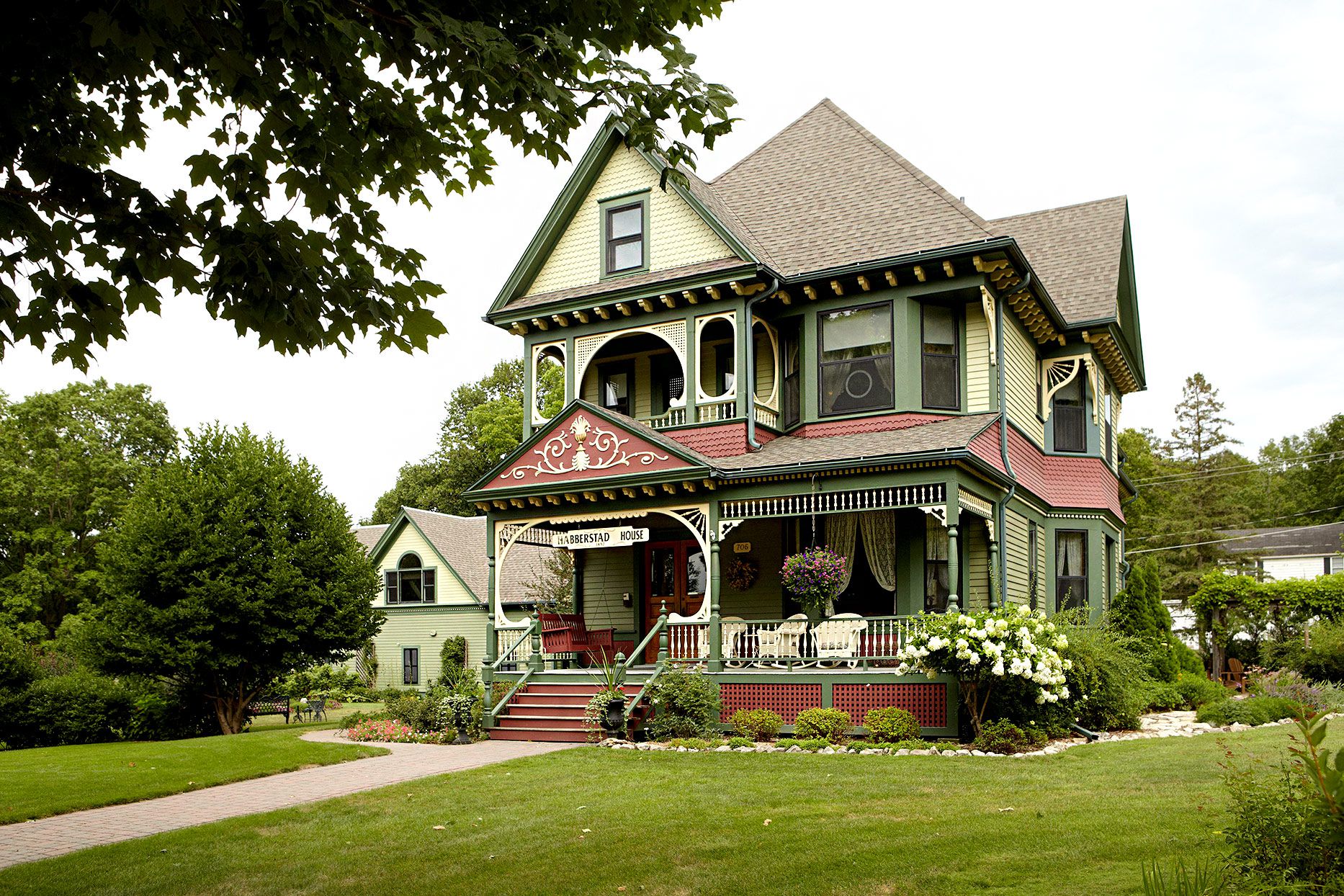

Every house has a birthday. Some celebrate it proudly with ornate trim, original wood floors, and a front porch that looks like it has judged generations of neighbors. Others hide their age like a movie star with perfect lighting and suspiciously new vinyl plank flooring. Either way, figuring out when your house was built is more than a fun bit of trivia. It can affect your renovation plans, your safety checklist, your insurance questions, your resale strategy, and even whether your place has historic value.
In other words, your home’s birth year is not just cocktail-party material. It is practical information. It tells you what materials may be hiding in the walls, what records you should pull, which upgrades are likely overdue, and why that charming “original detail” may actually be a 1957 surprise wearing a 1927 costume.
If you have ever asked, “When was my house built?” you are asking a smart question. And if you have ever followed that up with, “Why do I suddenly need three maps, a deed book, and the soul of a librarian?” welcome to the club.
Why Your Home’s Build Year Matters More Than You Think
The most obvious reason to learn your house’s age is curiosity. People want stories. They want to know whether their bungalow is truly a 1920s original or just a 1980s imitation with excellent marketing. But beyond curiosity, the year a house was built can shape serious decisions.
1. It helps you spot likely health and safety risks
Older homes can contain age-related hazards that are easier to manage when you know what era you are dealing with. A house built before 1978 may contain lead-based paint. A home built before 1986 is more likely to have lead pipes, fixtures, or solder somewhere in the plumbing system. Older building materials may also include asbestos in places such as floor tiles, roofing, insulation, or cement products. That does not mean you should sprint out of the house in dramatic fashion while clutching a toaster. It does mean that renovations should be planned carefully.
Knowing the build year gives you a realistic starting point. If you plan to sand trim, open walls, replace flooring, or remodel a kitchen in an older home, the age of the property helps determine whether you should test materials first, hire specialized professionals, or use lead-safe work practices.
2. It helps you budget for repairs like an adult with a spreadsheet
Different eras came with different construction methods, mechanical systems, and materials. A postwar ranch may have very different insulation performance than a Victorian, and a 1970s home may have energy issues that look nothing like those in a 1915 house. If you know your house was built before modern energy codes, you can prioritize upgrades like air sealing, insulation, windows, heating equipment, and ventilation more strategically.
Translation: the build year helps explain why the upstairs bedroom feels like a sauna in July and a tundra in January.
3. It can affect buying, selling, title, and disclosure questions
Public records tied to the property’s age often overlap with ownership history. A deed trace or title search can reveal not only when the land changed hands, but whether major value jumps, mortgages, or recorded improvements suggest when the structure first appeared. That matters for buyers, sellers, real estate agents, and anyone trying to avoid future paperwork drama.
4. It can reveal whether your home has historic significance
If your house is old enough or sits in a historic district, the real construction date can matter for preservation rules, district status, renovation approvals, or incentives connected to income-producing historic properties. This is where people discover that “historic” is not just a cute adjective for a listing description. Sometimes it comes with real regulatory and financial consequences.
5. It helps you separate original features from later additions
Many homeowners assume that whatever looks old must be original. Bless their optimistic hearts. In reality, houses evolve. Porches get enclosed. Rear additions appear. Windows get swapped. Kitchens move. Fireplaces vanish. Garage conversions happen. Determining the approximate build date helps you understand what belongs to the original structure and what showed up later with a hammer and questionable confidence.
So, When Was Your House Built? Here’s How to Find Out
If you want the answer, do not rely on just one source. A tax card might say one year, a permit record another, and an old fire insurance map might quietly expose them both. The best approach is part detective work, part paperwork, and part patience.
Start with the easiest records first
Your county assessor’s office, tax records, parcel database, or property card may already list an estimated year built. That can be a useful starting point, especially for post-World War II houses. But treat it as a clue, not gospel. Assessment records are often accurate enough to point you in the right direction, yet they are not always the final wordespecially for older homes.
Also check your local building department for permits. Permit registers can reveal the date a structure was approved, its estimated cost, the owner’s name, and sometimes the architect or builder. If you get lucky, this is the part where your mystery ends quickly and you get to feel smug before lunch.
Then trace the property through deeds and title records
If the easy answer is missing or suspicious, it is time to do a chain-of-title search. This means tracing ownership backward through deed records. The goal is not just to find names. You are looking for patterns: the first large mortgage, the first major jump in sale price, or the first moment when bare land starts behaving like improved property.
This step matters because land and buildings often have separate stories. A farm parcel may have existed long before your current house stood on it. The deed history can reveal whether your 1890 lot held a different structure before the house you live in today was built in 1924.
Use tax assessments to spot the “aha” moment
Old assessment records can be incredibly revealing. If the property value rises sharply from one year to the next, that is often a clue that a house was constructed or substantially improved around that time. It is not as dramatic as uncovering a secret staircase, but it is usually more useful.
Check Sanborn Fire Insurance maps
These maps are catnip for house-history nerds. Sanborn maps were created for many U.S. communities over many decades and can show building footprints, construction materials, number of stories, outbuildings, and other physical details. Compare editions from different years and you may be able to see exactly when your house first appearsor when an addition arrived and changed the footprint.
For older urban and small-town properties, this can be one of the strongest ways to verify whether a house existed by a certain date. It is like time travel, but with more symbols and less danger.
Look at census records, city directories, and old newspapers
Once you know who likely owned the property, you can use city directories, census schedules, obituary indexes, local histories, and newspaper archives to build context. Directories can show who lived at the address and when. Census records can help you track households over time. Newspapers may mention construction, sales, real estate ads, or even a builder’s announcement.
And yes, this is how a normal question about a house turns into an evening spent reading 1911 classifieds and wondering why every carpenter in town was apparently named Frank.
Study old photographs and aerial images
Historic photographs, postcards, neighborhood archives, and family albums can confirm what records only suggest. A photo of your house in the background of a 1940 church picnic can be surprisingly valuable. It may show the original porch, the roofline before a dormer was added, or that your “modern” garage was already there when people still wore hats on purpose.
Use architecture as evidence, not a final verdict
Architectural style can help narrow a period, but style alone should not be treated as the final answer. Houses get remodeled. Revival styles mimic earlier periods. Builders repeat ideas for decades. Still, details like window types, floor plan, roof shape, trim, masonry, and hardware can help identify the home’s core eraespecially when matched against documents.
If your house looks Tudor in front, ranch in back, and vaguely confused in the kitchen, congratulations: you probably own a very American remodeling story.
What the Build Date Can Tell You About Renovation Plans
Pre-1978 homes deserve extra caution
If your house predates 1978, you should assume painted surfaces may contain lead unless testing shows otherwise. That matters because sanding, scraping, demolition, and repair work can create hazardous dust. A lovely weekend DIY project can quickly become an awful decision wearing safety goggles.
Older homes may hide asbestos-containing materials
Asbestos was used in a range of building materials because of its heat resistance and durability. In many cases, the risk rises when those materials are damaged or disturbed during remodeling. If you are planning a major renovation in an older home, it makes sense to identify suspect materials before the sledgehammer gets any ideas.
Pre-code and older homes often benefit from energy upgrades
The age of your house can also explain comfort and efficiency problems. Many older homes were built before modern energy codes, which means they may leak air, lack insulation, or rely on outdated heating and cooling setups. The build year helps you plan sensible retrofits instead of randomly throwing money at the nearest contractor and hoping for thermal enlightenment.
Why Knowing the Real Date Helps With Buying and Selling
Build dates influence expectations. Buyers use them to anticipate maintenance needs, evaluate systems, and ask smarter inspection questions. Sellers use them to frame the home honestly and confidently. Lenders, insurers, inspectors, appraisers, and preservation officials may all view the property differently depending on its age and condition.
There is also a practical legal side. Title history can reveal liens, judgments, encumbrances, or ownership issues that matter during a sale or refinance. Even when you are not selling today, understanding the paper trail behind the property can prevent future surprises.
And for older houses with potential historic importance, accurate dating matters. If a building contributes to a historic district or meets preservation criteria, the date can affect what changes are allowed or how the property is classified. Just remember that a federal rehabilitation tax credit generally applies to qualifying historic, income-producing propertiesnot your ordinary owner-occupied private residence.
A Smart, Low-Stress Workflow for Researching Your House
- Check the assessor record for the listed year built and parcel history.
- Ask the local building department for permits, permit registers, or archived plans.
- Trace deeds backward using the legal description, not just the street address.
- Compare tax assessments year to year for major jumps in value.
- Pull historic maps, especially Sanborn maps, plat maps, and neighborhood atlases.
- Search city directories, census records, and newspapers for owners and occupants.
- Review photos and physical clues to confirm what the records suggest.
- Create a timeline of land purchase, first evidence of construction, later additions, and major remodels.
This method works because it does not force one record to do all the work. Instead, you let multiple sources build a case together. Think less “single magic answer” and more “convincing historical jury.”
Common Surprises Homeowners Discover
- The date on the listing was the date of a major renovation, not the original construction.
- The parcel existed long before the current house was built.
- The “original” porch was actually enclosed in the 1950s and then reopened in the 1990s.
- The oldest part of the house is only one section; the rest came later.
- The home is younger than its style suggests, because revival architecture loves a dramatic costume change.
That is why the question is not always “When was my house built?” Sometimes the better question is, “Which part of this house was built when?” Houses are layered objects. They keep receipts in wood, masonry, paper records, and odd little seams in the floor.
Final Thoughts: Your House Has a Timeline, Not Just a Date
Finding out when your house was built gives you more than a year to write on a note card. It gives you context. It helps you plan safer renovations, anticipate maintenance, understand past changes, and make better choices about preservation, energy efficiency, and resale.
It also makes you a more confident homeowner. Once you know how the property evolved, the house stops feeling like a mystery and starts feeling like a story you can actually read. Granted, some chapters are written in tax ledgers and permit ink rather than elegant prose, but stilla story.
So yes, learn the birth year. But do not stop there. Learn the timeline. Learn the additions. Learn the materials. Learn why the back hallway feels older than the front bedroom. Learn which details are original and which are the result of somebody in 1974 believing avocado green would last forever.
Your house may not tell you everything. But if you know where to look, it will tell you plenty.
Homeowner Experiences: What People Usually Learn When They Chase a House’s Real Age
One of the most common experiences homeowners have is discovering that the first answer they found was only half true. A tax card says 1948. A family story says 1936. The neighbor insists it was “definitely here before the war,” which narrows things down only if the neighbor is talking about the same war you are. Then the owner pulls an old map, checks deed transfers, and realizes the lot had a smaller structure first, while the current main house likely dates to a later rebuild. The lesson is simple: the first date you find may describe the parcel, a remodel, or an estimatenot the whole story.
Another common experience is the shock of matching house age to renovation reality. Someone buys a cute older home because it has charm, mature trees, and that impossible-to-fake feeling of permanence. Then they decide to update one bathroom. Suddenly, they are learning about lead-safe work practices, suspect flooring materials, old plumbing, wall cavities with surprises, and why “quick cosmetic refresh” is one of the funniest phrases in residential real estate. In this kind of experience, knowing the build year changes everything. It does not ruin the dream. It just replaces fantasy with a plan.
There is also the emotional experience of finding people behind the address. A homeowner starts with the practical goal of confirming the construction year, then falls down the rabbit hole in the best possible way. A city directory reveals the first listed resident. A census record adds names, ages, jobs, and family members. A newspaper clipping mentions the sale of the lot or the opening of a new subdivision. Suddenly the house is no longer “the blue one on Maple.” It becomes the former home of a machinist, a widow, a schoolteacher, a grocer, or a family that raised four children there during a completely different era. That kind of discovery changes how people feel about maintenance and restoration. They stop seeing the building as a product and start seeing it as a place with continuity.
Some experiences are funny. A homeowner spends weeks trying to prove the house is a pristine 1912 Craftsman, only to discover that the most dramatic features were added in a 1980s renovation by someone with a deep love of decorative brackets. Another owner is sure the house is modest and ordinary until a Sanborn map and local archive reveal that the rear structure once served a commercial purpose or that the property used to be arranged very differently. Houses are often weirder than they look from the sidewalk.
And then there is the satisfying experience of getting the answer right enough to make better choices. Maybe the owner confirms the house was built in 1927, with a kitchen wing added around 1958 and a family-room addition from the late 1980s. That timeline explains the uneven floors, the patched roofline, the inconsistent insulation, and the reason one section has beautiful old-growth trim while another feels distinctly more suburban. Once the timeline is clear, repair decisions become easier. You know which windows are worth restoring, which wiring needs expert review, which walls are likely original, and which “mystery bump-out” can stop pretending it belongs to the Jazz Age.
In the end, the most universal experience is this: people start by asking for a date, but they usually end up gaining perspective. They understand the house better. They spend money more wisely. They renovate more carefully. They talk about the property differently. And perhaps most importantly, they stop expecting a single neat answer from a building that has been altered, repaired, patched, loved, neglected, and reinvented across decades. A house is not a frozen object. It is a timeline with a roof.
SEO Tags