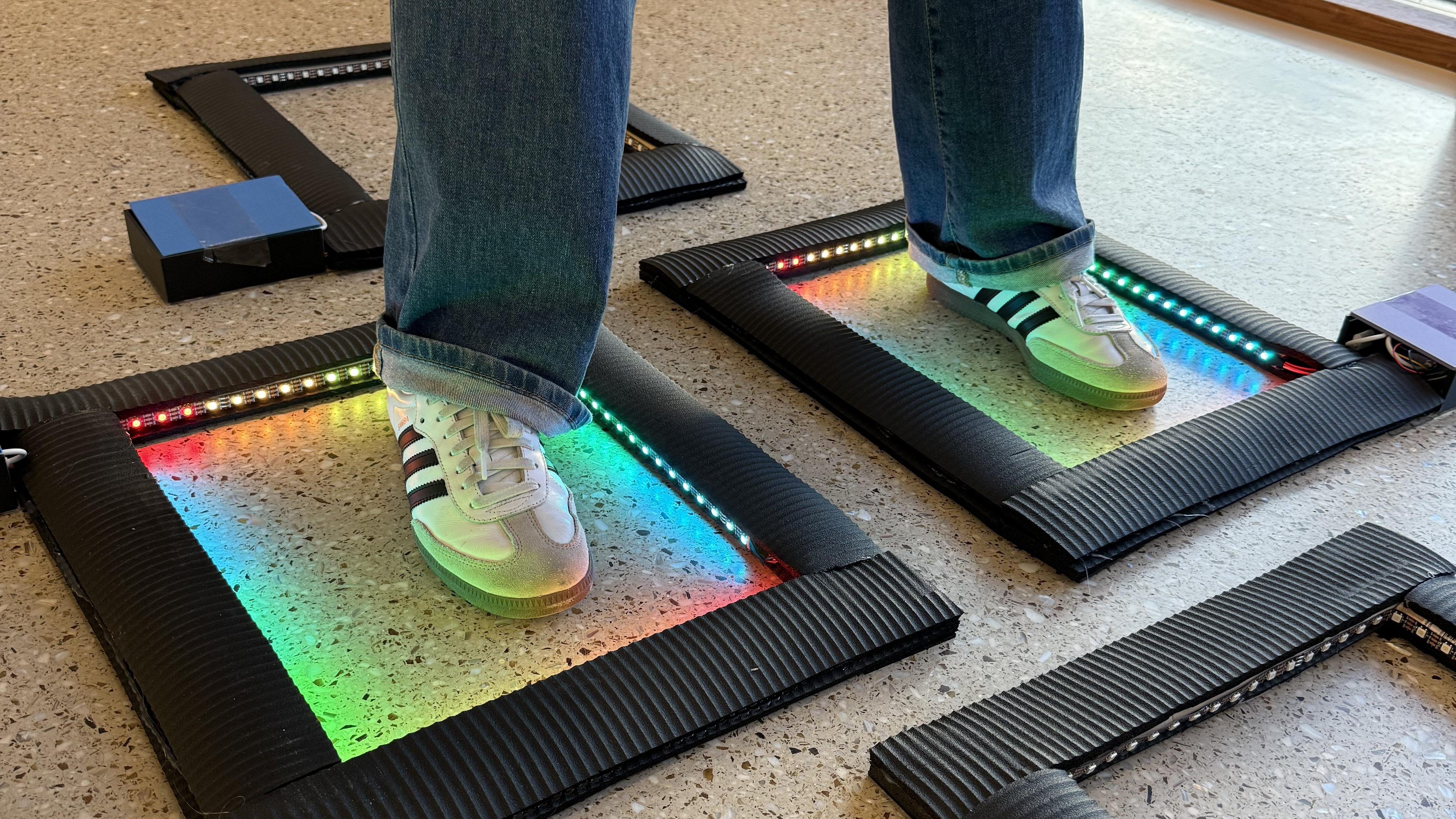

Hopscotch has survived generations for one simple reason: it turns a few squares on the ground into a tiny adventure. One minute, a child is hopping on one foot. The next, they are counting, balancing, negotiating rules, and trying very hard not to step on “lava.” Interactive hopscotch tiles give this classic game a modern upgrade by adding color, texture, movement prompts, sensory feedback, lights, or flexible game patterns that make kids want to come back for another round.
Unlike a permanent painted court that always tells the same story, interactive hopscotch tiles can change the challenge. Today, red may mean “jump twice.” Tomorrow, blue may mean “spell a word.” On Friday, every tile might become part of a dinosaur rescue mission. It is active play with a little more sparkleand thankfully, no charging cable is required for the simplest versions.
Why Interactive Hopscotch Tiles Are More Than Playground Decoration
Traditional hopscotch is already a clever game. Players jump, land, bend, toss, count, wait their turn, and remember a sequence. Interactive hopscotch tiles build on those strengths by making the playing surface part of the activity. The tile is not merely a square; it becomes a prompt, a puzzle piece, a target, or a tiny stage for a very dramatic penguin hop.
For children ages 6 to 17, the Centers for Disease Control and Prevention recommends at least 60 minutes of moderate-to-vigorous physical activity each day. Games that involve hopping, running, jumping, and playful movement can help make active time feel less like an assignment and more like a break from sitting still.
Interactive tiles are especially appealing because they invite participation without requiring a complicated lesson. A child can see a bright number, an arrow, a letter, or a colorful pattern and immediately understand that something interesting is about to happen. That low barrier to entry matters. The best playground games do not need a long instruction manual, a whistle, or a panel of judges holding scorecards.
What Makes Hopscotch Tiles “Interactive”?
The word interactive can mean different things depending on the design. Some tile systems use simple visual interaction: children respond to colors, numbers, letters, symbols, or arrows. Others add tactile surfaces, liquid sensory movement, sound, lights, or pressure-sensitive features. The important point is that the surface gives players a reason to make a choice, change direction, or react.
Color-Coded and Numbered Tiles
Color-coded hopscotch tiles are the easiest way to make the game more flexible. A teacher might call out “yellow, green, blue,” asking children to hop in that order. A parent might assign different movements to each color: red for a two-foot jump, green for a tiptoe step, and purple for a superhero landing. Numbered tiles can support counting, number recognition, addition, subtraction, and simple sequencing.
Sensory and Tactile Tiles
Textured or visually responsive floor tiles can make the course more engaging for children who enjoy movement, color, or touch-based play. The key is choice. Not every child enjoys the same sensory experience, and a fun tile should be an invitation rather than a surprise attack from the floor. Children with sensory differences may respond to movement and balance activities in very individual ways, so adults should observe, offer alternatives, and avoid forcing participation.
Light-Up, Projection, and Pressure-Responsive Systems
Technology-enhanced hopscotch systems can use lights, projected targets, music, timers, or pressure feedback to turn a simple grid into a game station. These setups are popular in some schools, recreation centers, therapy spaces, museums, and indoor play areas because they can change activities without repainting the floor. Still, high-tech does not automatically mean high-fun. A well-designed set of colorful tiles with a good game leader can outperform an expensive gadget that spends half the afternoon asking to reconnect to Wi-Fi.
Modular Tiles That Move With the Game
Modular hopscotch tiles are ideal for classrooms, day cares, libraries, and homes because adults can rearrange them. Create a traditional 1-to-10 hopscotch board one day, a zigzag balance path the next, and a giant spelling trail after lunch. That flexibility helps the same set of tiles stay fresh instead of becoming background scenery.
The Learning Benefits Hidden Inside a Hop
A good interactive hopscotch game does not announce, “Attention, learning is happening now.” It simply gets children moving. That is part of its charm. While kids are focused on reaching the next tile, they may also be practicing physical, cognitive, and social skills.
Balance, Coordination, and Body Awareness
Hopping from one tile to another requires balance, control, and awareness of where the body is in space. Young children are still building gross motor skills, and activities that involve hopping, skipping, jumping, and balancing give them meaningful practice. The National Association for the Education of Young Children notes that preschoolers are actively learning to hop, skip, jump forward, and balance on one foot.
Math, Literacy, and Memory Practice
Interactive hopscotch tiles can turn almost any lesson into a movement game. Use number tiles for counting backward. Put letters on the ground and ask children to hop through the letters in their names. Create word families, sight-word trails, shape paths, color sequences, or simple science questions. A child who is reluctant to answer from a chair may be delighted to answer while hopping like a frog with excellent opinions about vowels.
Attention and Executive Function
Physical activity is associated with benefits for children’s cognitive function, including executive-function skills such as working memory and cognitive flexibility. Research does not mean every jump instantly produces a math genius, but it does support the idea that movement belongs in a healthy learning environment rather than being treated as a distraction from learning.
Turn-Taking and Social Confidence
Hopscotch is also a tiny social laboratory. Players practice waiting, cheering for friends, following rules, solving disagreements, and trying again after a missed landing. Structured playground games can support cooperation, communication, sharing, and respect while children are physically active.
How Interactive Hopscotch Tiles Make Play More Exciting
The biggest advantage of interactive hopscotch tiles is not the tile itself. It is variety. Children lose interest when a game always unfolds the same way. Interactive tiles make it easy to change the rules without rebuilding the entire course.
One day, the goal might be speed. The next day, the goal might be accuracy. Another day, players may need to remember a sequence, solve a math problem, follow a story, or work together to get everyone through the course. This creates a feeling of novelty, which is often the secret ingredient that convinces kids to move voluntarily.
Outdoor play can support curiosity, creativity, critical thinking, balance, and spatial awareness. The American Academy of Pediatrics also emphasizes that play is important for children’s development and that outdoor settings give children room to use their senses and move freely.
In other words, interactive hopscotch tiles are not trying to replace imagination. They are giving imagination a colorful runway.
Fun Interactive Hopscotch Tile Game Ideas
1. Color Command Hopscotch
Assign a movement to each color. Red means jump, blue means spin, green means balance on one foot, and yellow means clap twice. Call out a sequence and let players follow it. This game works well for preschoolers and early elementary students.
2. Number Ninja Challenge
Place number tiles in a hopscotch layout. Ask players to hop only on even numbers, count backward from 10, solve simple addition problems, or find the answer to a number riddle. The child gets movement, math practice, and an opportunity to feel like a stealthy arithmetic expert.
3. Alphabet Adventure
Use letter tiles to spell names, simple words, sight words, or animal sounds. A teacher can call out a word and ask children to hop to its first letter. For older children, create a word-building relay where each player adds one letter before the next teammate continues.
4. Memory Trail
Show players a sequence of colors, numbers, or symbols for a few seconds. Cover the sequence, then challenge them to hop it from memory. This variation turns the floor into a giant brain teaser that happens to involve sneakers.
5. Storybook Hopscotch
Make each tile a story prompt. A star may mean “meet a friendly dragon,” a blue tile may mean “cross a river,” and a triangle may mean “find a clue.” Each child adds one sentence after landing. Soon, the group has created a story involving a pirate, a sandwich, and a suspiciously talented raccoon.
6. Team Relay Hopscotch
Divide players into small teams. Each child completes the course and then tags the next player. Add challenges such as carrying a beanbag, hopping backward, or retrieving a letter tile. Smaller teams reduce standing-around time and keep more children active.
7. Quiet Feet Challenge
Ask children to cross the tile course as quietly as possible. This activity encourages control, balance, and focus. It is also remarkably useful indoors when the grown-ups would prefer the building not to sound like a herd of cheerful buffalo.
Where Interactive Hopscotch Tiles Work Best
Classrooms and School Hallways
A hallway hopscotch path can transform a transition between classes into a quick movement break. Teachers can rotate academic prompts by season, grade level, or current lessons. Physical education organizations encourage schools to create varied, age-appropriate opportunities for students to be active, and short movement activities can complement a broader school physical activity program.
Day Cares and Preschool Centers
For younger children, a simple course with clear colors, large numbers, and easy movement choices is usually best. The focus should be joyful exploration, not perfect technique. Developmentally appropriate practice centers on play-based, strengths-focused learning that respects each child’s needs and abilities.
Homes and Playrooms
At home, removable or modular tiles make it easy to create an active play zone without turning the living room into a permanent obstacle course. Although some families may argue that the couch is already an obstacle course, especially when laundry is involved.
Libraries, Community Centers, and Recreation Spaces
Interactive hopscotch tiles can give children something active to do while waiting for a program, attending a family event, or visiting a community space. They are particularly useful in places where adults want children to stay engaged but do not want a full-scale game of tag circling the furniture.
Playgrounds and Parks
Outdoor hopscotch features can add a low-profile activity zone beside larger playground equipment. Traditional games such as hopscotch can offer a welcoming option for children who prefer a predictable, individual, or small-group challenge instead of climbing structures or high-energy chase games.
Safety and Accessibility Matter as Much as Fun
Interactive hopscotch tiles should make movement easier and safer, not turn recess into an audition for a slapstick movie. Before installing tiles, consider the surface, spacing, traction, edges, weather exposure, maintenance needs, and how children will enter and leave the play area.
For public spaces, choose products designed for the intended environment and follow the manufacturer’s installation guidance. Check routinely for cracked surfaces, loose edges, standing water, worn graphics, damaged lights, or anything that could create a trip hazard. The U.S. Consumer Product Safety Commission emphasizes regular attention to playground conditions and protective surfacing around elevated equipment; ground-level game features should still be maintained carefully so they remain stable and safe to use.
Accessibility should be part of the design from the start. A tile course can include nearby clear space, accessible routes, visual contrast, simple rules, and alternative ways to participate. A child who does not hop can still roll a beanbag to a tile, choose the next color, call out the sequence, keep score, or serve as the game leader. Federal accessibility standards address accessible routes and accessible play components in play areas.
The goal is not to make every child play in exactly the same way. The goal is to make sure every child has a real way to join the fun.
How to Choose the Right Interactive Hopscotch Tile System
Before buying or installing anything, think about how the tiles will actually be used. A home playroom, a busy school hallway, and a public park have very different needs.
Ask These Questions First
- Will the tiles be used indoors, outdoors, or in both settings?
- Are they temporary, modular, painted, adhesive, embedded, or electronically powered?
- Do children need large symbols, high-contrast colors, or tactile features?
- How much floor space is available for hopping, waiting, and exiting safely?
- Will staff members be able to inspect and clean the system regularly?
- Can the game layout change as children grow or as lesson themes change?
- Does the design include options for children with different mobility, sensory, or communication needs?
For many families and schools, the most practical option is not necessarily the flashiest one. Durable, non-slip modular tiles with numbers, colors, and simple prompts can deliver plenty of value. The real magic comes from how often adults refresh the games and invite children to help invent new rules.
Common Mistakes to Avoid
Making the Course Too Complicated
A tile system does not need 47 instructions, three scoreboards, and a dramatic soundtrack to work. Start with one simple game. Once children understand the layout, add challenges gradually.
Using Only One Type of Challenge
If every round is about speed, some children may lose interest or feel left out. Mix active challenges with memory games, cooperative games, storytelling prompts, and quieter balance activities.
Forgetting About Wait Time
A long line can turn an energetic game into a lesson in staring at someone else’s shoes. Create two parallel courses, use small groups, or choose relay games that keep everyone involved.
Assuming Every Child Wants the Same Sensory Experience
Bright lights, loud sounds, moving visuals, and textured surfaces can be exciting for some children and overwhelming for others. Give players the ability to opt in, adjust the challenge, or participate in another role.
Installing It and Never Changing the Rules
Interactive hopscotch tiles are most exciting when the game changes. Keep a small collection of game cards nearby, ask children for new ideas, and rotate themes throughout the year.
Experiences That Show Why Interactive Hopscotch Tiles Work
One of the best things about interactive hopscotch tiles is that they create small moments children remember. The game may only last five minutes, but those five minutes can become the highlight of a school morning, a rainy-day indoor break, or a family gathering where everyone suddenly discovers that Uncle Mike takes hopscotch far too seriously.
Imagine a kindergarten classroom just after morning arrival. Some children are still sleepy. Others have enough energy to power a small city. Instead of asking everyone to sit perfectly still right away, the teacher opens a hopscotch lane near the rug. Each child picks a color card, finds the matching tile, and completes one movement before joining circle time. One child jumps like a kangaroo. Another walks carefully heel-to-toe. A third proudly announces that blue is “the color of ocean dragons.” In a few minutes, the room feels more settled because children had a chance to move before being asked to focus.
In a school hallway, interactive tiles can turn an ordinary walk to lunch into a cheerful ritual. Students may hop on odd numbers, step only on shapes with four sides, or follow a secret color pattern posted on the wall. Teachers can change the challenge each week, which keeps children curious without adding much preparation. The tiles become a predictable part of the day, but the game inside them keeps changing.
At home, the experience can be even more personal. A parent might set up a small tile course on a rainy afternoon when everyone is tired of hearing, “I’m bored.” The first round is classic hopscotch. The second round becomes a spelling game. The third round becomes “animal moves,” which quickly leads to someone attempting a flamingo hop while holding a stuffed dinosaur. No one is practicing a formal curriculum, yet children are moving, laughing, taking turns, and inventing rules.
Interactive hopscotch tiles can also help children who are hesitant about group games. Not every child wants to sprint into a loud game of tag or climb the tallest structure at the playground. A hopscotch course offers a more predictable challenge. The steps are visible. The start and finish are clear. A child can watch first, try one tile, or participate beside a friend. That sense of control can make play feel more welcoming.
In a recreation center, tiles can become part of a family challenge. Adults and children can work as teams, with one person calling the sequence and another completing it. Grandparents can join by choosing colors, keeping score, or tossing a beanbag. The game becomes less about athletic skill and more about shared participation. A child who lands on the wrong tile may laugh, reset, and try againwhile everyone else pretends they definitely would have done better.
The most successful experiences happen when adults treat the tiles as a starting point, not a finished product. Let children suggest new rules. Let them name the course. Let them decide that the orange tile is a volcano or that the purple tile requires a robot dance. When children help shape the game, they are more likely to return to it, invite others, and make the space feel like it belongs to them.
That is the real power of interactive hopscotch tiles. They make movement visible, playful, social, and flexible. They remind children that a floor is not just something to stand on. With the right idea, it can become a number line, a story path, a challenge course, a team game, or a very serious mission to avoid stepping on imaginary crocodiles.
Conclusion: Small Tiles, Big Play Potential
Interactive hopscotch tiles make a familiar game feel fresh by combining movement, learning, creativity, and social play. Whether they are simple color-coded squares, textured sensory tiles, modular number paths, or high-tech light-up systems, they encourage children to move with purpose and imagination.
The best setup is one that fits the space, supports safe movement, welcomes different abilities, and gives children room to create their own rules. Start simple, rotate the games, and let the kids lead sometimes. After all, they are the true experts in turning one square on the floor into an entire universe.