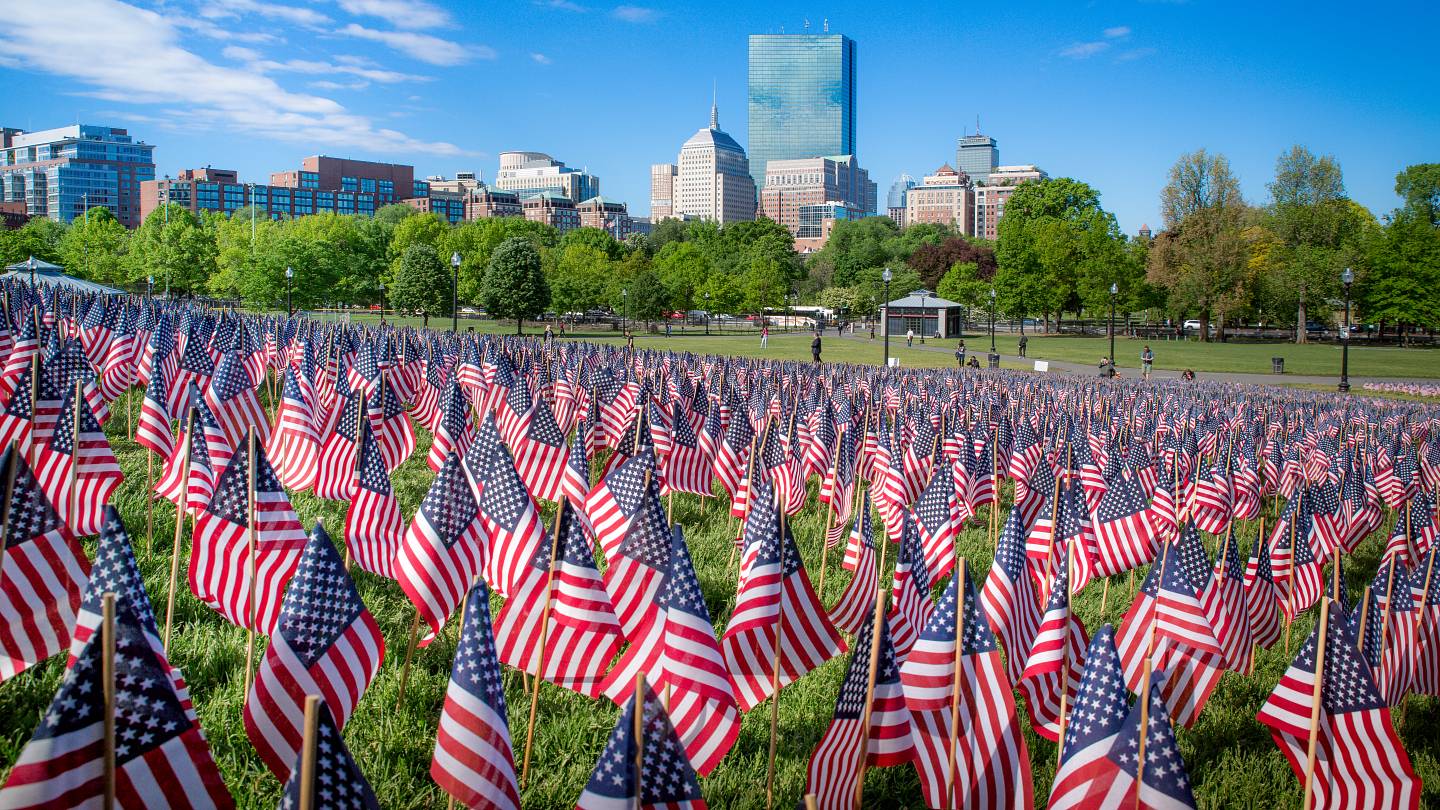

Memorial Day and Veterans Day both appear on the American calendar wearing red, white, and blue. Both involve flags, military ceremonies, speeches, and heartfelt tributes. Both may also arrive with a parade and at least one neighborhood grill working overtime.
Yet these two federal holidays have different purposes. Memorial Day honors U.S. military personnel who died while serving the country. Veterans Day honors everyone who served in the U.S. Armed Forces, with a particular emphasis on thanking living veterans. That distinction may be easy to summarize, but understanding the history and meaning behind it makes each observance far more personal.
Memorial Day vs. Veterans Day at a Glance
| Feature | Memorial Day | Veterans Day |
|---|---|---|
| Whom it honors | Military personnel who died while serving the United States | All who served in the U.S. Armed Forces, especially living veterans |
| Date | Last Monday in May | November 11 |
| Original name | Decoration Day | Armistice Day |
| Historical origin | Civil War remembrance traditions | The end of World War I fighting |
| Typical tone | Solemn remembrance and mourning | Gratitude, recognition, and celebration of service |
| Common observances | Cemetery visits, wreaths, flags on graves, moments of silence | Parades, ceremonies, veteran recognition events, community meals |
What Is Memorial Day?
Memorial Day is the nation’s principal day for remembering service members who died while serving in the U.S. military. The wording matters. The holiday is not simply a general appreciation day for the military, and it is not intended primarily to recognize every deceased person who once wore a uniform. Its central purpose is to honor those whose lives ended during their military service.
That makes Memorial Day a day of national mourning as well as gratitude. Families may remember a loved one whose chair is permanently empty. Communities may read the names of local service members who never returned home. Visitors may leave flowers at a national cemetery or stand quietly before a memorial wall. The observance asks Americans to consider not only what was gained through military service, but also what was lost.
Why Is Memorial Day on a Monday?
Memorial Day is observed on the last Monday in May, so its calendar date changes from year to year. The Monday schedule came from the Uniform Monday Holiday Act, which moved several federal observances to Mondays and created predictable three-day weekends.
The long weekend is convenient, but convenience can sometimes overshadow meaning. Beaches, road trips, furniture sales, and backyard cookouts are not forbidden. Enjoying the freedoms of ordinary life is not disrespectful. The key is to make room for remembrance instead of treating the holiday as nothing more than summer’s opening ceremony.
What Is Veterans Day?
Veterans Day, observed on November 11, recognizes people who have served in the U.S. Army, Navy, Air Force, Marine Corps, Coast Guard, or Space Force. It includes those who served during war and peace, in combat and noncombat positions, and for long careers or shorter periods of honorable service.
Veterans Day can include remembrance of veterans who have died, but its distinguishing purpose is to honor and thank the broader veteran populationparticularly those who are still living. That is why Veterans Day celebrations often include school programs, free community meals, parades, public recognition, and conversations with veterans about their experiences.
Is It “Veteran’s Day” or “Veterans Day”?
The official spelling is Veterans Day, without an apostrophe. It is not a day belonging to one veteran, which would be “Veteran’s Day,” or even a day owned by a group of veterans, which would be “Veterans’ Day.” It is a day established to honor veterans. English punctuation has entered the formation, saluted, and received its orders.
The History of Memorial Day
Memorial Day developed from Civil War-era traditions of decorating soldiers’ graves with flowers, flags, and other tributes. Numerous American communities held early remembrance ceremonies, and historians continue to recognize that the holiday’s origins were broader and more complicated than a single event in a single town.
A major national milestone came in 1868. General John A. Logan, leader of the Grand Army of the Republic, issued an order calling for May 30 to be set aside for decorating the graves of those who died during the Civil War. A large ceremony took place at Arlington National Cemetery, where flowers were placed on both Union and Confederate graves.
The observance was widely known as Decoration Day. After World War I, its scope expanded to remember Americans who died in all U.S. wars, not only the Civil War. “Memorial Day” gradually became the standard name, and the holiday eventually moved from May 30 to the last Monday in May.
The History of Veterans Day
Veterans Day began with the end of World War I. Major fighting stopped on November 11, 1918, when an armistice took effect at the eleventh hour of the eleventh day of the eleventh month. President Woodrow Wilson commemorated the first anniversary in 1919 as Armistice Day.
Armistice Day initially focused on World War I. After the United States fought in World War II and the Korean War, however, veterans’ organizations encouraged the country to broaden the observance. In 1954, the holiday’s name was changed to Veterans Day so it could honor American veterans from all periods of service.
The holiday briefly wandered away from November 11 when federal calendar reforms moved it to an October Monday. The change proved unpopular. President Gerald Ford signed legislation restoring the traditional date, and Veterans Day returned permanently to November 11 in 1978. When November 11 falls on a weekend, federal offices may observe the holiday on a nearby weekday, but the historical date remains November 11.
How the Tone of Each Holiday Differs
The easiest way to understand the emotional difference is to think of Memorial Day as a time of remembrance and Veterans Day as a time of recognition.
Memorial Day Is Primarily Solemn
Memorial Day ceremonies commonly feature wreath laying, the playing of “Taps,” cemetery visits, readings of the fallen, and periods of silence. The atmosphere is often reflective because the holiday centers on lives lost and families left behind.
That does not mean Americans must remain gloomy from sunrise to bedtime. A family can attend a ceremony in the morning and enjoy a picnic in the afternoon. The point is to understand why the day exists and to pause before reaching for the second cheeseburger.
Veterans Day Is More Celebratory
Veterans Day events tend to emphasize appreciation. Communities organize parades, schools invite veterans to speak, and businesses may offer meals or discounts. The national ceremony at Arlington National Cemetery begins with a wreath laying at the Tomb of the Unknown Soldier and continues with a program honoring those who served.
The tone can still be serious. Military service may involve trauma, injury, family separation, and lasting sacrifice. Nevertheless, the holiday generally creates an opportunity to recognize veterans directly and let them know that their service matters.
Memorial Day Traditions and Symbols
Flags at Half-Staff Until Noon
Memorial Day has a distinctive flag tradition. The American flag is flown at half-staff from sunrise until noon and then raised to full-staff for the rest of the day. The morning position symbolizes mourning for those who died. Raising the flag at noon represents the nation’s resolve to continue in their memory.
Veterans Day does not carry the same automatic nationwide half-staff rule. Unless another proclamation is in effect, the flag is generally displayed at full-staff on Veterans Day as a symbol of appreciation and national pride.
The National Moment of Remembrance
At 3:00 p.m. local time on Memorial Day, Americans are encouraged to pause for one minute during the National Moment of Remembrance. You do not need to be at a monument or formal ceremony. You can pause at home, at a ballpark, beside a lake, or next to a grill that suddenly requires sixty seconds of very respectful supervision.
Flowers, Flags, and Red Poppies
Volunteers often place American flags at military graves before Memorial Day. Visitors leave flowers and wreaths at cemeteries and memorials. Red poppies, inspired by the World War I poem “In Flanders Fields,” have also become symbols of remembrance. The Friday before Memorial Day is recognized by the American Legion Family as National Poppy Day.
Respectful Ways to Observe Each Holiday
Ways to Observe Memorial Day
- Attend a local remembrance ceremony or wreath laying.
- Visit a national, state, or local veterans cemetery.
- Learn the story of a service member who died while serving.
- Pause at 3:00 p.m. for the National Moment of Remembrance.
- Support a Gold Star family or an organization serving surviving military families.
- Display the American flag according to Memorial Day protocol.
- Enjoy family activities while acknowledging the holiday’s purpose.
Ways to Observe Veterans Day
- Thank a veteran you know in a sincere, personal way.
- Attend a parade, school program, or community ceremony.
- Ask a veteran whether they would like to share something about their service.
- Volunteer with a reputable veterans’ organization.
- Support veteran-owned businesses.
- Help veterans access employment, health care, housing, or educational resources.
- Listen without pressuring anyone to discuss combat or traumatic events.
What Should You Say on Memorial Day and Veterans Day?
On Veterans Day, saying “Happy Veterans Day” or “Thank you for your service” is generally appropriate. A more personal message may feel warmer: “I appreciate what you did,” “Thank you for serving,” or “I’m glad our community is recognizing you today.”
Memorial Day requires more sensitivity. Some people do not object to “Happy Memorial Day,” while others feel that “happy” clashes with a day centered on military deaths. Alternatives include:
- “I hope you have a meaningful Memorial Day.”
- “We remember those who gave their lives in service.”
- “Thinking of the fallen and their families today.”
- “May their service and sacrifice never be forgotten.”
When speaking with someone who lost a loved one in military service, simple acknowledgment is often more meaningful than a grand speech. Using the fallen service member’s name can be especially powerful. There is no need to produce a movie monologue complete with imaginary violins. Honest words are enough.
Where Does Armed Forces Day Fit In?
A third military observance helps complete the picture. Armed Forces Day, held on the third Saturday in May, primarily honors people currently serving in the U.S. military.
A useful memory guide is:
- Memorial Day: Honor those who died while serving.
- Veterans Day: Honor all who served, especially living veterans.
- Armed Forces Day: Honor those currently serving.
The categories may overlap in real families and communities, but the central purpose of each observance remains distinct.
Common Misunderstandings
“Memorial Day Honors Everyone Who Has Ever Served”
That description is too broad. Memorial Day specifically centers on people who died while serving the country. Veterans Day is the broader observance for everyone who served.
“Veterans Day Is Only for Combat Veterans”
Veterans Day honors eligible veterans whether they served in combat or in peacetime. Military readiness depends on thousands of occupations, many of which never appear in an action movie but are considerably more useful than dramatic slow-motion walking.
“You Cannot Have Fun on Memorial Day”
Respect does not require canceling every picnic. Americans can enjoy the weekend while still attending a ceremony, sharing a fallen service member’s story, displaying the flag properly, or pausing at 3:00 p.m. The problem is not recreation; it is forgetting.
“Veterans Day and Memorial Day Are Interchangeable”
Using the names interchangeably can unintentionally erase the people each day is designed to recognize. Knowing the difference allows a message, event, classroom lesson, or marketing campaign to match the occasion.
Experiences That Make the Difference Feel Real
The following scenes are composite examples based on common community and military-family experiences. They are included to illustrate how the two holidays can feel different in everyday life.
A Memorial Day Morning at a Small-Town Cemetery
A family arrives at a local cemetery shortly before a Memorial Day ceremony. Children carry small flags while volunteers straighten markers and brush grass from engraved names. Near the front stands an older woman holding a photograph of her brother in uniform. He was young in the pictureso young that one of the children quietly asks whether he had still been in school.
The ceremony begins with a prayer, followed by a reading of local service members who died while on duty. Some names are connected to wars remembered in history books. Others belong to recent conflicts that still feel close enough to touch. When “Taps” plays, conversations stop, hats come off, and the cemetery becomes remarkably still.
Later, the family goes home for lunch. There is laughter, watermelon, and an argument about whether the burgers are done. Yet the children now understand that Memorial Day is not simply the day the community pool opens. The fun continues, but remembrance has been given its proper place.
A Veterans Day Assembly at a School
In November, the same children attend a Veterans Day program in their school gym. Veterans from the community sit in the front row. One served aboard a Navy ship. Another worked as an Army mechanic. A third spent years in the Air Force managing communications systems. Their experiences are different, but each raised a hand and accepted the obligations of military service.
Students sing patriotic songs and present handwritten cards. One veteran smiles when a child asks whether military food is really as bad as people say. The answer begins with, “Well, that depends on how hungry you are,” and the room laughs.
The assembly is respectful, but it feels different from the cemetery ceremony. The veterans can hear the applause. They can answer questions, tell stories, and see that their service is remembered. Veterans Day gives the community a chance to express gratitude while the people being honored are present to receive it.
A Family That Observes Both Days
In another family, a grandfather served for more than twenty years and returned home. His closest friend from the military did not. On Veterans Day, the family takes the grandfather to breakfast, listens to stories about his assignments, and thanks him for years of service that required frequent moves and long separations.
On Memorial Day, the grandfather brings out a photograph of his friend. He talks less about battles and more about personality: the terrible jokes, the borrowed tools that were never returned, and the plan they once made to open a fishing shop after leaving the military.
The family realizes that the two holidays are linked but not identical. Veterans Day recognizes the grandfather’s completed service and the life he built afterward. Memorial Day preserves the memory of the friend who never had that opportunity. One day says, “Thank you for serving.” The other says, “We remember what your service cost.”
Conclusion
The difference between Memorial Day and Veterans Day comes down to whom the nation is honoring. Memorial Day remembers U.S. military personnel who died while serving. Veterans Day recognizes all who served in the Armed Forces, with special attention given to living veterans who can receive the nation’s thanks directly.
Knowing the distinction does not require memorizing a complicated history exam. Remember three ideas: Memorial Day is for the fallen, Veterans Day is for all veterans, and Armed Forces Day is for those currently serving.
Once that difference is clear, each holiday becomes more meaningful. The right words become easier to choose, ceremonies make more sense, and the calendar stops looking like it accidentally scheduled the same military holiday twice.