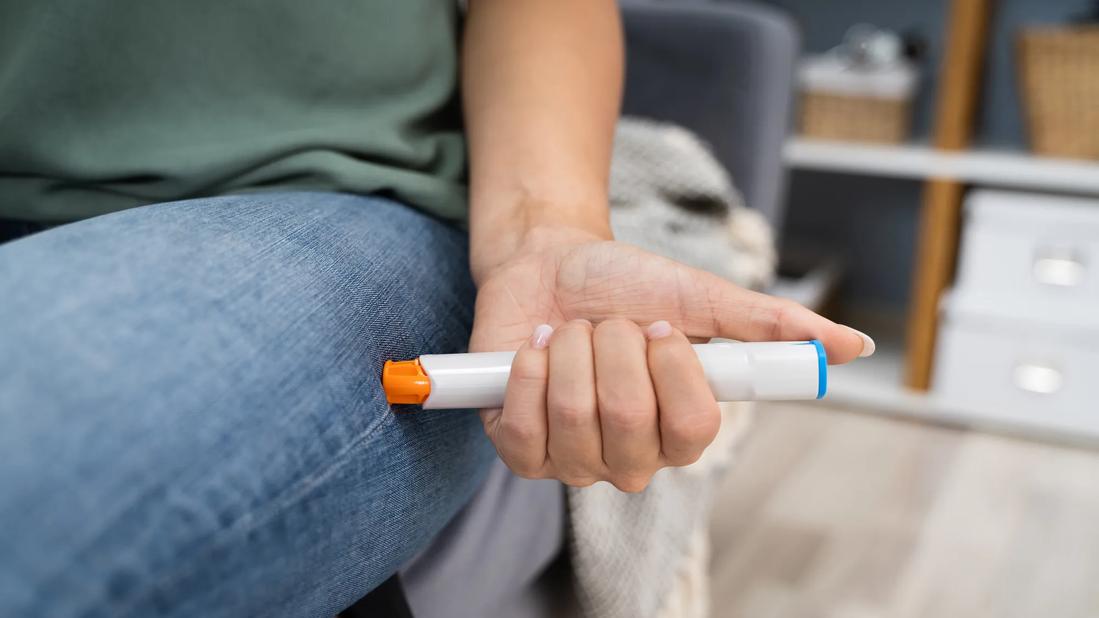

For years, “EpiPen” became the household shorthand for emergency epinephrine, much like “Band-Aid” became the word for a small adhesive bandage. But EpiPen is a brand, not the only way to receive epinephrine during a life-threatening allergic reaction.
Today, EpiPen alternatives include generic epinephrine auto-injectors, compact voice-guided devices, manual prefilled syringes, and an FDA-approved epinephrine nasal spray. They all aim to solve the same urgent problem: delivering epinephrine quickly when anaphylaxis occurs.
The best choice is not necessarily the fanciest, smallest, or least expensive device. It is the one with the correct dose that you and the people around you can recognize, carry, and use without hesitation. During an allergic emergency, nobody wants to pause for an unplanned episode of “Which end goes where?”
What Counts as an EpiPen Alternative?
A true EpiPen alternative is another prescription product designed to deliver epinephrine for emergency treatment of a severe allergic reaction, including anaphylaxis. The active medication is still epinephrine, also called adrenaline. What changes is the brand, dose, device design, administration route, or combination of these features.
Current U.S. options may include:
- Authorized generic versions of EpiPen and EpiPen Jr
- FDA-approved generic epinephrine auto-injectors
- Auvi-Q voice-guided auto-injectors
- Generic versions of the Adrenaclick auto-injector
- Symjepi prefilled epinephrine syringes
- Neffy epinephrine nasal spray
Availability, insurance coverage, pharmacy stock, and manufacturer programs can change. A prescription written only as “epinephrine auto-injector” may also be filled with a device that works differently from the one you practiced with. Always inspect the product at the pharmacy counter rather than discovering the surprise during an actual emergency.
Quick Comparison of EpiPen Alternatives
| Option | Delivery method | Available strengths | Notable feature |
|---|---|---|---|
| Authorized generic EpiPen | Automatic thigh injection | 0.15 mg and 0.3 mg | Similar device and instructions to branded EpiPen |
| Teva generic | Automatic thigh injection | 0.15 mg and 0.3 mg | FDA-approved generic with its own labeling and trainer |
| Auvi-Q | Automatic thigh injection | 0.1 mg, 0.15 mg, and 0.3 mg | Voice instructions, lights, compact shape, retracting needle |
| Generic Adrenaclick | Automatic thigh injection | 0.15 mg and 0.3 mg | Different cap-removal and activation steps |
| Symjepi | Manual thigh injection | 0.15 mg and 0.3 mg | Slim prefilled syringe rather than an auto-injector |
| Neffy | Nasal spray | 1 mg and 2 mg | Needle-free epinephrine for eligible patients |
1. Authorized Generic EpiPen
An authorized generic is marketed without the EpiPen brand name but is produced under the original product’s approved application. It uses the familiar automatic injection design and is available in the usual 0.15 mg and 0.3 mg strengths.
The 0.15 mg version is generally intended for patients weighing about 33 to 66 pounds, or 15 to 30 kilograms. The 0.3 mg version is intended for those weighing at least 66 pounds, or 30 kilograms. The device is pressed firmly against the middle of the outer thigh and may be administered through clothing when necessary.
Why people choose it
This alternative can make sense when someone already knows how to use an EpiPen-style device but wants a potentially less expensive version. Familiarity is valuable. In an emergency, muscle memory is a much better companion than improvisational theater.
Possible disadvantages
Pricing depends heavily on insurance and pharmacy arrangements. The generic may still be expensive for some patients, and its cylindrical shape is larger than certain pocket-friendly alternatives.
2. Teva Generic Epinephrine Auto-Injector
Teva markets an FDA-approved generic epinephrine auto-injector in 0.15 mg and 0.3 mg strengths. Its instructions involve removing a cap and safety release, placing the orange end against the outer thigh, pushing until it clicks, and holding it in place for the labeled amount of time.
The 0.15 mg strength is labeled for patients weighing approximately 15 to 30 kilograms, while the 0.3 mg strength is for those weighing at least 30 kilograms. The device is single-use and can be administered through clothing if needed.
Why people choose it
It provides another widely recognized auto-injector option and may be preferred by an insurance plan. Trainer devices and instructional materials can help families, teachers, coworkers, and caregivers practice safely.
What to remember
Do not assume every cylindrical epinephrine injector works exactly like every other one. Read the instructions supplied with the product you actually receive and practice with its matching trainer.
3. Auvi-Q
Auvi-Q is a compact, rectangular epinephrine auto-injector that provides electronic voice instructions and visual cues during use. It also has an automatically retracting needle. These features may be reassuring for caregivers who worry that panic will turn a three-step procedure into a 14-step mystery.
Auvi-Q is available in three strengths:
- 0.1 mg: generally for children weighing 16.5 to 33 pounds, or 7.5 to 15 kilograms
- 0.15 mg: generally for patients weighing 33 to 66 pounds, or 15 to 30 kilograms
- 0.3 mg: generally for patients weighing at least 66 pounds, or 30 kilograms
The 0.1 mg option is especially notable because many other consumer epinephrine devices begin at 0.15 mg. Auvi-Q’s current label lists all three strengths, and pediatric guidance recognizes the 0.1 mg device for appropriately selected infants and toddlers.
Why people choose it
The voice guidance, flat shape, retracting needle, and lower-dose option can be important advantages. It may be easier to carry in a pocket or small bag than a traditional tube-shaped auto-injector.
Possible disadvantages
Coverage and out-of-pocket cost vary. The electronic instructions are helpful, but users should still practice beforehand. Anaphylaxis is not an ideal time to meet your medical device for the first time.
4. Generic Adrenaclick Epinephrine Auto-Injector
Generic versions of the Adrenaclick auto-injector may be available in 0.15 mg and 0.3 mg strengths. Although these products deliver epinephrine into the outer thigh, their operating steps differ from EpiPen-style injectors. Some versions require removal of two caps before the device is activated.
That difference matters. A person trained only on EpiPen should not automatically be considered trained on an Adrenaclick-style generic. FARE lists the authorized generic of Adrenaclick among U.S. epinephrine device options and emphasizes keeping two devices together in case another dose is needed.
Who may prefer it
This option may be attractive when it is covered by insurance, locally available, and familiar to the patient. The deciding factor should be confident usenot whether the device won a beauty contest in the pharmacy aisle.
5. Symjepi Prefilled Syringe
Symjepi contains a single premeasured dose of epinephrine in a prefilled syringe. It is not an auto-injector. The user removes the cap, inserts the needle into the outer thigh, and manually presses the plunger.
Symjepi has been approved in 0.15 mg and 0.3 mg strengths. Its compact, slim format may be convenient, but manual administration requires comfort with seeing and inserting a needle. The FDA-approved instructions identify it as a disposable, single-dose prefilled syringe and permit a second device when symptoms continue or recur.
Who might consider it
A trained adult who prefers a smaller device and feels comfortable performing a manual injection may find Symjepi suitable. It may be less appealing for young children, needle-averse users, or caregivers who want automatic needle insertion.
Pharmacy availability can be inconsistent, so patients should confirm that replacement devices can be obtained before making Symjepi their primary emergency option.
6. Neffy Epinephrine Nasal Spray
Neffy is the first FDA-approved epinephrine nasal spray for severe allergic reactions, including anaphylaxis. It is needle-free and administered as one spray into one nostril.
The FDA first approved neffy in August 2024 for adults and pediatric patients weighing at least 30 kilograms. In March 2025, the indication was expanded to include children ages four and older weighing 15 to less than 30 kilograms.
Current weight-based dosing is:
- Neffy 1 mg: ages four and older weighing 15 to less than 30 kilograms, or approximately 33 to less than 66 pounds
- Neffy 2 mg: patients weighing at least 30 kilograms, or approximately 66 pounds
If symptoms do not improve or become worse, the FDA-approved instructions allow a second dose from a new device in the same nostril beginning five minutes after the first dose. Patients should have immediate access to two devices.
Why people choose it
Neffy avoids needles, is small enough to carry easily, and may reduce hesitation among people who fear injections. A delivery system that someone will actually use promptly can offer a major practical advantage over one that remains untouched in a backpack while everyone debates what to do.
Important nasal considerations
People with allergic rhinitis were included in clinical studies, but patients with certain structural or anatomical nasal conditions were not. Nasal polyps, previous nasal fractures, nasal injuries, or a history of nasal surgery may affect absorption. The prescribing information advises considering epinephrine delivered by another route for these patients.
Neffy should be sprayed straight into the nostril without angling toward the septum or outer nasal wall. Users should not sniff during or immediately after administration. It should not be primed before use.
How to Choose the Right EpiPen Alternative
Start with body weight and age
Epinephrine emergency devices deliver fixed doses. A product may look convenient but still be inappropriate if the available strength does not match the patient’s prescribed dose. Children should be weighed periodically because crossing a dosing threshold may require a new prescription.
Consider who will administer it
A confident adult may handle a manual syringe without difficulty. A grandparent, babysitter, teacher, or frightened teenager may do better with an automatic injector or voice-guided device. Needle fear may make a nasal spray more acceptable, provided the patient meets its age, weight, and nasal-health requirements.
Compare real costs, not list prices
Ask the insurer which products are on its formulary and compare the final pharmacy price. Manufacturer assistance, discount programs, deductibles, and prior-authorization rules can produce dramatically different costs for different families.
Never switch products solely because of a low advertised price without confirming the dose, expiration date, pharmacy source, and device instructions.
Check school and workplace procedures
A school nurse may be familiar with several devices, but teachers, coaches, restaurant coworkers, and relatives may not be. Update the patient’s emergency action plan whenever the prescribed product changes. Replace old instruction sheets and supply the correct trainer when one is available.
Carry two doses
A second dose may be needed if symptoms continue, worsen, or return. A device can also be dropped, misfired, damaged, or administered incorrectly. Allergy organizations and product instructions commonly recommend having two doses immediately available.
What Is Not an EpiPen Alternative?
Diphenhydramine, cetirizine, inhaled albuterol, corticosteroids, and acid-reducing antihistamines are not substitutes for emergency epinephrine. They may reduce certain symptoms, but they do not reliably stop anaphylaxis.
Likewise, over-the-counter epinephrine inhalers intended for temporary relief of mild asthma symptoms should not be used as an anaphylaxis treatment. The medication, device, route, and approved purpose are different.
For suspected anaphylaxis, use the prescribed epinephrine product promptly according to the patient’s emergency plan. Do not wait for an antihistamine to “kick in” while breathing, circulation, or throat symptoms deteriorate.
Storage and Maintenance Tips
Most epinephrine injection devices should be kept at controlled room temperature, protected from light, and away from extreme heat or cold. A vehicle glove compartment is not a medicine cabinet; in summer, it is closer to a small oven with cup holders.
Check injection devices regularly. Replace them when the solution becomes cloudy, develops particles, or changes to a pinkish or brown color. Do not refrigerate or freeze EpiPen-style auto-injectors.
Neffy should be stored at room temperature and can tolerate labeled temperature excursions up to 122°F, but it must not be frozen. If a neffy device is frozen during an emergency, it may not deliver the medication, and the patient should seek emergency treatment without waiting for it to thaw.
Set expiration reminders several months in advance. Confirm that devices are present in all approved locations, such as a home emergency kit, work bag, school health office, or travel bag. Epinephrine left on the kitchen counter does not provide much protection during a restaurant meal across town.
Experience-Based Lessons From Using EpiPen Alternatives
The following scenarios are composites based on common patient and caregiver experiences. They are not presented as personal medical histories and should not replace individualized medical advice.
The family that switched devices but forgot to retrain everyone
A family had used EpiPen-style auto-injectors for years before their insurance began covering an Adrenaclick-style generic. The prescription was correct and the medication was effective, but the new device had different preparation steps. The parents read the instructions; the babysitter and grandparents did not.
During a routine visit, one grandparent tried the trainer and instinctively followed the old technique. That harmless practice mistake revealed a serious gap. The family scheduled a ten-minute training session, placed illustrated instructions in the emergency bag, and practiced again several months later.
The lesson was simple: changing the brand can also change the choreography. Everyone likely to administer epinephrine needs to practice with the exact device being carried.
The teenager who actually carried the smaller option
Another common challenge is not knowing how to administer epinephrineit is convincing a teenager to carry it. A bulky case may be left in a locker, vehicle, or bedroom because it does not fit comfortably in everyday clothing.
After discussing options with an allergist, one family selected a more compact device. The teenager began keeping both prescribed doses in a small waist pack. The medical advantage was not that the new device contained “better” epinephrine. It was that the medicine was finally present when needed.
This experience highlights an underrated selection criterion: portability. The most technically impressive emergency medicine cannot help when it is 20 miles away beside a gaming controller.
The caregiver who preferred voice guidance
A caregiver responsible for a young child understood the allergy action plan but worried about freezing during an emergency. Practicing with a voice-guided Auvi-Q trainer made the process feel manageable. The spoken prompts did not replace training, but they reduced uncertainty about whether each step had been completed.
The family also appreciated having a 0.1 mg option prescribed for the child’s weight. As the child grew, the clinician monitored weight and later changed the dose. This avoided the common mistake of treating the original prescription as permanent equipment rather than a weight-dependent medication.
The adult whose needle anxiety caused dangerous hesitation
Some adults carry an auto-injector faithfully but hesitate when symptoms begin because they fear the needle or worry that epinephrine will cause harm. For an eligible patient without a concerning nasal condition, a prescribed nasal epinephrine option may reduce this psychological barrier.
However, switching to a spray still requires preparation. The user must know not to prime it, how to position it, when a second dose may be needed, and where the second device is stored. Needle-free does not mean instruction-free.
The travel bag audit
One of the most useful habits reported by experienced allergy families is a pre-travel “epinephrine audit.” Before leaving, they check the number of doses, expiration dates, appearance of injectable solutions, action-plan copies, storage conditions, and whether companions know where the medicine is located.
This routine often uncovers expired devices, separated two-packs, or medication buried beneath checked luggage. The audit takes only a few minutes and is considerably less stressful than searching through three suitcases while someone is developing anaphylaxis.
Conclusion
EpiPen remains an established emergency epinephrine product, but it is no longer the only practical choice. Generic auto-injectors can provide familiar and potentially more affordable options. Auvi-Q offers voice guidance and a 0.1 mg strength for appropriately selected small children. Symjepi provides a compact manual syringe, while neffy gives eligible patients a needle-free nasal alternative.
The right product depends on dose, weight, age, nasal anatomy, manual ability, insurance coverage, portability, and caregiver confidence. Whichever option is prescribed, carry two doses, practice with the correct device, monitor expiration and storage conditions, and follow a personalized anaphylaxis emergency plan.