
At 1:23 a.m. on April 26, 1986, a safety experiment at the Chernobyl Nuclear Power Plant became a brutal demonstration of how engineering weaknesses, confused procedures, poor communication, and political secrecy can combine into catastrophe. Reactor No. 4 did not simply malfunction. Its power rose uncontrollably, explosions tore open the building, and radioactive material escaped into the atmosphere.
Thirty-five years later, the initials RBMK still carried unusual weight. They represented a powerful Soviet reactor design, an industrial success story that went terribly wrong, and one of the most important case studies in the history of nuclear safety. The technology was not a cartoonishly evil machine waiting to explode. It was something more instructive: a productive system with serious vulnerabilities that were poorly disclosed and dangerously managed.
Understanding the Soviet RBMK reactor therefore requires more than repeating that “operators made mistakes.” The deeper story involves neutron physics, graphite, boiling water, unusual control rods, institutional secrecy, and a safety culture that treated inconvenient information like an office memo everyone hoped somebody else would answer.
What Was an RBMK Reactor?
RBMK is derived from the Russian phrase meaning high-power channel-type reactor. Developed by the Soviet Union, the design used graphite to moderate, or slow, neutrons while ordinary light water flowed through separate pressure channels to cool the uranium fuel.
This arrangement differed from most commercial reactors in the United States. In a typical pressurized-water reactor, the fuel sits inside one enormous steel pressure vessel. An RBMK instead contained more than 1,600 individual fuel channels running vertically through a huge graphite stack. Each channel could be serviced separately, allowing fuel to be replaced while the reactor remained online.
The standard RBMK-1000 could generate roughly 1,000 megawatts of electricity. That was enough to supply a major city, which made the design extremely attractive to a Soviet economy hungry for large blocks of power.
Why Soviet Planners Liked the Design
The RBMK offered several practical advantages. It could use relatively low-enriched uranium, did not require manufacturing one gigantic pressure vessel, and could be assembled largely from components produced within the Soviet industrial system. Its channel design also permitted online refueling, reducing costly shutdowns.
The reactor’s ancestry stretched back to graphite-moderated systems associated with plutonium production. The civilian RBMK was intended primarily to produce electricity, but its basic architecture reflected Soviet experience with large uranium-graphite reactors.
In other words, it was big, productive, and convenient. Unfortunately, “convenient” is not a synonym for “forgiving.”
How the RBMK Reactor Worked
Graphite Slowed the Neutrons
Nuclear fission releases fast-moving neutrons. Slowing those neutrons makes them more likely to split additional uranium atoms and continue the chain reaction. In the RBMK, a massive graphite structure performed that moderating job.
Water Removed the Heat
Water was pumped through pressure tubes containing the fuel. Heat from fission boiled part of the water into steam, which drove turbines and generated electricity. The steam was then condensed and circulated again.
Water also absorbed some neutrons. That detail became critically important. When liquid water turned into steam, it absorbed fewer neutrons. Because the graphite continued moderating neutrons even as the water boiled away, additional steam could increase reactivity under certain operating conditions.
The Dangerous Positive Void Coefficient
A steam bubble in reactor coolant is called a void. Many reactor designs are engineered so that creating more steam automatically reduces the nuclear reaction. That negative feedback helps stabilize the core.
The original RBMK could behave in the opposite way, especially at low power. More steam meant less neutron absorption. Less absorption meant greater reactivity. Greater reactivity produced more heat, which created more steam. Physics had constructed a feedback loop, and it was not the cheerful kind involving a customer-satisfaction survey.
This characteristic is known as a positive void coefficient. It did not mean every RBMK was constantly on the verge of exploding. It meant that certain unstable conditions could become worse very quickly unless operating limits and shutdown systems worked exactly as intended.
The Control Rod Problem
Control rods regulate a reactor by absorbing neutrons. In the original RBMK design, however, the rods included graphite displacers. When a fully withdrawn rod first entered the core, its graphite section displaced neutron-absorbing water before the main absorber section arrived.
For the first moments of insertion, the rod could therefore increase local reactivity instead of reducing it. Under normal conditions, that temporary effect might be manageable. In a severely unstable reactor with many rods withdrawn, it could be disastrous.
The rods also moved slowly compared with modern emergency-shutdown expectations. The reactor’s emergency stop button, known as AZ-5, was supposed to end the reaction. During the Chernobyl accident, pressing it helped trigger an enormous localized power surge before the absorber sections could fully enter the core. The emergency button was not a magic “undo” key. That night, it behaved more like the final domino.
What Happened on April 26, 1986?
Workers at Chernobyl Unit 4 were preparing the reactor for routine maintenance. They planned to conduct a test involving the turbine generators. The question sounded reasonable: if outside electrical power failed, could the spinning turbine continue supplying electricity to coolant pumps during the short delay before emergency diesel generators started?
The test had been attempted before without producing satisfactory results. On April 25, operators began lowering reactor power, but a request from the electrical grid delayed the shutdown. The reactor remained at partial power for hours, altering its internal conditions and complicating the later test.
The Reactor Fell to an Unstable Power Level
When the shutdown resumed, power dropped much lower than intended. The reactor experienced a buildup of xenon-135, a fission product that strongly absorbs neutrons. This phenomenon, called xenon poisoning, made it difficult to raise the power again.
Operators withdrew an excessive number of control rods in an attempt to recover power. The reactor eventually stabilized at a low level, but it was operating in a dangerous configuration with limited shutdown margin. Some automatic protections and systems were bypassed or placed in conditions that would not interrupt the test.
The Test Began
At approximately 1:23 a.m., steam to the turbine was reduced. As turbine speed fell, coolant-pump behavior changed. More water began turning into steam inside the core. Because of the RBMK’s positive void coefficient, the increasing steam content added reactivity rather than calming the reactor.
Power started rising. Operators pressed AZ-5 to shut the reactor down. The graphite displacers entered first, briefly increasing reactivity in parts of the already unstable core. Fuel channels ruptured, coolant flashed into steam, and violent explosions destroyed the reactor structure.
The exact physical sequence of every millisecond remains a subject of technical analysis, but the broad result is clear. The reactor was torn open. Hot fuel, graphite, structural material, and radioactive particles were ejected. Fires in the exposed core and surrounding buildings carried contamination high into the atmosphere.
Why the Accident Became So Severe
The Reactor Lacked Full-Pressure Containment
Many Western nuclear plants surround the reactor with a thick steel-and-concrete containment structure designed to limit radioactive releases during severe accidents. Chernobyl Unit 4 did not have a full-pressure containment building capable of enclosing an explosive core failure.
Once the reactor building was destroyed, the atmosphere had direct access to highly radioactive material. There was no final sealed barrier waiting to perform one last defensive job.
Operators Did Not Receive Complete Safety Information
The control-rod effect and the reactor’s low-power instability were not adequately communicated to plant personnel. Earlier RBMK incidents had revealed warning signs, but information moved poorly through the Soviet nuclear establishment. Design weaknesses were protected by secrecy, institutional prestige, and a belief that approved technology was fundamentally safe.
Modern investigations therefore reject the simplest version of the story, in which reckless operators alone caused the disaster. The crew violated procedures and made serious errors, but they were operating a reactor whose hidden characteristics made those errors far more dangerous.
The Safety Culture Was Deficient
The accident exposed failures extending beyond one control room. Designers, managers, regulators, and political authorities all operated within a system that discouraged questions and blurred responsibility. Procedures were incomplete, regulatory independence was weak, and technical criticism could become professionally hazardous.
A reactor may be built from graphite and steel, but safety is also built from habits: reporting problems, challenging assumptions, sharing data, and stopping work when conditions become uncertain.
The Immediate Human Cost
Two plant workers died in the immediate aftermath of the explosions. Firefighters and emergency personnel arrived without fully understanding that burning debris scattered around the site was intensely radioactive. Many wore ordinary protective clothing designed for smoke and heat, not severe radiation fields.
A total of 134 plant employees and emergency responders were diagnosed with acute radiation syndrome. Twenty-eight died within the first few months. Others experienced severe burns, bone-marrow damage, infections, and long-term health problems.
Pripyat, the nearby city built for plant employees and their families, was not evacuated until roughly 36 hours after the accident. Residents were told to take essential items for a temporary absence. Most never returned to live in their homes.
About 116,000 people were evacuated from affected areas during 1986, with many more relocated in subsequent years. Hundreds of thousands of military personnel, miners, engineers, medical workers, construction crews, and other “liquidators” participated in firefighting, decontamination, burial of contaminated materials, and construction of the first shelter over the destroyed reactor.
How the RBMK Design Changed After Chernobyl
The surviving RBMK reactors were not left in their original condition. Engineers modified control rods to eliminate the dangerous initial reactivity effect, added neutron absorbers, changed fuel enrichment, strengthened shutdown systems, and imposed stricter limits on low-power operation.
Operator training, instrumentation, emergency procedures, and international inspections also improved. The reactors remained unusual machines, but the combinations of conditions that destroyed Chernobyl Unit 4 became much more difficult to reproduce.
Several heavily modified RBMK reactors were still producing electricity in Russia at the 35-year anniversary. Their continued operation sometimes surprised the public, but closing large generating units overnight was economically and technically difficult. The post-accident strategy was therefore a mixture of extensive retrofits, monitoring, gradual retirement, and replacement with newer designs.
Chernobyl 35 Years Later
Workers rapidly built a concrete-and-steel shelter around Reactor 4 in 1986. Commonly called the sarcophagus, it reduced releases but was constructed under extreme conditions and was never intended as a permanent solution.
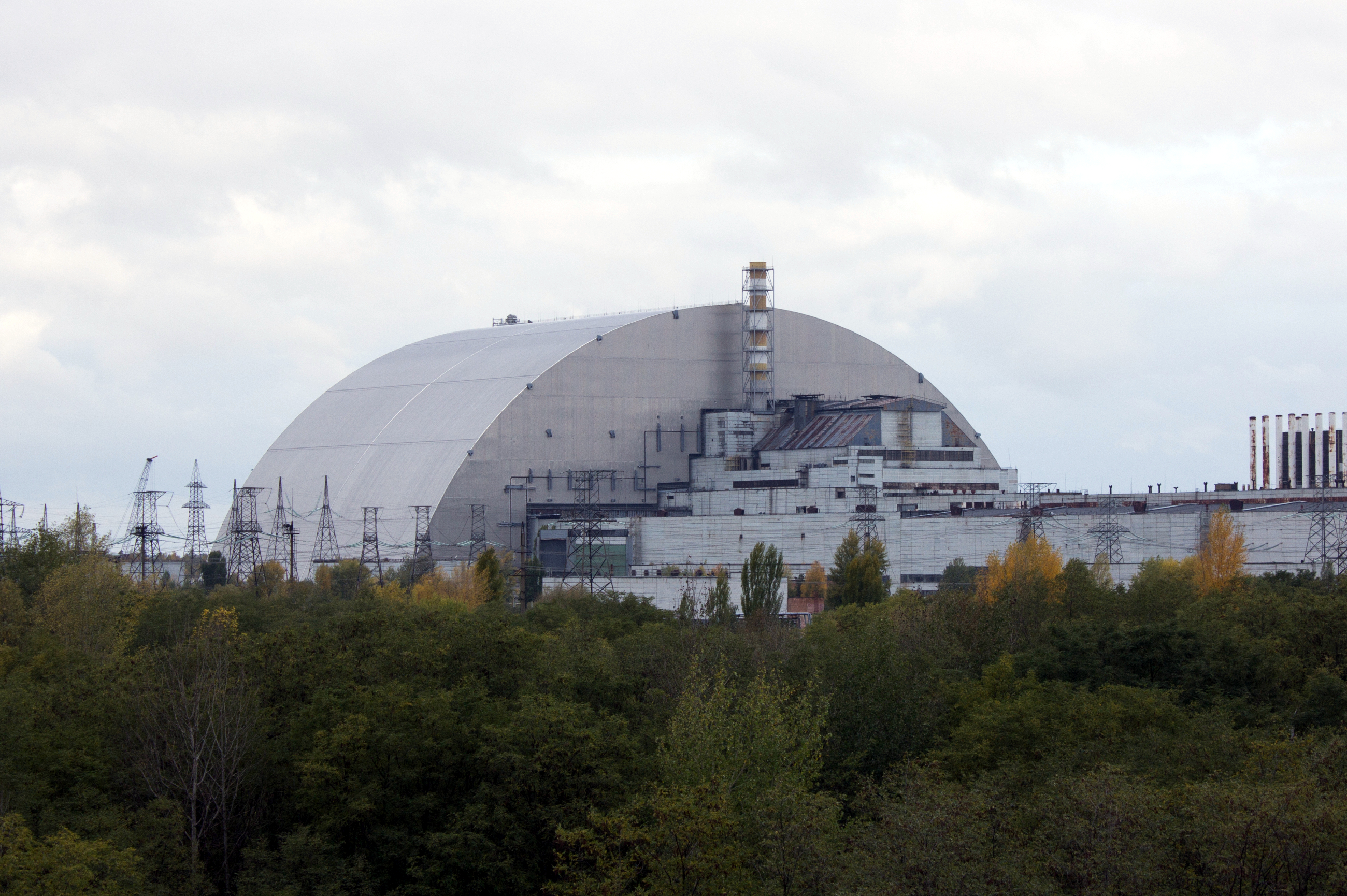
Decades later, an enormous steel arch known as the New Safe Confinement was assembled nearby and slid over the old shelter. Completed in the 2010s, it was designed for a service life of about 100 years. The structure limits the spread of radioactive dust and contains remotely operated cranes for dismantling unstable sections of the original building.
The arch is impressive, but it is not a giant lid that makes the problem disappear. Radioactive fuel-containing material remains inside. Engineers must monitor radiation, structural movement, moisture, dust, and neutron activity while planning work that may continue for generations.
The broader Chernobyl plant is also being decommissioned in stages. Preservation, safe enclosure, dismantling, waste processing, and environmental management extend the project well into the middle of the 21st century.
Health Effects and Scientific Evidence
Thyroid Cancer Became the Clearest Long-Term Effect
The accident released iodine-131, which can enter the body through inhalation or contaminated food. Children in affected regions were exposed partly through milk from cows that had eaten contaminated grass. Because the thyroid gland concentrates iodine, young people received especially significant thyroid doses.
Researchers later documented a clear increase in thyroid cancer among people exposed as children or adolescents. Fortunately, many of these cancers were treatable, but the medical, emotional, and economic burden remained substantial.
Iodine-131 decays quickly, with a half-life of about eight days. Cesium-137 lasts much longer, with a half-life of roughly 30 years. At the 35-year anniversary, environmental contamination had changed dramatically, but long-lived radionuclides had certainly not packed their bags and left.
Other Health Estimates Require Careful Language
Estimating the total number of cancer deaths caused by Chernobyl is difficult. High-dose effects among first responders are well documented. At lower doses, however, radiation-related cancers cannot usually be distinguished from cancers caused by other factors. Scientists must estimate small statistical increases across large populations, producing ranges rather than one universally accepted total.
Major health reviews have also emphasized psychological harm, forced relocation, fear of contamination, disrupted communities, stigma, and economic hardship. A radiation emergency can injure people without every injury appearing on a dosimeter.
What Scientists Learned About Later Generations
Research published around the 35th anniversary examined the children of exposed cleanup workers and evacuees. The study did not find an excess of inherited genetic mutations attributable to parental radiation exposure. That finding was reassuring, although it did not erase the health consequences experienced by directly exposed individuals.
Separate genomic research on post-Chernobyl thyroid tumors found radiation dose-related patterns of DNA damage. Together, these studies showed why decades of patient follow-up and biological research matter: dramatic assumptions are less useful than carefully collected evidence.
What Happened to Nature in the Exclusion Zone?
The Chernobyl Exclusion Zone has become an accidental ecological experiment. Wolves, deer, wild boar, birds, and other animals occupy landscapes from which most human activity disappeared. Some wildlife populations appear abundant because hunting, farming, road traffic, and urban development largely stopped.
That does not mean radiation is healthy for wildlife. Researchers have reported biological effects in highly contaminated locations, and results differ among species and study methods. The return of animals mainly demonstrates how strongly human land use affects ecosystems. Nature reclaimed the empty space, but it did not issue the reactor a certificate of innocence.
Experience-Based Reflections: Understanding Chernobyl Beyond the Diagrams
Technical diagrams make an RBMK look orderly. There are channels, pumps, separators, control rods, and arrows showing where water and steam should travel. Human accounts make the story feel very different. They describe ringing telephones, incomplete instrument readings, contradictory instructions, burning roofs, metallic tastes, exhausted medical teams, and buses arriving in a city where residents still expected to be home within a few days.
For engineers studying the accident, one of the most unsettling experiences is realizing that the control-room crew did not believe it was conducting a suicidal experiment. The workers thought they were completing an approved test on a reactor certified by respected institutions. Some knew conditions were unusual, but the full danger of the positive void coefficient and graphite-tipped control rods was not available to them in a useful form. This makes Chernobyl more relevant than a simple tale about foolishness. Competent people can make catastrophic decisions when the system gives them incomplete information and discourages skepticism.
Emergency responders experienced an entirely different reality. Firefighters arrived to confront visible flames, the kind of emergency they had trained to attack immediately. Radiation was invisible, and ordinary instincts encouraged them to move closer. Pieces of reactor material looked like rubble. Some responders handled debris or stood in intense radiation fields without knowing the dose they were receiving. Their courage is inseparable from the institutional failure that sent them into danger without adequate warning.
Medical workers faced patients whose symptoms could change rapidly. Treating severe radiation injury required managing burns, damaged bone marrow, infection risk, fluid loss, and psychological distress. Physicians also had to communicate with families while information remained uncertain and politically sensitive. Their experience illustrates why emergency medicine depends not only on equipment but also on honest, rapid communication.
For evacuated families, Chernobyl was less a reactor diagram than a broken timeline. Apartments, photographs, pets, gardens, schools, and ordinary routines were abandoned. People who expected a short trip became permanent migrants. Later compensation systems, health screenings, and relocation policies could not fully replace the experience of belonging to a place.
Visitors and workers at the site decades later encounter another kind of contradiction. Pripyat looks frozen, yet it is constantly changing. Buildings decay, trees push through pavement, paint peels from classrooms, and cleanup crews continue highly technical work nearby. The site is neither a museum nor an untouched wilderness. It is an active industrial decommissioning zone surrounded by the physical remains of interrupted lives.
Nuclear professionals often experience Chernobyl as a warning against organizational confidence. The reactor’s behavior was governed by physics, but the disaster developed through paperwork, hierarchy, assumptions, scheduling pressure, and secrecy. Every industry has its version of these ingredients. Few industries combine them with a core containing hundreds of tons of hot radioactive material.
The most useful emotional response is therefore not panic about all nuclear technology, nor the comforting claim that Chernobyl was merely a strange Soviet exception. It is disciplined humility. Complex systems must be designed for human error, unexpected combinations of events, and uncomfortable questions. When somebody says, “That failure cannot happen,” Chernobyl quietly suggests checking the calculations one more time.
Why the RBMK Story Still Matters
Chernobyl changed international nuclear safety by strengthening cooperation, emergency notification, reactor reviews, operator training, and the concept of safety culture. It also reminded engineers that defense in depth must include physical barriers, independent shutdown systems, reliable procedures, transparent reporting, and regulators capable of challenging powerful institutions.
The disaster should not be reduced to a slogan for or against nuclear energy. Its more valuable lesson is that technology cannot be separated from the organizations that design, regulate, operate, and explain it. A sophisticated machine inside a secretive and overconfident institution may be less safe than a simpler machine managed by people encouraged to report bad news.
Conclusion
Thirty-five years after the Chernobyl disaster, the Soviet RBMK reactor remained both an engineering achievement and a warning. It generated enormous amounts of electricity, supported industrial growth, and incorporated practical features such as online refueling. It also contained unstable low-power behavior, a dangerous control-rod design, weak containment, and vulnerabilities that were hidden or underestimated.
Reactor No. 4 was destroyed because design flaws, operator actions, inadequate procedures, and a deficient safety culture converged during one test. No single explanation is sufficient. That is precisely why the accident remains so important.
The ruined reactor now sits beneath a steel arch while specialists plan work extending far beyond one career or lifetime. Chernobyl’s longest lesson is not that humans should fear every complex technology. It is that complexity demands honesty, redundancy, curiosity, and the freedom to say, “Stopsomething is wrong.” Physics rarely negotiates, and it never reads the official press release.
Note: This article is an educational historical overview based on established technical investigations, public-health reviews, and documented experiences. The experience-based section does not claim firsthand participation in the Chernobyl response.