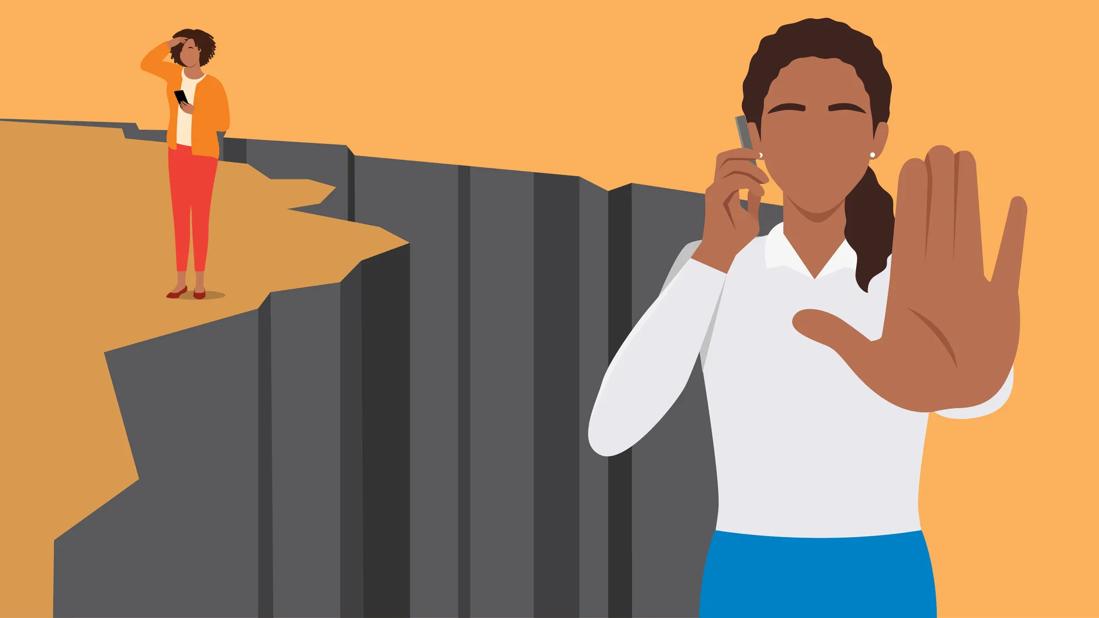

Going no-contact with a parent is one of those decisions people rarely make on a random Tuesday between coffee and email. It is usually the emotional equivalent of reaching for the fire extinguisher after years of smoke. By the time an adult child cuts off communication, there has often been a long history of pain, confusion, boundary violations, manipulation, or outright abuse. In other words, this is not usually about being “dramatic.” It is usually about survival, peace, or finally admitting that love alone cannot fix a relationship that keeps causing harm.
If you have ever wondered what it really means to go no-contact with a parent, the short version is this: it means ending direct communication in order to protect your mental, emotional, or physical well-being. But the real story is much more complicated. Family estrangement is rarely neat. It can come with relief, grief, guilt, freedom, anger, loneliness, and a dozen other emotions all trying to talk at once. This article breaks down what no-contact means, why people choose it, what the experience can feel like, and how to think about it with clarity instead of shame.
What Does “Go No-Contact” Actually Mean?
To go no-contact with a parent means intentionally ending communication and interaction with them. That can include phone calls, text messages, email, social media, visits, gifts, holiday gatherings, and messages passed through other relatives. For some people, it is a permanent decision. For others, it begins as a pause that later becomes a longer separation.
The key point is that no-contact is a boundary. It is not a magic spell. It does not instantly erase history, heal childhood wounds, or turn a nervous system into a spa playlist. It simply creates distance from a relationship that feels harmful, destabilizing, unsafe, or impossible to manage in a healthy way.
That also means no-contact is different from:
- Low contact: limiting calls, visits, or topics
- Gray rocking: responding in a bland, emotionally neutral way to reduce conflict
- Taking a timeout: stepping back temporarily after a major blowup
- Ordinary family tension: disagreements that, while painful, do not automatically require estrangement
In healthy families, conflict can be repaired. In unhealthy families, conflict often repeats, escalates, gets denied, or gets blamed on the person who dared to name it. That difference matters.
Why Someone Might Go No-Contact With a Parent
There is no one-size-fits-all reason, and that is part of what makes this subject so hard to explain to outsiders. People often want a clean headline. Real life usually gives you a messy folder instead. Still, there are common patterns.
1. Repeated Boundary Violations
Many adult children do not jump straight to no-contact. They start with requests: please call before coming over, please stop criticizing my spouse, please do not undermine my parenting, please do not scream at me, please stop sharing my private information with the whole family group chat. When those boundaries are ignored again and again, no-contact can become the final line rather than the first one.
2. Emotional, Verbal, Physical, Financial, or Sexual Abuse
Sometimes the issue is not merely “difficult family dynamics.” Sometimes it is abuse. A parent may use humiliation, intimidation, guilt, threats, stalking behavior, silent treatment, coercion, money as control, or violence. In those situations, no-contact is not cruel. It may be the safest option available. The same is true when a parent refuses accountability for serious past harm and continues harmful behavior in the present.
3. Chronic Manipulation and Control
Some parents do not relate to their adult children as separate adults. They relate to them as extensions of themselves, emotional dumping grounds, permanent employees in the family drama department, or supporting actors in a movie they never auditioned for. If every interaction leaves you anxious, guilty, cornered, or erased, distance may feel less like rejection and more like oxygen.
4. Protecting a Partner or Children
No-contact sometimes happens when the adult child realizes, “It is not just hurting me anymore.” A parent who insults your partner, shames your child, ignores household rules, or creates chaos in front of your family may force a decision. Plenty of people can tolerate too much for themselves. They become crystal clear only when the damage reaches the people they love most.
5. The Relationship Never Changes, No Matter How Hard You Try
This may be the most painful reason of all. Some adults go no-contact only after years of therapy, difficult conversations, carefully worded letters, family meetings, second chances, third chances, and enough “maybe this time will be different” to fill a storage unit. When nothing changes except your exhaustion, distance can become the only realistic form of self-respect left.
What No-Contact Is Not
Because the phrase gets tossed around online, it helps to be clear about what no-contact does not automatically mean.
It does not always mean you hate your parent. It does not mean you never loved them. It does not prove that you are unforgiving, selfish, or “brainwashed by therapy.” It does not mean you are perfect, either. It means that, in your judgment, continued contact is more harmful than helpful.
It also is not the same thing as trying to punish someone into changing. That approach usually backfires. If your real goal is to force a parent to finally become nurturing, remorseful, respectful, and emotionally mature on schedule, no-contact may leave you disappointed. It can create distance, but it cannot manufacture insight in someone who does not want it.
Signs Low Contact May No Longer Be Enough
Not every strained parent-child relationship needs total estrangement. But there are situations where low contact keeps turning into a revolving door of harm. You may be approaching that point if:
- You feel dread for days before every interaction
- You leave conversations shaky, ashamed, confused, or emotionally flattened
- Your parent repeatedly ignores reasonable limits
- They weaponize guilt, money, religion, culture, or illness to control you
- They pull other relatives in to pressure, monitor, or shame you
- Contact disrupts your work, sleep, parenting, partnership, or recovery
- You keep hoping for a healthy relationship, but all evidence points in the opposite direction
If every version of “less contact” still leaves you harmed, the issue may not be your communication style. The issue may be the relationship itself.
How To Prepare Before Going No-Contact With a Parent
If abuse or safety concerns are present, planning matters. No-contact can trigger retaliation in some families, especially where control has always been the point. Even in less extreme situations, practical preparation helps.
Get Clear on Your Goal
Ask yourself what you are trying to protect or restore. Peace? Safety? Emotional stability? Space to heal? Protection for your children? A clearer sense of self? Knowing your goal helps you stay grounded when guilt or pressure shows up later wearing a fake mustache and calling itself “family duty.”
Decide What No-Contact Means in Practice
Will you block calls and texts? Respond only through email? Skip holidays? Ask relatives not to relay messages? There is no universal template. Boundaries work better when they are specific enough to follow on hard days.
Think Through Safety and Logistics
If your parent has access to your home, finances, accounts, documents, or children, secure those areas first. Change passwords, review emergency contacts, update mailing details, and talk with trusted people who may need to know the plan. If you fear stalking, harassment, or violence, your safety plan needs to be more detailed, not more hopeful.
Build Support Before the Break
No-contact can feel lonely even when it is absolutely necessary. Tell a therapist, trusted friend, partner, sibling, support group, or mentor what you are doing. The goal is not to gather an applause committee. The goal is to have reality anchors when the emotional weather turns weird.
Decide Whether To Explain Yourself
Some people send a brief message. Others do not. If you choose to communicate, clarity beats drama. You do not need a ten-page legal brief with exhibits. A short statement can be enough: what behavior is unacceptable, what boundary you are setting, and what happens next. If explanation historically leads to more manipulation or danger, silence may be the safer route.
The Emotional Fallout: Relief and Grief Can Coexist
One of the strangest parts of going no-contact with a parent is that you can feel better and worse at the same time. Relief may hit first: better sleep, less dread, more mental space, fewer emotional ambushes. Then grief can roll in and rearrange the furniture.
You may grieve the parent you had, the parent you needed, and the parent you kept hoping might appear if you just explained yourself one more time in the exact perfect sentence that apparently unlocks human decency. Spoiler: that sentence may not exist.
Common feelings after going no-contact include:
- Relief
- Guilt
- Sadness
- Anger
- Numbness
- Second-guessing
- Loneliness during holidays and milestones
- Shame triggered by cultural or family expectations
None of these feelings automatically mean you made the wrong decision. They often mean the relationship mattered, the loss is real, and your body is adjusting to a new reality.
Can a No-Contact Relationship Ever Restart?
Sometimes, yes. Sometimes, no. Reconciliation is possible when there is real accountability, not just performative apology theater. A genuine repair usually involves changed behavior, respect for boundaries, willingness to hear the harm caused, and consistency over time. Not one emotional voicemail sent at 11:47 p.m. on a holiday weekend.
That said, reconciliation is not morally required. You are allowed to decide that a relationship has caused enough damage. You are allowed to need evidence, not promises. You are allowed to protect the life you built in the quiet that followed the chaos.
How To Heal After Going No-Contact With a Parent
No-contact can stop fresh harm, but it does not automatically heal old wounds. Recovery usually involves rebuilding the parts of yourself that were minimized, criticized, controlled, or ignored.
Work With a Therapist If You Can
A good therapist can help you sort out grief, trauma responses, guilt, family roles, and the question many people carry: “Was it really that bad?” That question is common, especially for adults raised in homes where reality was constantly minimized.
Create New Rituals
Holidays, birthdays, and Mother’s Day or Father’s Day can sting. Create your own traditions instead of waiting to be emotionally tackled by the calendar. Host brunch. Take a trip. Turn your phone off and make pancakes with an unreasonable amount of whipped cream. Stability is built through repetition.
Learn What Healthy Relationships Feel Like
If you grew up in chaos, calm may feel suspicious at first. Respect may feel oddly quiet. Healthy love does not usually require decoding hidden messages, bracing for insults, or earning basic kindness. That adjustment can take time.
Stop Explaining Yourself to Everyone
You do not owe every curious cousin, family friend, or holiday detective the whole story. A short answer is enough: “We are not in contact right now.” Privacy is not dishonesty. Sometimes it is healing with a lock on the door.
Real Experiences People Often Describe When Going No-Contact With a Parent
The following composite experiences reflect common themes many adults describe when they go no-contact with a parent. They are not one person’s story, but they are deeply familiar to many people who have lived through family estrangement.
One adult child says the hardest part was not blocking the number. The hardest part was accepting that every phone call followed the same script: criticism, guilt, denial, then a strange attempt at normal small talk as if none of it had happened. Once contact ended, there was relief, but also an eerie silence. She kept checking her phone out of habit, like her body had not yet learned the emergency was over.
Another person describes going low contact for years before finally choosing no-contact after becoming a parent. He could tolerate his mother mocking him, but the moment she began shaming his child and ignoring household rules, the situation changed. He says no-contact felt brutal at first, especially during holidays, but it also gave him something he had never had before: a home that felt emotionally predictable.
Someone else remembers the guilt more than the anger. She had been taught that “good children” always stay available, always forgive, always call back. When she stopped responding, extended family members called her selfish. For a while, she almost believed them. Therapy helped her understand that guilt is not always a sign you are doing something wrong. Sometimes it is a sign you were trained to abandon yourself.
Another adult child talks about how confusing it was to miss a parent who had caused real harm. He missed the occasional good moments, the jokes, the familiar routines, the version of his father who showed up in public and looked charming. He had to learn that missing someone does not mean access is safe. Love and distance can exist in the same sentence.
Many people also describe a delayed grief response. At first, they feel strong, decisive, even energized. Months later, sadness arrives unexpectedly in the cereal aisle, at a wedding, or while filling out medical forms that ask for “family history.” Estrangement can make ordinary life feel emotionally loaded in odd places. Healing often means learning to expect those waves without letting them drag you backward.
And then there are the stories of rebuilding. People describe making “chosen family,” learning to celebrate milestones without dread, setting boundaries in other relationships more quickly, and realizing that peace can feel unfamiliar before it feels normal. They talk about sleeping better. Laughing more. Not rehearsing imaginary arguments in the shower. Feeling less like a permanent defendant in a trial that never ended.
Perhaps the most common experience is this: almost nobody says the choice was easy, but many say the clarity that came afterward changed their lives. Not because no-contact solved everything, but because it stopped the ongoing injury long enough for healing to begin.
Final Thoughts
Going no-contact with a parent is not a trend, a buzzword, or an overreaction dressed in therapy language. It is usually a deeply painful decision made after repeated harm, failed repair, or the realization that access to you is not the same thing as entitlement to you. Sometimes the most loving thing you can do is keep trying. Sometimes the healthiest thing you can do is stop.
If you are weighing no-contact with a parent, the most important question is not, “Will everyone approve?” They probably will not. The better question is, “What protects my well-being, my safety, and my ability to live a stable life?” Start there. Stay honest. Get support. And remember: a boundary is not a betrayal just because someone else dislikes where you finally placed the fence.