
Planting flowers for bees is one of the rare gardening projects in which being a little messy, slightly lazy, and wildly enthusiastic all count as professional skills. A patch of native wildflowers, a pot of blooming herbs, or a border filled with coneflowers can become a miniature restaurant for bees, butterflies, moths, beetles, hummingbirds, and beneficial flies.
Pollinators move pollen between flowers, allowing plants to produce seeds and fruit. Approximately three-fourths of flowering plants and about 35 percent of global food crops depend to some degree on animal pollination. More than 3,500 native bee species also contribute to crop production in the United States. In other words, pollinators help put dinner on the table without ever requesting a tip.
However, the best flowers for bees and other pollinators are not identical in Maine, Arizona, Florida, or Oregon. Climate, soil, rainfall, elevation, and local wildlife all matter. Use this guide as a starting point, then prioritize species native to your region and suited to the conditions in your yard.
What Makes a Flower Good for Pollinators?
Accessible Nectar and Pollen
A flower may look spectacular to a person while offering almost nothing to an insect. Some highly modified ornamental varieties have extra petals that block access to nectar and pollen. Others have been bred primarily for color, size, or vase life, leaving their floral food resources somewhere on the cutting-room floor.
Single, open flowers are usually easier for bees, beetles, and flies to use than densely doubled blooms. Tubular flowers, meanwhile, can be valuable to long-tongued bees, butterflies, moths, and hummingbirds. A garden containing several flower shapes serves a wider range of visitors.
A Long Blooming Calendar
One glorious week of flowers is lovely, but pollinators need food for much longer. Early-emerging bees require spring pollen and nectar, summer colonies need dependable forage, and migrating or overwintering species benefit from late-season flowers.
A strong pollinator garden includes overlapping bloom periods from early spring through fall. Smithsonian Gardens notes that continuous flowering provides a more consistent food supply, while the U.S. Forest Service recommends using a wide variety of plants that bloom from early spring into late fall.
Regional Native Plants
Native flowers have evolved within local soils, weather patterns, and ecological relationships. They can support adult pollinators with nectar and pollen while also feeding caterpillars, providing nesting material, or serving specialist bees that collect pollen from only certain plant families.
Regional recommendations are essential because a plant that is beneficial in one part of the country may be unsuitable or invasive elsewhere. Pollinator Partnership offers planting guides tailored to specific U.S. ecoregions, while the Xerces Society maintains regional lists of native pollinator plants.
Flowers Grown Without Harmful Pesticides
A plant labeled “bee friendly” is not particularly friendly if its leaves, pollen, or nectar contain pesticide residues that can harm visiting insects. Ask nurseries how their plants were grown and look for pesticide-free or pollinator-safe stock. Avoid routine insecticide use in flowering areas, and use nonchemical or targeted pest-management methods whenever practical.
Best Flowers for Bees and Other Pollinators
1. Native Goldenrod
Goldenrod is one of the most valuable late-season flower groups in much of North America. Its golden clusters attract native bees, honey bees, wasps, beetles, flies, and butterflies when many summer perennials are beginning to retire.
Choose a goldenrod native to your region and appropriate for your available space. Some species spread enthusiastically, as though they have recently discovered free real estate, while compact varieties behave more politely. Goldenrod pollen is heavy and insect-carried, so it is not the main cause of seasonal hay fever often blamed on it.
2. Asters
Native asters provide blue, lavender, purple, pink, or white flowers near the end of the growing season. Their daisy-shaped blooms offer accessible landing platforms for small bees, bumble bees, butterflies, and beneficial flies.
New England aster, smooth aster, aromatic aster, and California aster are examples for different regions. Combine asters with goldenrod to create a late-season buffet that looks intentional even when the rest of the garden is quietly preparing for sweatpants weather.
3. Bee Balm
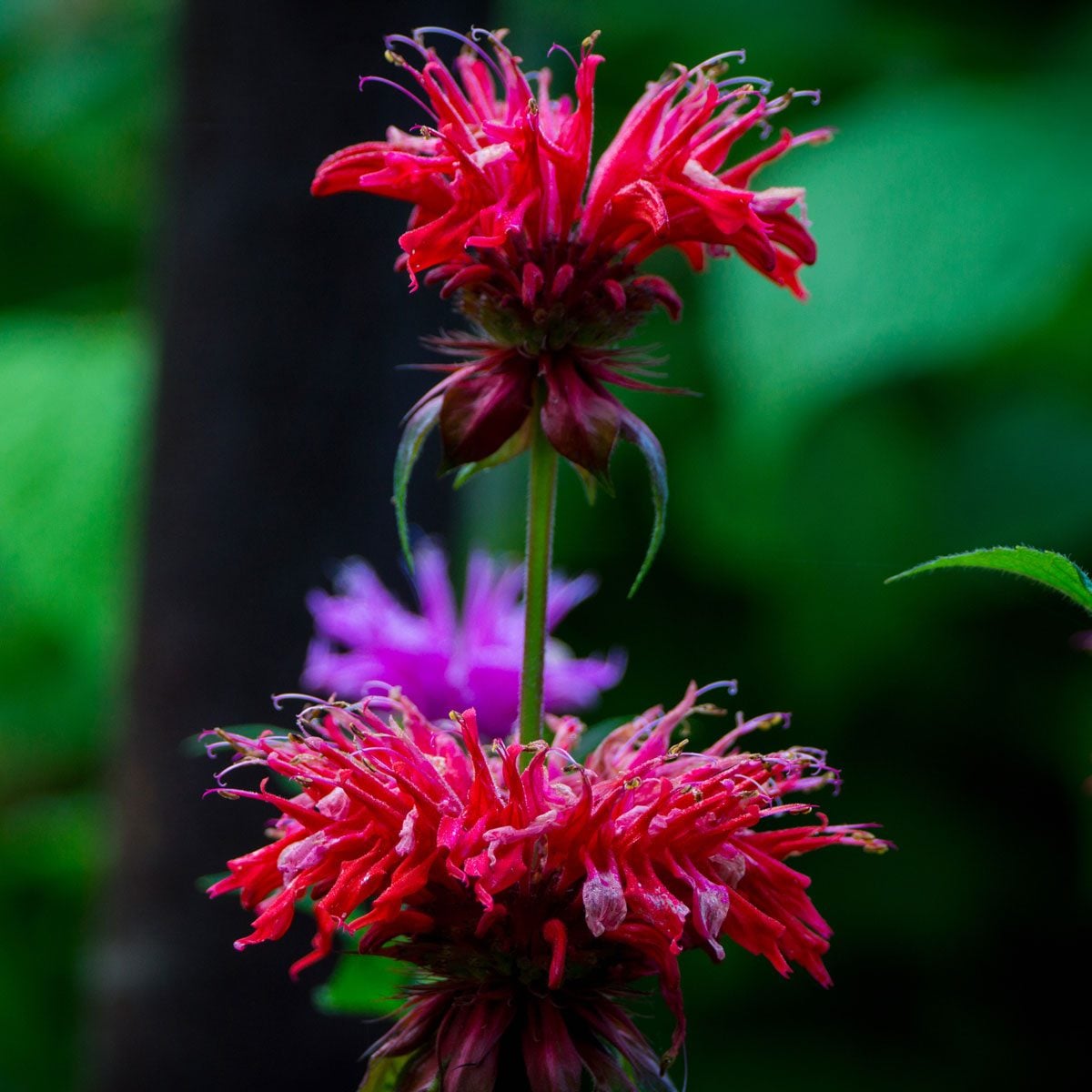
Bee balm, also called wild bergamot or Monarda, earns its name honestly. Its shaggy flower heads attract bumble bees, butterflies, hummingbirds, and other nectar feeders. Native species range from pink and lavender to red and pale yellow.
Bee balm performs best with good air circulation, since crowded foliage can develop powdery mildew. Plant several together for visual impact, but leave enough breathing room that the plants do not feel as though they are packed into an elevator.
4. Milkweed
Milkweed flowers provide nectar to many insects, including bees and butterflies. More importantly, milkweeds in the genus Asclepias are the required host plants for monarch caterpillars. Adult monarchs can drink from many flowers, but their offspring cannot complete their life cycle without milkweed.
Butterfly weed suits relatively dry, sunny sites, while swamp milkweed prefers consistently moist soil. Avoid planting tropical milkweed where it can remain green throughout winter, and select milkweed species native to your area.
5. Purple Coneflower
Purple coneflower offers broad, sturdy petals surrounding a raised central cone. Bees forage across the cone for pollen and nectar, while butterflies use the petals as convenient landing platforms. After flowering, the seed heads can feed birds and provide winter structure.
Single-flowered forms are generally more useful than heavily doubled cultivars. Coneflowers prefer sun and well-drained soil, although exact requirements vary by species. Michigan State University identifies coneflowers among the perennial border plants frequently visited by bees.
6. Blazing Star
Blazing star, or Liatris, sends up upright spikes covered in fuzzy purple or white flowers. The blooms typically open progressively along the stem, extending the feeding period instead of presenting one enormous floral grand opening followed by immediate closure.
Different blazing star species tolerate different conditions, from dry prairies to moist meadows. Their vertical form pairs well with rounded coneflowers, black-eyed Susans, and native grasses.
7. Mountain Mint
Mountain mint is not always the flashiest plant in the border, but pollinators strongly disagree with human fashion critics. Its dense flower clusters can draw small native bees, bumble bees, wasps, flies, and beetles in remarkable numbers.
Some species spread vigorously, so choose carefully and allow sufficient room. Mountain mint is particularly useful for supporting beneficial predatory and parasitic insects that can help control garden pests naturally.
8. Native Sunflowers
Sunflowers provide pollen, nectar, and later, seeds for birds. Branching varieties produce more flowers over a longer period than single-stem cutting types. Open-centered cultivars are usually easier for insects to access than novelty forms with densely packed petals.
North America is home to numerous perennial sunflower species, including woodland sunflower, Maximilian sunflower, and swamp sunflower. Match the species to your region and soil rather than planting the first giant yellow object that leaps into your shopping cart.
9. Anise Hyssop
Anise hyssop produces upright spikes of small lavender-blue flowers that attract bees, butterflies, and hummingbirds. The fragrant foliage has a minty, licorice-like aroma, making this perennial a pleasant addition near paths and patios.
It prefers sun and well-drained soil and often flowers for an extended period. Leaving some seed heads standing can provide winter interest and food for birds.
10. Black-Eyed Susan
Black-eyed Susans are cheerful, durable, and easy for many pollinators to use. Their open flower heads attract bees, beetles, flies, and butterflies through summer and into fall, depending on the species and climate.
Several plants share this common name, so check the botanical name and regional status before buying. Native Rudbeckia species can work in meadow plantings, perennial borders, rain gardens, and informal cottage gardens.
11. Native Penstemon
Penstemons produce tubular flowers that are particularly useful to long-tongued bees and hummingbirds. Flower colors include white, pink, red, lavender, and blue, with species available for deserts, prairies, mountains, and woodlands.
Hairy beardtongue, foxglove beardtongue, and firecracker penstemon are examples adapted to different U.S. regions. Their spring or early-summer flowering periods help bridge the gap between early trees and peak summer perennials.
12. Native Violets
Violets provide early flowers for small bees and serve as host plants for fritillary butterfly caterpillars. They can thrive beneath deciduous trees, in woodland edges, and even in low-input lawns where conditions are suitable.
Gardeners trained to view every lawn flower as an emergency may need an adjustment period. A few violets will not cause civilization to collapse. In fact, they can make an ordinary patch of turf more useful to wildlife.
13. Native Willows
Although gardeners often focus on perennials, flowering trees and shrubs can produce enormous quantities of pollen and nectar. Willows are especially important because many species bloom early, providing food when queen bumble bees and other overwintered pollinators become active.
Select a willow appropriate for your site, since some need moist soil and may grow into substantial trees. Other valuable woody plants can include serviceberry, redbud, blueberry, native plum, basswood, and buttonbush.
14. Flowering Herbs
Borage, basil, oregano, thyme, chives, dill, cilantro, and mint can become excellent pollinator plants when allowed to flower. Gardeners frequently harvest or trim herbs before blooming, accidentally closing the café just as the customers arrive.
Let a portion of each herb crop flower while harvesting the rest. Borage is particularly attractive to bees and hover flies, while many mint-family herbs produce numerous small nectar-rich blossoms.
15. Pollinator-Friendly Annuals
Annual flowers can fill temporary gaps while slower native perennials establish. Open zinnias, Mexican sunflower, sweet alyssum, borage, pentas, certain marigolds, and single sunflowers may attract bees, butterflies, or beneficial flies.
Cultivar choice matters. Plants within the same species can differ in nectar production, pollen availability, and flower accessibility. University trials have found that some zinnias and other annual cultivars receive far more pollinator visits than others, so observe what works in your own garden.
A Simple Pollinator Garden Plan
Choose at Least Three Bloom Periods
Start with early, middle, and late-season flowers. A stronger design includes several species blooming during each period so that bad weather, plant failure, or a hungry rabbit does not eliminate an entire month of food.
| Season | Possible Choices | Primary Benefit |
|---|---|---|
| Early spring | Willow, serviceberry, violet, native plum, penstemon | Food for early-emerging bees |
| Late spring | Golden Alexanders, wild geranium, beardtongue, chives | Bridges the early-season forage gap |
| Summer | Bee balm, milkweed, coneflower, mountain mint, blazing star | Supports peak pollinator activity |
| Late summer and fall | Goldenrod, aster, ironweed, sunflower, sneezeweed | Fuel for migration and overwintering |
Plant Flowers in Groups
A single flower is a snack. A clump is a restaurant with visible signage. Grouping several plants of the same species helps pollinators locate the flowers and forage efficiently. The U.S. Forest Service specifically recommends planting flowers in clumps rather than scattering isolated specimens throughout the landscape.
Include Different Flower Shapes
Combine flat flowers, daisy-like blooms, clustered blossoms, and tubes. Small bees and flies often favor shallow flowers, while butterflies and hummingbirds can reach nectar in longer floral tubes. Diversity in color, height, scent, shape, and flowering time welcomes more species than a garden built around one fashionable plant.
Provide Nesting Habitat
Flowers provide food, but pollinators also need places to reproduce and overwinter. About 70 percent of native bee species nest in the ground, while many others use hollow stems or existing cavities in dead wood. Leave a few patches of bare, well-drained soil, retain some standing stems, and keep a small amount of natural woody material where it does not create a safety hazard.
Reduce Fall Cleanup
Cutting every stem to the ground in October may satisfy the human desire for neatness, but it can remove overwintering habitat. Leave seed heads, hollow stems, grasses, and some fallen leaves through winter. When spring arrives, delay major cleanup until temperatures have warmed and insects have had an opportunity to emerge.
Common Pollinator-Gardening Mistakes
Buying Plants Based Only on a “Pollinator Friendly” Label
Marketing labels do not guarantee that a flower is native, pesticide-free, noninvasive, or valuable in your region. Check the botanical name, ask about pesticide treatments, and consult a regional extension office, native plant society, or ecoregional planting guide.
Planting Only Summer Flowers
Summer gardens are usually overflowing with choices. Early spring and late fall are more likely to contain food gaps. Add early-flowering woody plants and late asters or goldenrods before buying a fourteenth midsummer coneflower.
Choosing Too Many Double Flowers
Double blooms can hide or replace the flower parts that produce accessible pollen and nectar. They are not forbidden, but they should not dominate a habitat garden. Mix ornamental favorites with generous quantities of simple, open flowers.
Using Pesticides as Preventive Maintenance
Spraying plants simply because an insect might appear defeats the purpose of creating pollinator habitat. Learn to distinguish destructive pests from harmless visitors, caterpillars, native bees, hover flies, and beneficial wasps. A healthy garden is not an insect-free garden; an insect-free garden is usually a buffet with the lights turned off.
Experiences and Lessons From Real Pollinator Gardens
One of the first lessons gardeners learn is that pollinators do not always share our taste. A large, expensive rose may receive almost no attention, while a modest patch of mountain mint sounds like a tiny airport. This is not a personal insult from the bees. They are evaluating food accessibility, nutritional value, scent, bloom density, and travel efficiency rather than matching flowers to the patio cushions.
New pollinator gardens also tend to look sparse during their first year. Many native perennials spend early months developing root systems instead of producing an instant wall of flowers. Annuals such as borage, open zinnias, alyssum, or sunflowers can provide temporary color and forage while the permanent plants establish. By the second or third growing season, the perennials often fill gaps, and the garden begins to look less like a collection of hopeful labels in mulch.
Another common experience is discovering that different flowers attract different crowds. Bumble bees may dominate bee balm and penstemon. Tiny metallic sweat bees may work across asters or goldenrod. Butterflies often pause on broad coneflower heads, while hummingbirds investigate red tubular blooms. Hover flies may look suspiciously like bees until their flight pattern and single pair of wings give them away. The more carefully you watch, the more the garden resembles a neighborhood rather than a decorative arrangement.
Gardeners also learn that leaf damage is not automatically bad news. A monarch caterpillar chewing milkweed is evidence that the plant is doing its job. Leafcutter bees may remove neat circles from leaves to build nests. Swallowtail caterpillars can reduce dill or parsley to green sticks with impressive speed. Planting extra host plants makes this easier to accept, particularly when one patch is reserved for wildlife and another for the kitchen.
Watering habits usually improve through experience. Deep, less frequent irrigation encourages stronger roots and is generally more useful than lightly sprinkling the surface every day. Grouping plants with similar moisture needs also prevents awkward situations in which drought-tolerant blazing star shares an irrigation zone with a thirsty moisture-loving species. Native does not mean a plant requires no care; it means the plant is adapted to a region, provided it is placed in conditions that suit it.
The most surprising lesson may be how quickly pollinators find a new planting. A balcony container holding flowering herbs can receive visitors within days. A suburban bed converted from lawn may attract multiple bee species during its first season. Even small habitat patches can function as feeding stops when they contain useful flowers and are protected from harmful pesticides.
Finally, successful pollinator gardening tends to change a person’s definition of beauty. Standing stems become winter nurseries. Fallen leaves become shelter. Seed heads become bird feeders. A bare soil patch becomes potential nesting habitat rather than an unfinished chore. The garden may look slightly less controlled, but it becomes far more aliveand watching a bumble bee sleep inside a flower is considerably more entertaining than staring at perfectly arranged mulch.
Conclusion
The best flowers for bees and other pollinators are regionally appropriate, rich in accessible pollen or nectar, and available across multiple seasons. Native goldenrods, asters, milkweeds, bee balm, coneflowers, blazing stars, mountain mints, penstemons, violets, and flowering shrubs are excellent starting points, but the strongest garden combines many plant families and flower shapes.
Plant in generous clumps, include early and late bloomers, avoid harmful pesticides, provide nesting habitat, and resist the urge to sanitize every corner of the yard. Pollinators do not need a perfect garden. They need a safe one with food, shelter, and perhaps a gardener willing to forgive a few chewed leaves.