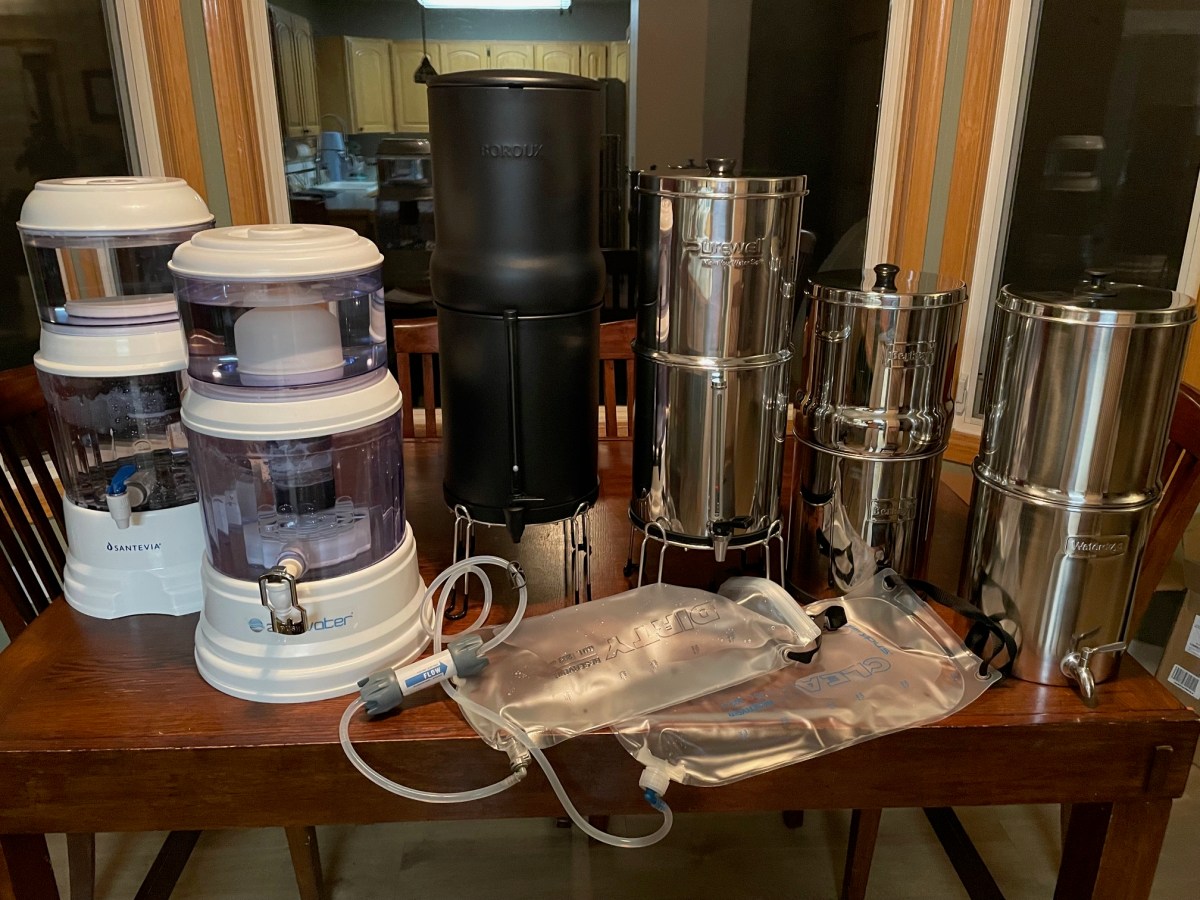

Gravity water filters are the quiet overachievers of the water-filter world. They do not buzz, beep, demand plumbing, or ask you to sacrifice half the cabinet under your sink. You pour water into the top, gravity does the heavy lifting, and clean-tasting water collects below like a small domestic miracle. In 2025, Bob Vila’s hands-on testing put several popular gravity water filters through weeks of real-world use, comparing capacity, speed, setup, durability, taste, and value. The result is a helpful snapshot for families, renters, campers, emergency-prep fans, and anyone tired of playing bottle-water Tetris in the fridge.
The best gravity water filter is not automatically the biggest, shiniest, or most dramatic-looking stainless steel tower on the counter. A great system should match your water concerns, your household size, your patience level, and your available counter space. Some filters are designed mainly to improve taste and reduce chlorine. Others target heavier-duty contaminants such as lead, microplastics, sediment, bacteria, or fluoride, depending on the filter media and certifications. The smartest buying rule is simple: do not shop by vibes alone. Shop by verified performance, filter life, and how the system will behave on an ordinary Tuesday when everyone wants water at the same time.
What Is a Gravity Water Filter?
A gravity water filter is a non-electric filtration system that moves water from an upper reservoir through one or more filter elements into a lower chamber. Most countertop models use stainless steel or BPA-free plastic housings, while camping systems often use hanging bags and hollow-fiber filters. Because the system relies on gravity rather than water pressure, it can be used in kitchens, offices, cabins, RVs, campsites, and emergency kits.
The appeal is obvious: no installation, no plumbing appointment, no under-sink gymnastics, and no need to explain to your landlord why there is a new hole in the countertop. Fill the upper chamber, let the water pass through the filters, and dispense it from a spigot or clean-water bag. The trade-off is speed. Gravity filters are usually slower than pressurized faucet filters or reverse osmosis systems, so capacity and flow rate matter more than they might seem at first glance.
Bob Vila’s 2025 Testing: The Standout Picks
Bob Vila’s 2025 testing evaluated seven gravity water filters over six weeks after researching more than 20 models. The test team considered setup, functionality, water quality, durability, filter life, filtration rate, and value. That kind of hands-on testing matters because product pages often make every filter sound like a stainless steel superhero. Real use reveals the tiny details: Is the spigot awkward? Does the system wobble? Does it take all day to filter one tank? Does the water taste clean, or does it taste like it spent spring break in a hardware store?
Best Overall: Waterdrop King Tank Gravity Water Filter System
The Waterdrop King Tank earned Bob Vila’s top overall spot thanks to its strong mix of speed, capacity, stainless steel construction, filter life, and value. It has a 2.25-gallon drinking water capacity and uses two activated carbon filters plus two fluoride filters. In testing, its maximum filtration rate was about 4 gallons per hour, making it one of the fastest countertop gravity systems in the group. For a busy household, that matters. A filter that produces great water but moves slower than a sleepy turtle can quickly become a kitchen decoration.
Waterdrop’s King Tank is also notable for its food-grade stainless steel housing, leak-resistant spigot, and NSF/ANSI 42 and 372 certification claims. Its carbon filters are rated for a long service life, which helps reduce ongoing replacement costs. The included stand is more useful than it sounds because it lifts the spigot high enough to fit a cup or bottle underneath. That small design detail can be the difference between “I love this thing” and “why am I crouching under my own water filter?”
Best Large-Capacity Countertop Option: Boroux Legacy Gravity Water Filter System
The Boroux Legacy is a strong choice for households that want more capacity and a polished stainless steel look. It holds about 3 gallons, making it a practical fit for families, shared apartments, or anyone who drinks water like they are training for a desert expedition. Bob Vila’s test noted that it performed well in setup, functionality, and water quality, though its value score was lower than the Waterdrop because of its higher cost.
Boroux also highlights WQA certification to NSF/ANSI 42, NSF/ANSI/CAN 401, and NSF/ANSI/CAN 372 standards. That matters because independent certification is more meaningful than vague marketing language. If a product says it “helps reduce impurities,” that is nice. If it lists specific standards and contaminant claims, that is much better. The Boroux Legacy is especially appealing for shoppers who want a stainless steel gravity water filter with less plastic contact and a more premium countertop presence.
Best Mineral-Style Filter: Zen Water Vitality Gravity Water Filter
The Zen Water Vitality filter takes a different approach from the stainless steel tank crowd. It uses a ceramic filter and a multi-layer mineral filter, and it is designed not only to filter water but also to improve taste through mineralization. In Bob Vila’s comparison, it offered a 2.5-gallon capacity and a flow rate of about 1 gallon per hour. That is slower than the Waterdrop, but it may appeal to users who enjoy a smoother, mineral-style taste.
This kind of system is best for people who care about flavor and do not mind a more visible, water-dispenser-style design. It is not the most compact option, but it can work well in a kitchen, office, or wellness-focused household where the filter is used daily and refilled as part of the routine.
Best Alkaline-Style Pick: Santevia Gravity Water System
The Santevia Gravity Water System is another mineral-focused model that combines filtration with taste adjustment. With a 2.6-gallon capacity and about 1 gallon per hour filtration rate, it is not built for speed demons. Instead, it is aimed at users who want filtered water with added minerals and a smoother taste profile. It scored well for water quality in Bob Vila’s testing and can be a good match for households that prioritize flavor over fast refill cycles.
As with any alkaline or mineralizing filter, buyers should focus on what the system is actually certified or tested to reduce. Added minerals can make water taste pleasant, but they do not automatically mean the filter removes every contaminant of concern. The magic words are still certification, test data, and replacement schedule.
Best for Camping and Emergency Use: Platypus GravityWorks Water Filter System
The Platypus GravityWorks is a different beast. It is not a countertop tank for your kitchen; it is a portable gravity system built for camping, backpacking, group trips, and emergency preparedness. It uses a hollow-fiber membrane and can filter up to 1.75 liters per minute under ideal conditions. That is fast enough to make thirsty campers briefly believe civilization has returned.
The big distinction is contaminant type. Backpacking filters like the Platypus GravityWorks are generally designed for bacteria, protozoa, and particulates, not chemical contaminants such as pesticides, PFAS, heavy metals, or chlorine taste. For trail water, that can be exactly what you need. For city tap water with chemical concerns, a countertop carbon-based system may be more appropriate.
Other Tested Options: Purewell and Big Berkey
Bob Vila’s list also included the Purewell 7-Stage Alkaline Gravity Water Filter System and the Big Berkey Water Filter. Purewell offers a multi-stage alkaline-style setup with carbon composite and mineralization filters, while Big Berkey remains one of the most recognizable names in stainless steel gravity filtration. The Big Berkey has a 2.25-gallon capacity and can be expanded with additional filter elements for faster flow.
Big Berkey is popular with preparedness-minded households and off-grid users because it requires no electricity or plumbing. However, buyers should pay close attention to current certification details, authorized sellers, warranty terms, and the specific contaminant claims tied to the filter elements they purchase. In 2025, smart water-filter shopping is less about brand legend and more about verified performance.
How to Choose the Best Gravity Water Filter
Start With Your Water, Not the Product
The most important step is identifying what you want to reduce. City water users can review their annual Consumer Confidence Report. Private well users should consider periodic water testing because wells are not regulated the same way public water systems are. If your concern is chlorine taste and odor, a filter certified to reduce aesthetic contaminants may be enough. If your concern is lead, PFAS, bacteria, or other health-related contaminants, you need a filter with specific certifications or credible test data for those contaminants.
Look for Certifications That Match Your Concern
NSF/ANSI standards are not decorative badges. They help buyers understand what a product has been tested to do. NSF/ANSI 42 generally relates to aesthetic effects such as chlorine taste and odor. NSF/ANSI 53 covers certain health-related contaminants, depending on the product’s listed claims. NSF/ANSI 401 covers emerging compounds such as some pharmaceuticals and microplastics. NSF/ANSI 372 addresses lead-free material requirements. For PFAS concerns, EPA guidance recommends looking for systems certified under appropriate NSF/ANSI standards for PFAS reduction, such as NSF/ANSI 53 or NSF/ANSI 58, depending on filter type.
Choose the Right Capacity
For one or two people, a 2.25-gallon system may be plenty. For families, shared homes, or heavy water drinkers, a 3-gallon unit can reduce refill frequency. Capacity is not just about convenience; it also affects whether the filter becomes part of daily life or gets abandoned in the corner next to the bread maker from 2018. If you cook with filtered water, make coffee, fill bottles, or have pets, size up.
Think About Filtration Speed
Gravity filters are naturally slower than pressurized systems. A model filtering around 4 gallons per hour, such as the Waterdrop King Tank in Bob Vila’s testing, feels much more convenient than a model filtering around 1 gallon per hour. Slower systems can still work beautifully if you refill them before they are empty. The trick is to treat the filter like a tiny water station, not a faucet.
Check Filter Replacement Costs
A low purchase price can lose its charm if replacement filters are expensive or need frequent changes. Look at the cost per gallon, not just the upfront price. Also check whether the system uses proprietary filters, optional fluoride filters, mineral stones, ceramic domes, or multiple cartridges. The more parts involved, the more important it is to understand the maintenance schedule.
Consider Counter Space and Cleaning
Stainless steel gravity filters look sleek, but they take up vertical and horizontal space. Measure before buying, especially if you have low cabinets. Plastic and mineral-style systems can be wider or taller than expected. Cleaning also matters. Reservoirs should be washed regularly, spigots should be checked for buildup, and filters should be replaced according to the manufacturer’s instructions. A neglected filter is not a badge of sustainability; it is a science experiment with a spigot.
Gravity Water Filters vs. Pitchers, Faucet Filters, and Reverse Osmosis
Gravity water filters sit in the middle of the home-filtration universe. Compared with pitchers, they usually offer larger capacity and longer filter life. Compared with faucet filters, they require no installation and can work even when plumbing access is limited. Compared with reverse osmosis systems, they are simpler, portable, and often more affordable upfront. However, reverse osmosis may be better for certain dissolved contaminants when certified for the target substance.
The best choice depends on your goal. For better-tasting everyday water, a gravity filter can be excellent. For apartment living, emergency preparedness, and off-grid cabins, it is especially practical. For highly specific contaminant problems, such as arsenic, nitrate, or PFAS, you should confirm that the filter is certified or independently tested for that exact issue.
Best Uses for a Gravity Water Filter
A countertop gravity water filter makes sense in a family kitchen where people fill glasses, bottles, coffee makers, and cooking pots throughout the day. It is also helpful for renters who cannot install under-sink systems, homeowners who want a no-plumbing solution, and emergency-prep households that want a reliable backup during power outages. Portable gravity filters are excellent for camping groups because they can filter larger amounts of water without hand pumping.
They are less ideal for people who want instant, unlimited filtered water from the tap. They also may not be the best standalone solution for unsafe water unless the filter is designed and verified for the specific biological or chemical risks present. In other words, gravity is powerful, but it is not a wizard.
Our Buying Verdict for 2025
Based on Bob Vila’s 2025 testing, the Waterdrop King Tank is the most balanced gravity water filter for most households because it combines fast filtration, solid capacity, stainless steel construction, and strong value. The Boroux Legacy is the better premium-style choice for larger households and buyers who want a 3-gallon stainless steel system with notable certification claims. The Zen Water Vitality and Santevia systems are good fits for people who prefer mineral-style water. The Platypus GravityWorks is the obvious choice for camping and emergency kits. Big Berkey remains a familiar name, but buyers should carefully verify current certifications, seller authenticity, and filter claims before purchasing.
The real winner is the filter that matches your water, your habits, and your patience. A gravity water filter should make drinking water easier, not turn your kitchen into a slow-motion hydration puzzle.
Extra Experience: Living With a Gravity Water Filter Day After Day
Using a gravity water filter every day teaches you a few things that do not always show up in product specs. First, placement matters more than expected. A countertop model should live near the sink because refilling a multi-gallon tank from across the kitchen gets old fast. It should also sit high enough for the spigot to clear your favorite glass or bottle. A stand may look like a minor accessory, but in daily use it can feel like the difference between convenience and comedy.
Second, the refill rhythm is everything. The best habit is to top off the upper chamber before the lower chamber is empty. Think of it like charging your phone before it hits 2 percent. If you wait until everyone is thirsty, even a good gravity filter can feel too slow. In a household of three or four people, a morning refill and an afternoon refill usually keeps things comfortable. If you cook pasta, make iced tea, brew coffee, and fill school or gym bottles, you may need a larger system or a stricter refill routine.
Third, taste improvement can be surprisingly motivating. Many people buy a gravity water filter for health or preparedness reasons, then end up loving it because the water simply tastes better. Coffee can taste cleaner. Ice cubes can lose that freezer-plus-chlorine flavor. Kids may drink more water when it tastes fresh. Even pets may become tiny water critics, although they will not thank you because pets are emotionally complicated.
Fourth, maintenance is not difficult, but it must be respected. Filters need priming, flushing, replacing, or cleaning depending on the design. Stainless steel chambers should be washed periodically. Spigots should be checked for drips and mineral buildup. If your water has heavy sediment, the filters may slow down sooner than expected. If you leave water sitting for too long, clean the reservoir before refilling. A gravity filter is simple, but simple does not mean maintenance-free.
Finally, the biggest lifestyle benefit is independence. A gravity filter gives you filtered water without electricity, plumbing, or constant trips to buy bottled water. During storms, boil advisories, camping weekends, or busy weeks when errands pile up, that independence feels valuable. It also reduces the number of plastic bottles moving through your home, which is good for your trash bin, your budget, and your conscience. The right gravity water filter quietly becomes part of the household routine: fill, wait, drink, repeat. Not glamorous, perhaps, but deeply usefuland sometimes useful is the real luxury.
Conclusion
The best gravity water filters of 2025 prove that clean-tasting water does not need to be complicated. Bob Vila’s testing points to the Waterdrop King Tank as the best overall choice for most people, while Boroux, Zen Water, Santevia, Platypus, Purewell, and Big Berkey each serve different needs. Before buying, identify your water concerns, check certifications, compare filter life, and choose a capacity that fits your home. A good gravity water filter should be easy to use, affordable to maintain, and reliable enough that drinking more water feels natural instead of noble.