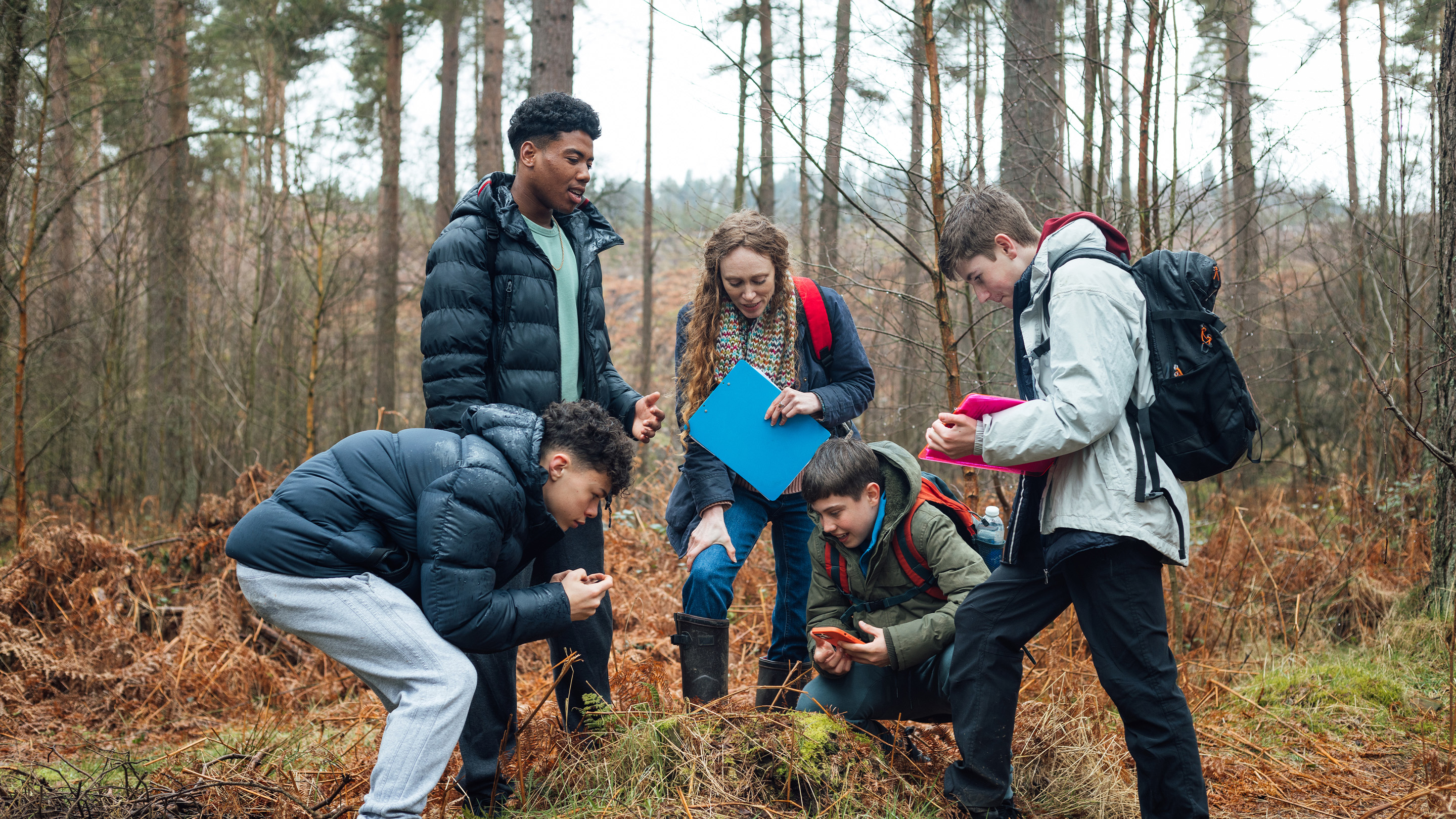

High school science does not have to live only inside a textbook, a lab handout, or that mysterious drawer full of half-working goggles. Citizen science gives students a better invitation: step into the real world, ask real questions, collect real data, and contribute to research that scientists, communities, and public agencies can actually use.
At its best, connecting high school students with citizen science turns biology, environmental science, astronomy, chemistry, geography, and data literacy into something students can touch. A class might monitor local air quality, track monarch migration, document neighborhood biodiversity, classify galaxy images, measure tree height for NASA’s GLOBE Program, or report observations of plants as seasons change. Suddenly, “science class” is not just a period on the schedule. It is a way of noticing the world.
And here is the secret teachers already know: teenagers are excellent observers when they are given a reason to care. They notice the weird bird outside the cafeteria. They know when a stream smells off. They can spot patterns in schoolyard temperatures, neighborhood flooding, invasive plants, or light pollution. Citizen science gives that curiosity a place to go.
What Is Citizen Science?
Citizen science, also called community science or participatory science, is the public’s involvement in scientific research. People who are not professional scientists help collect, classify, analyze, or share data. In many projects, volunteers follow clear protocols designed by researchers so the observations can be compared across places and time.
For high school students, this is powerful because it connects classroom learning with authentic investigation. Instead of pretending to be scientists for a grade, students participate in a scientific process that extends beyond the classroom door. They may not be wearing white coats, but they are doing something better: building evidence.
Why Citizen Science Fits High School Learning
High school students are ready for deeper scientific thinking. They can ask testable questions, evaluate data quality, use digital tools, analyze trends, and explain uncertainty. These skills align naturally with modern science standards that emphasize asking questions, planning investigations, using mathematics, interpreting data, constructing explanations, and communicating evidence-based claims.
Citizen science also helps solve one of the oldest problems in education: “When will I ever use this?” When students use a phone camera to document biodiversity through iNaturalist, compare local weather observations with NASA GLOBE data, or classify images on Zooniverse, the answer becomes obvious. They use science when they want to understand the world, solve problems, and contribute to something bigger than a worksheet.
Why Connect High School Students With Citizen Science?
Citizen science gives students a rare combination of independence, responsibility, and relevance. It can work in a biology class, an environmental science elective, an after-school STEM club, a school garden, a library program, or even a cross-disciplinary project involving English, math, and social studies.
1. It Makes Science Feel Real
Many students think science is a collection of finished facts. Citizen science shows them that science is active, messy, collaborative, and constantly improving. Real researchers do not always know the answer in advance. They design better questions, gather better evidence, and revise their understanding as new information arrives.
That shift matters. A student who has watched a local tree bud earlier than expected, compared the observation with historical seasonal data, and discussed climate patterns will understand ecology differently than a student who only memorized the word “phenology.” One student studied a definition. The other watched the definition happen outside.
2. It Builds Data Literacy
Today’s students swim in data, although sometimes it feels more like they are being chased by it. Citizen science helps them learn how data is created, why protocols matter, and how errors can affect conclusions. Students learn that a data point is not magic. Someone made an observation, recorded it, checked it, and placed it into context.
When students collect multiple observations, they can graph patterns, compare sites, identify outliers, and discuss uncertainty. These habits strengthen math skills, scientific reasoning, and digital literacy. They also prepare students for careers in healthcare, engineering, environmental management, technology, public policy, agriculture, and research.
3. It Supports Environmental Awareness
Many citizen science projects focus on environmental monitoring: water quality, biodiversity, weather, air pollution, marine debris, plant life cycles, and wildlife migration. These topics are perfect for high school students because they connect global issues with local places.
A lesson on climate change can feel enormous. A project tracking flowering dates, extreme heat around school buildings, or changes in bird migration gives students a concrete entry point. They can see that environmental change is not only happening “somewhere else.” It may be visible in the schoolyard, the community park, or the sidewalk tree that blooms before spring break.
4. It Encourages Civic Engagement
Citizen science also teaches students that communities need evidence. Local decisions about green spaces, stormwater, air quality, public health, and conservation are stronger when people understand data. Students who participate in these projects learn that science can support civic action without turning every class into a town hall meeting, complete with somebody arguing about parking.
For example, students might map heat differences across paved and shaded areas on campus, then use their findings to recommend more trees or shade structures. They might monitor litter near a stream and design a cleanup campaign. They might track pollinator visits in a school garden and suggest native plantings. The result is not just a science grade; it is a contribution.
Best Citizen Science Project Ideas for High School Students
The best project depends on the class goals, student interests, available technology, time, and location. A successful project does not have to be complicated. In fact, simple projects with clear routines often work better than ambitious ones that require seventeen passwords, four apps, and a teacher with the patience of a saint.
NASA GLOBE: Measuring Earth Systems
The GLOBE Program, supported by NASA and partner organizations, connects students, teachers, scientists, and community members through environmental observations. Students can investigate atmosphere, biosphere, hydrosphere, soils, and Earth systems. They may collect data on clouds, temperature, precipitation, land cover, mosquito habitats, or tree height.
One memorable example involves high school students contributing tree height measurements that supported scientific work. That kind of experience can be transformative. Students see that accurate observations from a classroom or neighborhood can become part of a much larger research network.
iNaturalist: Biodiversity in the Schoolyard
iNaturalist allows students to photograph plants, insects, fungi, birds, and other organisms, then receive identification suggestions and input from a global community. It is especially useful for biology, ecology, environmental science, and school garden projects.
A teacher might ask students to create a biodiversity inventory of campus, compare shaded and sunny areas, document invasive species, or observe pollinators over several weeks. Students learn taxonomy, ecosystems, observation skills, and the importance of careful documentation. They also discover that the “boring bush” near the front office may be hosting more life than expected. The bush would probably appreciate the recognition.
eBird: Bird Observation and Migration Patterns
eBird, managed by the Cornell Lab of Ornithology, invites people to submit bird observations that contribute to a large biodiversity database. High school students can use it to study migration, habitat, seasonal abundance, and local species diversity.
Bird projects are excellent because they require patience, listening, and repeated observation. Students can compare morning and afternoon sightings, examine how weather affects bird activity, or investigate which habitats near school attract the greatest variety of species.
Zooniverse: Online Research From Any Classroom
Zooniverse is a people-powered research platform where volunteers help classify images, transcribe documents, identify patterns, and support research in astronomy, biology, climate, history, language, medicine, and more. It is a great option for schools with limited outdoor access or unpredictable weather.
Students might classify galaxies, identify animals in camera-trap images, transcribe historical records, or help process scientific images. Zooniverse projects show students that citizen science is not only about going outside with a notebook. Sometimes the field site is a laptop screen, and the expedition snack is whatever survived at the bottom of a backpack.
NOAA and Marine Debris Projects
NOAA supports citizen science opportunities related to weather, oceans, fisheries, geography, marine debris, and environmental monitoring. For coastal schools, marine debris projects can connect science with community service and public awareness. Students can collect data about trash types, locations, and patterns, then use the evidence to recommend prevention strategies.
Even inland schools can connect to NOAA-related topics through weather observations, watershed education, and climate data. Students learn how local actions connect to larger water systems, from school drains to streams, rivers, bays, and oceans.
EPA Air Sensor and Environmental Monitoring Projects
Air quality projects are especially relevant for urban and suburban schools. With appropriate guidance and safety planning, students can learn how sensors measure particulate matter, temperature, humidity, or other environmental conditions. The U.S. Environmental Protection Agency has emphasized quality assurance and documentation because citizen science data is strongest when methods are clear and consistent.
For students, this is a great lesson in scientific responsibility. A sensor reading is not the end of the story. Students must ask where the sensor was placed, whether it was calibrated, what conditions affected the result, and how many measurements are needed before making a claim.
Budburst and Journey North: Tracking Seasonal Change
Budburst focuses on plant observations and seasonal changes such as leafing, flowering, and fruiting. Journey North tracks wildlife migration and seasonal patterns across North America, including monarch butterflies and hummingbirds. These projects help students study phenology, climate patterns, habitat, and species interactions.
Both programs are friendly entry points because they rely on repeated observation. Students can monitor a specific tree, garden bed, or migration event over time. They learn that science often rewards consistency more than drama. Not every observation needs to be a thunderclap discovery. Sometimes science is showing up on Tuesday and noticing one new leaf.
How Teachers Can Bring Citizen Science Into the Classroom
Connecting students with citizen science does not require a total curriculum makeover. Teachers can start small, then build. The key is to match the project to a learning goal rather than choosing an activity because it has a shiny app and a logo that looks nice on a slide.
Start With a Local Question
A strong project often begins with a question students care about. What kinds of organisms live around our school? Does our campus have heat islands? Are there fewer pollinators in heavily mowed areas? How does cloud cover change over a month? What types of litter appear most often near the storm drain?
Local questions help students feel ownership. They are not collecting data for “science” in the abstract. They are investigating their own place.
Choose a Project With Clear Protocols
Good citizen science projects provide instructions for what to observe, how to record it, when to submit it, and what counts as a valid observation. Clear protocols are essential for data quality and classroom sanity. Without them, the project can quickly become a festival of “I think this is close enough,” which is also the unofficial motto of many rushed homework assignments.
Teachers should review privacy policies, student account requirements, location-sharing settings, age restrictions, and photo guidelines before assigning any platform. If student names, faces, or precise locations are involved, schools should follow district policies and obtain necessary permissions.
Teach Data Quality Explicitly
Citizen science is a perfect opportunity to teach students that quality matters. Students should practice using consistent units, taking clear photos, recording exact times, noting weather conditions, avoiding duplicate entries, and acknowledging uncertainty. A student who writes “big bug on leaf” may be enthusiastic, but science needs a little more help.
Teachers can build mini-lessons around sample data: What makes this observation strong? What is missing? How could it be improved? Why might two observers report different results? These conversations build critical thinking and help students become careful contributors.
Connect the Project to Standards and Assessment
Citizen science works best when it is not treated as an extra activity squeezed in after testing season. It can support learning goals in ecology, evolution, Earth systems, environmental science, statistics, scientific argumentation, engineering design, and communication.
Assessment can include field notebooks, data tables, graphs, reflection journals, research posters, presentations, lab reports, or community action proposals. Students should be evaluated not only on participation but also on how well they explain methods, interpret evidence, and connect findings to scientific concepts.
Benefits for Students Beyond the Science Classroom
The benefits of citizen science reach beyond content knowledge. Students practice collaboration, communication, persistence, and problem-solving. They learn how to work with uncertainty and how to revise ideas when evidence changes.
Citizen science can also expand access to STEM. Students who may not see themselves as “science people” can enter through photography, technology, mapping, writing, community action, outdoor observation, or data visualization. A student who dislikes traditional labs may become deeply engaged when asked to document insects in a school garden or investigate air temperature differences around campus.
Career Awareness and College Readiness
Many students have a narrow view of science careers. They may imagine only doctors, engineers, or someone in a lab coat staring at colorful liquids. Citizen science introduces them to ecologists, data analysts, geographers, conservationists, public health specialists, meteorologists, urban planners, museum researchers, and environmental technicians.
It also gives students experience they can discuss in college essays, scholarship applications, internships, and career interviews. A student who can explain how they collected biodiversity data, checked observations, analyzed patterns, and presented findings has a stronger story than “I passed biology and only mildly feared the frog dissection.”
Common Challenges and How to Solve Them
Challenge: Limited Time
Teachers are already juggling curriculum demands, testing schedules, grading, meetings, and the occasional copier malfunction that feels like a personal attack. Citizen science should not add chaos. Start with a short project lasting one to three weeks. Use one platform, one protocol, and one clear research question.
Challenge: Technology Access
Not every student needs a personal device. Teachers can use small groups, shared tablets, printed observation sheets, or classroom uploads. Online platforms like Zooniverse are useful when outdoor access or device availability is limited.
Challenge: Data Messiness
Messy data is not a failure. It is a teaching opportunity. Students can learn to identify incomplete observations, discuss sampling bias, improve methods, and compare results. Real science includes imperfection. The goal is not to hide uncertainty but to understand it.
Challenge: Student Motivation
Motivation increases when students know their work matters. Show them project maps, dashboards, publications, or examples of how volunteer data supports research. Let students choose between project options when possible. Give them a public audience, such as a school display, community presentation, or digital report.
A Practical Classroom Plan for Citizen Science
Here is a simple model teachers can adapt for a two-week high school project:
Day 1: Introduce the Big Question
Begin with a local phenomenon: changing bird activity, campus heat, plant flowering, litter patterns, or cloud cover. Ask students what they notice and what they wonder.
Day 2: Choose the Citizen Science Platform
Introduce a project such as iNaturalist, GLOBE, Budburst, Journey North, eBird, NOAA-related monitoring, or Zooniverse. Review the purpose, protocol, and student privacy expectations.
Days 3-5: Practice Observations
Students collect sample data, compare entries, and revise methods. This is where they learn that “somewhere near the gym” is not a precise location and “kind of cloudy” may need a better description.
Days 6-8: Collect and Submit Data
Students work in groups to gather observations. They submit data according to project guidelines and keep a local copy for classroom analysis.
Days 9-10: Analyze and Communicate
Students create graphs, maps, claims, and evidence-based explanations. They discuss limitations and propose next steps.
Experiences From Connecting High School Students With Citizen Science
One of the most rewarding experiences in connecting high school students with citizen science is watching the quiet students become expert observers. In a traditional class discussion, they may speak only when called on. But outside, with a camera, data sheet, or field notebook, they often notice details others miss: a fungus growing near a tree root, ants moving differently after rain, or a bird call that repeats from the same corner of campus every morning. Citizen science gives observation a purpose, and purpose can unlock confidence.
In a biodiversity project, students may begin by assuming the schoolyard is biologically boring. After all, they see it every day. But once they start documenting organisms through a platform like iNaturalist, the familiar landscape changes. A patch of grass becomes a mini-ecosystem. A wall becomes habitat for lichens. A flower bed becomes a pollinator station. Students begin asking better questions: Why are more insects found near native plants? Why do some areas have fewer species? How does mowing affect what grows back? The campus becomes a living laboratory, minus the need to label every hallway “Science Zone,” although that would be fun.
Another strong experience comes from environmental monitoring. When students measure temperature around asphalt, grass, trees, and shaded structures, they often discover dramatic differences across very short distances. This leads naturally to conversations about urban heat islands, school design, equity, and climate resilience. Students can take a simple thermometer reading and connect it to larger issues: public health, energy use, city planning, and access to green space. That is a big intellectual leap, and citizen science makes it feel manageable.
Online citizen science experiences can be just as meaningful. With Zooniverse, students who are less comfortable outdoors can still contribute to research by classifying images or transcribing records. Some students love the pattern-recognition challenge. Others enjoy the historical or astronomical mystery. A classroom can become a research team, comparing decisions, discussing disagreement, and learning that classification requires evidence rather than vibes. Teenagers are experts in vibes, but science asks for a little more paperwork.
The most memorable projects often end with students presenting their findings. When students explain their methods, show their data, and defend their conclusions, they begin to sound like young researchers. They learn to say, “Our sample size was limited,” or “We need more observations before making a stronger claim.” That humility is not weakness; it is scientific maturity. They also learn that their community may care about their results. A principal may listen to a heat-map proposal. A garden club may use pollinator data. A local park group may appreciate species observations. The students see that evidence can travel.
Citizen science also changes the teacher’s role. Instead of being the only source of answers, the teacher becomes a coach, project manager, question-asker, and occasional rescuer of misplaced clipboards. This shift can be refreshing. Students learn that uncertainty is normal, and teachers can model how to investigate without pretending to know everything instantly. That honesty makes science more human.
Perhaps the biggest experience is the slow change in student identity. A student who once said, “I’m not good at science,” may begin saying, “I found something,” “I checked the data,” or “Our results show…” That language matters. It moves students from passive learners to contributors. Connecting high school students with citizen science is not only about building better science lessons. It is about helping students see that they can participate in knowledge, protect their communities, and ask smarter questions about the world they are inheriting.
Conclusion: Turning Students Into Contributors
Connecting high school students with citizen science is one of the most practical ways to make STEM education more meaningful. It brings research into the classroom, moves learning into the community, and gives students a reason to care about data. Whether they are measuring clouds, tracking birds, documenting plants, classifying images, monitoring air quality, or studying migration, students learn that science is not locked away in universities and government labs. It is happening everywhere, and they can be part of it.
The best citizen science projects do more than teach facts. They build habits: curiosity, accuracy, patience, collaboration, skepticism, and responsibility. Those habits matter in science, but they also matter in citizenship. In a world full of big claims and tiny attention spans, students who know how to gather evidence and ask better questions are exactly the kind of people every community needs.
Note: This article synthesizes real citizen science practices, classroom strategies, and examples from reputable U.S.-based science and education organizations for web publication.