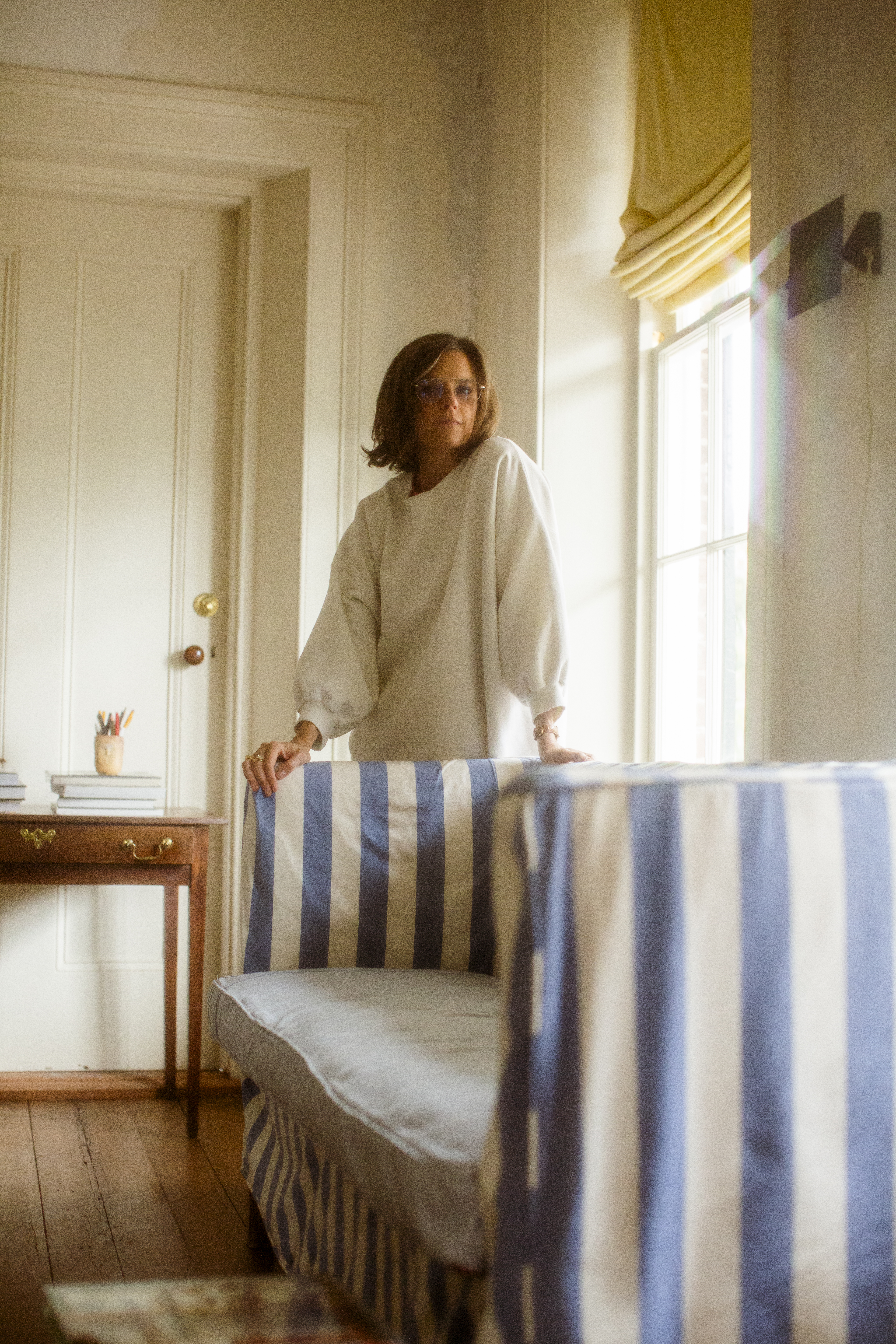

Some designers decorate rooms. Some build brands. A rare few do both without making either one feel like a corporate exercise in beige. Helen Rice belongs in that rare category. She is the kind of creative person whose work makes you think, “Oh, righttaste is not the same thing as money, and style is not the same thing as stuff.” In a design culture that often mistakes excess for personality, Rice has built a point of view around restraint, texture, patina, and the almost rebellious decision to leave well enough alone.
That is what makes Quick Takes With: Helen Rice, Designer and Tastemaker such an appealing idea. The phrase “quick takes” suggests a light-speed Q&A, but Rice’s answers reveal something much deeper: a whole design philosophy hidden inside everyday preferences. Ask her what belongs on a bedside table, and the answer is basically nothing. Ask about a good housewarming gift, and she does not drift into fantasy-land and recommend a hand-carved alabaster swan from another dimension. She recommends useful, consumable things. Ask about her signature move, and she does not give a dramatic designer speech worthy of a chandelier reveal. She says she likes rooms to feel a little unfinished.
That last point is the key that unlocks everything else. Helen Rice’s world is not about overproduced perfection. It is about tension: old and new, polished and worn, humble and elevated, edited and alive. It is a design language that feels intelligent without being smug, and beautiful without acting like beauty is allergic to real life.
Who Is Helen Rice?
Helen Rice is best known as a Charleston-based creative force whose work stretches across branding, interiors, real estate, retail, and art. She is a cofounder of Fuzzco, the independent creative studio known for blending strategy, digital design, and visual storytelling with a distinct sense of wit and clarity. She is also connected to Serious Buildings, a design-minded renovation and real estate venture, as well as Ponytail, her shop for objects, furniture, and art. In other words, Rice is not operating in one lane. She has built a creative ecosystem.
That matters because her taste does not come from theory alone. It has been tested in client work, renovated spaces, retail curation, and lived-in homes. Rice’s career gives her a wider lens than the average interiors personality. She understands how people respond to a room, a brand, a storefront, a color story, and a single object on a table. She also seems to understand that the emotional effect of a space can be stronger when the room stops trying so hard to impress you.
Her background in studio art helps explain that instinct. So does the history of Fuzzco, which grew from scrappy beginnings into a respected creative studio with an unusually broad design vocabulary. That brand-side experience shows up in Rice’s interiors: they are thoughtful, intentional, and never accidental, even when they look relaxed. The looseness is curated. The calm is built. The charm is earned.
What the “Quick Takes” Reveal About Her Style
1. She treats clutter like a design bug, not a feature
One of the most telling details in Rice’s quick-answer world is her bedside table philosophy: nothing. That tiny preference says a lot. Many tastemakers perform personality through accumulation. Rice seems more interested in breathing room. She appreciates clutter in other people’s homes, but not in her own. That distinction is revealing because it is not judgmental. It is self-aware.
Her restraint does not read cold; it reads intentional. She wants rooms that can be cleaned efficiently, objects that justify their presence, and surfaces that do not feel like they are one scented candle away from emotional collapse. This is not minimalism for social media. It is order as a form of mental comfort.
That same mindset appears in her gift philosophy. A useful host gift, in her view, beats a decorative burden every time. Cloth napkins, a bottle opener, a knife sharpenerthese are not flashy answers, but they are smart ones. Rice seems drawn to objects that earn affection through use, not through theatrical posing.
2. She likes rooms that feel alive, not overfinished
Rice has described her signature move as leaving rooms “a little unfinished.” That might sound accidental to people who associate luxury with total completion, but in practice it is a highly sophisticated choice. A space that feels too finished can also feel sealed off, frozen, or weirdly defensive. A space with a little openness still has oxygen in it.
That sense of opportunity is central to Rice’s appeal. She leaves room for life to continue shaping the space. A chair can move. A corner can evolve. A wall can remain less than overburdened. The result is a room that feels inhabited rather than staged. It is design with pulse.
In an age of algorithm-friendly interiors, that approach feels especially fresh. So many online spaces now look like they were assembled from the same mood board, approved by the same frightened committee, and fluffed by the same invisible throw-blanket intern. Rice’s rooms push in the opposite direction. They trust the viewer. They do not shout. They do not beg.
3. She believes imperfection is not a flaw but a mood enhancer
Rice’s taste aligns beautifully with the philosophy of wabi-sabi: beauty in imperfection, impermanence, and simplicity. She has spoken about liking things with scars and patina because they bring texture, depth of color, and a softness that brand-new surfaces often lack. That idea matters because it lifts her work out of the category of “pretty design” and into something more human.
A patinated table does more than look vintage. It lowers the blood pressure of a room. It lets people relax. It suggests that a good interior is not a museum exhibit but a place where life has already happened and will happen again. Rice understands that wear can be welcoming. A slightly imperfect object can make a polished room feel less uptight and more believable.
This philosophy also explains why her spaces often mix antique and contemporary elements so effectively. The old pieces bring memory, grain, and soul. The newer elements bring shape, clarity, and utility. One keeps the other from becoming precious. Together they create tension, which is where style actually lives.
Why Charleston Matters to Helen Rice’s Design Language
Rice has said her first design love was the architecture of Charleston, and that makes perfect sense. Charleston is a city where materials, proportions, age, and atmosphere do a lot of the talking. It is not a place where design has to be invented from scratch; it is a place where design has to learn how to listen.
That local architectural inheritance runs through Rice’s work. She is clearly drawn to the bones of old buildings, the logic of historic floor plans, the relationship between light and shade, and the visual dignity of structures that have survived long enough to develop character. Her renovation work through Serious Buildings reflects that respect. Rather than scrubbing history away, the projects aim to restore usefulness while preserving the raw material intelligence of the original structures.
That is a big reason Rice feels like more than a shopkeeper or creative director. She reads as a cultural editor of place. She is taking the visual vocabulary of Charlestonits age, craft, asymmetry, wear, and restraintand translating it for a contemporary audience without sanding off its personality.
Even when she is curating retail objects at Ponytail, the same sensibility is at work. The shop has been described as a study in contrasts, bringing together antique and contemporary, textured and glazed, ugly and beautiful. That pairing is not random. It is Rice’s taste in one sentence. She is not interested in obvious prettiness. She likes friction. She likes things that become better in company with each other.
From Brand World to Interior World
One of the most interesting things about Helen Rice is how naturally her branding brain appears to inform her interiors. At Fuzzco, the studio’s work sits at the intersection of brand, strategy, content, and digital experience. That kind of work requires discipline. It asks what matters, what can be removed, what tone should guide the whole system, and what details carry meaning.
Rice applies that same logic to physical spaces. Her rooms have point of view. They know what they are trying to say. They are edited with the same confidence that good identity design requires. You can feel that in her resistance to pointless gestures, whether it is her dislike of clumsy oversized headers where a wall used to be or her skepticism toward stained wood floors that will not age gracefully. She values integrity in materials and elegance in decisions.
At the same time, Rice avoids the trap of making interiors feel too branded. Some creative people design homes as if they are campaign launches. Rice’s spaces are smarter than that. They are cohesive, yes, but they are also emotionally legible. They let weathered wood remain weathered, let red appear in subtle accents rather than in a full-volume performance, and let furniture stand in a room as sculpture instead of forcing it to cling nervously to the perimeter.
That is a designer’s confidence move. Not the loud kind. The good kind.
What Makes Helen Rice a Tastemaker, Not Just a Designer
The word “tastemaker” gets tossed around so casually it often ends up meaning “person with a nice lamp.” Helen Rice earns the label more convincingly because her taste is not just decorative. It is editorial. She selects, pairs, subtracts, and frames. She is not merely choosing attractive things; she is deciding what kind of world those things belong to.
That distinction shows up in the way she talks about films, architecture, objects, and daily rituals. Her inspiration does not come only from trendy interiors or whatever style currently has a stranglehold on social media. She has pointed to the color compositions and melancholy beauty of an older film like Grand Prix, and that detail says a lot. It suggests a roving eye, one that sees design in cinema, mood, pacing, and memorynot just in shopping.
Rice also reads as a tastemaker because she understands curation as a form of personality rather than status. Ponytail, by all accounts, is less about collecting expensive things for applause and more about living among objects that feel curious, functional, and emotionally charged. That combination is hard to fake. Plenty of stores know how to look expensive. Far fewer know how to look thoughtful.
How to Borrow the Helen Rice Approach Without Copying Her House
The smartest way to learn from Helen Rice is not to imitate her literally. Do not run out and buy every piece of wicker within a fifty-mile radius while muttering “patina” like a spell. Instead, steal the principles.
Start by editing. If every surface is already speaking, none of them can be heard. Remove the objects that only exist because you forgot they were there. Then focus on materials. Rice’s work suggests that warm woods, worn finishes, natural fibers, old metal, and handmade surfaces create a richer emotional field than slick novelty ever could.
Next, mix time periods with intention. A room becomes more persuasive when everything was not born on the same truck. Let one antique piece carry memory. Let one modern piece bring structure. Let one strange piece keep the room from becoming predictable.
Then leave a little room unresolved. This is harder than it sounds because many people decorate out of panic. They think if a corner is not finished, they have failed. Rice’s work argues the opposite. An unfinished edge can give a home momentum. It can feel inviting rather than inert.
Finally, choose utility without apology. A filtered water tap, cloth napkins, a great tote bag, a bottle openerRice’s preferences remind us that good taste is often visible in the things you actually use. Beautiful practicality is still beauty. Maybe better beauty, because it has a job.
Experiences Related to “Quick Takes With: Helen Rice, Designer and Tastemaker”
To understand Helen Rice’s appeal, it helps to imagine the experience of moving through a world shaped by her eye. Not a fantasy palace with twelve fireplaces and a morally suspicious marble budget, but a quieter place: a Charleston street with age in the walls, a shop where every object seems chosen for both usefulness and mood, a room that smells faintly of wood, paper, old linen, and coffee. The first thing you notice is not a “statement piece.” It is the absence of noise.
That absence changes your body before it changes your mind. You stop scanning for gimmicks. You stop trying to decode whether the room is expensive, trendy, or camera-ready. Instead, you start noticing texture. The grain of a table. The worn edge of a chair. The way a softer paint color pulls light across a wall instead of bouncing it back like an interrogation lamp. In many Helen Rice-informed spaces, the reward is cumulative. Nothing screams, but everything contributes.
There is also a particular emotional experience in rooms that are slightly unfinished. You feel less like a trespasser and more like a participant. The room does not seem closed to future change. It lets you imagine your own life inside it. That is a deeply underrated design pleasure. So many “beautiful” spaces feel like they were completed in self-defense, as if one moved coaster might bring down civilization. Rice’s sensibility makes space for use, movement, and time. It feels easier to breathe there.
Another experience tied to her taste is the pleasure of contrast. At a place like Ponytail, or in a Rice-curated interior, you can sense the conversation between polished and rough, antique and contemporary, odd and elegant. That conversation wakes you up. It keeps the eye moving. It saves the room from becoming too sweet or too stern. You might see a practical everyday object elevated by placement, or a beautiful piece made more approachable by the wear around it. The effect is not “look at me.” It is “stay a while.”
There is a local experience here, too. Rice’s work feels rooted in Charleston without turning the city into a costume. That may be one reason it resonates. She seems interested in honoring architecture, climate, proportion, and history rather than flattening them into generic luxury. As a result, the experience of her work is often one of belonging. These rooms seem to know where they are.
And maybe that is the real lesson of Quick Takes With: Helen Rice, Designer and Tastemaker. The quick answers are fun, but the deeper experience is about permission: permission to prefer useful things, to leave some negative space, to love old materials, to let beauty emerge through editing instead of piling on, and to trust that a room can be memorable without performing for attention every second of the day. That is not just a design lesson. It is a life upgrade dressed as interiors advice.
Conclusion
Helen Rice stands out because she offers a grown-up version of taste. Not stiff, not flashy, not overexplainedjust sharp, observant, and quietly confident. Her work across Fuzzco, Serious Buildings, and Ponytail shows that the best design often happens when branding, art, architecture, and everyday living stop acting like separate categories.
What makes her especially compelling right now is that she is pushing against two things at once: clutter and perfection. She does not romanticize mess, but she does believe in looseness. She does not worship polish, but she understands finish. Her rooms suggest that beauty gets better when it has texture, and style gets stronger when it leaves space for life.
So yes, the quick takes are entertaining. But the real takeaway is slower and more useful: choose objects with purpose, trust materials with history, and never underestimate the elegance of a room that still has a little possibility left in it.
SEO Tags