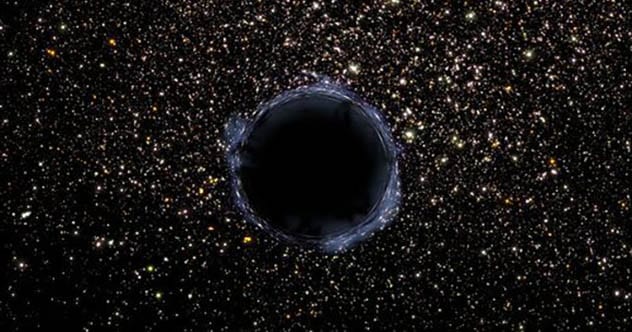

The universe is not just a giant black room sprinkled with stars like someone got carried away with glitter. It is a wildly organized, gloriously chaotic, physics-powered masterpiece filled with cosmic walls, galaxy rings, invisible matter, glowing bubbles, empty voids, and structures so large they make Earth feel like a breadcrumb on a stadium floor.
When astronomers talk about the most unusual structures in the universe, they are not exaggerating for dramatic effect. Some of these objects span millions or even billions of light-years. Others are smaller by cosmic standards but so strange in shape or behavior that they look like the universe paused, opened a design app, and clicked “surprise me.”
Below are ten of the strangest, most fascinating, and most mind-bending cosmic structures known to science. Some are beautiful. Some are mysterious. Some are so enormous that even calling them “large” feels like describing the Pacific Ocean as “a bit damp.”
1. The Cosmic Web: The Universe’s Giant Invisible Spiderweb
The cosmic web is the largest known pattern in the universe. Galaxies are not scattered randomly. Instead, they gather along vast filaments, sheets, clusters, and walls, with enormous voids in between. Imagine a sponge, a spiderweb, and a city subway map had a babythen made it billions of light-years wide.
This structure formed because gravity pulled matter together over cosmic time. Slightly denser regions in the early universe attracted more matter, eventually becoming galaxy clusters and superclusters. Less dense areas expanded into vast cosmic voids. The result is a breathtaking network where galaxies appear to ride along invisible highways made largely of dark matter.
What makes the cosmic web unusual is not only its size, but its hidden architecture. We see galaxies glowing, but much of the web’s scaffolding is dark matter, the mysterious substance that does not emit light but still shapes the universe through gravity. In other words, the universe has a skeletonand it is invisible. Very dramatic. Very on-brand for space.
2. The Hercules–Corona Borealis Great Wall: The Possible Champion of Cosmic Size
The Hercules–Corona Borealis Great Wall is often described as one of the largest possible structures ever detected. It was identified through unusual clustering patterns in gamma-ray bursts, which are among the most powerful explosions in the universe. If confirmed as a single structure, it may stretch across many billions of light-years.
That size is both thrilling and controversial. Cosmology generally assumes that, at extremely large scales, the universe should look roughly the same in every direction. A structure this massive could challenge that expectation, which is why scientists continue to debate whether it is a true connected structure or an apparent pattern produced by limited data.
Either way, the idea is spectacular. A wall of cosmic activity so vast that light itself would need billions of years to cross it sounds like something invented by a science-fiction writer who had three coffees and no editor. Yet the discussion around it is serious science: astronomers use these giant structures to test whether our models of the universe are complete.
3. The Boötes Void: A Cosmic Room With Almost Nobody Home
If galaxy clusters are the universe’s crowded downtowns, the Boötes Void is the abandoned parking lot at 3 a.m. It is one of the most famous cosmic voids, a huge region of space containing far fewer galaxies than expected. Its diameter is commonly described as hundreds of millions of light-years across.
What makes the Boötes Void so eerie is the contrast. In a typical region of similar size, astronomers would expect to find many more galaxies. Instead, this area is astonishingly sparse. It is not completely empty, but by cosmic standards, it is deeply underpopulated.
The void helps scientists study how matter clumps together over time. Cosmic voids are not failures in the universe’s design; they are part of the design. As gravity pulls matter into filaments and clusters, empty regions become emptier. Still, there is something wonderfully spooky about a place so large and quiet that even galaxies seem to have RSVP’d “no thanks.”
4. Laniakea Supercluster: Our Enormous Cosmic Neighborhood
The Laniakea Supercluster is the vast region of galaxies that includes the Milky Way. Its name means “immense heaven,” which is poetic, accurate, and frankly much better than “Galaxy Neighborhood Zone 47.” Laniakea contains around 100,000 galaxies and stretches across hundreds of millions of light-years.
Laniakea is unusual because it defines our place in the universe not by where galaxies appear on the sky, but by how they move. Astronomers mapped galaxy motions and found that many nearby galaxies seem to flow toward a gravitational region associated with the Great Attractor.
Here is the twist: superclusters like Laniakea are not necessarily tightly bound objects. The expansion of the universe means many parts of these enormous structures will drift apart over time. So our cosmic “home” is more like a temporary grand neighborhood than a permanent apartment building. The lease, apparently, is written by dark energy.
5. The BOSS Great Wall: A Billion-Light-Year Galaxy Mega-Structure
The BOSS Great Wall is a huge complex of superclusters identified using data from the Baryon Oscillation Spectroscopic Survey, part of the Sloan Digital Sky Survey. It is often described as being over a billion light-years across, making it one of the largest known arrangements of galaxies.
This structure is not a wall in the brick-and-mortar sense. There are no cosmic contractors, no scaffolding, and no tiny alien hard hats. Instead, it is a gigantic arrangement of galaxy superclusters forming a wall-like pattern in the cosmic web.
The BOSS Great Wall matters because it helps astronomers understand the boundary between real cosmic structures and chance alignments. At these scales, defining what counts as a single object becomes surprisingly tricky. Is it one connected structure? A complex of neighboring structures? A cosmic optical illusion? The answer depends on careful statistics, mapping, and a willingness to admit that space is very good at making our labels look silly.
6. The Giant Arc: A Crescent That Puzzles Cosmologists
The Giant Arc is a reported large-scale structure made of galaxies, galaxy clusters, gas, and dust. It appears as a vast crescent-shaped arrangement billions of light-years away and is estimated to span roughly 3.3 billion light-years.
Its unusual shape and scale make it a cosmological eyebrow-raiser. The standard model of cosmology works extremely well, but discoveries like the Giant Arc encourage scientists to keep testing it. If the universe should become smooth at very large scales, then structures of this size demand close attention.
The Giant Arc is also a reminder that modern astronomy is not just about taking pretty pictures. It is about massive sky surveys, data analysis, spectroscopy, and patient pattern-hunting. Sometimes the universe whispers its weirdest secrets not through a dramatic explosion, but through a suspiciously curved line of distant galaxies.
7. Fermi Bubbles: Giant Gamma-Ray Balloons Above and Below the Milky Way
The Fermi Bubbles are two enormous lobes of gamma-ray emission extending above and below the center of the Milky Way. Discovered using NASA’s Fermi Gamma-ray Space Telescope, these structures reach tens of thousands of light-years from the galactic center.
They look like the Milky Way is blowing a pair of high-energy bubbles. Which, in a sense, it might be. Scientists think the bubbles may be connected to past activity from the supermassive black hole at the center of our galaxy or intense episodes of star formation near the core.
What makes them unusual is that they were hidden in plain sight. They do not glow in visible light the way stars do, so astronomers needed gamma-ray observations to reveal them. The discovery changed how we think about the Milky Way, proving our galaxy has a more dramatic history than its calm, starry appearance suggests. The Milky Way is not just a spiral galaxy; it has a backstory.
8. The Pillars of Creation: Star-Forming Towers of Gas and Dust
The Pillars of Creation are towering columns of gas and dust inside the Eagle Nebula, about 6,500 light-years away. They became famous through Hubble Space Telescope images and later appeared in stunning new detail through the James Webb Space Telescope.
These pillars are unusual because they are both destructive and creative. Dense regions inside them can collapse to form new stars, while radiation and stellar winds from nearby young stars erode the columns from the outside. It is cosmic construction and demolition happening at the same time.
Their name sounds almost mythological, but the physics is very real. Dust blocks some wavelengths of light, while infrared observations reveal hidden stars and structure inside. The Pillars show that star birth is not gentle. It is turbulent, radiant, messy, and majesticbasically a cosmic nursery with fireworks and no quiet hours.
9. Hoag’s Object: A Galaxy That Looks Like a Cosmic Bullseye
Hoag’s Object is one of the strangest-looking galaxies ever imaged. It has a nearly perfect ring of hot blue stars surrounding a yellowish central core, with a dark-looking gap between them. It resembles a celestial life preserver, a glowing donut, or the universe’s fanciest bagel.
The mystery is how it formed. Some ring galaxies are created by collisions, but Hoag’s Object does not show an obvious intruder galaxy nearby. Astronomers have proposed different explanations, including past interactions or unusual internal dynamics, but the object remains delightfully puzzling.
Its beauty comes from contrast: young blue stars in the outer ring, older stars near the center, and a wide separation that makes the whole galaxy look engineered. Of course, it was not engineered. Gravity, motion, gas, and time did the work. Still, if the universe ever opened a jewelry store, Hoag’s Object would be in the front window.
10. The Cartwheel Galaxy: A Galactic Collision Frozen in Motion
The Cartwheel Galaxy is a rare ring galaxy shaped by a high-speed collision. A smaller galaxy likely passed through a larger one, sending ripples outward like waves in a pond. The result is a bright inner ring, a larger outer ring, and spoke-like features that give the galaxy its wheel-like appearance.
Images from the James Webb Space Telescope revealed new details in the galaxy’s dust, star formation, and structure. The outer ring is especially active, filled with young stars and star-forming regions triggered by the expanding collision wave.
The Cartwheel is unusual because it captures a violent event in a graceful shape. It is the aftermath of a cosmic crash, but instead of looking like wreckage, it looks like art. That is one of astronomy’s great tricks: the universe can turn chaos into symmetry, then make us stare at it for decades trying to understand what happened.
Bonus Oddity: Einstein Rings and Dark Matter Rings
Some of the universe’s strangest structures are not objects in the usual sense but visual and gravitational effects. Einstein rings form when a massive foreground object bends the light of a more distant object behind it. If the alignment is nearly perfect, the background light appears as a ring or arc around the foreground galaxy.
These rings are not just pretty. They help astronomers measure mass, study dark matter, and observe galaxies too distant or faint to see clearly otherwise. Gravity becomes a natural telescope, which is convenient because building a telescope the size of a galaxy would probably exceed most research budgets.
Another strange example is the dark matter ring observed in galaxy cluster Cl 0024+17. Astronomers mapped distorted background light and inferred a ring-like distribution of dark matter. Since dark matter cannot be seen directly, structures like this help reveal where it hides and how it behaves after massive cluster collisions.
Why These Strange Cosmic Structures Matter
The most unusual structures in the universe are more than space trivia. They are clues. Cosmic walls and arcs test our understanding of large-scale structure. Voids reveal how gravity sculpts emptiness. Galaxy rings show the aftermath of collisions. Nebula pillars expose the drama of star birth. Gamma-ray bubbles uncover ancient activity in our own galaxy.
Each structure teaches us something about the universe’s past and future. They help answer big questions: How did galaxies form? What is dark matter doing? Is the universe truly uniform on the largest scales? How do black holes influence galaxies? Why does gravity organize matter into webs instead of cosmic soup?
They also remind us that science is not a dusty shelf of finished answers. It is a living conversation. New telescopes, sky surveys, and observatories keep adding detail, correcting old assumptions, and occasionally dropping a cosmic plot twist large enough to ruin everyone’s weekend plans.
Experiencing the Universe From Earth: A 500-Word Cosmic Reflection
Most of us will never visit the Cartwheel Galaxy, float beside the Fermi Bubbles, or take a scenic weekend drive through the Boötes Void. Even if we packed snacks, the travel time would be a problem. Yet the strange thing about astronomy is that distance does not prevent experience. We experience these structures through images, data, imagination, and the quiet shock of realizing that reality is far bigger and weirder than our daily routines suggest.
Looking at the Pillars of Creation, for example, feels almost personal. The image is beautiful, but it is not merely decoration. It shows stars being born inside clouds that are also being torn apart. That mix of creation and erosion feels familiar in a human way. Life on Earth works like that too: things grow, change, collapse, and become material for something new. Space has a way of making ordinary experiences feel connected to something ancient.
The Boötes Void creates a different emotional reaction. It is not dazzling like a nebula or stylish like Hoag’s Object. Its power comes from absence. Thinking about a region hundreds of millions of light-years wide with so few galaxies can make a person feel tiny, but not necessarily in a sad way. It is more like standing in a dark desert under a clean sky and realizing silence has its own scale.
Then there are structures such as the cosmic web and Laniakea. These make the universe feel less like a random explosion of stuff and more like an evolving system with shape, flow, and memory. The Milky Way is not alone. It belongs to a local group, which belongs to a larger supercluster, which sits within an even greater cosmic web. That layered sense of belonging is oddly comforting. Even galaxies have neighborhoods.
Images of ring galaxies can spark another kind of experience: playful amazement. Hoag’s Object looks too perfect, almost like a prank. The Cartwheel Galaxy looks like a wheel rolling through deep space. These objects remind us that science does not remove wonder; it sharpens it. Knowing that gravity and collisions made these forms does not make them less magical. It makes the magic more impressive because it actually happened.
For writers, students, skywatchers, and curious readers, unusual cosmic structures offer a powerful mental reset. After a long day of emails, traffic, bills, and mysteriously disappearing phone chargers, it helps to remember that the universe contains galaxy walls, dark matter rings, gamma-ray bubbles, and glowing towers where stars are forming. Space is the ultimate perspective machine.
The best experience related to these structures may be the simple act of looking up. You cannot see the cosmic web with your naked eye, but you can see stars. You can recognize that every point of light belongs to a universe with architecture beyond imagination. The night sky becomes not just a ceiling, but a doorway. And once you know what is out there, the doorway never quite closes again.
Conclusion
The top 10 most unusual structures in the universe show that space is not empty, boring, or simple. It is filled with patterns so huge they challenge cosmology, shapes so strange they look designed, and invisible forces that sculpt everything from galaxy clusters to star-forming clouds.
From the cosmic web to the Cartwheel Galaxy, from the Boötes Void to the Fermi Bubbles, these structures prove that the universe has a flair for drama. It builds, bends, spins, collides, stretches, hides, reveals, and occasionally creates something that looks suspiciously like a glowing donut. Science gives us the tools to understand these wonders, but wonder itself remains the best reason to keep looking.
SEO Tags