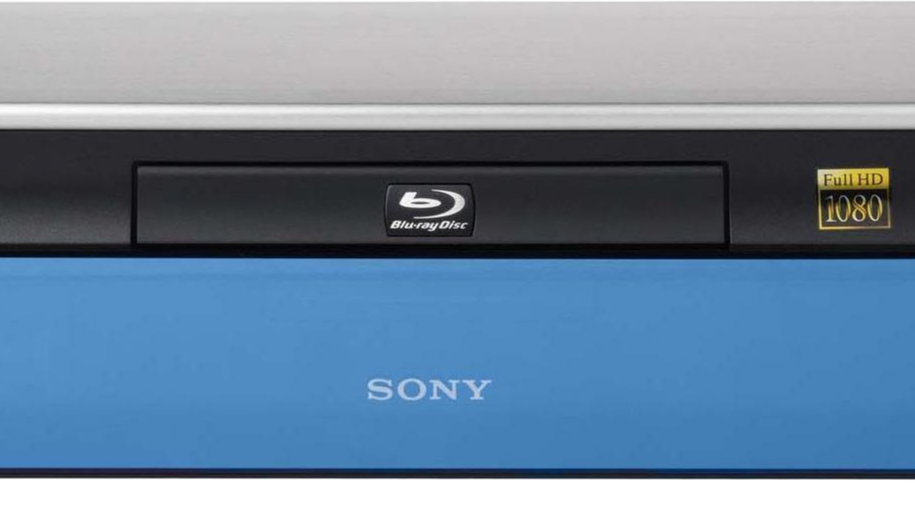

For a hot second in the mid-to-late 2000s, home entertainment became a gladiator match fought with shiny plastic circles. On one side: HD DVD, backed by Toshiba and a handful of major allies. On the other: Blu-ray, backed by Sony, powerful studio support, and one very sneaky piece of strategy called the PlayStation 3. It was a genuine format war, complete with corporate chest-thumping, confused shoppers, expensive hardware, and enough acronym soup to make a Best Buy aisle feel like a graduate seminar in laser physics.
And then Blu-ray won.
At least, that is the headline version. The longer and much more interesting version is that Blu-ray won the battle for high-definition physical media just as the world started losing interest in physical media altogether. That is what makes the story so weird, so funny, and honestly a little tragic. Blu-ray did what every new format dreams of doing: it beat its rival, became the standard, and secured major industry backing. Then it turned around and discovered that the party had already moved to streaming.
So yes, Blu-ray won. But the better question is the one in the title: at what cost?
The Format War That Made Everyone Tired
To understand why Blu-ray’s victory feels bittersweet, you have to go back to the problem both formats were trying to solve. DVD was a monster success, but high-definition televisions were becoming more common, and standard DVDs suddenly looked a little soft around the edges. Consumers wanted sharper pictures, better sound, and discs that could hold more data. The industry responded in the most industry way possible: by creating two incompatible next-generation formats and daring regular people to figure it out.
That was the first cost. Consumer confusion was not a side effect of the Blu-ray vs. HD DVD war. It was the war. If you bought the wrong player, you were stuck. If your favorite studio supported the other format, you were annoyed. If you were the average shopper just trying to watch a movie in better quality, you had every reason to stand in the aisle, squint at two expensive boxes, and decide to go home instead.
Blu-ray eventually pulled ahead for several reasons. It had more storage capacity, which gave it room to market itself as the more future-ready option. It built a stronger coalition of studio and hardware support. And then Sony made one of the boldest moves of the era by putting a Blu-ray drive inside the PlayStation 3. Suddenly, every PS3 was not just a game console. It was also a Blu-ray machine sitting in millions of living rooms.
Why the PS3 mattered more than people admit
The PS3 was not cheap, but compared with early standalone Blu-ray players, it looked almost reasonable. That mattered. In tech history, convenience usually wins. The PS3 turned Blu-ray from “another gadget you might buy” into “a bonus feature on the gadget you already want.” It gave Blu-ray a distribution engine, a cultural halo, and a way into homes that HD DVD never matched with the same force.
Warner Bros. going Blu-ray-exclusive in early 2008 was the tipping point. Once that happened, the format war stopped looking like a contest and started looking like a funeral with better packaging. Toshiba pulled the plug on HD DVD shortly after, and the scoreboard said Blu-ray had done it.
Blu-ray Won the War, Then Met a Bigger Enemy
The irony is almost too perfect. Blu-ray finally got what it wanted: one standard, cleaner messaging, broader studio support, and room to grow. But by the time that uncertainty disappeared, consumer behavior was already changing. The real threat to Blu-ray was not HD DVD. It was the slow but relentless shift from ownership to access.
Streaming did not kill Blu-ray overnight. It did something more subtle and more devastating: it made discs feel less necessary. That is a harder enemy to fight because it does not ask consumers to pick sides. It just asks them to stop caring. Why compare formats when a button on your remote says “Play”? Why build a shelf when an app promises a library? Why drive to a store when a subscription offers infinite choice, even if “infinite” turns out to mean “whatever is licensed this month”?
Blu-ray’s victory came at the exact moment the broader home entertainment market was shifting from quality-first to convenience-first. That is the second cost. Blu-ray won the technical argument and lost the behavioral one.
Better quality was real, but convenience was louder
This is the maddening part for physical media fans: Blu-ray really was better in meaningful ways. It delivered stronger video quality, better audio, and a more premium home theater experience than compressed streaming for years. It also offered extras, commentaries, booklets, alternate cuts, and the deeply endangered joy of actually owning the thing you paid for.
But convenience has a way of flattening nuance. Most consumers will choose “good enough and easy” over “better but more complicated” almost every time. Blu-ray asked people to buy a player, buy discs, store discs, and care about formats. Streaming asked them to remember one password. You can probably guess which pitch aged better.
The Hidden Costs of Blu-ray’s Victory
1. The cost to consumers
Early adopters paid dearly for the privilege of watching this whole mess unfold in high definition. Players were expensive. Some setups required TV upgrades to really appreciate the jump in picture quality. HDMI and HDCP quirks made simple movie night feel weirdly technical. Even after the format war ended, prices did not immediately drop into impulse-buy territory. So Blu-ray won, but plenty of shoppers were left thinking, “Great, now can it please stop costing a small fortune?”
And there was another issue: timing. A format war makes cautious buyers more cautious. Many people delayed purchases until a winner emerged. By the time Blu-ray became the clear standard, some of those buyers had already started drifting toward digital rentals, downloads, and later subscription streaming. The war taught consumers to wait. The market then rewarded them for waiting even longer.
2. The cost to the companies that backed the losing side
Format wars create collateral damage. Companies that backed HD DVD had to absorb sunk costs, rethink hardware plans, and move on from a failed bet. Retailers had to reconfigure inventory. Manufacturers that made hybrid or combo devices were left in an awkward spot. Studios that played both sides spent years navigating a chaotic release strategy instead of focusing on one clear format. When people talk about Blu-ray “winning,” they often skip the fact that the whole battle burned resources that could have gone into making the eventual transition cheaper and smoother for everybody.
3. The cost to physical media itself
This may be the biggest irony of all: the format war damaged consumer confidence in the exact category it was supposed to expand. Instead of making next-generation discs irresistible, the battle made them feel risky. It slowed adoption, split catalogs, muddied marketing, and turned what should have been a clean upgrade path into a loyalty test.
By the time one format finally emerged, the category had already lost momentum. Blu-ray did not inherit a booming empire. It inherited a market that had been bruised, delayed, and partially distracted by digital alternatives.
4. The cost to mainstream retail culture
One underrated casualty of the post-Blu-ray era is the physical browsing experience. There was a time when wandering through rows of discs was part of how people discovered movies. You found something because the cover looked cool, because the steelbook was shiny, or because the bargain bin whispered your name like a mischievous gremlin. That culture has shrunk dramatically.
As major retailers backed away from discs, Blu-ray stopped feeling like a mass-market habit and started feeling like a collector hobby. That is not nothing. Collector culture is passionate and durable. But it is smaller. Blu-ray won standardization only to watch distribution narrow around it.
What Blu-ray Actually Did Right
For all the irony, it would be unfair to write Blu-ray’s story like it was a pointless detour. It absolutely mattered. It preserved a high-quality home video format at a moment when image quality and sound design still had a fighting chance in mainstream living rooms. It became an important bridge between DVD and 4K UHD Blu-ray. It also helped preserve the idea that movies can be owned, archived, revisited, and experienced outside the whims of licensing deals and rotating catalogs.
That last part matters more now than it did when Blu-ray first took the throne. In the streaming era, people routinely discover that a purchased digital title can be removed, a show can vanish, a bonus feature can disappear, or a version can be edited without much warning. Physical media fans sound less like nostalgists these days and more like people who correctly predicted the future.
The collector paradox
Blu-ray’s afterlife has become strangely dignified. It is no longer the default. It is the premium option. That means the format survives through enthusiasts, cinephiles, restoration fans, and collectors who care about transfers, bitrates, packaging, and liner notes. In other words, Blu-ray did not become the new DVD. It became something more niche and, in some ways, more prestigious.
That is both a compliment and a limitation. A niche format can be healthy without being dominant. It can be loved without being central. It can remain culturally important without ever becoming the everyday norm its backers once imagined. Blu-ray won, but it won into a smaller future than the one it had been fighting for.
So, At What Cost?
At the cost of consumer trust, at least in the short term. At the cost of money spent on a war that confused more people than it converted. At the cost of momentum for physical media just as a digital transition was accelerating. At the cost of turning a potentially universal format into a somewhat boutique one.
And maybe, on a more symbolic level, at the cost of winning the wrong war. Blu-ray defeated HD DVD. No argument there. But the bigger battle was always about how people wanted to live with entertainment. Did they want shelves or servers? Ownership or access? Permanent copies or endlessly refreshed convenience? Blu-ray had a brilliant answer for a question the mainstream was slowly starting to stop asking.
That does not make Blu-ray a failure. It makes it a fascinating success story with a twist ending. It won exactly what it was designed to win, and then discovered the world had moved one lane over.
Experience: What Living Through the Blu-ray Era Actually Felt Like
If you lived through the Blu-ray era as a normal consumer instead of a trade publication analyst with a laser chart addiction, the experience was oddly theatrical. First came the hype. Everything was “next generation,” “full HD,” or “cinematic,” and the sales pitch suggested that once you saw a movie in true high definition, you would never emotionally recover from regular DVD again. That part, to be fair, was not entirely wrong. Blu-ray on a decent setup looked fantastic. You really could see more texture, more detail, and more of the little visual decisions filmmakers actually cared about.
But then came the practical side, and that was where the romance took a beating. You had to ask yourself whether your TV was good enough, whether your cables were the right ones, whether your player supported the newer features, and whether the movie you wanted was even available in the format you owned. It was like being told you had bought a luxury car and then learning the steering wheel was sold separately.
There was also a certain social comedy to the whole thing. One friend had a PS3 and smugly insisted it was the smartest entertainment purchase of the decade. Another had backed HD DVD because the players were cheaper and now spoke about the format with the wounded dignity of a man who had invested emotionally in the wrong horse. Someone else refused to buy anything until the war ended, which turned out to be the most financially responsible move in the room. Blu-ray created tiny tribes of certainty in a market built on uncertainty.
Then streaming crept in, not with a dramatic explosion but with a slow rearrangement of habits. Suddenly the question changed from “Which disc format should I buy?” to “Why am I buying discs at all?” That was the weirdest part. Blu-ray did not become uncool because it stopped being good. It became less central because watching habits changed around it. Movie night became less about selecting a title from a shelf and more about scrolling, previewing, abandoning, and pretending that decision fatigue is a form of entertainment.
Even so, the Blu-ray experience left behind something valuable. It reminded people that quality can be visible, that ownership can matter, and that extras are not trivial fluff but part of how movies are documented and appreciated. Opening a disc case, reading the booklet, hearing an uncompressed soundtrack, and knowing the movie would still be there next month had a quiet kind of luxury to it. In hindsight, Blu-ray feels like the last mainstream moment when home media still believed that movies were objects worth keeping, not just files worth renting from the cloud until a licensing agreement got cranky.
That is why the format still inspires loyalty. Not because everyone wants to go backward, but because a lot of people have now seen what “frictionless convenience” can cost. Blu-ray may not have become the universal king its supporters imagined, but it became something else: proof that the best format does not always become the dominant culture. Sometimes it just becomes the one people miss after they traded it away.
Conclusion
Blu-ray won the format war in the plainest sense possible. It outlasted HD DVD, secured studio support, leveraged the PS3 brilliantly, and became the standard for high-definition physical media. But the victory came with a bill. The battle confused buyers, slowed adoption, raised costs, and gave precious time to a much bigger force: the rise of streaming and the decline of ownership-based media habits.
That is the real answer to the question “Blu-ray won, but at what cost?” It won at the cost of inheriting a crown just as the kingdom was shrinking. Still, its story is not one of irrelevance. Blu-ray remains a symbol of quality, permanence, and a kind of movie fandom that values keeping what it loves. In a world where digital libraries can vanish and catalogs can change overnight, that feels less outdated than ever.