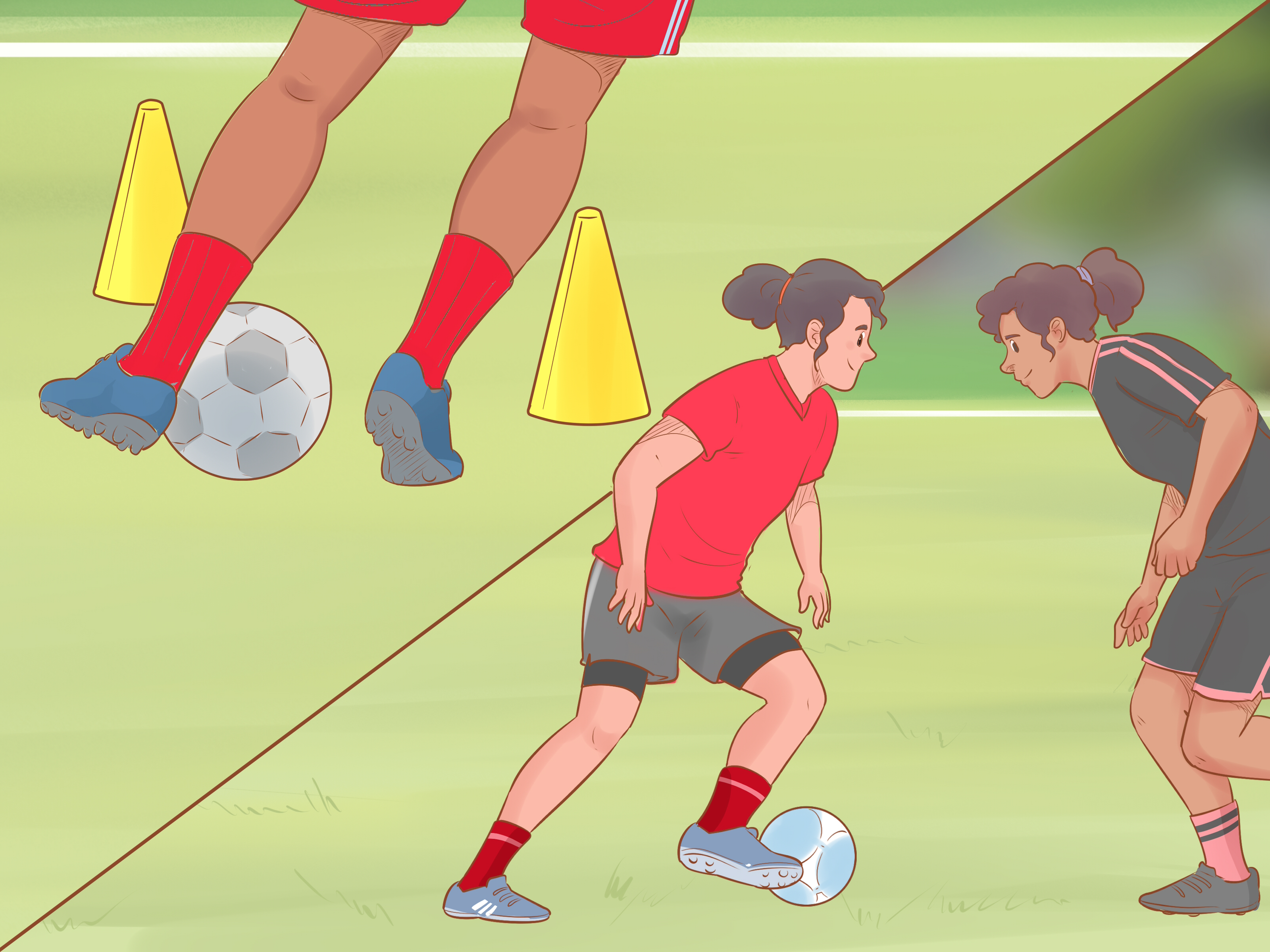

Learning how to dribble a soccer ball past an opponent is one of the most exciting skills in the game. It is the moment when the field seems to pause, the defender leans the wrong way, and you glide past like you just found a secret shortcut on a video game map. But great dribbling is not just about flashy footwork or copying highlight clips. It is a blend of timing, body control, close touches, decision-making, confidence, and knowing when not to dribble at all.
Whether you are a winger trying to beat a fullback, a midfielder escaping pressure, or a beginner who simply wants to stop donating the ball to defenders like it is a holiday gift, this guide will show you how to dribble with purpose. We will break down the fundamentals, the best moves, common mistakes, training drills, and real-game habits that help you beat an opponent in soccer without turning every possession into a circus act.
What It Really Means to Dribble Past an Opponent
To dribble past an opponent means using the ball, your body, and your movement to get beyond a defender while keeping possession. The goal is not always to humiliate the defender. The goal is to create space, move your team forward, open a passing lane, cross the ball, shoot, or draw another defender out of position.
Smart dribblers understand this: beating a defender is not only about the move. It is about the moment. A simple touch into space can be better than a complicated stepover. A body feint can be more dangerous than five unnecessary tricks. In soccer, the best dribble is often the one that solves the problem quickly.
The Core Principles of Beating a Defender
1. Keep the Ball Close Before You Attack
Close control is the foundation of successful soccer dribbling. When the ball stays near your feet, you can change direction quickly, protect possession, and react if the defender steps in. Think of the ball like a loyal dog on a short leash. If it wanders too far, trouble begins.
Use small touches with the inside, outside, and sole of your foot. Keep your knees slightly bent and your body relaxed. The closer you are to the defender, the closer your touches should be. In open space, you can push the ball farther ahead and sprint. Near pressure, short touches give you control.
2. Attack the Defender With Speed Under Control
One of the biggest mistakes players make is slowing down too much before taking on a defender. If you dribble at walking speed, the defender has time to read your move, check their calendar, and probably make a sandwich. You need to approach with enough speed to make the defender uncomfortable.
The key phrase is “speed under control.” Sprinting wildly at a defender usually ends with the ball bouncing away. Instead, accelerate toward the defender, shorten your steps as you get close, then use a move or change of direction at the right distance.
3. Change Pace After the Move
A dribbling move is only half the job. The real magic happens after the move, when you explode into the space you created. If you perform a beautiful body feint but jog afterward, the defender will recover. Beat the defender, then accelerate immediately.
This is why coaches often say, “Slow in, fast out.” Approach under control, sell the fake, then burst away. That first step after the move is often more important than the move itself.
4. Use Your Body, Not Just Your Feet
Good dribblers lie with their bodies. They drop a shoulder, bend a knee, turn their hips, glance one way, and then go the other. A defender watches more than the ball. If your body does not sell the fake, your feet are just doing expensive decoration.
To beat an opponent, exaggerate your fake just enough to shift the defender’s weight. If the defender leans right, go left. If they open their hips, attack the space behind them. If they plant their feet, accelerate before they can reset.
5. Read the Defender’s Balance
Dribbling is not random. You are looking for clues. Is the defender standing square? Are they forcing you toward the sideline? Are they reaching with one foot? Are they backing up too quickly? Are they flat-footed?
A defender who reaches is vulnerable to a quick touch away. A defender who turns sideways may be beaten by attacking the front foot. A defender who backs up gives you space to carry the ball forward. A defender who dives in can be beaten with a simple push past them. The better you read body shape, the fewer moves you need.
Step-by-Step: How to Dribble Past an Opponent
Step 1: Scan Before You Receive the Ball
The dribble begins before your first touch. Look over your shoulder and check the field. Where is the defender? Where is the space? Is there a teammate open? Is another defender covering behind?
Scanning helps you decide whether to dribble, pass, shield, or turn. Players who never look up often dribble straight into traffic and then act surprised, as if the other team appeared by magic.
Step 2: Take a Positive First Touch
Your first touch should help you face the defender or move into space. If the ball gets stuck under your feet, the defender can close you down. If your touch is too far, they can tackle. A good first touch sets up the duel.
For example, if you are on the wing and the defender is closing from the inside, your first touch may go down the line. If the defender is overprotecting the sideline, your first touch may bring you inside. The first touch is your opening sentence. Make it interesting.
Step 3: Approach at an Angle
Running directly at a defender can work, but approaching at a slight angle often gives you more options. It lets you threaten one direction while preparing to cut another. Angles also make the defender adjust their feet, which can create imbalance.
If you are near the sideline, angle your dribble so you can go either inside or outside. If you only leave yourself one path, the defender’s job becomes easy.
Step 4: Perform the Move at the Right Distance
Distance matters. If you do your move too early, the defender will not react. If you do it too late, they may tackle you before you finish. A useful guideline is to make your move when you are about one to two steps away from the defender, depending on your speed and the situation.
The move should force a decision. You want the defender to shift weight, open their hips, or step toward the fake. Once they commit, take the ball into the opposite space.
Step 5: Accelerate Into Space
After the move, push the ball into open grass and sprint. Use your body to get between the defender and the ball. This is called shielding while moving. Even if the defender recovers, your body position can prevent them from making a clean tackle.
Do not admire your own skill. Soccer has no replay button during the match. Beat the defender and keep playing.
Best Soccer Dribbling Moves to Beat a Defender
The Body Feint
The body feint is one of the simplest and most effective dribbling moves. Lean one way with your upper body, then use the outside of the opposite foot to push the ball into space. This move works because it attacks the defender’s balance.
Example: Dribble toward the defender, drop your left shoulder as if going left, then push the ball right with the outside of your right foot and accelerate.
The Scissors
The scissors move involves stepping around the ball with one foot to fake movement in that direction, then taking the ball the other way. It is especially useful for wingers and attacking players in one-on-one situations.
Do not make the scissors too slow or too wide. A quick, sharp step around the ball is more effective than a dramatic dance routine that gives the defender time to clap politely and tackle you.
The Stepover
A stepover is similar to the scissors but usually involves swinging your foot from outside to inside over the ball. The purpose is to suggest you are moving in one direction before cutting away.
The best stepovers are quick and connected to acceleration. If your move does not change the defender’s balance, simplify it.
The Stop-and-Go
The stop-and-go is perfect when a defender is running beside you. Slow down or pause with the sole of your foot, then explode forward. This move works because defenders often relax when they think you are stopping.
Use it near the sideline, in wide areas, or when carrying the ball at speed. The pause creates hesitation; the burst creates separation.
The Cut Inside
The cut inside is a classic move for wide players. Dribble toward the outside, then use the inside of your foot to cut the ball across your body. This can open a shooting lane, passing option, or central attacking space.
Sell the outside run first. If the defender does not believe you might go down the line, the cut inside will not work.
The Outside Touch Past the Defender
Sometimes the best move is no fancy move at all. Push the ball past the defender with the outside of your foot and sprint around them. This is especially useful when the defender is flat-footed or standing too close.
Make sure your touch is far enough to escape the tackle but not so far that another defender can collect it. Controlled aggression is the secret.
The Nutmeg
The nutmeg means playing the ball through the defender’s legs and running around them. It is fun, dramatic, and occasionally makes teammates make noises usually reserved for fireworks. But use it wisely.
A nutmeg works best when the defender’s legs are open, their weight is forward, and there is space behind them. If there is no space to recover the ball, it is not a dribble; it is a donation.
How to Protect the Ball While Dribbling
Beating a defender is easier when you know how to protect the ball. Use your body as a shield by placing yourself between the opponent and the ball. Keep your arm out for balance, not pushing. Bend your knees and stay strong through your hips and core.
When pressure comes from the side, use the foot farthest from the defender. If the defender is on your left, dribble with your right foot when possible. This creates distance between the opponent and the ball.
Shielding is not just for big players. Smaller players can protect the ball by staying low, using quick touches, and changing direction before the defender can lean on them.
When Should You Dribble Past an Opponent?
Great players know when to dribble and when to pass. Dribbling is useful when there is space behind the defender, when you are in a one-on-one situation, when beating the opponent creates a clear advantage, or when passing options are blocked.
You should think twice before dribbling if you are surrounded by multiple defenders, if you are near your own goal, if a teammate is in a better position, or if losing the ball would create a dangerous counterattack.
A smart dribbler is not selfish. A smart dribbler is selective. The goal is to help your team, not collect imaginary style points.
Drills to Improve Dribbling Past an Opponent
1. Cone Slalom Drill
Set up five to eight cones in a straight or zigzag line. Dribble through them using small touches with both feet. Focus on close control, quick changes of direction, and keeping your head up when possible.
To make it harder, time yourself or use only your weaker foot. Your weaker foot may complain at first, but it will eventually become useful instead of decorative.
2. 1v1 Channel Drill
Create a narrow channel with cones. One player attacks, and one player defends. The attacker must dribble past the defender and cross the end line under control. This drill teaches timing, body feints, acceleration, and decision-making under pressure.
Start with passive defending, then increase pressure. The goal is not just to perform moves but to choose the right move based on the defender’s position.
3. Change-of-Pace Drill
Dribble slowly for three touches, then explode for five yards. Repeat across the field. This drill trains the stop-start rhythm used to beat defenders. Add a cone as the “defender” and accelerate after passing it.
Remember: defenders hate sudden speed changes. It makes their feet panic.
4. Mirror Dribbling
Work with a partner. One player dribbles laterally while the other shadows as a defender. The attacker uses body feints and quick touches to create separation. After 20 to 30 seconds, switch roles.
This improves reaction speed and teaches you how defenders move. Understanding defense makes you a better attacker.
5. Small-Sided Games
Play 2v2, 3v3, or 4v4 games in tight spaces. Small-sided games create many dribbling situations because players receive the ball under pressure and must make quick choices.
Unlike cone drills, small games include real defenders, passing options, transitions, and mistakes. In other words, they look more like actual soccer and less like an obstacle course at a very athletic birthday party.
Common Mistakes When Trying to Beat a Defender
Looking Down Too Much
If you stare at the ball, you miss the defender’s movement and your teammates’ runs. Practice glancing down only when needed. Your eyes should scan the field often.
Using Too Many Moves
One good move is usually enough. Doing four tricks in a row may look impressive, but it often slows the attack. Be direct. Make the defender react, then go.
Dribbling Into Crowds
If you beat one defender but run into three more, you have not solved the problem. Look for space before committing. Sometimes the best dribble is diagonal, not straight forward.
Not Accelerating After the Move
This is the classic error. Players do the fake, win the moment, then stay at the same speed. The defender recovers and tackles. Every move needs an exit.
Ignoring the Weak Foot
If you can only dribble with one foot, defenders will force you the other way. Train both feet so you can attack inside, outside, left, and right.
How to Build Confidence in 1v1 Soccer Situations
Confidence comes from repetition. The more you practice dribbling moves, the more natural they feel in a game. Start with no pressure, then add passive pressure, then full pressure. Do not expect a move to work in a match if you have only practiced it twice in the backyard while wearing flip-flops.
Choose two or three moves and master them. For example, learn the body feint, scissors, and stop-and-go. Practice them on both sides. Once they become automatic, you can use them without overthinking.
Also, accept that you will lose the ball sometimes. Every creative player does. The goal is not perfection. The goal is learning when to take risks and how to recover quickly when a dribble fails.
Game Examples: How Different Players Beat Opponents
A winger often beats a defender by isolating them near the sideline, faking inside, then accelerating outside to cross. A central midfielder may beat pressure with a quick body feint and a touch across the body. A striker may use a small touch past a defender inside the penalty area to create a shot.
Professional players are not successful because they know thousands of moves. They are successful because they use simple moves at high speed with excellent timing. Watch elite dribblers and you will notice how often they rely on body shape, first touch, acceleration, and change of pace rather than complicated tricks.
Experience-Based Advice: What Actually Helps You Beat Defenders
One of the most useful lessons about dribbling past an opponent is that confidence has to be trained like technique. Many players can perform a move perfectly during warmups, then freeze when a defender stands in front of them. That is normal. A cone never tackles you, talks trash, or steals the ball and runs the other way. Real defenders create stress, and the only way to get comfortable is to practice against real pressure.
In actual games, the first successful dribble often changes everything. Once you beat a defender one time, they usually become more cautious. They may back up, give you space, or hesitate before tackling. That hesitation is gold. You can use it to carry the ball forward, pass around them, or attack again. So early in a match, try a simple, low-risk dribble in the right area of the field. Do not start by attempting a nutmeg in front of your own penalty box unless your coach enjoys dramatic emotional experiences.
Another practical experience is that defenders reveal patterns. Some always lunge with the same foot. Some always force you toward the sideline. Some are fast but impatient. Others are slower but strong and disciplined. After a few minutes, you should begin collecting clues. If a defender keeps diving in, use a quick touch away or a stop-and-go. If they keep backing up, carry the ball forward until they must commit. If they overprotect your strong foot, use that pressure against them by cutting onto your weaker side.
It also helps to understand that dribbling is not only an individual skill. Your teammates affect your success. If teammates make runs, defenders have to think about passing lanes, not just your dribble. If nobody moves, the defender can focus completely on you. Before taking on an opponent, glance for support. A simple wall pass may beat the defender more cleanly than a solo move. The best attackers make defenders guess between pass, shot, and dribble.
From a training perspective, the biggest improvement usually comes from practicing at game speed. Slow technical work is useful at first, especially when learning a new move. But eventually you must increase speed and pressure. Practice the exact rhythm of a real duel: approach, fake, touch, burst, recover. Add a finish or pass at the end so the dribble connects to an outcome. Beating a defender is great, but soccer rewards what you do next.
Finally, keep your personality in the skill. Some players are explosive and direct. Others are clever and deceptive. Some rely on strength, while others rely on quick feet. You do not need to become someone else. Build a dribbling style around your body, speed, and position. Master the basics, sharpen two or three reliable moves, and learn to read defenders. When you combine technique with timing, you stop hoping to beat opponents and start expecting to.
Conclusion
Dribbling a soccer ball past an opponent is a skill built on control, courage, and smart decision-making. You need close touches before pressure, a convincing fake, a change of pace, and an explosive exit into space. The best players do not dribble just to show off. They dribble to create an advantage.
Start with the fundamentals: keep the ball close, scan the field, attack the defender with controlled speed, use your body to sell the move, and accelerate after beating them. Practice simple moves like the body feint, scissors, stop-and-go, and outside touch. Then test those moves in real 1v1 drills and small-sided games.
Most importantly, be brave enough to try. You will lose the ball sometimes, but every attempt teaches you something about timing, pressure, and defenders. Keep training, keep scanning, and keep your dribbles purposeful. With enough practice, the defender in front of you will stop looking like a wall and start looking like a door waiting to be opened.