
Movies are magic, but movie sets are not magical places where gravity takes lunch breaks and prop guns read the script. Behind the camera, filmmaking can involve helicopters, trains, fire, animals, weapons, speeding vehicles, brutal weather, and tight schedules that make common sense sweat through its shirt. Most productions are safe because professionals plan every detail. But when planning failsor when pressure beats cautionthe results can be devastating.
This article looks at 10 horrific things that happened during movie filming, based on real, widely reported production incidents. Some changed safety rules. Some ended careers. Some cost lives. All of them remind us that “movie magic” should never come at the price of human safety.
1. The Twilight Zone: The Movie Helicopter Crash
One of the most infamous film set accidents in Hollywood history happened on July 23, 1982, during production of Twilight Zone: The Movie. Actor Vic Morrow and child actors Myca Dinh Le and Renee Shin-Yi Chen were filming a Vietnam War-style sequence involving explosions and a low-flying helicopter.
The scene became a catastrophe when pyrotechnics contributed to the helicopter losing control. It crashed onto the set, killing Morrow and the two children. The tragedy shocked the industry not only because of the deaths, but also because children were reportedly working late and around dangerous special effects.
The aftermath included lawsuits, criminal charges, and a long public debate about safety, child labor rules, stunt coordination, and directorial responsibility. The case remains a grim turning point in conversations about on-set risk management.
2. Brandon Lee’s Fatal Shooting on The Crow
Brandon Lee, son of martial arts legend Bruce Lee, was only 28 when he died while filming The Crow in 1993. During a scene in which his character was supposed to be shot, a prop gun fired a deadly projectile.
The accident involved a chain of failures. A bullet fragment had become lodged in the barrel from an earlier improperly prepared dummy round. Later, when a blank cartridge was fired, the force expelled that fragment, striking Lee. He died after emergency surgery.
The incident is still cited whenever movie firearm safety is discussed. It also gave The Crow a tragic legacy: a stylish gothic film forever tied to the death of its rising star.
3. The Rust Shooting That Killed Halyna Hutchins
Nearly three decades after Brandon Lee’s death, the film industry faced another fatal firearm incident. On October 21, 2021, cinematographer Halyna Hutchins was killed on the New Mexico set of the Western film Rust. Director Joel Souza was also injured when a revolver discharged during a rehearsal.
The tragedy led to intense scrutiny of weapons handling, live ammunition, production safety culture, and accountability on film sets. The movie’s armorer, Hannah Gutierrez-Reed, was convicted of involuntary manslaughter in 2024 and sentenced to 18 months in prison. Criminal charges against Alec Baldwin were dismissed in 2024, but the case remains one of the most discussed on-set disasters of the modern era.
The main lesson is painfully simple: real weapons on film sets require extreme control, and “cold gun” should never be treated like a magic spell that makes danger disappear.
4. Sarah Jones and the Midnight Rider Train Tragedy
In 2014, camera assistant Sarah Jones was killed during filming of Midnight Rider, a planned biopic about musician Gregg Allman. The crew was shooting on a railroad trestle in Georgia when a freight train came through. Jones was struck and killed, and several others were injured.
The horror of this incident was amplified by reports that the production did not have proper permission to film on the tracks. The accident became a rallying point for crew safety advocates and inspired the “Safety for Sarah” movement.
Film workers often operate behind the scenes, but this tragedy brought their risks into public view. It also reminded productions that no shot is worth gambling with a location that cannot be controlled.
5. The Big-Cat Chaos of Roar
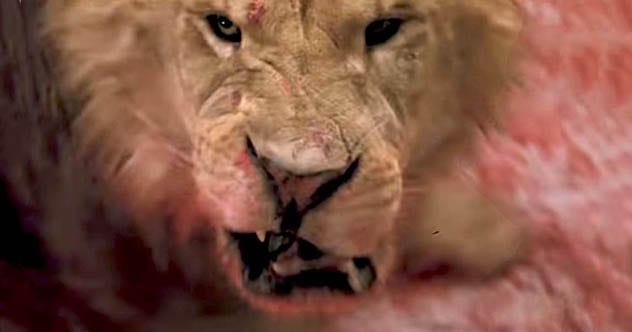
If there were an award for “Most Obviously Bad Idea That Still Became a Movie,” Roar would be a strong contender. The 1981 film featured real lions, tigers, cougars, jaguars, and elephants interacting with cast and crew. Not trained movie animals in the polished Hollywood senselarge, unpredictable animals with enough power to treat humans like chew toys with opinions.
Reports vary, but around 70 cast and crew members were injured during production. Tippi Hedren was hurt. Melanie Griffith reportedly required stitches and facial reconstruction after being mauled. Cinematographer Jan de Bont was badly injured by a lion and needed extensive medical treatment.
The film has since become a cult curiosity, partly because the danger is visible on screen. But the behind-the-scenes reality is not charming. It is a case study in what happens when ambition invites nature to improvise.
6. Burns and Toxic Makeup on The Wizard of Oz
The Wizard of Oz is one of the most beloved films ever made, but its production had a darker side. Buddy Ebsen, the original Tin Man, became seriously ill after inhaling aluminum dust used in his makeup. He was hospitalized and replaced by Jack Haley.
Margaret Hamilton, who played the Wicked Witch of the West, suffered severe burns during a fiery trapdoor scene. Her green makeup made the cleanup even more painful and dangerous, because the makeup had to be removed from burned skin.
There were other hazards too, including uncomfortable costumes, intense studio conditions, and old-school special effects that would make modern safety officers reach for coffee, paperwork, and possibly a megaphone. The yellow brick road looked cheerful, but the set was not exactly a spa day with flying monkeys.
7. The Double Disaster on Resident Evil: The Final Chapter
The filming of Resident Evil: The Final Chapter was marked by two severe incidents. Stunt performer Olivia Jackson was seriously injured in 2015 while filming a motorcycle sequence in South Africa. She suffered life-changing injuries and later had an arm amputated.
In a separate incident on the same production, crew member Ricardo Cornelius died after being crushed by a vehicle during an on-set accident. The combination of a catastrophic stunt injury and a crew death made this production one of the most tragic action shoots of recent years.
Action filmmaking can look effortless after editing, sound design, and visual effects do their work. But the people performing and supporting those scenes face real risks when vehicles, timing, and physical impact are involved.
8. Joi Harris’s Fatal Motorcycle Stunt on Deadpool 2
In 2017, stunt performer Joi “SJ” Harris died while filming Deadpool 2 in Vancouver. Harris, a professional motorcycle racer, was doubling for the character Domino in a motorcycle sequence. During the stunt, she lost control and crashed through a glass window.
The accident raised difficult questions about stunt preparation, performer experience, protective gear, and the pressure to match a character’s appearance. Harris was a skilled rider, but stunt work for camera is its own specialized discipline. Racing and screen stunts overlap, but they are not identical twins; they are more like cousins who both enjoy speed and bad ideas.
The tragedy pushed renewed discussion about stunt safety, especially for performers hired to match actors in race, body type, and appearance while still needing the right stunt-specific experience.
9. Art Scholl’s Death While Filming Top Gun
Top Gun helped make fighter jets look glamorous, but one aerial sequence came at a terrible cost. In 1985, legendary aerobatic pilot and aerial cameraman Art Scholl died while filming footage for the movie.
Scholl was flying a camera-equipped aircraft and reportedly entered a spin to capture dramatic footage. He was unable to recover, and the plane crashed into the Pacific Ocean. Neither Scholl nor the aircraft was recovered.
The film was later dedicated to him. His death is a sobering reminder that aerial cinematography, especially before today’s digital tools and drone options, demanded extraordinary courageand carried extraordinary danger.
10. Conway Wickliffe’s Death During The Dark Knight
Christopher Nolan’s The Dark Knight is known for practical effects, intense action, and a grounded visual style. But during production, special effects technician Conway Wickliffe died while working on a stunt-related sequence in 2007.
Wickliffe was filming from a vehicle during a car stunt test in the United Kingdom when the vehicle crashed into a tree. He suffered fatal injuries at the scene. The accident happened away from the finished glamour of Gotham, during the technical work that makes action cinema possible.
His death is a reminder that danger on a movie set is not limited to the stars in front of the camera. Camera operators, stunt teams, special effects crews, drivers, riggers, assistants, and technicians often stand closest to the hazards.
Why Do Horrific Film Set Accidents Happen?
Pressure Can Make Bad Decisions Look Normal
Film sets are expensive. Every delay costs money. When the sun is going down, the crew is tired, and the schedule is glaring at everyone like an unpaid bill, pressure can quietly push people toward risk. That is when safety rules matter most.
Realism Can Become a Dangerous Obsession
Audiences love practical stunts, real locations, real fire, real vehicles, and real physical impact. But “real” is not automatically better. If a fake gun, digital muzzle flash, controlled stage, or visual effect can protect people, realism should not be treated like a sacred golden statue.
Crew Members Need the Power to Say No
The safest sets are not just the ones with rules. They are the ones where people can stop work without fear of being mocked, replaced, or labeled difficult. A production culture that respects “no” is far more valuable than a director who can shout “action” dramatically.
Experiences and Lessons From These Movie Filming Disasters
When you read about these horrific things that happened during movie filming, the first reaction is usually shock. The second reaction is often disbelief: How could a helicopter fly that low near actors? How could live ammunition end up on a movie set? How could a crew be placed on train tracks? But the deeper experience is more uncomfortable. These tragedies often happened not because nobody knew danger existed, but because warning signs were ignored, underestimated, or buried under momentum.
For viewers, these stories change the way we watch movies. A motorcycle chase stops being only a cool sequence. A helicopter shot stops being only cinematic spectacle. A burning trapdoor or a crashing car becomes evidence of dozens of people working inches away from danger. Once you know what can happen behind the scenes, you begin to see film crews not as invisible helpers, but as skilled workers whose safety deserves the same respect as the final performance.
For filmmakers, the experience is even more direct. Every production, whether it is a blockbuster or a student short, has a safety culture. A tiny indie film may not have lions, helicopters, or fighter jets, but it can still have wet floors, overloaded extension cords, exhausted drivers, unsecured locations, fake weapons, or rushed decisions. Safety is not only for giant productions with walkie-talkies and catering trucks. It belongs anywhere someone says, “Let’s just get one more shot.”
The most practical lesson is that accidents rarely feel dramatic before they happen. They feel like shortcuts. They sound like, “It will only take a minute,” “We did it before,” “The train schedule should be clear,” or “The gun was checked.” Those phrases are dangerous because they create comfort without control. Real safety requires verification, not vibes.
Another important experience is emotional. These incidents are not trivia. They involve people with families, careers, talent, and futures. Brandon Lee was not just a famous name attached to a gothic cult film. Halyna Hutchins was not just a headline in a legal case. Sarah Jones was not just a symbol for crew safety. Each person mattered beyond the production that made their death public.
At the same time, remembering these events can do something useful. It can push audiences to value ethical filmmaking. It can encourage producers to budget for safety instead of treating it as paperwork. It can remind directors that leadership is not measured by how much risk they demand, but by how well they protect the people helping bring their vision to life. The best movie set is not the one where everyone suffers for art. The best movie set is the one where everyone gets to go home after making something unforgettable.
Conclusion
The history of cinema is filled with breathtaking creativity, but it also contains painful warnings. The most horrific movie filming accidents reveal what happens when dangerous tools, rushed schedules, weak oversight, and human confidence collide. From Twilight Zone: The Movie to Rust, from The Crow to Deadpool 2, these stories show that safety cannot be treated as a boring department with a clipboard. It is the foundation that allows art to exist without becoming tragedy.
Movies should thrill us, scare us, move us, and maybe make us question why anyone in a horror film ever investigates basement noises alone. But the terror should stay on screen. When the camera cuts, the people who made the scene should still be standing.
Note: This article is based on documented public reporting, historical production records, official investigations, and widely reported film industry safety cases. Source links are intentionally omitted to match the requested publishing format.