
A boy’s bedroom is more than a place to sleep. It is headquarters, imagination station, homework zone, toy airport, reading cave, sock-disappearing laboratory, and occasionally a very mysterious place where snack wrappers go to retire. The best boys’ bedroom ideas balance fun with function, personality with practicality, and style with enough storage to keep the floor from becoming an obstacle course.
Whether you are decorating for a toddler, a grade-school adventurer, a sports fan, a science lover, or a teen who suddenly has strong opinions about everything, the goal is the same: create a room that feels personal without becoming so theme-heavy that it needs a full remodel next year. The smartest kids’ bedroom designs use flexible furniture, layered lighting, durable materials, playful details, and storage systems that are easy enough for kids to actually use.
Below are 18 creative boys’ bedroom ideas for building a fun and personalized space that can grow, shift, and survive real life. Translation: yes, it can look great and still handle LEGOs, laundry, backpacks, books, and one suspiciously sticky toy dinosaur.
1. Start With a Flexible Theme, Not a Theme Park
Themed rooms are exciting, but the trick is to avoid decorating so specifically that the room becomes outdated when your child moves from dinosaurs to soccer to outer space in one dramatic afternoon. Instead of painting every wall with a giant jungle scene, try a flexible theme. For example, an adventure room can use earthy colors, a world map, wood shelves, and travel-inspired bedding. A space-themed room can include navy walls, glow-in-the-dark stars, and planet art without turning the ceiling into mission control.
This approach keeps the room playful while making updates simple. When interests change, you can swap art, bedding, pillows, and accessories instead of repainting the entire room.
2. Use a Statement Wall for Instant Personality
A statement wall is one of the easiest ways to make a boys’ bedroom feel custom. Peel-and-stick wallpaper, painted stripes, geometric patterns, murals, wood slats, or a chalkboard wall can create a strong focal point without overwhelming the room. A mountain mural behind the bed can make the room feel adventurous. A bold navy accent wall can make a small room feel cozy and polished. A graphic black-and-white pattern can work for younger kids and still look cool years later.
If you are nervous about bold color, keep the other walls neutral. The statement wall gets to have the fun while the rest of the room keeps the peace.
3. Choose a Bed That Does More Than Sleep
In a kid’s bedroom, the bed takes up serious real estate, so make it earn its rent. Storage beds with drawers underneath are great for clothes, sports gear, extra bedding, or toy bins. Loft beds can free up space below for a desk, reading nook, play area, or mini lounge. Bunk beds are a classic choice for shared rooms, sleepovers, or families who want to maximize floor space.
For a small boys’ bedroom, a bed with built-in shelves or drawers can reduce the need for extra furniture. That means more open floor space for playing, building, stretching, or dramatically flopping onto the rug after school.
4. Build a Reading Nook That Feels Like a Hideout
A reading corner does not need to be fancy. A soft chair, beanbag, floor cushion, wall-mounted bookshelves, and a good lamp can turn an unused corner into a cozy escape. For extra magic, add a canopy, small tent, or curtain around the nook. Kids love spaces that feel slightly tucked away, even if the “secret hideout” is three feet from the laundry basket.
Keep books facing outward on picture ledges or low shelves so younger children can see covers easily. For older boys, add a small side table for graphic novels, chapter books, headphones, or a water bottle.
5. Create a Homework Zone That Does Not Feel Like Detention
A desk area should be practical, but it does not have to feel boring. Choose a desk that fits the room, then add a comfortable chair, task lamp, pencil cups, and a simple bulletin board. A pegboard above the desk can hold supplies, headphones, small baskets, art, or reminders. Wall shelves keep books and school materials nearby without crowding the desktop.
The best study zones are distraction-light but personality-friendly. Let your child choose a poster, desk accessory, or color accent. A workspace with a little ownership is more inviting than one that screams, “Welcome to tax season.”
6. Mix Open and Closed Storage
Open shelves are great for displaying favorite books, trophies, models, collections, and decor. Closed storage is better for the less photogenic stuff: action figures, mismatched socks, craft supplies, old birthday party favors, and the tiny plastic pieces no one can identify but everyone is afraid to throw away.
A balanced storage plan uses both. Try cube shelves with baskets, under-bed drawers, closet organizers, wall hooks, and a storage bench. Label bins with words or pictures depending on the child’s age. The easier the system is, the more likely it is to survive past Tuesday.
7. Add a Sports-Inspired Room Without Going Overboard
A sports bedroom can be stylish if you focus on texture, color, and subtle references. Instead of covering every surface with team logos, use framed jerseys, pennants, a ball display shelf, or bedding in team-inspired colors. A basketball hoop over the door can be fun, but choose soft indoor balls unless you enjoy the sound of framed art surrendering.
For a timeless look, try navy, gray, white, tan leather, or deep green with wood furniture. These colors feel sporty without locking the room into one team or season.
8. Design a Space Room That Feels Out of This World
Space-themed rooms are popular because they work for many ages. Start with a dark blue, charcoal, or soft gray color palette, then add planet prints, star decals, constellation bedding, or a moon lamp. A ceiling with small glow stars can feel magical at bedtime, while framed NASA-style art gives the room a smarter, more polished look.
To keep it from feeling too young, avoid too many cartoon rockets. Mix in metallic accents, simple furniture, and clean-lined lighting. The result is cosmic, not chaotic.
9. Bring in Nature With an Adventure Bedroom
An outdoor-inspired bedroom is perfect for a child who loves camping, animals, hiking, fishing, or climbing trees. Use natural textures like wood, woven baskets, canvas, and cotton. Choose colors such as forest green, warm beige, slate blue, rust, or soft brown. Add a map, landscape prints, animal illustrations, or a tent-style canopy over the bed.
A nature-inspired boys’ bedroom can feel calm and imaginative at the same time. It also ages well because outdoor themes can shift from playful to mature with just a few accessory changes.
10. Use Bold Color in Smart Doses
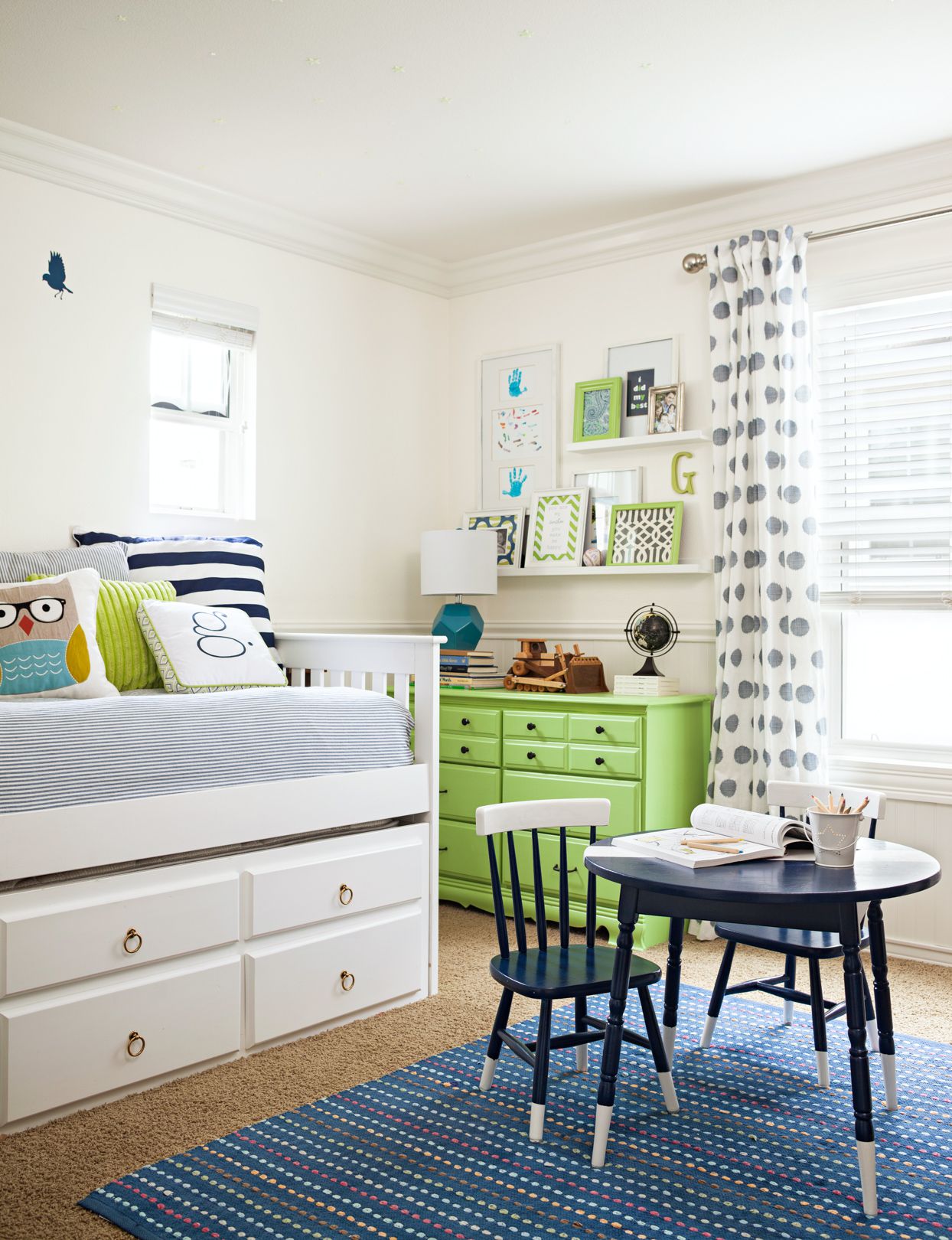
Color gives a kid’s room energy, but too much bright color can feel busy. A smart method is to choose one or two bold shades and repeat them in controlled ways. For example, use cobalt blue on a dresser, orange in throw pillows, or green on the lower half of the wall. Keep larger pieces like beds and wardrobes neutral so the room can change easily.
If your child wants a very bright color, consider using it inside shelves, on a door, in a painted stripe, or through bedding. This gives them the excitement without making the entire room look like a highlighter exploded.
11. Make a Shared Boys’ Bedroom Feel Fair
Shared bedrooms work best when each child has a sense of personal territory. Give each boy his own shelf, reading light, bedding style, storage bin, or wall section. Matching beds can create order, while different pillows or artwork help each personality show up.
Bunk beds, twin beds with a shared nightstand, or beds placed in an L-shape can all work depending on the room. The key is to create balance. No one wants the “good side” of the room to become a sibling negotiation worthy of a courtroom drama.
12. Add a Gallery Wall With Personal Meaning
A gallery wall is a great way to personalize a boys’ room without committing to one theme. Mix framed art, family photos, school artwork, favorite quotes, maps, pennants, small shelves, or shadow boxes. For younger kids, display their drawings. For older boys, include concert posters, photography, sports prints, or graphic art.
Use matching frames for a clean look or mix frame styles for a more collected feel. Leave room to add new pieces as interests change. A great kids’ gallery wall should feel alive, not frozen in a catalog.
13. Try a Loft Bed for Small-Room Magic
When floor space is limited, a loft bed can completely change the room. The area underneath can become a desk zone, gaming corner, reading nook, dresser area, or play space. This is especially useful in apartments, small homes, or rooms that need to serve multiple purposes.
Safety matters, so choose a sturdy loft bed with guardrails, a secure ladder, and an age-appropriate design. Keep the area below well lit. A small rug, clip-on lamp, or curtain can make the lower zone feel like a room within a room.
14. Include a Display Area for Collections
Many boys collect something: rocks, cars, trading cards, LEGO builds, trophies, books, shells, mini figures, robots, baseball cards, or extremely important sticks from the backyard. Instead of fighting the collections, give them a home.
Floating shelves, clear display boxes, wall-mounted ledges, corkboards, and small cubbies can turn collections into decor. This makes the room feel personal and keeps treasures from spreading across every flat surface like a tiny empire.
15. Layer Lighting for Sleep, Study, and Play
One ceiling light is rarely enough for a child’s bedroom. Layered lighting makes the room more comfortable and useful. Start with overhead lighting, then add a bedside lamp or wall sconce for reading. Use a desk lamp for homework and a night-light for younger children. String lights or LED strips can add atmosphere, but keep them tasteful and safe.
Warm bulbs create a cozy feeling, while brighter task lighting helps with reading and schoolwork. Good lighting can make even a simple room feel designed.
16. Choose Durable, Washable Materials
A boys’ bedroom should be designed for real life, not a museum tour. Choose washable rugs, sturdy furniture, performance fabrics, wipeable paint, and bedding that can survive frequent laundry. A low-pile rug is easier to clean than a shag rug, especially if small toys are involved. Spoiler: small toys are always involved.
Durability does not mean boring. Canvas bins, denim pillows, metal shelves, wood beds, and washable cotton quilts can look stylish while handling everyday use.
17. Add a Creative Zone for Art, Music, or Building
If your child loves making things, give creativity a clear place to happen. A small art table, building station, music corner, or craft cart can prevent supplies from taking over the room. Use rolling carts for markers, paper, tape, blocks, or model kits. Hang a corkboard or magnetic board to display finished projects.
The goal is not perfection. It is giving creativity a landing zone so the entire bedroom does not become one giant unfinished project with socks.
18. Design the Room to Grow With Him
The best boys’ bedroom ideas are flexible. Choose major furniture pieces that can last for years, then use easy-to-change elements for personality. Neutral beds, classic dressers, simple desks, and adjustable shelving can work from childhood into the teen years. Bedding, art, lamps, rugs, and accessories can change as your child’s taste changes.
Think of the room as a foundation, not a final version. A five-year-old may want dinosaurs. A ten-year-old may want gaming decor. A teenager may want a calm, grown-up space with fewer colors and more privacy. A flexible room can handle all of those chapters without requiring a full design emergency.
How to Pull the Whole Room Together
After choosing your favorite ideas, create a simple plan before buying anything. Start with the room’s main function. Does it need more storage? A better study area? Space for two kids? A calmer bedtime setup? Once you know the biggest need, the design choices become easier.
Next, choose a color palette. Three main colors are usually enough: one neutral, one main color, and one accent color. For example, try warm white, navy, and mustard; light gray, forest green, and black; or beige, denim blue, and rust. Repeat these colors through bedding, rugs, art, and storage to make the room feel intentional.
Finally, involve your child. Let him choose between approved options, such as two wallpaper patterns, three bedding sets, or a few art prints. This gives him ownership while keeping the design realistic. Because if you simply ask, “What do you want in your room?” there is a nonzero chance the answer will involve a trampoline, a vending machine, and a slide from the bed to the kitchen.
Real-Life Experience: What Actually Works in a Boys’ Bedroom
In real homes, the most successful boys’ bedrooms are not the ones that look perfect for one photo. They are the ones that make everyday life easier. A beautiful room that has nowhere for backpacks, shoes, books, and laundry will become messy fast. A simple room with smart storage, good lighting, and a few personal details often works much better than a room stuffed with trendy decor.
One practical experience many parents share is that low storage wins. Kids are more likely to use bins, hooks, and shelves they can actually reach. A high shelf may look neat, but if a child needs an adult every time he wants a book or toy, the system fails. Low cube shelves, under-bed drawers, rolling bins, and wall hooks near the door can make cleanup quicker and less dramatic.
Another lesson is that bedding changes the room quickly. If you are decorating on a budget, start with paint, bedding, and lighting before replacing furniture. A plain bed can look completely different with a striped quilt, textured throw, and fun pillows. A basic dresser can be updated with new hardware. A simple desk can feel custom with a pegboard and task lamp.
It also helps to leave open space. Adults often want to fill every corner, but kids need room to play, stretch, build, and spread out. Even older boys appreciate clear floor space, whether they use it for exercise, gaming with friends, building models, or sorting school projects. A room with breathing room feels calmer and is easier to clean.
Personalization matters most when it reflects the child, not a stereotype. Some boys love sports; others love art, reading, animals, science, cooking, music, or design. A great room pays attention to the actual child living there. Display his drawings, frame his favorite map, organize his LEGO builds, hang his guitar, or create a shelf for his favorite books. Those details make the room feel loved.
Finally, plan for change. Kids grow quickly, and their rooms should be able to grow with them. Avoid spending the entire budget on one ultra-specific theme. Instead, invest in a solid bed, quality storage, a comfortable desk, and lighting. Then have fun with decor that can be swapped later. The result is a bedroom that feels creative now and still makes sense later, which is basically the design version of buying shoes with a little growing room.
Conclusion
Creating a fun and personalized boys’ bedroom does not require a huge budget or a professional design team. It requires a thoughtful mix of imagination, storage, comfort, and flexibility. Start with the way your child actually uses the room, then layer in color, decor, lighting, and personal details that make the space feel like his own.
Whether you choose a loft bed, adventure theme, sports-inspired wall, reading nook, smart storage system, or creative display area, the best design is one that supports sleep, play, study, and self-expression. A great boys’ bedroom should feel fun today and adaptable tomorrow. And if it also makes cleanup a little easier, that is not just good design. That is household magic.