
Note: This article is synthesized from public aviation records and reputable aviation resources including NASA, FAA, the National Air and Space Museum, National Academies material, British Airways heritage information, accident investigation summaries, and major U.S. aerospace reporting.
Introduction: The Jet That Made Time Zones Feel Negotiable
For a few glamorous decades, the Concorde made the Atlantic Ocean feel like a puddle with a passport stamp. New York to London in roughly three and a half hours? Breakfast in Manhattan, lunch in Mayfair, and enough smugness to power a small airport terminal? That was the Concorde experience. It was sleek, white, needle-nosed, and fast enough to make ordinary jetliners look like they were politely jogging.
But the story of the Concorde is not just about luxury, champagne, and Mach 2 bragging rights. It is also about sonic booms, supersonic jet boom test flights, environmental concerns, high fuel costs, limited routes, maintenance headaches, one devastating crash, and a business model that needed more first-class wallets than the world could reliably provide.
Today, supersonic travel is back in the conversation thanks to NASA’s X-59 quiet supersonic aircraft, private companies such as Boom Supersonic, and renewed interest in rewriting old aviation rules. So what really happened to the Concorde? And why did the sound of speed become such a big problem? Buckle up. The seat belt sign is on, and yes, we are going faster than gossip in an airport lounge.
What Is a Sonic Boom?
A sonic boom is the loud, explosive sound produced when an aircraft flies faster than the speed of sound. At sea level, sound travels at about 761 miles per hour, though the exact number changes with temperature and altitude. When a jet exceeds Mach 1, pressure waves build up and merge into shock waves. Those shock waves travel to the ground as a boom.
Many people imagine a sonic boom as one single “bang” that happens only when a plane first breaks the sound barrier. In reality, a supersonic aircraft creates a boom continuously along its flight path. Think of a boat wake, but in the sky. The aircraft is not simply popping through an invisible wall; it is dragging a pressure signature behind it. That is why overland supersonic flight became controversial. One aircraft could create boom exposure across a long corridor, and people below did not exactly write thank-you notes.
Why Sonic Booms Became a Public Problem
Sonic booms can rattle windows, startle people, disturb sleep, interrupt conversations, and in some cases contribute to damage claims involving glass, plaster, and fragile structures. The noise is short, but it is sharp. It does not politely knock. It kicks the doorbell and runs.
In the 1950s and 1960s, the United States explored whether the public would tolerate routine sonic booms from future supersonic transport aircraft. Military jets could already fly faster than sound, and the dream was to bring that speed to commercial aviation. But dreams meet reality quickly when thousands of citizens hear thunder from a clear blue sky several times a day.
Supersonic Jet Boom Test Flights: The Oklahoma City Lesson
One of the most important episodes in sonic boom history took place in Oklahoma City in 1964. The Federal Aviation Agency, working with military aircraft, conducted a months-long program commonly associated with Operation Bongo II. The idea was to study how a major city would respond to regular sonic booms similar to those expected from future supersonic passenger jets.
Residents experienced repeated booms over many weeks. Surveys showed that some people said they could live with the noise, but the broader story was messier. Complaints arrived. Damage claims followed. Windows cracked. Public patience cracked faster. The tests became a symbol of the gap between engineering optimism and neighborhood reality.
The Oklahoma City tests did not single-handedly kill supersonic passenger travel, but they helped shape public and political resistance. They also gave regulators a hard lesson: speed in the sky is not only an aircraft-design problem. It is a community problem. A jet may be technically brilliant, but if it makes every dog in town believe the sky is attacking, the market becomes complicated.
Enter the Concorde: A Beautiful Solution With a Loud Catch
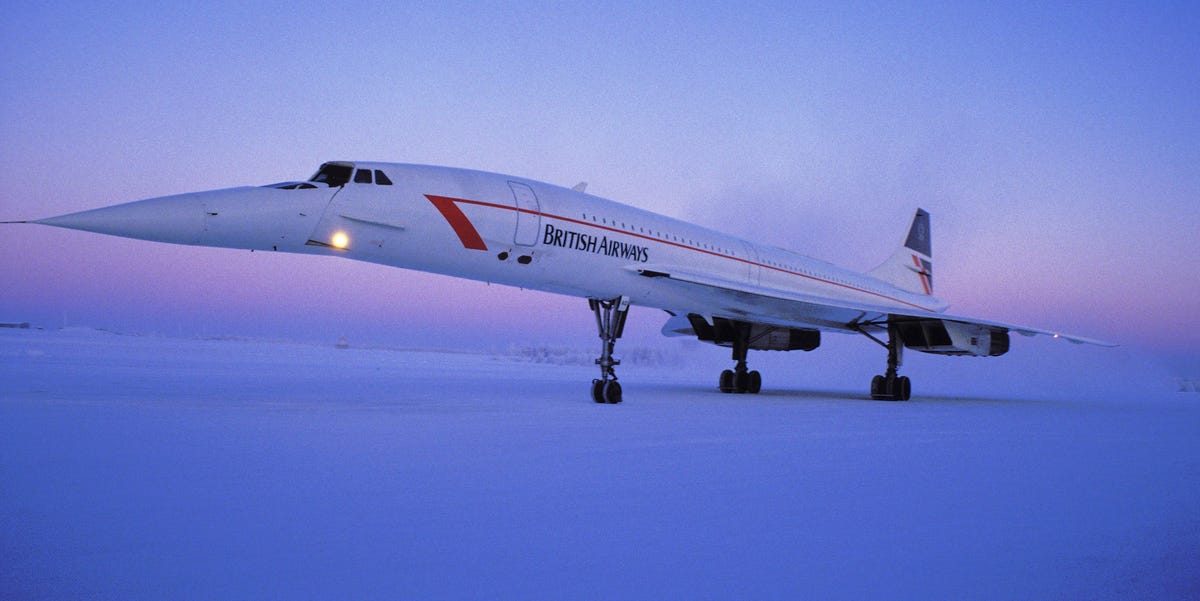
The Concorde was developed jointly by Britain and France and entered commercial service in 1976. It could cruise at about Mach 2, more than twice the speed of sound, at altitudes around 60,000 feet. Passengers flew high enough to see the curve of the Earth, which is a lovely perk if you can ignore the ticket price doing its own orbital launch.
Concorde was a masterpiece of aerodynamics. Its delta wing, long nose, powerful Rolls-Royce/Snecma Olympus engines, and heat-resistant structure made it one of the most recognizable aircraft ever built. It was not just transportation; it was a national symbol, a luxury product, and a technological flex in aluminum and afterburners.
Why Concorde Could Not Fly Everywhere
The problem was not that Concorde could not fly fast. It could. The problem was where it was allowed to fly fast. Because of sonic boom restrictions, Concorde was generally limited to supersonic speeds over oceans. That made routes such as London to New York and Paris to New York ideal. But U.S. coast-to-coast service, like New York to Los Angeles at supersonic speed, was not practical under overland restrictions.
This route limitation damaged the aircraft’s business case. A normal airliner can serve hundreds of city pairs. Concorde’s best use case was narrower: long overwater routes where wealthy passengers would pay a premium to save time. That is a market, but it is not a giant one. Concorde became famous around the world while serving only a very small slice of it.
The FAA Ban and the Supersonic Bottleneck
In the United States, civil aircraft operations above Mach 1 over land became heavily restricted because of sonic boom concerns. The rule effectively prevented routine commercial supersonic flight across the country. Aircraft could exceed Mach 1 only under special authorization, such as for test programs that met strict conditions.
For Concorde, this was a major limitation. The aircraft could arrive at New York from Europe after racing across the Atlantic, but it could not simply continue across the American continent at Mach 2. Imagine buying a sports car that can hit 200 mph, then being told the only place you can use that speed is a private driveway over the ocean. Useful? Yes. Transformational? Not quite.
Was Concorde Profitable?
The answer depends on which years, which operator, and how costs are counted. British Airways eventually turned Concorde into a prestigious premium product, selling expensive seats to business travelers, celebrities, and aviation enthusiasts. Air France had a tougher commercial experience. But even when the aircraft attracted high fares, it remained expensive to maintain, fuel, crew, and support.
Concorde burned a lot of fuel compared with subsonic wide-body aircraft. It carried only about 100 passengers. Its maintenance needs were specialized. Spare parts and engineering support became more challenging as the fleet aged. In aviation, small fleets are costly fleets. Airlines like standardization because every unique aircraft type demands its own training, parts inventory, procedures, and financial patience.
The Fuel Problem
Speed is expensive. Concorde used turbojet engines optimized for high-speed flight, not fuel-sipping efficiency. That was acceptable when the goal was pure performance, but commercial aviation is a business of margins. A slower Boeing 747 or later twin-engine wide-body could carry far more passengers at a lower cost per seat. Concorde won the race across the ocean but lost the spreadsheet contest.
The Ticket Price Problem
Concorde tickets were famously expensive. That exclusivity became part of its brand, but it also narrowed demand. The aircraft was not built for the family vacation market. It was for executives, diplomats, celebrities, and travelers who considered time more valuable than a small used car. When business travel softened, Concorde felt the impact quickly.
The 2000 Air France Crash: The Tragedy That Changed Everything
On July 25, 2000, Air France Flight 4590 crashed shortly after takeoff from Charles de Gaulle Airport near Paris, killing all 109 people on board and four people on the ground. Investigators found that the aircraft ran over a metal strip on the runway, which caused a tire to burst. Tire debris struck the wing area, fuel leaked, a major fire developed, and the aircraft was unable to recover safely.
The crash was the only fatal accident in Concorde’s commercial service history, but it damaged public confidence and triggered a grounding of the fleet. Modifications were made before Concorde returned to service, including improvements related to tires, fuel tank protection, and wiring. Yet the accident arrived at a terrible time for an aircraft already under economic pressure.
Then came the September 11, 2001 attacks, a global downturn in premium air travel, and rising airline financial stress. Concorde returned to service, but the world around it had changed. Fewer passengers were willing to pay ultra-premium fares, security procedures added friction to travel, and airlines were under pressure to cut costs rather than preserve icons.
Why Was Concorde Retired?
Concorde was retired because several problems converged at once. It was noisy, fuel-hungry, expensive to maintain, restricted by sonic boom rules, limited to a small number of profitable routes, and dependent on a premium passenger market that weakened after 2001. The 2000 crash did not by itself end Concorde, but it accelerated the end of an aircraft whose future was already fragile.
Air France ended Concorde service in 2003, and British Airways followed the same year. British Airways’ final scheduled Concorde flight from New York to London took place in October 2003. The aircraft that once made the future look fast became a museum piece, lovingly preserved but no longer roaring above the Atlantic.
Concorde Did Not Fail as an Aircraft
Calling Concorde a failure is too simple. It was an engineering triumph and a commercial challenge. It proved that passenger supersonic travel was possible, safe over many years, and deeply desirable to certain travelers. But it also proved that speed alone cannot defeat economics, regulation, noise, fuel burn, and route limitations.
In other words, Concorde did not lose because it was slow. It lost because everything around being fast was expensive.
Could Concorde Come Back?
A literal Concorde comeback is extremely unlikely. The aircraft are old, out of production, and no longer supported for commercial service. Restarting them would require enormous technical, regulatory, and financial effort. Museums can preserve Concorde’s beauty, but airlines cannot simply dust one off, fill the galley with champagne, and file a flight plan to JFK.
What may come back is the idea of Concorde: faster-than-sound passenger travel. But the next generation must solve problems Concorde could not solve fully. It must be quieter, cleaner, more fuel-efficient, easier to maintain, and commercially useful on more routes.
NASA’s X-59: The Quest for a Softer Boom
NASA’s X-59 aircraft is designed to test quiet supersonic technology. Instead of producing a classic loud sonic boom, the X-59 aims to create a softer “sonic thump.” Its long, slender shape is engineered to prevent shock waves from merging into the sharp pressure signature that creates the traditional boom.
The goal is not to build a passenger aircraft directly. The goal is to collect data. NASA plans to fly the X-59 over selected communities and measure how people respond to the quieter sound. That data can help regulators decide whether future supersonic aircraft should be judged by noise levels rather than a simple speed limit over land.
This is a major shift in thinking. The old rule was basically: faster than sound over land equals no. The new question is more nuanced: if a supersonic aircraft is quiet enough, should it be allowed? That is the heart of modern supersonic jet boom test flights.
Why the X-59 Matters
The X-59 matters because it addresses the barrier that trapped Concorde over the ocean. If future aircraft can fly over land without producing disruptive booms, supersonic travel becomes far more useful. Routes like New York to Los Angeles, Chicago to San Francisco, or Miami to Seattle could become realistic high-speed markets.
Of course, “could” is doing a lot of work here. Regulators must approve standards. Aircraft makers must prove safety and economics. Airlines must believe passengers will pay. Airports must handle operations. Manufacturers must deliver reliable engines. And the public must decide that a sonic thump is acceptable rather than annoying. Aviation progress is thrilling, but it always brings paperwork as a carry-on item.
Boom Supersonic and the Private Race to Replace Concorde
Private companies are also chasing the supersonic dream. Boom Supersonic’s XB-1 demonstrator broke the sound barrier during testing, helping prove technologies intended for the company’s future Overture airliner. Overture is planned as a commercial supersonic aircraft designed to fly faster than today’s jets while carrying dozens of passengers.
Boom and other developers are trying to avoid Concorde’s weaknesses. They emphasize better materials, modern aerodynamics, improved engines, sustainable aviation fuel compatibility, and more efficient operations. But the core challenge remains: a supersonic airliner must be more than spectacular. It must make sense to airlines, regulators, passengers, and communities under the flight path.
What Concorde Teaches Future Supersonic Aircraft
Concorde left behind a clear checklist for the next generation of supersonic aircraft. First, noise matters. A plane that annoys the ground will face political resistance, no matter how beautiful it looks in a brochure. Second, fuel burn matters. Airlines cannot operate nostalgia. They operate costs. Third, route flexibility matters. If a plane can only fly fast over water, its market is limited. Fourth, safety perception matters. Even one major accident can reshape the future of a rare aircraft type.
Finally, passenger experience matters. Concorde was cramped by modern premium-cabin standards, but passengers loved the speed, altitude, service, and exclusivity. Future supersonic aircraft will need to deliver not only speed, but comfort and reliability. Nobody wants to cross the country in half the time if the cabin feels like a glamorous pencil case.
The Future of Supersonic Flight: Fast, Quiet, or Forget It
The future of supersonic passenger travel depends on whether engineers can make speed socially acceptable. That means reducing sonic booms, controlling airport noise, improving emissions performance, and proving that faster flight can fit into a world more aware of climate and community impacts.
Regulators in the United States have been reconsidering supersonic rules, especially as new low-boom technologies emerge. But changing aviation regulation is not like updating a phone app. It requires data, testing, environmental review, public input, safety analysis, and international coordination. The next Concorde will not arrive just because people miss the old one. It will arrive only if it earns permission from physics, economics, and the neighbors.
Experience Section: What Supersonic Travel Feels Like From the Human Side
To understand the emotional power of Concorde and modern supersonic testing, imagine standing near a runway during a high-performance jet departure. Even a subsonic airliner can shake your ribs a little. Now imagine an aircraft designed not merely to climb, but to slice into the upper atmosphere and cruise faster than a rifle bullet. The fascination is immediate. Aviation has always had a touch of theater, and supersonic flight is the Broadway musical version: loud entrance, sharp costume, dramatic lighting, and a ticket price that makes you check your bank account twice.
For passengers who flew Concorde, the experience was not simply about arriving early. It was about participating in a technological event. The cabin was narrow, the windows were small, and the seats were not giant airborne sofas. Yet people remembered the Mach meter, the altitude display, the elegant service, and the strange thrill of outrunning the sun. On westbound flights, passengers could leave Europe in the evening and arrive in New York earlier by the clock than when they departed. That kind of time-zone trick feels like aviation cheating in the best possible way.
On the ground, however, the experience could be very different. A sonic boom does not feel luxurious when you are drinking coffee in your kitchen and the window suddenly rattles like it has received urgent news. This is why supersonic jet boom test flights matter. They are not just technical exercises; they are public trust exercises. Engineers can model shock waves, but communities decide whether the result is livable. If the sound is a gentle thump, people may shrug. If it feels like a dumpster fell from orbit, regulators will hear about it before lunch.
The Oklahoma City tests showed how easily public patience can become a design requirement. The tests were meant to measure tolerance, but they also revealed resentment when people felt they had been turned into unwilling research subjects. That lesson echoes today. Modern programs like NASA’s X-59 are more careful because the public is not just background scenery. People under the flight path are part of the test.
From a traveler’s perspective, the promise is still irresistible. A future where Los Angeles to New York takes around three hours would change business travel, weekend trips, sports logistics, and emergency mobility. It would also make the United States feel geographically smaller. But the experience must be balanced. Travelers want speed; communities want peace; airlines want profit; regulators want safety; engineers want all of the above and maybe a stronger coffee.
That is the real legacy of Concorde. It taught the world that passengers love speed, but speed has consequences. The next supersonic aircraft must offer the magic without the thunderclap. If it can do that, the future may once again include aircraft that make time zones nervous.
Conclusion: Concorde Was the Beginning, Not the End
The Concorde disappeared from commercial service because it was trapped between brilliance and practicality. It flew beautifully, crossed the Atlantic at astonishing speed, and became an icon of human ambition. But sonic boom restrictions limited its routes, high operating costs strained its economics, the 2000 crash damaged confidence, and changing travel markets made its future unsustainable.
Supersonic jet boom test flights are now rewriting the conversation. Instead of asking whether people can endure loud booms, NASA and modern aerospace companies are asking whether aircraft can be designed to avoid them. That is a smarter question. The Concorde proved that supersonic passenger flight could be done. The next challenge is proving it can be done quietly, efficiently, safely, and profitably.
If future aircraft succeed, Concorde will not look like a dead end. It will look like the first bold chapter in a story that simply took a long pause between takeoff and climb.