
Note: This article is for educational purposes only and should not replace medical advice from a licensed healthcare professional. If a knee injury causes severe pain, swelling, instability, numbness, visible deformity, or trouble walking, it is best to get medical care promptly.
What Is a Hyperextended Knee?
A hyperextended knee happens when the knee bends backward beyond its normal range of motion. In plain English, your knee tries to audition as a folding chair, and your body immediately files a complaint. This type of injury can happen during sports, a fall, a sudden stop, a bad landing, or even a simple awkward step that turns into a dramatic plot twist.
The knee is built to bend and straighten, but it is not designed to bend too far backward. When that happens, the soft tissues that help stabilize the joint may stretch, strain, or tear. These structures can include the ACL, PCL, MCL, LCL, tendons, cartilage, and the meniscus. Some hyperextended knee injuries are mild and improve with rest and conservative care. Others are more serious and require medical evaluation, imaging, physical therapy, or surgery.
The good news? Many people recover well from a hyperextended knee, especially when they do not ignore the warning signs. The less-good news? Knees have excellent memories. If you rush back into running, jumping, or sports before the joint is ready, your knee may remind you loudly, usually at the worst possible moment.
Common Hyperextended Knee Symptoms
Symptoms can vary depending on how far the knee bent backward and what tissues were affected. A mild injury may feel like a quick sharp pain followed by stiffness. A more serious injury may cause swelling, instability, or a feeling that the knee cannot be trusted with basic responsibilities like walking across the room.
1. Pain at the Front, Back, or Sides of the Knee
Pain is usually the first sign of a hyperextended knee. Some people feel pain immediately at the moment of injury. Others feel discomfort that builds over several hours. Pain behind the knee may happen when the back of the joint is overstretched. Pain inside or outside the knee may suggest involvement of the collateral ligaments. Deep joint pain may point to cartilage, meniscus, ACL, or PCL irritation.
2. Swelling and Inflammation
Swelling can appear quickly after a more significant injury, especially if there is internal bleeding or major tissue damage. Mild swelling may develop more slowly. A swollen knee can feel tight, warm, heavy, or difficult to bend. Think of swelling as your body sending a repair crew to the knee, except the crew brought too many trucks and blocked traffic.
3. Stiffness and Reduced Range of Motion
After a hyperextension injury, it may be hard to fully bend or straighten the knee. Stiffness can come from swelling, muscle guarding, pain, or joint irritation. Some people feel like the knee is “stuck,” especially when trying to walk downstairs, squat, or get in and out of a car.
4. Knee Instability or Buckling
A knee that feels wobbly, loose, or like it might give out should be taken seriously. Instability may mean a ligament has been stretched or torn. The ACL and PCL are especially important for controlling forward and backward motion of the shinbone. If one of these ligaments is injured, the knee may feel unreliable during turning, pivoting, or walking on uneven ground.
5. Popping Sensation at the Time of Injury
Some people report hearing or feeling a “pop” when the knee hyperextends. A pop does not automatically mean a major tear, but it is a red flag when paired with swelling, instability, or difficulty bearing weight. In that situation, the knee deserves more than a brave little shrug and an ice pack named “good enough.”
6. Bruising or Tenderness
Bruising may appear around the knee after impact or tissue injury. Tenderness can develop along the joint line, behind the knee, or near ligament attachments. If the knee is very tender to touch or pain is worsening instead of improving, medical evaluation is wise.
What Causes a Hyperextended Knee?
A hyperextended knee usually happens when a force pushes the knee backward while the foot is planted or the leg is straight. This can occur in athletics, daily life, and accidents.
Sports and Athletic Movements
Sports are a common setting for knee hyperextension because they involve speed, contact, jumping, landing, and sudden direction changes. Football, soccer, basketball, volleyball, gymnastics, skiing, wrestling, and martial arts can all create situations where the knee is forced beyond its normal limit.
For example, a basketball player may land from a jump with the knee locked straight. A soccer player may plant the foot while another player makes contact with the leg. A football player may take a hit to the front of the knee. In each case, the joint can move backward too far, stressing the ligaments and surrounding tissues.
Falls and Awkward Landings
You do not need to be an athlete to hyperextend your knee. Slipping on a wet floor, stepping into a hole, missing a stair, or landing awkwardly after a small jump can do the job. Gravity does not care whether you are training for a championship or carrying laundry.
Previous Knee Injuries or Weakness
People with a history of knee ligament injuries, muscle weakness, poor balance, or joint hypermobility may be more likely to experience knee hyperextension. Weak quadriceps, hamstrings, hips, and calves can reduce control around the knee. When the muscles do not stabilize the joint well, the ligaments may take more stress than they should.
When Should You See a Doctor?
Some mild hyperextended knee injuries improve with careful home care. However, certain symptoms should not be ignored. See a healthcare provider if you have significant swelling, severe pain, trouble walking, a visible deformity, numbness, tingling, fever, redness spreading around the joint, or a knee that feels unstable.
You should also get checked if you heard a pop, cannot fully bend or straighten the knee, cannot bear weight, or symptoms do not improve after a few days. Children and teenagers should be evaluated carefully because growth plates and bone injuries can sometimes be involved. Adults with repeated instability should also seek care because untreated ligament or cartilage problems may lead to ongoing pain and reduced function.
How a Hyperextended Knee Is Diagnosed
A medical professional will usually begin with questions about how the injury happened. Did the knee bend backward? Was there a fall or direct hit? Did you hear a pop? Could you keep walking? Did swelling happen quickly? These details help narrow down which structures might be injured.
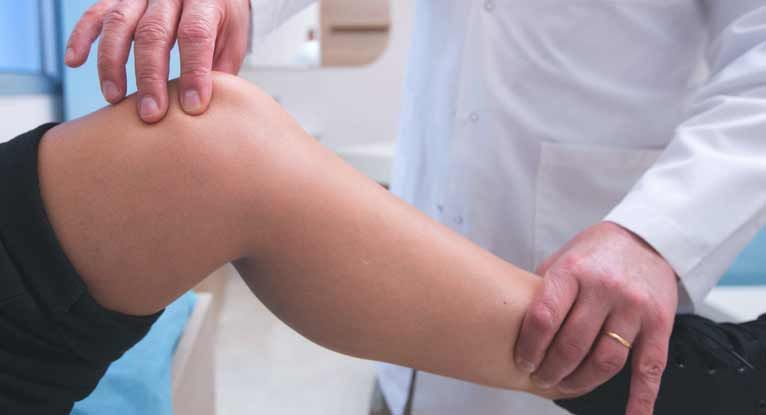
The exam may include checking swelling, tenderness, range of motion, strength, and knee stability. A clinician may gently move the knee in specific ways to test the ACL, PCL, MCL, LCL, and meniscus. If a more serious injury is suspected, imaging may be ordered.
- X-rays can help rule out fractures or bone alignment problems.
- MRI scans can show ligament tears, meniscus injuries, cartilage damage, and soft tissue problems.
- Ultrasound may be used in some settings to look at soft tissue structures.
Not every hyperextended knee needs an MRI. But if the knee is unstable, very swollen, or not improving, imaging can help guide treatment. In other words, the goal is not to collect fancy knee photos. The goal is to know what needs healing and how to protect it.
Hyperextended Knee Treatment Options
Treatment depends on the severity of the injury. A mild strain may need rest, protection, and gradual rehab. A severe ligament tear may need bracing, physical therapy, and sometimes surgery. The best plan is based on symptoms, exam findings, imaging results, activity level, age, and recovery goals.
Initial Care: Protect the Knee
In the first stage after injury, the priority is to protect the knee from further damage. Stop the activity that caused the pain. Avoid running, jumping, pivoting, or deep squatting. If walking hurts or the knee feels unstable, crutches may be recommended by a healthcare professional.
Rest does not mean becoming a statue forever. It means giving the injured tissues time to calm down before gradually reintroducing safe movement. The knee likes motion eventually, but it strongly dislikes being rushed like a late commuter.
Ice, Compression, and Elevation
Cold therapy may help reduce pain and swelling during the early phase. Use a towel between the ice pack and skin, and avoid applying ice for too long at one time. Compression with an elastic bandage or knee sleeve may help control swelling, as long as it is not too tight. Elevating the knee above heart level can also help fluid drain away from the joint.
Medication for Pain and Swelling
Over-the-counter pain relievers may help some people manage discomfort, but they are not right for everyone. People with medical conditions, allergies, stomach issues, kidney disease, bleeding risks, or those taking other medications should ask a healthcare professional before using them. Medication can reduce symptoms, but it does not magically repair a torn ligament. Sadly, knees do not accept wishful thinking as a treatment plan.
Bracing and Support
A knee brace may be used to limit risky movement while the injury heals. Some braces help prevent the knee from bending too far backward. Others provide side-to-side stability. The type of brace matters, so it is best to follow guidance from a clinician, athletic trainer, or physical therapist.
Physical Therapy
Physical therapy is often a key part of hyperextended knee recovery. The goal is to restore motion, reduce swelling, rebuild strength, improve balance, and retrain safe movement patterns. Therapy may include gentle range-of-motion work, quadriceps and hamstring strengthening, hip and core exercises, balance drills, walking mechanics, and eventually sport-specific training.
Good rehab does not simply ask, “Does it still hurt?” It asks, “Can the knee handle real life?” That means stairs, uneven sidewalks, quick stops, carrying groceries, returning to the gym, or playing sports without the joint acting like it has a secret escape plan.
Surgery for Severe Injuries
Surgery is not required for every hyperextended knee. However, it may be recommended when there is a complete ligament tear, multiple ligament injuries, major instability, meniscus damage, or failure to improve with conservative treatment. ACL reconstruction, PCL reconstruction, ligament repair, or meniscus procedures may be considered depending on the injury.
Recovery after surgery is longer and more structured than recovery from a mild sprain. It usually involves bracing, swelling control, progressive physical therapy, strength testing, and careful return-to-activity decisions. For athletes, returning too early can raise the risk of re-injury, so patience is not just a virtue; it is part of the treatment plan.
Hyperextended Knee Recovery Time
Recovery time depends on the severity of the injury. A mild hyperextended knee may improve within a couple of weeks. A moderate sprain may take several weeks. A serious ligament tear or injury requiring surgery may take several months or longer.
| Injury Severity | Possible Symptoms | Typical Recovery Pattern |
|---|---|---|
| Mild strain or sprain | Minor pain, mild swelling, stable knee | Often improves with rest, protection, and gradual movement over a few weeks |
| Moderate ligament sprain | More swelling, stiffness, pain with walking, some weakness | May require bracing and physical therapy for several weeks |
| Severe ligament or meniscus injury | Instability, major swelling, popping sensation, trouble bearing weight | May require imaging, specialist care, longer rehab, and possibly surgery |
These timelines are general. The knee does not own a calendar, and it definitely does not care about your vacation, tournament, or leg day schedule. Healing depends on tissue damage, swelling control, strength, mobility, balance, and whether the person follows a safe progression.
Safe Exercises During Recovery
Exercises should be matched to the injury and approved by a healthcare professional, especially if there is swelling, instability, or suspected ligament damage. Early rehab may focus on gentle movement and muscle activation. Later rehab may add strengthening, balance, and sport-specific drills.
Common Early-Stage Exercises
- Heel slides: Gently bend and straighten the knee while lying down or sitting.
- Quad sets: Tighten the thigh muscle while keeping the leg straight.
- Straight leg raises: Lift the leg while keeping the knee straight, only if it does not increase pain.
- Ankle pumps: Move the ankles up and down to encourage circulation.
Common Later-Stage Exercises
- Mini squats: Strengthen the legs without deep knee bending.
- Step-ups: Rebuild strength for stairs and daily activity.
- Hamstring curls: Improve support behind the knee.
- Balance drills: Train the knee, hip, and ankle to work together.
- Controlled lunges: Add strength and coordination when appropriate.
Pain, swelling, or buckling during exercise means the plan may need to be adjusted. A little muscle effort is normal. Sharp pain is not a badge of honor. It is more like your knee sending an email with “urgent” in the subject line.
What to Avoid After a Hyperextended Knee
During recovery, avoid activities that stress the knee before it is ready. This includes sprinting, jumping, pivoting, heavy squats, deep lunges, high-impact workouts, and returning to sports too quickly. Also avoid locking the knee backward while standing, especially if the joint already feels unstable.
Do not keep “testing” the knee by forcing it into the painful position. That is not science; that is just annoying your ligaments. Instead, track progress through safer measures: less swelling, better range of motion, improved walking, stronger muscles, and better balance.
How to Prevent Knee Hyperextension
Not every injury can be prevented, but strong movement habits reduce risk. Prevention is especially important for athletes, active adults, and anyone with previous knee instability.
- Strengthen the quadriceps, hamstrings, hips, and calves. Strong muscles help control knee position.
- Practice landing mechanics. Land with soft knees instead of stiff, locked legs.
- Improve balance and proprioception. Balance training helps the body react quickly to awkward positions.
- Warm up before activity. Cold muscles are not famous for making brilliant decisions.
- Use proper footwear. Shoes should match the activity and surface.
- Do not ignore fatigue. Tired legs are more likely to lose form.
- Follow return-to-sport guidance. Strength and control matter more than enthusiasm.
Experience-Based Recovery Lessons: What People Often Learn the Hard Way
One of the most common experiences after a hyperextended knee is underestimating the injury on day one. The moment may be quick: a step goes wrong, the knee bends backward, pain flashes, and then the person thinks, “Maybe I can walk it off.” Sometimes that works for a mild tweak. But when swelling builds, stairs become suspicious, and the knee feels like it has lost its password, the situation becomes harder to ignore.
A practical recovery lesson is that swelling is not just cosmetic. A puffy knee can shut down the quadriceps, reduce range of motion, and make walking feel strange. People often say the knee does not feel painful every second, but it feels “off.” That off feeling matters. It may come from fluid in the joint, muscle inhibition, or instability. This is why early management focuses on calming the joint instead of immediately trying to prove toughness.
Another real-world lesson is that the hip and ankle matter more than people expect. A knee rarely works alone. Weak hip muscles can allow the knee to collapse inward during landing or squatting. Limited ankle mobility can change how force travels up the leg. Tight calves, weak hamstrings, and poor balance can all make the knee work overtime. In recovery, physical therapists often look above and below the knee because the joint is part of a team, not a solo artist.
Many people also learn that walking normally is a milestone. After a knee injury, it is easy to limp without noticing. A limp may protect the knee briefly, but if it continues, it can irritate the hip, back, ankle, or the other knee. Restoring a smooth walking pattern is often one of the first big wins. It may require reducing swelling, regaining extension, improving quad control, and using support temporarily when needed.
Returning to exercise is another place where patience pays rent. The knee might feel fine during a warm-up but complain later that evening. That delayed swelling or soreness is useful feedback. It may mean the workout was too intense, too long, or too soon. A smarter approach is to increase activity gradually: walking before jogging, controlled strength before jumping, straight-line movement before cutting and pivoting. The knee likes progress, but it prefers progress with a receipt.
People recovering from hyperextension also discover the emotional side of injury. Trusting the knee again can take time. Even after pain improves, the memory of the joint bending backward can make certain movements feel scary. Balance drills, controlled strengthening, and sport-specific practice help rebuild confidence. Confidence should not be fake bravery; it should come from evidence that the knee can handle the task.
The biggest experience-based takeaway is simple: respect the early warning signs, get help when symptoms are significant, and do not rush the comeback. A hyperextended knee can be a small bump in the road or a more serious injury hiding under a casual name. Listening early can make recovery smoother, safer, and much less dramatic. Your knee may forgive you, but it appreciates being consulted first.
Conclusion
A hyperextended knee occurs when the joint bends backward beyond its normal range, potentially stretching or injuring ligaments, tendons, cartilage, or the meniscus. Symptoms may include pain, swelling, stiffness, bruising, instability, and difficulty walking. Mild cases may improve with protection, ice, compression, elevation, and gradual movement. More serious cases may require bracing, imaging, physical therapy, or surgery.
The smartest recovery plan is not the fastest one; it is the one that restores strength, motion, balance, and confidence without inviting a second injury. If the knee is swollen, unstable, very painful, or not improving, medical evaluation is the right move. Knees are hardworking joints. Treat them well, and they are much more likely to keep showing up for stairs, sidewalks, workouts, and all the weird little movements life throws at them.