I Made Portraits Whose Subjects And Surroundings Express Intense Emotional Narrative (18 Pics)

Some portraits politely introduce a person. Others kick open the door, pull up a chair, and say, “We need to talk.” The 18 portraits in this series belong to the second category. They are not simply faces arranged inside a frame; they are emotional short stories. A smile, a slumped shoulder, a crowded background, a half-lit room, or a passing blur can become part of the plot. The subject matters, of course, but so does everything around them: the wall, the light, the distance, the angle, the silence, and occasionally, yes, the photobombing dog who somehow understands the assignment.
This collection, inspired by the emotional force of classic documentary portraiture and street photography, explores how portraits can reveal feeling without spelling everything out. The artist behind the project began studying photography in 2009 and created many of these images between 2009 and 2013 using Nikon and Canon cameras. Some were made from passenger seats, some were close-ups, and all were selected because they carried a strong emotional charge. That matters because powerful portrait photography is rarely about technical perfection alone. It is about recognition: the moment a viewer sees a stranger and thinks, “I know that feeling.”
What Makes an Emotional Portrait So Hard to Forget?
An emotional portrait is not just a picture of someone looking happy, sad, tired, amused, or completely done with the day. It is a portrait that gives the viewer enough visual evidence to imagine the life around that expression. That is why the surroundings are so important. A person sitting in a nursing home, a child staring with open curiosity, a figure caught mid-prayer, or someone receiving painful news all become more meaningful when the environment quietly supports the feeling.
The best portraits do not shout, “This is deep!” They allow depth to sneak in. A face may be calm, but the room may feel heavy. A smile may be bright, but the surrounding space may suggest age, endurance, or loneliness. This is the magic of environmental portraiture: the background is not decorative wallpaper; it is part of the emotional architecture.
The Face Is the Doorway, Not the Whole House
We are naturally drawn to faces. We look for eyes first, then expression, then posture. But a strong portrait rewards the second look. After the viewer registers the subject, the surroundings begin speaking. A cluttered table may suggest routine. A window may hint at waiting. A book, a coat, a chair, or a patch of harsh sunlight can act like supporting characters in a very quiet drama.
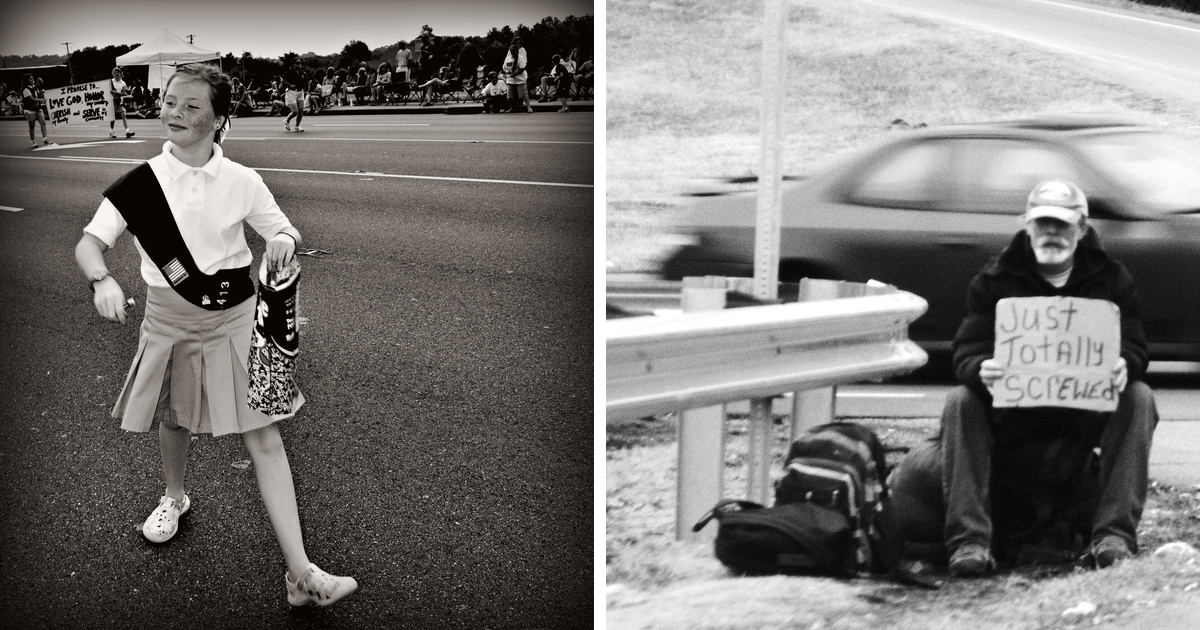
That is why portraits such as “Nursing Home Resident,” “Just Totally Screwed,” “Prayer,” and “News Of A Death” feel memorable even before we know anything about the people pictured. The titles guide us, but the visual language does the heavier lifting. We do not need a biography to feel the weight of the moment. The photograph gives us enough to enter the story, but not so much that imagination has nothing left to do.
The Power of Subjects and Surroundings in Visual Storytelling
In portrait photography, the subject and the surrounding space are always in conversation. Sometimes they agree. Sometimes they argue. A confident person in a chaotic room creates one kind of tension. A fragile expression in a soft, peaceful setting creates another. When the subject and setting are carefully balanced, a portrait becomes more than a likeness; it becomes narrative art.
This is especially true in black-and-white portrait photography. Without the emotional shortcut of color, the viewer pays closer attention to shape, contrast, line, texture, and expression. Wrinkles become topography. Shadows become mood. A bright highlight on a cheekbone can feel like hope; a dark corner can feel like a secret. Black and white can strip away visual noise, but it can also make every detail feel more serious, like the photograph put on a tiny suit and decided to testify in court.
Environment as Emotional Evidence
The surroundings in a portrait can tell us where a person is, but more importantly, they can suggest what kind of moment the person is living through. A street parade, a dinner table, a bookshelf, a car window, or a public room can all become emotional evidence. The photographer’s job is to decide how much of that evidence belongs in the frame.
Too little environment, and the portrait may lose context. Too much environment, and the subject can disappear into visual clutter. The sweet spot is where the viewer understands the relationship between person and place. In this series, that relationship often feels spontaneous and human. The pictures are not overly polished. They feel observed rather than manufactured, which gives them a living pulse.
Why These 18 Pics Feel Like Little Human Novels
The phrase “intense emotional narrative” may sound dramatic, but it fits. Each image appears to contain a before and after. A nursing home resident’s smile suggests a lifetime outside the frame. A person labeled “Just Totally Screwed” becomes instantly relatable because most of us have worn that exact emotional weather report on our faces. “Friends With Books” uses setting and body language to suggest comfort, curiosity, and companionship. “Prayer” compresses belief, vulnerability, and silence into a single gesture.
What makes these portraits engaging is that they are not trying to be glossy. They are closer to visual fragments: a glimpse from a car, a close-up of a face, a candid arrangement of people, light, and circumstance. The result feels honest. The viewer is not being asked to admire expensive styling or impossible smoothness. Instead, we are invited to notice the ordinary emotional theater of daily life.
Specific Examples of Emotional Narrative in the Series
“Nursing Home Resident” appears to center warmth and dignity. A smile in such a setting can carry several emotions at once: joy, resilience, memory, and perhaps the bittersweet awareness of time. It is the kind of portrait that reminds us old age is not a costume of sadness. It contains humor, personality, and spark.
“Just Totally Screwed” works because the title matches a universal expression. The portrait does not need elaborate symbolism. The face does the work, and the surroundings act as pressure. We recognize defeat, fatigue, and maybe a tiny bit of absurd comedy. It is misery with a wink.
“Vision” and “Innocent” lean into the emotional clarity of youth. Children and young subjects can express wonder without performing it. Their faces often contain directness that adults learn to hide behind polite nods, work emails, and pretending to understand tax forms.
“News Of A Death” suggests the most difficult kind of emotional portrait: grief. A photographer must treat such moments with care. The strength of an image like this comes not from spectacle, but from restraint. The viewer senses pain without the photograph becoming invasive or theatrical.
“Lady Liberty” and “Time Travel Parade” appear to bring a playful, public energy into the series. They show that emotional narrative does not always mean sorrow. Humor, oddity, pride, performance, and surprise are emotions too. A portrait can be intense and still have a mischievous grin.
The Influence of Documentary Portraiture
The artist has mentioned being fascinated by Diane Arbus, and that influence makes sense. Arbus is often associated with portraits that confront the viewer with individuality, strangeness, social tension, and psychological presence. The lesson is not to imitate her subjects or style, but to understand her courage in looking. She treated portrait photography as a way to meet people at the edge of what society considered ordinary.
Documentary portraiture asks photographers to pay attention to people as they are, not as an algorithm wants them to appear. That approach feels especially refreshing now, when so many images online are polished until they look less like humans and more like commemorative spoons. Emotional portrait photography pushes back. It says pores are allowed. Wrinkles have seniority. Awkwardness may stay. The weird little detail in the corner might be the best part.
Trust, Timing, and the In-Between Moment
Great portraits often happen between official poses. A subject relaxes. A hand drops. A smile fades into thought. Someone looks away for half a second, and suddenly the image becomes more honest. The photographer must be technically prepared, but also emotionally awake. Timing matters because feelings move quickly. One second too early, and the image is flat. One second too late, and the moment has packed its suitcase and left.
This is where experience matters. Knowing the camera allows the photographer to stop wrestling with settings and start observing people. Light, focus, exposure, and framing should serve the emotional idea, not distract from it. A portrait does not become powerful because it uses a fancy camera. It becomes powerful because the photographer knows when to press the shutter and why.
Composition: How the Frame Builds Feeling
Composition is emotional engineering. Where the subject appears in the frame, how much space surrounds them, whether they look into the camera or away from it, and how light falls across their face all change the meaning. A close-up can feel intimate or claustrophobic. A wide shot can feel lonely or liberating. A tilted angle can create unease. A centered subject can feel iconic, formal, or trapped.
In portraits that rely on subjects and surroundings, depth of field becomes a storytelling tool. A blurred background can isolate emotion, making the face feel like the whole universe. A sharper background can reveal context, letting the viewer read the room. Neither choice is automatically better. The right choice depends on the story the portrait wants to tell.
Light Is the Mood Department
Light is not just visibility. It is tone, rhythm, and emotional temperature. Soft light can create tenderness. Hard light can expose tension. Side lighting can carve the face into drama. Backlighting can turn a subject into a memory. Ambient light can make a photograph feel discovered rather than staged. Artificial light can heighten a scene until it feels cinematic.
In emotional portrait photography, shadows are not mistakes by default. They can protect mystery. They can suggest what remains unsaid. The trick is to keep shadows meaningful rather than messy. A good shadow has a job. A bad shadow just wandered in and started blocking the snacks.
Why Viewers Connect With Imperfect Human Portraits
People respond to portraits because portraits return the favor. They look back. Even when the subject is not staring directly into the lens, the image creates a relationship with the viewer. We bring our own memories, fears, jokes, losses, and private weather systems to the photograph. That is why two people can look at the same portrait and feel different things.
One viewer may see loneliness in an elderly subject; another may see peace. One may see comedy in a weary face; another may see economic stress, family responsibility, or a day that needs a refund. Emotional portraits work because they do not lock meaning into a single room. They leave a window open.
The Role of Titles in Emotional Photography
Titles can sharpen a viewer’s response. “News Of A Death” immediately changes how we read a face and posture. “Dinner Companion” adds humor and warmth. “Photobomb” lets the viewer enjoy interruption as part of the story. Good titles do not explain everything; they tilt the lamp so we notice the right corner.
However, the strongest portraits can survive without titles. Their emotional structure is visible. The title simply adds a final nudge, like a friend whispering, “Look again.”
Lessons Photographers Can Learn From This Portrait Series
For photographers, this series offers several practical lessons. First, pay attention to people before you pay attention to gear. Cameras matter, but emotional attention matters more. Second, let surroundings participate. Do not automatically blur every background into cream cheese. Sometimes the chair, wall, street, or window is doing important narrative work.
Third, shoot more than the obvious moment. A posed smile may be useful, but the emotional portrait often appears right after the pose ends. Fourth, respect the subject. Intensity should not become exploitation. When photographing vulnerable moments, the photographer must think about dignity, consent, and context. The goal is not to harvest pain. The goal is to make a truthful image without forgetting that the subject is a person, not a prop with cheekbones.
How to Create Portraits With Strong Emotional Narrative
Start with a simple question: what emotion is already present? Do not force a subject into a feeling they do not have. Watch their posture, hands, eyes, and breathing. Then ask what the environment contributes. Is the room too busy? Is the light helping or confusing the mood? Would moving two steps to the left make the background more meaningful? Would including the table, doorway, or street sign add context?
Next, consider distance. Move closer for vulnerability. Step back for context. Try both. Sometimes the emotional truth lives in the face; sometimes it lives in the distance between the person and the world around them. Finally, edit with restraint. Contrast, cropping, and tonal adjustments can strengthen mood, but over-editing can turn sincerity into melodrama. A portrait should feel alive, not like it spent six hours trapped inside a filter factory.
The Cultural Value of Portraits That Tell the Truth
Portraits are more than attractive images. They preserve gestures, moods, identities, and social environments. They show how people carry themselves through public and private spaces. They remind us that human life is not one emotion at a time. We are funny and grieving, tired and hopeful, awkward and beautiful, often before lunch.
This is why a set of 18 pictures can feel larger than its number. Each image becomes a small archive of feeling. The series encourages viewers to slow down and practice visual empathy. Instead of scrolling past another face, we pause. We wonder. We recognize. That pause is valuable.
Added Experience: Living With Emotional Portraits as a Viewer and Creator
Spending time with emotional portraits changes the way you look at everyday scenes. After studying images like these, a bus stop no longer looks like “just a bus stop.” It becomes a stage where impatience, hope, exhaustion, and daydreaming all stand in line together. A diner booth becomes a confession room with pancakes. A nursing home hallway becomes a place where time is not abstract; it has shoes, photographs, and a very specific smell of furniture polish.
For anyone creating portraits, the experience is humbling. You begin with a camera, thinking you are there to capture someone else. Then the process quietly turns the lens back on you. What do you notice first? What do you ignore? Are you drawn to joy, loneliness, humor, resilience, or tension? The portraits you make reveal your own emotional vocabulary as much as your subject’s expression.
One of the most useful experiences in making narrative portraits is learning to wait. Beginners often panic in silence. They fill every second with instructions: “Chin down, look here, smile, no, not that smile, a natural smile, but also the exact smile I am imagining.” This usually produces the facial expression of someone being asked to renew a driver’s license during a mild earthquake. Waiting works better. Let the subject settle. Let the surroundings breathe. Let the awkwardness pass through the room and out the window.
Another important experience is learning that emotional images do not always announce themselves while you are shooting. Sometimes a frame feels ordinary in the moment, but later, during editing, one detail changes everything: a hand gripping a sleeve, a glance reflected in glass, a background figure echoing the subject’s posture, or a patch of light falling exactly where the feeling lives. Editing becomes an act of listening. The image tells you what it is after the noise of the shoot has faded.
There is also a personal lesson in accepting imperfection. Some of the most affecting portraits are not clinically sharp, perfectly lit, or composed according to every textbook rule. A little blur can feel like memory. Grain can feel like atmosphere. A strange crop can feel urgent. Technical skill matters, but emotional truth sometimes arrives wearing mismatched socks. The task is to know the difference between a mistake that weakens the image and an imperfection that gives it a heartbeat.
Finally, emotional portraiture teaches respect for mystery. Not every portrait needs to answer every question. In fact, the unanswered parts are often what keep viewers returning. Who is this person? What happened just before the frame? What happened after? Why does this expression feel familiar? A strong portrait does not close the story; it opens it. That is the lasting beauty of this series. These 18 pictures do not simply show subjects in surroundings. They show human beings surrounded by time, memory, humor, grief, tenderness, and the strange little theater of being alive.
Conclusion
I Made Portraits Whose Subjects And Surroundings Express Intense Emotional Narrative (18 Pics) is a reminder that portrait photography is not only about faces. It is about the emotional relationship between a person and the space around them. Through candid timing, expressive environments, black-and-white drama, visual restraint, and human curiosity, these portraits become compact narratives. They invite viewers to slow down, feel more carefully, and notice the stories hiding in ordinary moments.
The best portraits do not need to be loud. They need to be honest. Whether the image shows grief, innocence, fatigue, humor, prayer, friendship, or resilience, its power comes from the same source: a person seen with attention. And in a world drowning in disposable images, attention may be the rarest art form of all.