
Note: This article blends heartfelt storytelling with general veterinary information about feline leukemia and cat comfort. It is not a substitute for diagnosis, treatment, or medical advice from a licensed veterinarian.
Some cats enter a room. Mine enters like the room was built yesterday specifically for her runway debut. She does not walk across the carpet; she floats over it with the confidence of a tiny, whiskered celebrity who knows the paparazzi are hiding behind the laundry basket. She is my leukemic cat, my soft little medical mystery, my emotional support supervisor, and without question, the greatest fashion diva of all time.
Yes, the word “leukemic” sounds heavy, and it is. Feline leukemia, often discussed through feline leukemia virus, or FeLV, can affect a cat’s immune system, blood cells, and overall health. It can make ordinary sniffles more serious. It can turn routine vet visits into spreadsheet-worthy events. It can make a cat parent develop the emotional stability of a wet paper towel. But here is the twist: illness does not cancel personality. In my house, it simply accessorizes it.
My cat has never read a veterinary textbook, which is probably for the best because she already thinks she is overqualified. She knows only this: warm blankets are mandatory, soft sweaters are acceptable if they meet her standards, and every human exists to admire her. Her diagnosis changed our routines, but it did not dim her sparkle. If anything, it made her daily glamour show feel more meaningful, more hilarious, and more deeply human.
Understanding Feline Leukemia Without Losing The Plot
Feline leukemia is commonly associated with FeLV, a contagious virus that affects cats. It does not infect humans, dogs, or your aunt’s dramatic parrot. Among cats, however, it matters. FeLV can spread through close contact, especially saliva, grooming, shared bowls, bites, and from mother cats to kittens. Some cats live with the virus for a long time while looking relatively normal. Others develop anemia, recurring infections, weight loss, dental problems, or cancers such as lymphoma or leukemia.
The challenging part is that FeLV does not always arrive wearing a flashing warning sign. A cat may seem perfectly fine until a routine blood test changes the conversation. That is why testing matters, especially for adopted cats, cats with unknown histories, kittens, and cats who have been exposed to outdoor or FeLV-positive cats. A veterinarian may recommend blood tests, follow-up testing, monitoring, vaccination for at-risk cats, and a management plan based on the cat’s health and household situation.
But a diagnosis is not a personality description. “FeLV-positive” does not mean “joy-negative.” Many cats with feline leukemia can still enjoy cozy routines, playtime, affection, safe indoor living, and excellent quality of life for months or years. Their care may require more caution, but their inner diva remains completely unbothered.
The Diva Behind The Diagnosis
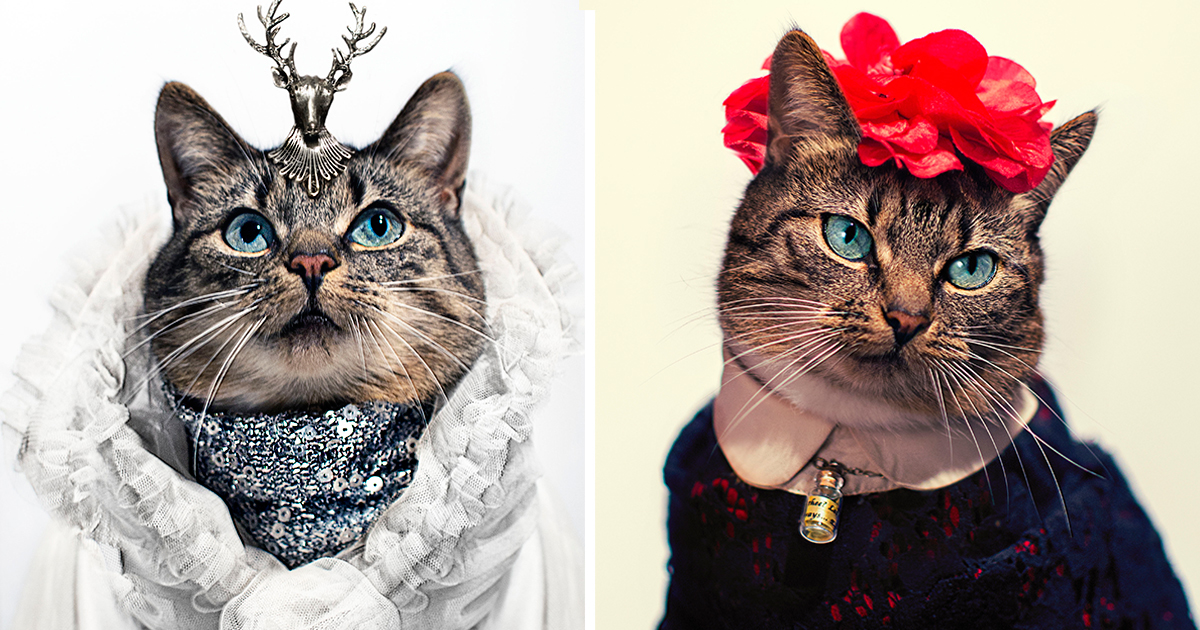
My cat’s fashion career began by accident. Like many cats with medical needs, she sometimes needed extra warmth and comfort. A soft recovery shirt after a procedure? She accepted it. A lightweight sweater on a chilly day? She tolerated it, then posed as if she had invented knitwear. A tiny bandana? She strutted across the sofa like she was closing New York Fashion Week.
To be clear, not every cat enjoys clothing. Some cats consider a sweater a personal insult. Others freeze in place like someone hit the pause button on their soul. Cat clothing should never restrict breathing, movement, grooming, or bathroom habits. It should be soft, lightweight, easy to remove, and used only when the cat is calm and comfortable. The outfit is never more important than the animal. A cat’s consent may not be verbal, but it is extremely clear if you know how to listen.
My leukemic fashion queen has rules. Rule one: no itchy fabrics. Rule two: no sleeves that make walking look like a haunted puppet show. Rule three: compliments must begin immediately. Rule four: if she flops dramatically, the outfit has failed and must be removed by her staff, also known as me.
Why Comfort Matters More Than Cuteness
When caring for a cat with feline leukemia, comfort becomes the main design principle. Think less “costume party” and more “wellness lounge with a velvet rope.” FeLV can weaken the immune system, so stress reduction is important. A calm indoor environment, predictable routines, clean bowls, fresh water, warm sleeping spots, and quick attention to symptoms all help support daily quality of life.
For my cat, fashion is only a tiny part of a much bigger comfort plan. Her real luxury collection includes heated beds, washable blankets, low-dust litter, easy-access water bowls, gentle grooming, and vet-approved care. She has more soft surfaces than a boutique hotel. If there were loyalty points for napping, she could retire in Monaco.
The best “outfit” for a sick cat is often not clothing at all. It is a quiet room during stressful moments. It is a warm lap. It is a clean feeding area. It is a carrier that does not smell like panic and betrayal. It is a human who notices when appetite changes, breathing sounds different, gums look pale, or playfulness suddenly disappears.
Building A Safe Indoor Kingdom For A Leukemic Cat
Because FeLV can spread between cats, many veterinarians recommend that FeLV-positive cats live indoors and avoid contact with FeLV-negative cats unless a veterinarian has helped assess the risks. In multi-cat homes, testing, vaccination, separation, and careful planning may be necessary. This is not about punishment; it is about protection.
An indoor life does not have to be boring. My cat’s kingdom includes window perches for bird television, cardboard boxes with suspiciously high real estate value, scratching posts, puzzle feeders, and blankets arranged according to her mysterious royal geometry. Enrichment keeps her mind busy and gives her safe ways to act like a predator without actually terrorizing anything larger than a felt mouse.
For a leukemic cat, the indoor environment should feel stable. Loud changes, new animals, unfamiliar visitors, and chaotic routines can be stressful. Some stress is unavoidable, because life occasionally drops a vacuum cleaner into the plot. But small adjustments help: keep food in a familiar place, provide hiding spots, maintain regular feeding times, and let the cat choose when to interact.
Vet Care: The Real Couture Behind The Curtain
Behind every glamorous sick cat is a veterinarian doing the unglamorous but essential work. FeLV care may include regular physical exams, blood work, dental checks, parasite prevention, vaccines recommended for the cat’s lifestyle, and prompt treatment of infections. Since FeLV-positive cats may not handle infections as easily as healthy cats, early attention can make a big difference.
I keep a simple health journal for my cat. It is not fancy, although she believes all documents about her should be laminated. I track appetite, weight changes, medications, energy level, litter box habits, and any unusual symptoms. This helps during vet visits because “she seemed off last Tuesday but then judged me normally by Thursday” is emotionally accurate but medically vague.
Nutrition also matters. Cats with chronic illness need food that supports their overall condition, and any major diet change should be discussed with a veterinarian. Some cats need help maintaining weight. Others need dental care before eating comfortably. The goal is not internet perfection; it is practical, individualized care.
Fashion Rules For Cats With Medical Needs
1. Let The Cat Lead
If a cat resists clothing, do not force it. A fashion diva chooses the runway. She is not dragged onto it like a confused potato in cashmere. Watch for stress signs such as hiding, crouching, pinned ears, tail flicking, freezing, frantic licking, or trying to escape.
2. Keep Outfits Soft And Simple
Choose breathable fabrics, safe seams, and designs that do not squeeze the neck, chest, belly, or legs. Avoid small buttons, beads, bells, ribbons, or decorations that could be chewed off and swallowed. A cat is not a Christmas tree with opinions.
3. Use Clothing For Comfort, Not Performance
Some cats benefit from light warmth, recovery shirts, or protective garments after vet procedures. Others do better with a blanket. The purpose should be comfort, safety, or medically guided protection, not likes, laughs, or social media applause.
4. Keep Sessions Short
Even cats who tolerate outfits should wear them only under supervision. Remove clothing before long naps unless your veterinarian has advised otherwise. Always check for overheating, rubbing, restricted movement, or irritation.
5. Celebrate The Cat, Not The Costume
The outfit is merely punctuation. The real sentence is the cat: her resilience, her mood, her preferences, her little rituals, and her right to be comfortable.
The Emotional Side Of Loving A Leukemic Cat
There is a strange emotional math in caring for a chronically ill pet. You become grateful for ordinary things: a full food bowl that becomes an empty food bowl, a playful swat at a toy, a normal blood test, a nap that looks peaceful instead of worrying. You learn that hope is not always dramatic. Sometimes hope is a cat eating breakfast and then yelling at a sock.
My cat’s fashion diva energy helps me cope. When she wears a soft bandana and looks personally offended by gravity, I laugh. When she sits in her sweater like a tiny retired opera singer, I take a picture. When she curls up beside me, warm and breathing softly, I remember that love is not measured only in years. It is measured in care, attention, and the number of times you say, “Ma’am, please stop sitting on the clean laundry,” while secretly admiring the composition.
Pet illness can make a person feel helpless. Fashion, routines, photos, and small rituals give shape to that love. They do not cure the disease, but they help turn fear into tenderness. They remind us that a sick cat is still a whole cat: funny, stubborn, elegant, ridiculous, and deeply worthy of joy.
Specific Examples From Life With My Feline Fashion Icon
One morning, I placed a pale pink bandana near her. Not on her. Near her. This is important because cats respect boundaries mainly when they invent them. She sniffed it, stepped on it, sat beside it, then looked at me as if approving the seasonal collection. I gently put it around her neck for two supervised minutes. She walked to the mirror, saw herself, and immediately adopted the posture of a duchess whose memoir will be controversial.
Another time, after a chilly vet day, she wore a simple recovery-style shirt for warmth and comfort. No glitter. No nonsense. Just soft fabric and a fit that let her move normally. She settled into her bed, tucked her paws under her chest, and gave me a slow blink. That slow blink felt better than applause.
Of course, not every attempt was a triumph. A tiny hat lasted approximately three seconds and ended with a glare that could have canceled a streaming subscription. Lesson learned: hats are not fashion; hats are betrayal. The diva had spoken.
What My Leukemic Cat Taught Me About Style
Style is not about being perfect. It is about presence. My cat does not know she is teaching me anything, which is typical of great teachers and most cats. She has taught me that dignity can exist in illness. She has taught me that softness is a medical strategy and an emotional one. She has taught me that a pet can be fragile and fierce at the same time.
Her best look is not the sweater or the bandana. It is the expression she wears when she knows she is safe. It is the relaxed stretch after a good nap, the bright-eyed demand for dinner, the confident little stomp across the bed at 3 a.m. as if delivering breaking news. She is fashionable because she is completely herself.
Extra Experience: Living With The Greatest Fashion Diva Of All Time
Living with my leukemic cat has turned ordinary days into tiny ceremonies. Morning begins with a health check disguised as affection. I pet her head, feel her body condition, look at her eyes, notice her energy, and pretend this is all casual. She knows exactly what I am doing, of course. She allows it because breakfast follows, and breakfast is the foundation of diplomacy.
Her wardrobe sits in a small drawer, though “wardrobe” is generous. It contains a few soft bandanas, one lightweight sweater, one recovery shirt, and a blanket that she believes is legally hers. Nothing is tight, noisy, glittery, or complicated. The best pieces are the ones she forgets she is wearing. If she changes her mind, the fashion show ends immediately. A diva must be respected, especially one with claws and a medical file.
The most meaningful experience has been learning to read her comfort level. Before her diagnosis, I thought love meant doing big things. Afterward, I learned that love usually means noticing small things. Did she finish her food? Did she jump onto the chair easily? Is she grooming normally? Did she choose the sunny spot today? Did she hide, or did she supervise my emails with her usual executive judgment?
Some days feel wonderfully normal. She plays with a crinkly toy, steals my warm seat, and looks offended when I move. Other days are quieter. On those days, I lower the volume of the house. I bring the blanket closer. I offer food gently. I watch without hovering too obviously, because cats hate being worried at. They prefer admiration, served warm.
The fashion part is really a language between us. A bandana means “today is a good day.” A soft sweater means “let’s stay warm.” A blanket wrap after a vet visit means “you are home, you are safe, and no one here will poke you with anything.” It is cute, yes, but it is also care. It transforms illness from a shadow into a routine we can manage together.
I have also learned not to compare her journey with anyone else’s. Some FeLV-positive cats live for years with few symptoms. Some decline faster. Some need frequent treatment. Some simply need monitoring and a peaceful home. The internet can be helpful, but it can also turn into a haunted carnival of worst-case scenarios. My veterinarian gives the medical plan. My cat gives the daily report. I try to listen to both.
If there is one experience I would share with another cat parent, it is this: do not let the diagnosis erase the cat in front of you. Take the disease seriously, but do not let fear become the only story. Take photos. Laugh at the weird sleeping positions. Celebrate the good bloodwork. Cry when you need to. Buy the soft blanket. Skip the hat. Always skip the hat unless your cat personally signs a notarized approval form.
My leukemic cat is the greatest fashion diva of all time not because she wears outfits, but because she wears life with attitude. She is proof that illness and joy can share the same room. She is proof that a small creature can make a home feel like a palace, a blanket feel like couture, and an ordinary afternoon feel like a runway.
Conclusion: A Diva, A Diagnosis, And A Lot Of Love
My leukemic cat is not a tragedy in a sweater. She is a living, purring, opinionated masterpiece who happens to need extra care. Her diagnosis taught me to be practical: test, monitor, protect, and work closely with a veterinarian. Her personality taught me to stay joyful: admire the pose, respect the boundaries, and never underestimate the healing power of a warm blanket and a cat who believes she owns the lighting.
Feline leukemia is serious, but love does not have to become grim. With good veterinary guidance, a safe indoor environment, careful observation, and comfort-first routines, many cats can continue to live meaningful, beautiful lives. And if your cat happens to accept a tiny bandana with queen-level confidence, congratulations. You are not the owner. You are the stylist.