Valerian and the City of a Thousand Planets – The Lasting Impact of the Little-Known French Sci-Fi Comic ‘Valérian’

Valerian and the City of a Thousand Planets may have arrived in theaters like a neon meteor in 2017, but its real story began fifty years earlier on the pages of a French comic magazine. Before Alpha became a dazzling movie metropolis packed with thousands of alien cultures, before Rihanna shapeshifted through a cabaret number, and before Luc Besson spent blockbuster money on a gloriously strange space opera, there was Valérian and Laureline, a French sci-fi comic created by writer Pierre Christin and artist Jean-Claude Mézières.
In the United States, Valérian has often been treated like a curious footnote: “that old European comic people say influenced Star Wars.” That description is not entirely wrong, but it is hilariously insufficientlike describing a spaceship as “a chair with ambition.” The comic was not just a visual toy box. It helped shape modern space opera through its world-building, political imagination, alien design, gender dynamics, and playful sense of cosmic absurdity.
This article explores why Valerian and the City of a Thousand Planets matters, how the original Valérian comic left a long shadow over science fiction, and why this “little-known” French series deserves a bigger seat at the galactic table.
The Origin of Valérian: A French Comic With a Universe-Sized Imagination
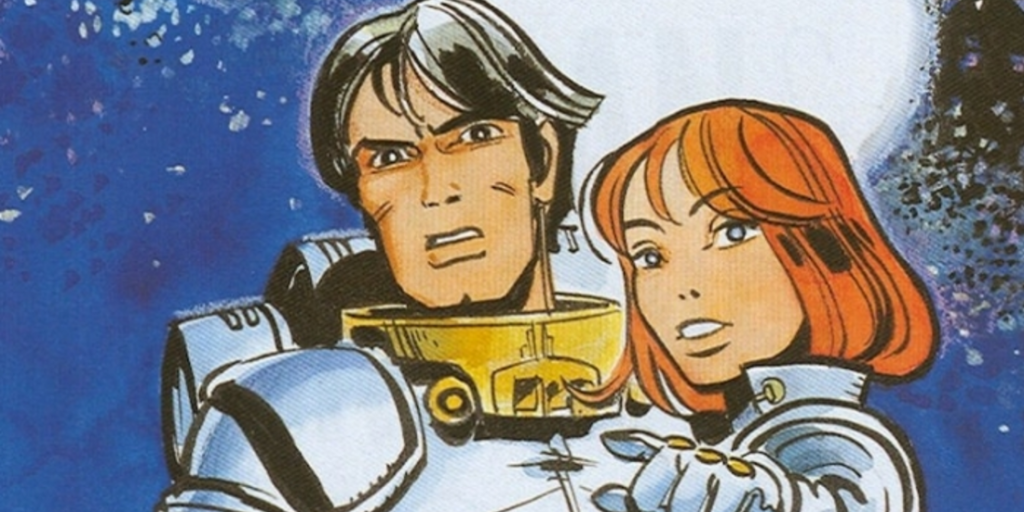
Valérian and Laureline first appeared in 1967 in the French comics magazine Pilote. Created by Pierre Christin and Jean-Claude Mézières, the series followed Valérian, a spatio-temporal agent from Earth’s future, and Laureline, his sharp, independent partner, as they traveled through time, space, politics, and more alien weirdness than one artist should reasonably be asked to draw.
At first glance, the setup sounds familiar: heroic agents, interstellar missions, exotic planets, galactic trouble. But Christin and Mézières gave the formula a distinct flavor. Their universe was not simply a playground for laser fights. It was full of bureaucracy, colonial tension, ecological anxiety, strange economies, collapsing empires, and alien societies that did not exist merely to be conquered or rescued. In other words, it was space opera with brains, jokes, and occasionally a very French suspicion of authority.
Laureline was especially important. In an era when many adventure comics treated female characters like decoration with dialogue, Laureline had wit, agency, moral judgment, and often more common sense than Valérian. She was not just “the girl character.” She was the person who frequently made the story work. If Valérian was the square-jawed agent, Laureline was the spark plug, compass, and emergency brake.
Why Valérian Was Ahead of Its Time
The lasting impact of Valérian comes from the way it made science fiction feel crowded, lived-in, and culturally layered. Many earlier space adventures imagined alien worlds as backdrops: one planet, one species, one problem, one escape. Valérian preferred messier universes. Its cities had history. Its creatures had customs. Its political systems had flaws. Its technology felt magical, but its societies felt suspiciously human.
A Universe That Looked Busy Before “Busy” Became the Standard
Modern sci-fi audiences are used to giant intergalactic hubs filled with dozens of species, glowing marketplaces, floating vehicles, and aliens who look like they were designed during a caffeine emergency. Valérian helped popularize that kind of visual density. Mézières’s artwork created panels stuffed with strange architecture, bizarre creatures, unusual costumes, and machines that looked both functional and ridiculous in the best possible way.
That visual abundance became one of the comic’s signatures. Instead of presenting space as sterile and metallic, Valérian made it colorful, chaotic, funny, and deeply alive. It suggested that the future would not look like one sleek corporate lobby. It would look like a galactic train station during rush hour, except everyone has tentacles and somebody is selling illegal time crystals.
Political Sci-Fi Without the Lecture Hall
Another reason the comic still matters is its political imagination. Christin’s scripts often dealt with power, exploitation, war, environmental destruction, and imperial arrogance. Yet the stories rarely felt like homework. The satire came wrapped in adventure. The critique came with monsters. The serious themes rode inside pulpy, entertaining plots.
This balance is part of what made Valérian and Laureline special. It could be playful without being empty. It could be critical without becoming stiff. It understood that science fiction works best when big ideas wear cool boots.
Did Valérian Influence Star Wars?
The question of whether Valérian influenced Star Wars is one of the most debated topics around the comic. Fans and critics have pointed to similarities in alien marketplaces, spaceship designs, desert-world imagery, carbon-freezing-like visuals, bikini-costume echoes, and the general idea of a crowded, multi-species galactic civilization. However, direct influence is difficult to prove unless creators explicitly confirm it.
What can be said with confidence is this: Valérian was part of the visual and imaginative atmosphere that helped define modern space opera. Whether specific ideas traveled directly, indirectly, or through a shared creative bloodstream, the comic anticipated many things that later became standard in blockbuster sci-fi. When people look at Valérian panels from the late 1960s and 1970s, the reaction is often, “Wait, this came before that?”
That is the comic’s magic trick. It makes famous science fiction look slightly less spontaneous. It reminds us that pop culture is not built from isolated lightning bolts. It is built from echoes, borrowings, coincidences, reinventions, and artists staring at other artists’ work while pretending they are not taking notes.
Luc Besson and the Dream of Bringing Valérian to Film
Luc Besson, the French filmmaker behind The Fifth Element, had admired Valérian and Laureline since childhood. The connection is easy to see. The Fifth Element shares the same love of wild design, eccentric humor, bright colors, and operatic sci-fi spectacle. Mézières even worked as a designer on that film, which makes the creative bridge between Valérian and Besson’s cinematic universe more than a fan theory.
For years, adapting Valérian properly seemed almost impossible. The comic demanded hundreds of alien species, elaborate worlds, massive environments, and a tone that could shift from action to comedy to melancholy without asking permission. Earlier film technology would have struggled to bring that world to life without turning it into rubber masks, fog machines, and one very tired intern holding a laser pointer.
Besson later credited advances in visual effects, especially after films like Avatar, with making his dream adaptation achievable. The result was Valerian and the City of a Thousand Planets, released in 2017 with Dane DeHaan as Valerian and Cara Delevingne as Laureline. The film adapted elements from the comic album Ambassador of the Shadows while building its own cinematic version of Alpha, the city of a thousand planets.
The Movie: A Beautiful Mess With a Big Heart
Valerian and the City of a Thousand Planets is one of those movies that almost begs viewers to argue with it. Its visuals are spectacular. Its world-building is generous to the point of overfeeding the audience. Its opening sequence, which shows the International Space Station gradually transforming into a vast interstellar city, is one of the most elegant pieces of science-fiction optimism in modern blockbuster cinema.
And yet, the film divided viewers. Critics often praised the imagination and visual design while criticizing the script, pacing, and chemistry between the leads. The movie earned far more internationally than domestically, but its huge production cost made it difficult to label as a financial success. In Hollywood math, “beautiful and ambitious” is nice, but “profitable before everyone panics” is usually preferred.
Still, reducing the film to a box-office disappointment misses the point. Valerian is not remembered because it played safe. It is remembered because it did not. It is colorful when many blockbusters are gray. It is earnest when many franchises are armored in irony. It is overstuffed, strange, occasionally awkward, and impossible to mistake for anything else. That alone gives it cultural value.
Alpha: The City of a Thousand Planets as a Sci-Fi Idea
The most powerful concept in the film is Alpha itself. The city begins as a human space station and grows over centuries as more nations, then alien civilizations, attach their own modules. Eventually, Alpha becomes too massive to remain near Earth and is sent into deep space, where it continues evolving into a mobile multicultural metropolis.
That idea is simple, visual, and strangely moving. Alpha is not just a location. It is a metaphor for cooperation, migration, exchange, and the messy miracle of different cultures building something together. In a genre often obsessed with galactic war, Alpha imagines galactic coexistence. Yes, there are conspiracies and threats inside itbecause otherwise the movie would just be urban planning with aliensbut the central image is hopeful.
This optimism connects the movie back to the comic. Valérian often questioned empire and authority, but it also believed in curiosity. It believed alien difference should be explored, not flattened. It believed the future could be ridiculous and dangerous, but also worth visiting.
Laureline: The Character Who Deserved Even More Spotlight
One of the most important parts of the original comic’s legacy is Laureline. In many stories, she is smarter, more emotionally perceptive, and more adaptable than Valérian. She challenges orders, reads situations quickly, and often sees ethical problems before the official hero does.
The 2017 film gives Laureline plenty of toughness and attitude, but many longtime fans still felt the adaptation could have leaned more deeply into her central role. The original title, after all, is not simply Valérian. It is Valérian and Laureline. That “and” matters. The partnership is the engine.
In today’s pop culture environment, Laureline feels more relevant than ever. Audiences are hungry for science-fiction heroines who are not simply “strong” in the generic trailer-voice sense, but complex, funny, flawed, clever, and morally alert. Laureline was already doing that decades ago, usually with better hair and less patience for nonsense.
The Lasting Impact of Valérian on Modern Sci-Fi
The legacy of Valérian can be seen in several key areas of modern science fiction. First is visual design. The comic helped normalize the idea that the future could be baroque, crowded, multicultural, and strange. Second is narrative scope. Its stories moved between intimate character beats and massive cosmic stakes without treating either as less important. Third is tone. Valérian proved that serious science fiction could also be funny, sexy, absurd, and politically aware.
The comic also expanded what European comics could contribute to global pop culture. American audiences often think of science fiction through Hollywood films, television franchises, and superhero publishers. Valérian is a reminder that some of the genre’s richest visual ideas came from Franco-Belgian comics, where artists had room to build extravagant worlds panel by panel.
Its influence does not depend on everyone knowing its name. In fact, that is part of the story. Valérian is like a deep-space signal buried inside other works: not always recognized, but still transmitting.
Why the Comic Still Rewards New Readers
For new readers, Valérian and Laureline offers a fascinating experience. Some elements are clearly products of their time, but the best ideas remain fresh. The art is still inventive. The political edge still bites. The relationship between the leads still has charm. The alien worlds still feel wonderfully handmade, as if Mézières personally visited them and came back with sketches, postcards, and mild food poisoning.
Readers who know only the movie may be surprised by the comic’s range. It is not simply louder, bigger, and more colorful. It is often more ironic, more reflective, and more interested in systems of power. The film captures the spectacle of Valérian, but the comics reveal the full personality.
Experience Section: Watching Valerian After Knowing the Comic’s Legacy
Watching Valerian and the City of a Thousand Planets after learning about the comic is a completely different experience. Without context, the film can feel like someone opened a glitter cannon inside a space museum. It is dazzling, confusing, occasionally clumsy, and filled with details that fly by before the viewer can properly ask, “Was that a jellyfish diplomat?” But once you understand the history of Valérian and Laureline, the movie becomes less random. It starts to feel like a love letter written in fireworks.
The opening sequence is the best example. The first time you watch it, it is simply beautiful: humans meeting humans, then humans meeting aliens, all through the repeated gesture of a handshake. On a second viewing, with the comic’s humanist spirit in mind, the sequence becomes the film’s thesis. It says that science fiction does not always need to begin with invasion, fear, or destruction. Sometimes it can begin with cooperation. Sometimes the future starts when someone extends a hand instead of launching a missile. A shocking concept, apparently.
The Big Market sequence also plays better when viewed as a cinematic attempt to reproduce the density of Mézières’s panels. It is not just an action scene. It is a translation problem: how do you turn a comic page packed with alien commerce, absurd technology, and visual jokes into moving images? Besson’s answer is to make the scene exist across dimensions, with tourists shopping in one reality while the actual market occupies another. It is ridiculous, but it is also very Valérian. The scene understands that sci-fi shopping should be more dangerous than ordering socks online.
The film’s weaknesses are real. The romance can feel forced, the dialogue sometimes lands like a spaceship with one broken leg, and the pacing occasionally wanders into side quests with suspicious confidence. But even those flaws are tied to the movie’s ambition. It wants to show everything: the city, the creatures, the politics, the tragedy, the comedy, the romance, the chase scenes, the shapeshifting performance, the moral conspiracy, and probably three alien tax systems we never get to see. It is too much because the source material is too much. That is both the problem and the charm.
Personally, the most enjoyable way to experience Valerian is not as a traditional Hollywood blockbuster, but as a visual archive of sci-fi dreams. It feels like browsing the sketchbook of a filmmaker who never stopped being a ten-year-old reader amazed by French comic art. Some pages are messy. Some ideas are underdeveloped. But the sense of wonder is sincere, and sincerity is rarer in modern blockbusters than a calm day at an alien customs office.
The movie also encourages viewers to go backward, from screen to page. That may be its greatest achievement. Even people who disliked the film often became curious about the comic. Where did this come from? Why does it look familiar? Why did so many later sci-fi worlds seem to echo it? Those questions lead to Christin and Mézières, and from there to a richer understanding of how science fiction evolves.
In that sense, Valerian and the City of a Thousand Planets did something valuable. It turned a little-known French comic into a global conversation again. It reminded audiences that science fiction history is bigger than the franchises that dominate multiplexes. It invited viewers to discover a universe that had been hiding in plain sight for decades, wearing a spacesuit, carrying a blaster, and arriving fashionably late across time.
Conclusion: Valérian’s Future Is Its Past
Valerian and the City of a Thousand Planets may not have become the franchise-launching phenomenon its creators hoped for, but the legacy of Valérian and Laureline is bigger than one movie’s performance. The comic helped shape the language of modern space opera. It imagined alien societies with wit and texture. It gave readers a memorable partnership in Valérian and Laureline. It influenced visual storytelling far beyond France, even when its name remained unfamiliar to many American fans.
The film is best understood as a spectacular, imperfect tribute to a comic that deserved the spectacle. It may be messy, but it is never lazy. It may stumble, but it stumbles while carrying a universe on its back. And honestly, if more blockbusters failed this imaginatively, moviegoing would be a lot less boring.
For readers and viewers discovering Valérian today, the invitation is simple: look past the box-office numbers, look past the “was it like Star Wars?” debates, and explore the original comic’s strange, funny, politically charged universe. You may find that this little-known French sci-fi classic has been quietly shaping your favorite futures all along.