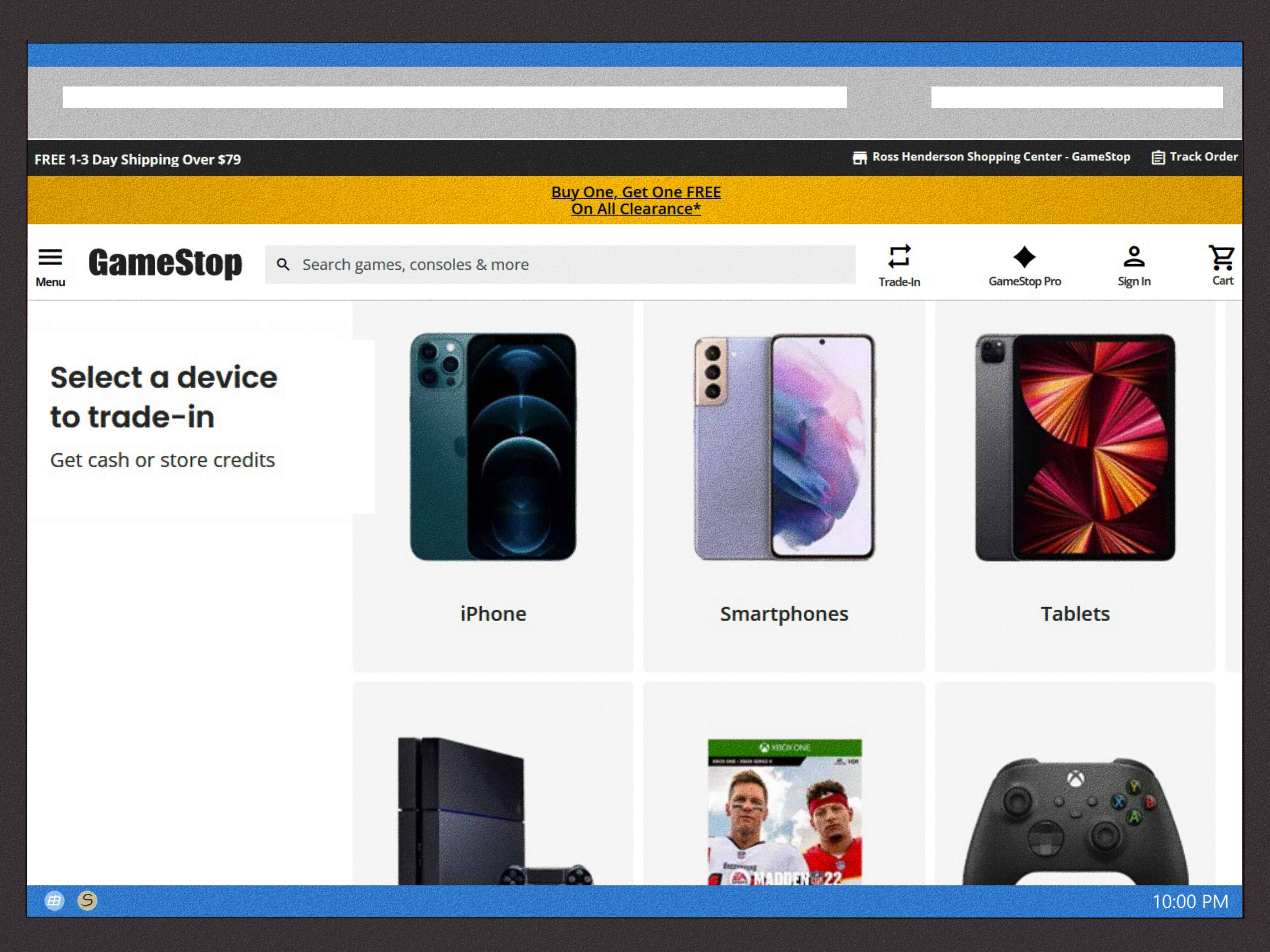

Quick answer: GameStop does not currently promote a broad, public, always-guaranteed price match policy in the same way Best Buy does. In real-world shopping, some GameStop stores may match certain prices in limited situations, often depending on the item, proof, membership status, current promotions, and manager discretion. Translation: yes, it may happenbut no, you should not walk in like you are carrying a royal decree from the Kingdom of Discounts.
If you are comparing prices on a new PlayStation controller, a Nintendo Switch game, a pre-owned console, trading cards, collectibles, or a headset that promises “immersive sound” but mostly helps you hear your friend eating chips online, you are not alone. Gamers are professional price-checkers. We will compare three websites, two apps, a coupon code, and one mysterious forum comment from 2018 before spending $59.99.
This guide explains how GameStop price matching appears to work, what shoppers should know before asking, what usually qualifies, what probably will not, and how to save money even when a price match is not available.
What Does “Price Match” Mean?
A price match means a retailer agrees to sell an item at the lower price offered by another retailer or by its own website. For example, if a controller is $69.99 in one store but $59.99 online, a price match would reduce the store price to $59.99.
Simple idea, right? In practice, price matching has more rules than a boss fight with three phases. Retailers often require the item to be identical, in stock, sold directly by the competitor, not part of a clearance sale, not sold by a third-party marketplace seller, and not tied to a limited-time promotion. Many stores also exclude Black Friday, Cyber Monday, doorbusters, bundles, pre-orders, open-box products, refurbished items, and pricing errors.
That matters because GameStop sells many different types of products: new games, pre-owned games, consoles, refurbished tech, collectibles, trading cards, accessories, apparel, digital products, memberships, warranties, and trade-in offers. Not every category behaves the same way.
So, Does GameStop Price Match?
The safest answer is: GameStop may price match in some situations, but it does not appear to offer a broad customer-facing price match guarantee that shoppers can rely on everywhere, every time.
GameStop’s public help and policy pages focus heavily on orders, returns, exchanges, trade-ins, Pro membership benefits, promotions, digital content, and pre-orders. Unlike Best Buy, which clearly publishes a price match guarantee, GameStop does not prominently advertise a universal “we match competitors” policy for all shoppers.
That means your success may depend on the specific store, the associate, the manager, your GameStop Pro status, the item category, and whether the lower price is easy to verify. Some shoppers report better luck when matching GameStop’s own website or app price in a physical store. Others have heard that certain competitor matches may be limited to Pro members or handled case by case. Because this information is not presented as a simple public guarantee, the smart move is to ask before you buy.
Does GameStop Match Its Own Website Prices?
This is usually the most reasonable price match request to make. If GameStop.com shows a lower price than your local GameStop store for the exact same item, ask the associate whether the store can honor the online price.
For example, suppose a pre-owned Xbox game is marked $24.99 in-store but GameStop’s app shows the same edition for $19.99. That is the kind of situation where asking politely makes sense. The associate can check the item, confirm the SKU, and see whether the register allows an adjustment.
However, even an internal price difference is not always guaranteed. Prices can vary by online availability, local inventory, clearance status, promotions, membership requirements, and timing. A sale that appears online may not apply to every store. A store may also be unable to match a web-only deal, especially if it is marked as online only.
Does GameStop Match Amazon?
This is where things get spicy. GameStop shoppers often ask whether stores match Amazon because Amazon frequently has lower prices on games, accessories, and gaming gear. Some reports suggest certain GameStop locations may match Amazon in limited circumstances, but it should not be treated as a guaranteed company-wide benefit.
If you ask GameStop to match Amazon, make sure the Amazon listing is sold and shipped by Amazon, not a third-party seller. A random marketplace seller with a suspiciously low price and a product photo taken on a potato is usually not going to help your case. Retailers that do price matching generally avoid third-party marketplace listings because the seller, inventory, shipping, condition, and authenticity can vary.
You will have a better shot if the item is new, identical, in stock, sold directly by Amazon, and not part of a lightning deal, coupon-only discount, Prime-only offer, or limited-time promotion. Even then, GameStop may decline. The golden rule: ask nicely, show live proof, and be prepared for “no.” Your wallet may be brave, but store policy still has the final boss health bar.
Does GameStop Price Match Best Buy, Walmart, or Target?
GameStop does not publicly present a simple list of approved competitors like Best Buy does. So if you find a lower price at Best Buy, Walmart, Target, or another retailer, the answer is: maybe, but do not assume.
Best Buy is one of the clearer examples of a retailer with a formal price match policy. It generally matches prices from qualified competitors for immediately available new products, with exclusions for marketplace items, clearance, refurbished products, open-box items, membership-only pricing, special daily sales, Black Friday pricing, and other limited offers.
Walmart’s policy is narrower. For in-store purchases, Walmart may match the price of an identical item advertised on Walmart.com, but Walmart.com itself does not match competitor prices or later price drops. Target has also moved toward matching its own prices rather than broad competitor matching. Amazon states that it does not offer price matching, although shoppers can report lower prices and may use normal return options when appropriate.
Why does this matter? Because the retail world has become more cautious about price matching. Third-party sellers, flash deals, membership discounts, app-only coupons, and marketplace listings make price comparisons messy. GameStop is not unusual for being careful. The entire industry has been tightening the screws on price-match promises.
Is GameStop Price Matching Only for Pro Members?
Some shoppers have reported being told that price matching is limited to GameStop Pro members, but GameStop’s public Pro pages emphasize benefits such as monthly rewards, category discounts, extra trade credit, points, Pro-exclusive deals, free shipping thresholds, and extended return windowsnot a clearly advertised universal price-match guarantee.
That does not mean Pro membership is useless. In fact, Pro can be valuable if you shop at GameStop regularly. The membership includes monthly rewards, discounts on certain categories, extra trade value, points back, and extended return or exchange windows. If you buy pre-owned games, collectibles, GameStop-brand accessories, digital items, or trade in games often, the membership may pay for itself.
But you should not buy Pro only because you expect guaranteed price matching. Think of Pro as a savings program first, not as a magical coupon wand. It can help lower your total cost, but it does not replace asking the store directly about a specific price match.
What Items Are Most Likely to Be Considered?
If GameStop is willing to consider a price match, the best candidates are usually simple, identical, new products with clear pricing. These may include:
- New physical video games with the same platform and edition
- Standard controllers from major brands
- Gaming headsets with the same model number
- Console accessories sold as standalone items
- GameStop.com items that are lower online than in-store
For example, if a new PlayStation 5 DualSense controller in the exact same color is $74.99 in-store but GameStop.com shows it at $64.99, that is a clean comparison. If Walmart has the same controller for $59.99, it is still worth asking, but it is less certain. If a third-party seller has it listed for $41.37 with shipping from “DefinitelyRealControllerWarehouse,” the odds are not great.
What Items Are Less Likely to Qualify?
Some products are naturally harder to price match because condition, availability, and promotions vary. These include:
- Pre-owned games and consoles
- Refurbished tech
- Clearance items
- Trading cards and collectibles
- Limited editions or bundles
- Digital games, currency, subscriptions, and add-ons
- Items with coupons, rewards, gift card offers, or loyalty-only pricing
- Marketplace seller listings from Amazon, Walmart, Target, eBay, or Best Buy
Pre-owned products are especially tricky because one retailer’s “used” item may not be the same as another retailer’s “pre-owned,” “refurbished,” “renewed,” or “open-box” item. Condition standards can vary. Warranty coverage can vary. Packaging can vary. Sometimes even the included cables vary, and nobody wants to get home with a console and discover the power cord has gone on a spiritual retreat.
How to Ask GameStop for a Price Match
1. Check the exact product details
Before you ask, confirm the title, platform, edition, model number, color, storage capacity, and condition. “Same game” is not always enough. A standard edition, deluxe edition, collector’s edition, steelbook edition, and digital code are different products.
2. Use live proof, not a screenshot
Many retailers prefer live website or app verification because screenshots can be outdated. Pull up the current listing on your phone and make sure the price is visible. Bonus points if the item is clearly in stock and sold directly by the retailer.
3. Ask before checkout
Price matching is easier before payment. After purchase, you may be dealing with return rules instead of price adjustment rules. Ask at the counter before the associate rings up the item.
4. Be polite and specific
Try this: “Hi, I noticed GameStop.com shows this same controller for $10 less. Are you able to match the online price in-store?” That sounds much better than, “The internet says you owe me ten bucks.” Retail workers are humans, not vending machines with name tags.
5. Accept the answer
If the store cannot match the price, do not argue for twenty minutes while other shoppers slowly become background NPCs in your discount drama. Ask whether there are any current promotions, Pro offers, trade-in deals, or online options that could help.
Can You Get a Price Adjustment After Buying?
A price adjustment is different from a price match. A price match happens before or during purchase. A price adjustment happens after you buy something and the price drops later.
GameStop’s public return policy explains return and exchange conditions, but it does not clearly advertise a broad post-purchase price adjustment program. If the price drops shortly after you buy, you can contact the store or customer service and ask. However, approval is not guaranteed.
Your best backup is understanding the return window. GameStop return rules vary by product type, condition, and membership status. Pro members receive extended return and exchange windows for certain eligible items. If your item is unopened and eligible, returning and repurchasing at the lower price may be possible, but you should check the current policy and avoid assuming every product can be returned.
GameStop Price Match Examples
Example 1: GameStop.com is cheaper than the store
You find a new Nintendo Switch game for $49.99 in-store. GameStop.com shows the exact same game, same platform, same edition, for $39.99. This is a strong request because the lower price is from GameStop itself. Ask the store to verify the online listing.
Example 2: Amazon has a lower price
A new Xbox controller is $64.99 at GameStop and $54.99 on Amazon. The Amazon item is sold and shipped by Amazon, in stock, and identical. This is worth asking about, but GameStop may still decline because Amazon matching is not presented as a universal public guarantee.
Example 3: A third-party seller is cheaper
A headset is $79.99 at GameStop and $47.99 from a marketplace seller on Walmart.com. The seller is not Walmart itself, shipping takes three weeks, and the condition is unclear. This is unlikely to work. Retailers generally dislike matching marketplace chaos, and honestly, who can blame them?
Example 4: A Pro deal changes the math
A pre-owned game is $29.99, and a Pro member receives an extra discount or monthly reward. Even without a price match, the final price may beat another retailer. Always check the out-the-door total, not just the sticker price.
Best Ways to Save at GameStop Without Price Matching
Use GameStop Pro strategically
If you shop at GameStop often, Pro membership can be useful. The monthly reward alone can add up over a year if you remember to use it. Category discounts and extra trade credit can also help frequent buyers.
Check GameStop.com before visiting a store
Always compare the website or app price before driving to the store. If the online price is lower, you can ask the store about matching it or simply order online for pickup or shipping when available.
Watch Pro Weeks and seasonal sales
GameStop regularly runs promotions on games, accessories, collectibles, and trade-ins. Pro Weeks can be especially useful for shoppers who want pre-owned games, controllers, collectibles, or console deals.
Trade in at the right time
GameStop trade values change. Extra trade-credit promotions can make a big difference, especially when trading toward a new release or console. If you are not in a rush, waiting for a trade bonus may beat chasing a price match.
Compare total value, not just price
A $5 lower price elsewhere may not be better if GameStop offers faster pickup, reward points, easier returns, a warranty option, or trade credit. Saving money is good. Saving money and avoiding a customer service questline is better.
Frequently Asked Questions
Does GameStop price match online prices?
Sometimes shoppers may be able to get a store to match GameStop.com or another online price, but it is not guaranteed. The best approach is to ask before buying and show the live listing.
Does GameStop price match Amazon?
Some locations may consider matching Amazon in limited cases, especially for identical new items sold directly by Amazon, but GameStop does not publicly advertise a universal Amazon price match guarantee.
Does GameStop price match Best Buy?
Possibly, depending on store discretion, item eligibility, and proof. However, shoppers should not assume GameStop will match Best Buy just because Best Buy has a formal price match program.
Does GameStop price match Walmart?
It may be worth asking, but third-party Walmart Marketplace sellers are unlikely to qualify. If the item is sold directly by Walmart and is identical, your odds are better, but still not guaranteed.
Does GameStop price match Target?
Ask the store directly. Target now focuses heavily on matching its own prices rather than broad competitor price matching, and GameStop does not publish a simple Target price-match rule for shoppers.
Does GameStop price adjust after purchase?
GameStop does not clearly advertise a broad price adjustment guarantee. If the price drops shortly after purchase, contact the store or customer service. Return eligibility may depend on product type, condition, receipt, and timing.
Real Shopping Experience: What It Feels Like to Ask GameStop for a Price Match
Here is the realistic experience many shoppers have: you walk into GameStop with confidence, your phone charged, your comparison price ready, and your inner bargain hunter wearing sunglasses indoors. You find the item, check the shelf tag, check GameStop.com, check Amazon, then check your bank account just to make sure reality has not patched itself since breakfast.
The first thing you learn is that product details matter more than vibes. A game might look identical until you realize one listing is for PlayStation 5 and the other is for Xbox Series X. A controller might be the same model but a different color. A headset might have one version for console and another for PC. Retail systems are very literal. They do not care that “it is basically the same.” The SKU must match or the request starts wobbling like a shopping cart with one bad wheel.
The second thing you learn is that live pricing matters. A screenshot from yesterday is not strong proof. A search result snippet is not enough. A price shown on Google Shopping may be outdated. The associate usually needs to verify the current listing on the retailer’s website or app. If the lower price disappears when you tap the page, congratulations, you have met the ancient enemy of deal hunters: cached pricing.
The third thing you notice is that tone makes a difference. Asking politely does not guarantee approval, but it makes the conversation smoother. A calm “Are you able to match this?” works better than treating the counter like a courtroom. Store associates deal with trade-ins, pre-orders, warranty questions, console availability, and customers asking if a decade-old sports game is “rare.” A little patience goes a long way.
In many cases, the associate may check the system, call a manager, or explain that the item is excluded. Maybe the online price is for shipping only. Maybe the competitor listing is from a marketplace seller. Maybe the product is clearance. Maybe the sale is Pro-only. Maybe the register simply will not allow it. This is frustrating, but it is normal. Price matching is not always a button labeled “Make Customer Happy.” Sometimes it is a policy maze with fluorescent lighting.
The best experience comes from having a backup plan. If GameStop will not match the price, ask whether the store can order it at the online price, whether pickup is available, whether a Pro reward can apply, or whether any trade-in promotion is running. You may still save money even without a formal match. For example, a $5 Monthly Pro Reward plus a pre-owned discount can beat another retailer’s sticker price. A trade bonus can turn old games into meaningful credit. A buy-two-get-one offer can make the average price per game much lower.
Another practical lesson: do not ignore return rules. If you are buying something expensive, especially hardware, check the return window before paying. Pro members may have longer return or exchange windows on eligible new hardware and software, which can be valuable if you are unsure. However, opened products, digital content, refurbished tech, collectibles, trading cards, and final-sale-style promotions may have different restrictions. Read the receipt. Keep the packaging. Protect the proof of purchase like it is the last save file before the final boss.
The biggest takeaway is that GameStop shopping rewards preparation. Check the price online first. Confirm the exact item. Use the app. Bring proof. Ask before checkout. Be polite. Know when to accept a no. And most importantly, compare the final valuenot just the headline price. A lower price is great, but rewards, trade credit, pickup speed, return convenience, and product condition all matter.
In short, asking GameStop for a price match is not a guaranteed cheat code. It is more like trying a dialogue option in an RPG. Sometimes it unlocks a discount. Sometimes the NPC says no. Either way, you are better off entering the conversation prepared, calm, and ready with Plan B.
Conclusion: Should You Ask GameStop to Price Match?
Yes, you should askespecially when GameStop.com shows a lower price for the exact same item. Just do not treat the request as guaranteed. GameStop’s current public materials do not present a broad, simple price match guarantee for every shopper and every competitor. In practice, price matching may depend on store discretion, item type, proof, availability, membership, and current promotions.
The smartest strategy is to check prices before you buy, bring live proof, ask politely, and compare all savings options. GameStop Pro rewards, trade-in bonuses, pre-owned deals, online prices, and seasonal promotions can sometimes save more than a traditional price match. Your goal is not to win a policy debate at the register. Your goal is to keep more money for the next game, controller, collectible, or suspiciously tempting clearance shelf discovery.
Editorial note: Retail policies can change quickly. Before making a purchase, verify the current price, item eligibility, return window, and store policy directly with GameStop or the retailer involved.