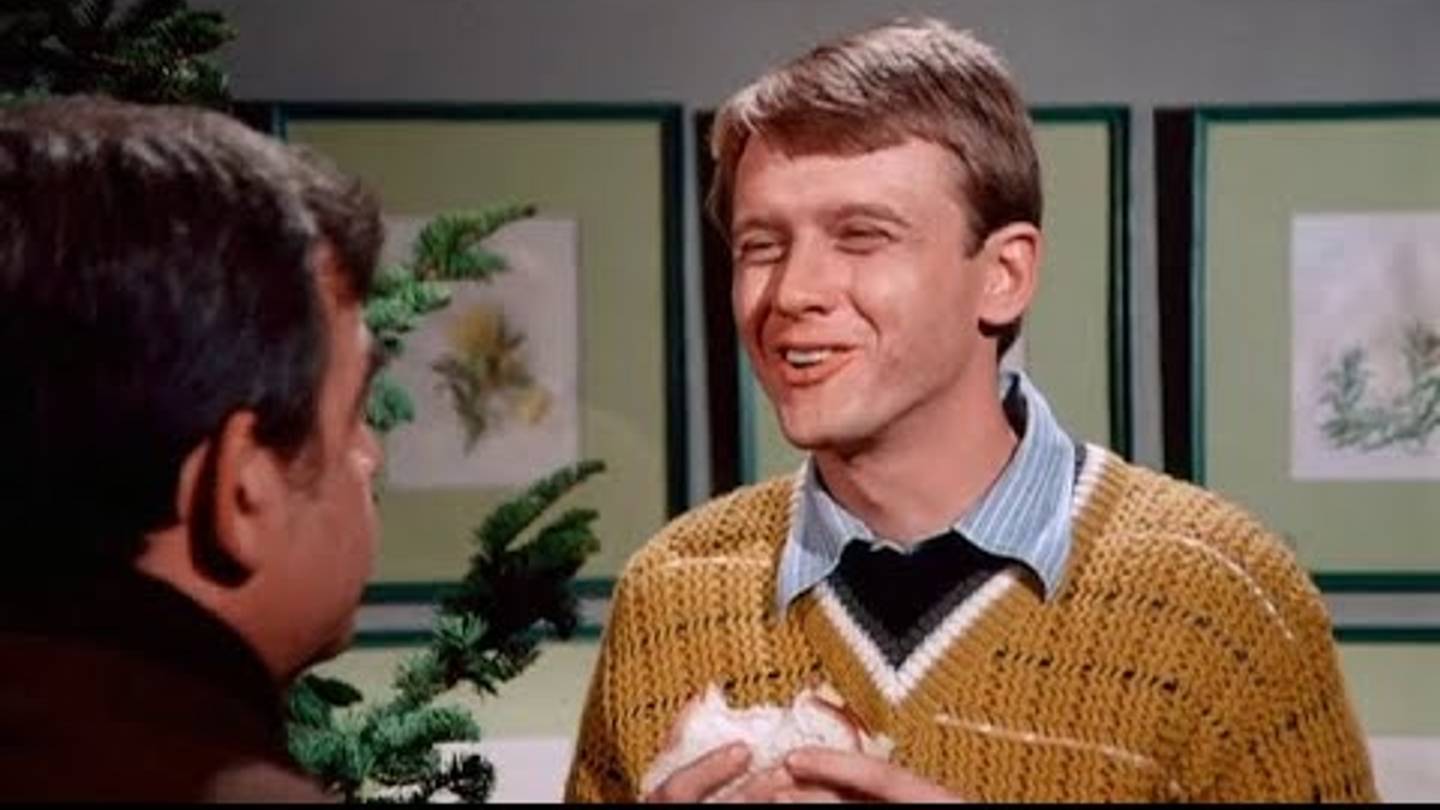

Television has given us many mysteries: Who shot J.R.? Why did everyone in every sitcom kitchen own the same orange Tupperware? And, most importantly for classic TV fans, what happened to Chuck Cunningham on Happy Days? One minute, Richie and Joanie had an older brother who played basketball, ate like a refrigerator with sneakers, and occasionally wandered through the Cunningham home. The next minute, he was gone so completely that even his own fictional parents seemed to misplace him in the family album.
The disappearance of Chuck Cunningham became one of the funniest and strangest pieces of sitcom history. He was not killed off. He did not move away in a dramatic farewell episode. He did not join the circus, inherit a farm, or leave Milwaukee to become a professional yo-yo champion, although frankly, any of those explanations would have helped. Instead, Chuck simply vanished from Happy Days, leaving behind a legacy much bigger than his actual screen time.
Today, the phrase “Chuck Cunningham Syndrome” is used by TV fans to describe a character who disappears from a show without explanation, as if the writers quietly slid the character under the couch and hoped nobody would vacuum. But Chuck’s vanishing act is more than a trivia question. It reveals how television storytelling changed in the 1970s, how breakout characters can reshape a series, and how even a minor role can become pop-culture shorthand for a very specific kind of narrative disappearing trick.
Who Was Chuck Cunningham?
Chuck Cunningham was introduced as the eldest child of Howard and Marion Cunningham, making him the older brother of Richie Cunningham and Joanie Cunningham. In the early version of Happy Days, the Cunningham family had three children, and Chuck was the athletic college-age sibling who usually seemed to have a basketball nearby. If Richie was the clean-cut teenage everyman and Joanie was the nosy little sister, Chuck was supposed to be the big-brother figure: taller, older, sportier, and theoretically wiser.
The problem was that the show rarely knew what to do with him. Chuck was not central to Richie’s high school adventures. He was not part of Richie’s friend group with Potsie Weber and Ralph Malph. He was not the comic engine of the series. And once Fonzie began stealing scenes like a leather-jacketed magician, Chuck’s job as the older male presence became less necessary. Fonzie could offer advice, swagger, protection, and comic timing. Chuck could offer jump shots.
That does not mean Chuck was useless. In the earliest version of the show, he helped make the Cunningham home feel like a fuller family environment. He gave Richie an older sibling, which created a believable household rhythm. In a more dramatic family sitcom, Chuck might have become a source of sibling rivalry, college advice, sports pressure, or generational contrast. But Happy Days moved in another direction. It became faster, broader, and more focused on the chemistry between Richie and Fonzie.
The Three Actors Connected to Chuck
One reason the Chuck Cunningham story feels extra strange is that the character was played by more than one actor. In the original Love, American Style segment that helped launch Happy Days, Chuck was played by Ric Carrott. When the series itself went into production, Gavan O’Herlihy took over the role. O’Herlihy became the actor most closely associated with Chuck in the first season.
O’Herlihy had the right look for the part: tall, athletic, and believable as the Cunningham family’s basketball-playing oldest son. But the role did not offer much room to grow. Chuck was often reduced to a background presence, walking in with a basketball or popping up when the family needed one more person at home. For an actor who wanted substantial work, it was not exactly Shakespeare. It was more like, “Enter, bounce ball, exit upstairs.”
After O’Herlihy left the series, Randolph Roberts briefly played Chuck in the second season. Roberts appeared in only a small number of episodes, including a storyline in which Richie moves in with Chuck after a disagreement at home. That episode gave Chuck one of his clearest functions: he was the slightly older young adult who could show Richie that independence was not as easy as it looked. Still, the role never caught fire.
By the time Happy Days found its winning formula, Chuck was gone. No parade. No heartfelt goodbye. Not even a quick line like, “Chuck called from college, and he says hello.” For a character whose last known habitat seemed to be somewhere between the Cunningham driveway and the upstairs bedroom, the exit was impressively silent.
Why Did Chuck Disappear?
The practical reason is simple: the show evolved. Early Happy Days was more centered on Richie Cunningham’s coming-of-age experiences in a nostalgic 1950s Milwaukee setting. As the series developed, Henry Winkler’s Fonzie became a breakout character. Fonzie brought charisma, physical comedy, and a cool factor that audiences loved. Once Fonzie became Richie’s unofficial older-brother figure, Chuck’s role became redundant.
In sitcom terms, redundancy can be fatal. A character needs a clear job. Richie was the relatable lead. Howard and Marion were the parental anchors. Joanie brought sibling comedy. Potsie and Ralph filled out the teen-friend circle. Fonzie became the mythic cool guy who could fix both motorcycles and emotional problems with roughly the same amount of effort. Chuck, meanwhile, was a basketball player in a show that did not really need basketball.
Another factor was screen time. Sitcom episodes are short, and every minute matters. If a character does not generate enough jokes, conflict, warmth, or plot movement, writers often stop using that character. Modern shows may give a careful explanation, but 1970s sitcoms were not always worried about continuity in the way today’s viewers are. Back then, if a character stopped serving the story, the show often moved on and trusted the audience to do the same.
The funny part is that the audience did not move on. Fans noticed. Viewers remembered that Richie and Joanie once had an older brother. Later episodes made the situation even more bizarre by presenting Howard and Marion as if they had only two children. That turned Chuck’s absence from a normal cast adjustment into a full-blown pop-culture mystery.
How Fonzie Replaced Chuck’s Function
To understand Chuck’s disappearance, you have to understand Fonzie’s rise. Arthur “Fonzie” Fonzarelli began as a supporting character, but he quickly became the show’s secret weapon. He was cool but kind, rebellious but moral, intimidating but oddly tender. In other words, he was a walking contradiction with a motorcycle, and American television could not resist him.
Fonzie gave Richie the older-male guidance that Chuck might have provided. But Fonzie did it with more style, more laughs, and a much stronger audience reaction. A scene in which Chuck tells Richie to be confident might be fine. A scene in which Fonzie says it with a thumbs-up, a raised eyebrow, and the power to make a jukebox obey him is television gold.
This is why Chuck’s vanishing act makes sense from a production standpoint. The show did not need two older-brother figures. Fonzie was not related to Richie by blood, but he became family in every way that mattered for the audience. He could advise Richie, charm Marion, challenge Howard, tease Joanie, and still remain slightly outside the wholesome Cunningham world. Chuck could not compete with that. Few characters could.
The Birth of “Chuck Cunningham Syndrome”
Chuck’s disappearance became so famous that it inspired the term “Chuck Cunningham Syndrome.” The phrase describes what happens when a TV character disappears from a series without an in-story explanation and is rarely, if ever, mentioned again. It is not the same as a character moving away, dying, or leaving after a clear farewell. The key ingredient is silence. The character falls into sitcom fog, and everyone on screen behaves as if nothing happened.
Other shows have had similar disappearances. Fans often mention Judy Winslow from Family Matters, who faded out of the series as the show shifted more attention toward Steve Urkel. Viewers also point to forgotten siblings, missing pets, vanished neighbors, and one-episode relatives who apparently stepped into another dimension between commercial breaks. But Chuck remains the classic example because the contradiction was so obvious: the central family once had three children, and then the show acted like there had only been two.
The term has lasted because it is useful and funny. It gives fans a quick way to talk about a storytelling shortcut that can feel both practical and ridiculous. In the real world, people do not usually forget a son, brother, or family member because the plot got crowded. In sitcom world, however, a character can vanish forever because a cooler guy in a leather jacket tested better with audiences.
Why Fans Still Care About Chuck Cunningham
Chuck Cunningham is memorable precisely because he was not memorable enough to keep. That is the paradox. If he had been a major character with rich storylines, the show would have needed to explain his exit. If he had never existed, no one would ask questions. But because he existed just enough to be noticed and then disappeared completely, he became a perfect TV mystery.
Fans care because television creates a sense of familiarity. Viewers invite sitcom families into their homes week after week. The Cunningham house, Arnold’s Drive-In, and Richie’s circle of friends became comfortable places for millions of people. When someone vanishes from that world without explanation, it creates a tiny crack in the illusion. The viewer suddenly sees the machinery behind the show: casting changes, writing decisions, ratings pressure, and character adjustments.
There is also something wonderfully human about the way fans refuse to forget him. Chuck may have been forgotten by the fictional Cunningham family, but he was remembered by the audience. In a strange way, viewers gave Chuck the continuity the show denied him. Every joke, article, forum debate, and nostalgic rewatch keeps the character alive.
What Chuck’s Vanishing Says About Classic Sitcoms
The Chuck Cunningham story reminds us that classic sitcoms were often built for weekly viewing, not endless rewatching. Today, audiences can stream episodes in order, analyze continuity, and pause every scene like detectives investigating a missing-brother case. In the 1970s, television was more casual. Episodes aired, reruns appeared, and long-term continuity was often flexible.
That flexibility had advantages. Writers could adapt quickly when something worked. When Fonzie became popular, Happy Days leaned into him. When the show’s tone shifted, the format changed. Characters came and went. Sets changed. The theme song changed. The series followed audience energy, not a rigid master plan.
But that same flexibility created loose ends. Chuck is one of the most famous loose ends in sitcom history because his absence involved the core family. It is one thing for a neighbor to stop dropping by. It is another for an oldest son to vanish so thoroughly that his parents later speak as if he never existed. That is not just a loose end. That is a sweater unraveling itself while smiling at the camera.
Was Removing Chuck the Right Creative Decision?
From a storytelling perspective, removing Chuck was understandable. The show became tighter without him. Richie’s relationship with Fonzie had more room to grow, and the Cunningham family dynamic became simpler. Howard, Marion, Richie, and Joanie formed a clean sitcom unit. Add Fonzie as the beloved outsider, and the show had the formula that made it a hit.
From a continuity perspective, however, the exit was clumsy. A single line could have solved everything. Chuck could have been at college. Chuck could have joined a basketball program. Chuck could have moved to another city for work. He could have written a letter. Marion could have said, “Chuck called, and he’s doing fine.” That would have taken five seconds and saved decades of jokes.
Of course, if the writers had done that, we might not have “Chuck Cunningham Syndrome” today. Sometimes a mistake becomes more memorable than a perfect solution. Chuck’s disappearance is a continuity problem, but it is also a gift to TV fans. It gave viewers a phrase, a running joke, and a reason to rewatch early episodes with the energy of detectives searching for clues.
The Pop-Culture Afterlife of Chuck Cunningham
Chuck Cunningham’s afterlife is proof that pop culture does not always reward screen time. Some characters become famous because they dominate a show. Others become famous because they disappear from one. Chuck belongs to the second group. He is not remembered for a catchphrase, a dramatic scene, or a beloved episode. He is remembered for the silence around him.
That silence became louder over time. As Happy Days grew into one of the defining sitcoms of its era, Chuck’s absence became more noticeable. Fans who revisited the early seasons discovered the missing brother. Writers and critics used him as a reference point. Online communities turned him into a shorthand for abandoned characters everywhere.
In a way, Chuck became more useful outside the show than he ever was inside it. Inside Happy Days, he was a lightly sketched older brother. Outside the show, he became a symbol of how television sometimes edits its own history. Not bad for a guy who mostly bounced a basketball.
Experiences and Reflections: Watching Chuck Vanish in Real Time
For viewers discovering Happy Days today, Chuck Cunningham’s disappearance can feel almost surreal. Modern audiences are trained to expect explanations. If a character leaves a show now, fans look for interviews, behind-the-scenes reports, social media posts, contract news, and emotional farewell montages. We expect closure. We expect a reason. We expect at least one character to stare out a window and say, “I still miss Chuck.”
Watching early Happy Days with that modern mindset creates a funny experience. You see Chuck appear, and because you know the legend, you pay attention to him in a way original viewers may not have. Every scene becomes suspicious. There he is with a basketball. There he is in the house. There he is functioning as a real member of the family. Then, slowly, the show’s attention drifts elsewhere. Fonzie gets brighter. Richie’s friendships get sharper. The Cunningham home becomes familiar without Chuck. Before long, you realize the series has quietly moved on.
That experience is oddly relatable. Families, workplaces, schools, and friend groups all have people who were once present and then gradually stopped appearing in the story. Of course, real life usually has explanations: someone moved, graduated, changed jobs, or lost touch. But memory can be strange. Sometimes a person who was part of the everyday background becomes a “whatever happened to…” question years later. Chuck Cunningham taps into that feeling, only in a much sillier sitcom package.
For longtime fans, the Chuck mystery is part of the fun of classic television. It gives viewers something to discuss beyond favorite episodes and catchphrases. It turns a minor continuity issue into a shared joke. Mention Chuck Cunningham to a classic TV fan, and you will probably get a smile, a theory, or a dramatic announcement that he is still upstairs looking for his basketball. That kind of fan folklore keeps older shows alive.
There is also a lesson for writers. Audiences notice more than creators sometimes expect. A character does not need to be the star to matter. If you introduce someone as part of a central family, viewers file that information away. They may forgive changes, but they enjoy acknowledgment. Even a tiny explanation can preserve trust. Without it, the missing piece becomes the story.
Still, Chuck’s vanishing act did not damage Happy Days in any serious way. The show went on to become a cultural giant, Fonzie became an icon, and the Cunningham family remained one of television’s most beloved households. If anything, Chuck’s disappearance added one more layer to the show’s legacy. Happy Days gave us Fonzie, Arnold’s, Richie, Joanie, the phrase “jump the shark,” and one of the greatest unexplained exits in sitcom history. That is a pretty impressive résumé.
So when people ask what happened to Chuck Cunningham, the best answer may be this: he disappeared from the show, but he never disappeared from television history. He became the patron saint of vanished sitcom characters, the missing brother who accidentally achieved immortality by leaving no forwarding address. Somewhere in the great fictional beyond, Chuck is probably still dribbling a basketball, wondering why everyone keeps talking about him.
Conclusion
Chuck Cunningham’s disappearance from Happy Days is one of those classic TV oddities that refuses to fade away. The character was minor, but the mystery became major. His exit shows how quickly a television series can evolve, especially when a breakout character like Fonzie changes the entire shape of the show. It also proves that audiences remember details, even when writers hope they will not.
In the end, Chuck Cunningham vanished from Milwaukee, from the Cunningham family, and from the show’s official emotional memory. But he gained something unexpected: a permanent place in TV language. “Chuck Cunningham Syndrome” remains a funny, useful phrase for every character who walks off-screen and never returns. Not every sitcom character gets a farewell episode. Some get something stranger: immortality by omission.
Note: This article is written as original publishable web content based on real entertainment-history information, without source links inside the body as requested.