Indonesian Illustrator Sketches Real People As Cartoons And You Will Be Amazed At The Accuracy

Note: This article is written as original, publish-ready SEO content based on publicly available information about Indonesian illustrator Rudi, cartoon portrait art, caricature principles, anime-inspired illustration, and modern digital drawing culture.
There is a special kind of magic in seeing an ordinary photo transformed into a cartoon portrait. One minute, you are looking at a real person sitting in a café, holding a cat, posing with a baby, or smiling awkwardly at the camera like someone just said, “Act natural.” The next minute, that same person has become a charming anime-style character with expressive eyes, polished shading, and just enough exaggeration to look like they belong in a comic book universe.
That is exactly why the work of Indonesian illustrator Rudi has caught the attention of art lovers online. Known for sketching real people as cartoons, Rudi creates portraits that feel cute, expressive, and surprisingly accurate. His drawings do not simply copy a photo. They translate the person’s personality, pose, hairstyle, clothing, mood, and tiny visual details into a stylized illustration that still feels instantly recognizable.
In a digital world filled with filters, AI avatars, and one-tap cartoon apps, hand-drawn cartoon portraits still hit differently. They have warmth. They have intention. They have that unmistakable human touch that says, “Yes, I noticed your uneven bangs, your shy smile, your cat’s judgmental stare, and the coffee cup you were absolutely using as emotional support.”
Who Is Rudi, the Indonesian Illustrator Behind These Cartoon Portraits?
Rudi is an Indonesian artist and illustrator widely recognized online for transforming photos of real people into cartoon and anime-inspired sketches. His work became popular because it combines accurate likeness with a soft, playful character design style. Instead of creating harsh caricatures that exaggerate features for comedy, Rudi leans toward sweetness, charm, and emotional accuracy.
His subjects vary widely. Some drawings feature women in casual outfits, couples posing together, babies with adorable expressions, children in playful moments, men with distinct hairstyles or facial features, and even cats that look like they are already planning world domination. That variety is one reason the artwork feels so relatable. These are not only celebrity-style portraits or polished studio references. Many look like everyday people in everyday situations, reimagined as characters from a cheerful animated universe.
What makes Rudi’s cartoon sketches so appealing is the balance between fantasy and recognition. The final image is clearly stylized, often with larger eyes, smoother facial shapes, softer lines, and a manga-like sense of expression. Yet the subject still looks like themselves. The face, pose, clothing, gesture, and attitude remain intact. That balance is harder than it looks, which is why his work has been shared so widely by art and design communities.
Why Turning Real People Into Cartoons Is So Fascinating
People love seeing themselves as cartoons because it offers a playful version of identity. A portrait shows who you are. A cartoon portrait shows who you might be if your life had theme music, dramatic lighting, and a loyal animal sidekick.
There is also a nostalgic reason this style connects so strongly with viewers. Many people grew up watching cartoons, reading comics, or falling in love with anime characters. When a real person is drawn in that visual language, the result feels both personal and cinematic. It suggests that ordinary life is worth illustrating. Your messy hair, your favorite hoodie, your baby’s curious expression, or your cat’s refusal to respect personal space can become art.
Cartoon portraits also make reality feel lighter. A regular photo might capture a moment, but a cartoon version can amplify its emotional tone. A shy smile becomes sweeter. A funny pose becomes funnier. A couple’s quiet closeness becomes more romantic. A cat’s suspicious glare becomes a full-blown animated villain origin story.
The Secret Is Not Just AccuracyIt Is Smart Stylization
At first glance, the accuracy of Rudi’s illustrations may seem like the result of simply drawing what is in the photo. But cartoon portrait art depends on something more complex: choosing what to keep, what to simplify, and what to exaggerate.
A realistic portrait tries to reproduce the subject as faithfully as possible. A cartoon portrait has a different mission. It must simplify the subject while preserving identity. That means the artist has to identify the most recognizable features: the shape of the eyes, the curve of the smile, the hairstyle, the posture, the clothing, the mood, and the relationship between the subject and the environment.
For example, if a person has round glasses, a soft smile, and a tilted head, those details become visual anchors. If a baby has chubby cheeks and wide curious eyes, the cartoon version can emphasize those traits without losing the baby’s likeness. If a cat has a very specific grumpy expression, the artist must capture that sacred feline judgment with absolute respect. Cats, as everyone knows, have lawyers.
Rudi’s work succeeds because the illustrations keep the important details. Props, clothing, backgrounds, and poses often remain part of the final image. That matters because likeness is not only about the face. Sometimes a person’s personality lives in the way they hold a phone, sit beside a loved one, wear a favorite scarf, or cuddle a pet that clearly believes it owns the house.
Anime Influence Gives the Portraits Extra Charm
One of the most noticeable qualities in Rudi’s work is the anime-inspired style. The portraits often use expressive eyes, clean outlines, rounded facial shapes, gentle shading, and an emotional softness associated with manga and anime character design. This style works especially well for personal portraits because it can make the subject look warm, approachable, and story-ready.
Anime-style illustration is powerful because it communicates emotion quickly. Large eyes can suggest innocence, surprise, warmth, or mischief. Simplified noses and mouths keep the face clean and readable. Hair can be stylized into flowing shapes that feel dynamic even when the original photo is still. Clothing folds, accessories, and background elements can be reduced into clear lines without losing the overall feel of the moment.
Rudi’s portraits show how anime influence can be used without turning every subject into the same generic character. The best cartoon portraits do not erase individuality. They use style as a lens. The person becomes cuter, brighter, or more dramatic, but still recognizable. That is the sweet spot between portraiture and character design.
Why the Details Matter So Much
Accuracy in cartoon art is often hiding in small details. A viewer might first notice the big eyes or clean outlines, but the real reason the drawing feels “right” is usually more subtle.
1. The Pose Stays True to the Photo
If the reference photo shows a person leaning forward, holding a baby, hugging a partner, or sitting with relaxed shoulders, preserving that pose keeps the energy of the original moment. A pose can reveal confidence, shyness, affection, humor, or calm. Rudi’s illustrations often keep that body language intact, which helps the cartoon feel accurate even when the face is stylized.
2. Clothing and Accessories Are Not Ignored
Many cartoon portrait artists focus mostly on the face, but clothing and accessories can be just as important. Glasses, hats, scarves, patterned shirts, bags, and jewelry help identify the person. They also give the drawing texture. When an illustrator includes these details, the artwork feels more personal and less like a template.
3. Facial Expressions Carry the Personality
A smile is never just a smile. It can be nervous, bright, sarcastic, gentle, proud, or completely forced because someone’s aunt insisted on “one more photo.” Capturing the right expression is essential. Rudi’s cartoon portraits often retain the emotional expression of the original picture, which is why the drawings feel familiar and alive.
4. Pets Become Characters Too
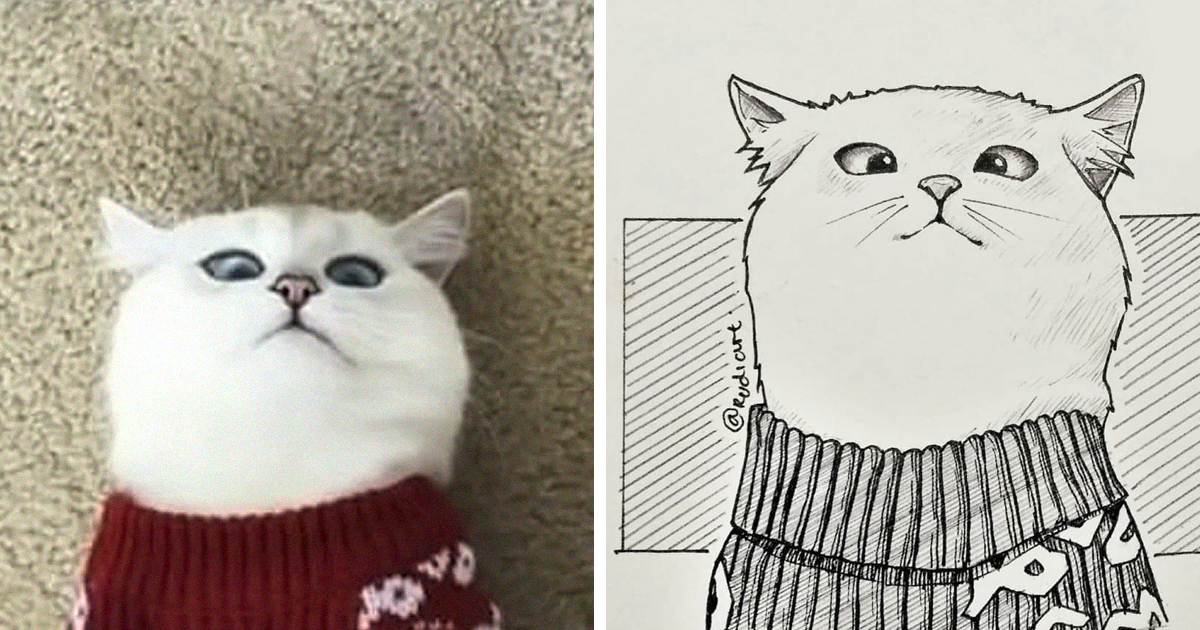
Including cats and other animals adds another layer of charm. Pets already behave like cartoon characters in real life. Cats especially arrive with built-in drama, mystery, and a face that says, “I have seen your search history.” When illustrated in cartoon form, their personalities become even more obvious.
The Difference Between Cartoon Portraits and Caricatures
Cartoon portraits and caricatures are closely related, but they are not the same thing. A caricature usually exaggerates a person’s features more strongly, often for humor or satire. A cartoon portrait can be softer. It may stylize the subject without making them look ridiculous.
Rudi’s work fits more comfortably into the world of cute cartoon portraiture and anime-style character art. The goal is not to roast the subject. The goal is to transform them into an appealing illustrated version of themselves. Think less “political cartoon in a newspaper” and more “main character in a heartwarming animated series.”
This distinction matters because many people want artwork that feels flattering, fun, and personal. They do not necessarily want their nose turned into a mountain range or their forehead drawn with its own zip code. Rudi’s style respects the subject while still giving the artwork a playful twist.
Why These Portraits Work So Well on Social Media
Side-by-side transformation art is perfect for social media. Viewers love comparing the original photo with the finished drawing. It creates an instant before-and-after effect, which makes people pause, look closer, and share the post.
There is also a satisfying “spot the details” quality. People enjoy noticing how the illustrator handled the hairstyle, the eyes, the clothes, the background, and the expression. The more accurate the transformation, the more impressive it becomes. It is the art-world version of watching someone solve a puzzle beautifully.
Another reason this content spreads is that it feels personal and accessible. Viewers can imagine themselves, their partner, their child, or their pet in the same style. That emotional connection turns casual viewers into fans. The artwork does not feel distant or intimidating. It feels like something that could happen to your own favorite photo.
What Artists Can Learn From Rudi’s Cartoon Sketches
Rudi’s work offers several useful lessons for beginner and intermediate artists who want to draw real people as cartoons.
Start With Observation, Not Style
Before applying an anime or cartoon style, study the reference photo carefully. Look at the subject’s face shape, eye spacing, posture, hairstyle, and expression. Style should come after observation. Otherwise, every person starts to look like the same character wearing different clothes.
Keep the Most Recognizable Features
Not every detail needs to be included, but the right details must survive. If someone is known for curly hair, sharp eyebrows, round cheeks, or a bright smile, those features should remain visible in the cartoon version.
Simplify Without Flattening the Personality
Cartooning requires simplification, but simplification should not remove character. The trick is to reduce visual clutter while keeping emotional truth. A good cartoon portrait is clean, readable, and expressive.
Use Props and Backgrounds Wisely
A coffee mug, a phone, a sofa, a plant, or a cat can help tell the story of the image. These details do not need to be overly realistic, but including them can make the portrait feel complete.
Practice Both Black-and-White and Color
Black-and-white sketches help artists focus on line, shape, contrast, and shading. Color adds mood, warmth, and visual impact. Rudi’s work shows that both approaches can be effective depending on the subject and composition.
Why Human-Made Cartoon Portraits Still Matter in the Age of Filters
Cartoon filters and AI avatar generators are everywhere now. They can turn a selfie into a fantasy portrait in seconds. But speed is not the same as soul. A hand-drawn cartoon portrait feels different because an artist has made choices. The artist has studied the subject, interpreted the expression, selected the visual details, and built the final image with care.
That human decision-making gives the artwork personality. A filter might smooth your face and enlarge your eyes, but an illustrator can notice the way you tilt your head, the way your smile curves more on one side, or the way your pet is stealing the emotional spotlight. Those details make the difference between a generic effect and a meaningful illustration.
In many ways, Rudi’s popularity proves that people still value art created by hand and guided by human attention. Technology can imitate style, but artists understand mood. And mood is where the magic lives.
Specific Examples of What Makes the Artwork Feel Accurate
When looking at Rudi’s cartoon transformations, several types of examples stand out. In portraits of couples, the closeness between the two subjects often remains the heart of the drawing. The artist keeps the angle of their bodies, the direction of their gaze, and the emotional warmth between them. The result feels romantic without becoming overly polished.
In portraits of children and babies, the cartoon style enhances innocence and playfulness. Rounder shapes, softer cheeks, and wide eyes make the drawings feel adorable, but the original expression still matters. A curious look, a shy smile, or a tiny serious face can become even more charming in cartoon form.
In cat drawings, the humor comes from personality. A cat sitting calmly, staring intensely, or looking mildly offended already has comic potential. Rudi’s style turns that energy into something even more animated, as if the cat is about to receive its own spin-off series and demand royalties.
In portraits with detailed clothing or backgrounds, the accuracy comes from visual memory. The viewer recognizes not only the person but the whole scene. That makes the drawing feel less like a generic character sketch and more like a specific moment preserved in a new artistic language.
The Emotional Appeal of Seeing Yourself as a Character
One reason cartoon portraits are so beloved is that they make people feel seen in a joyful way. Traditional portraits can sometimes feel formal or serious. Cartoon portraits feel friendly. They say, “You are interesting enough to become a character.” That is a surprisingly powerful compliment.
There is also a playful confidence boost in the transformation. The subject often looks a little brighter, cuter, or more heroic than in the original photo. But the appeal is not only vanity. It is the feeling of being reimagined. The artwork suggests that everyday people have stories worth telling.
This is why cartoon portraits are popular as gifts, profile pictures, wedding art, family keepsakes, pet memorials, and personal branding images. They are personal but not overly serious. They are decorative but meaningful. They are fun, but they can still carry emotional weight.
Experience Section: What It Feels Like to Watch a Real Person Become a Cartoon
There is a small moment of suspense when you see a real photo placed next to its cartoon version. Your brain starts checking the details immediately. Are the eyes right? Did the artist get the smile? Is the hairstyle close? Did they remember the necklace, the sleeve pattern, the cat, the background chair, the tiny expression that makes the original photo so specific?
When the illustration works, the reaction is almost automatic: “That is so them.” Not “that is a perfect copy,” but “that is the feeling of them.” That is the real achievement. A cartoon portrait does not have to reproduce every pore, shadow, or wrinkle. It has to capture the recognizable essence of the person. Rudi’s work often gives viewers that satisfying click of recognition.
For someone receiving a portrait like this, the experience can be surprisingly emotional. Many people are used to seeing themselves in photos, and photos can be unforgiving. A camera catches weird angles, bad lighting, tired eyes, and the exact second your smile gave up and went home. A cartoon portrait softens that experience. It keeps your identity but removes some of the harshness. It turns the image into something warm and stylized.
For artists, studying this kind of work can also change the way they look at people. Suddenly, every face becomes a collection of shapes and expressions. A friend’s laugh becomes a line rhythm. A child’s curious stare becomes a design choice. A cat’s suspicious side-eye becomes an artistic responsibility of the highest order. Drawing real people as cartoons trains the eye to notice what makes each subject unique.
There is also a lesson here for anyone who creates visual content online. Accuracy does not always mean realism. Sometimes accuracy means emotional truth. A simplified drawing can feel more like a person than a detailed rendering if it captures the right expression, posture, and mood. That is why cartoon portraits can be more memorable than ordinary photos.
Another experience many viewers share is the desire to imagine their own cartoon version. Would you look like a calm side character with excellent advice? A chaotic best friend who enters every room holding snacks? A mysterious anime mentor with wind-blown hair and unresolved backstory? Rudi’s portraits invite that kind of playful self-imagination. They make the viewer part of the fun.
And perhaps that is the biggest reason this artwork resonates. It does not treat cartooning as a childish version of reality. It treats cartooning as a way to celebrate reality. The people in the photos are not replaced by fantasy characters. They are translated into a visual world where their expressions become brighter, their personalities become clearer, and their ordinary moments feel worthy of a frame.
In a culture where millions of images pass by every day, that kind of attention feels rare. Someone looked closely. Someone noticed. Someone turned a passing photo into a character portrait with charm, humor, and care. That is why Indonesian illustrator Rudi’s sketches continue to feel delightful: they remind us that every face has a story, every pet has dramatic potential, and every ordinary moment might secretly be one drawing away from becoming a cartoon masterpiece.
Conclusion
Indonesian illustrator Rudi’s cartoon portraits are more than cute online art. They are a reminder of how powerful stylized portraiture can be when it respects the subject. By turning real people, couples, children, babies, and pets into anime-inspired cartoon characters, Rudi captures both likeness and personality. His work stands out because it balances accuracy with imagination, preserving the details that matter while adding a charming illustrated glow.
In a world full of instant filters and automated effects, hand-drawn cartoon portraits still feel personal. They show that accuracy is not only about copying a face. It is about understanding expression, posture, mood, and identity. That is why these drawings are so enjoyable to look atand why so many people can imagine themselves as the next cartoon character in the story.