
Paranormal research has always lived in a strange neighborhood between science, philosophy, folklore, psychology, and “Did that chair just move by itself?” Long before ghost-hunting shows had night-vision cameras and dramatic whispering in abandoned hallways, serious scholars, physicians, psychologists, chemists, and skeptics were already investigating claims of telepathy, apparitions, mediumship, hauntings, extrasensory perception, and survival after death.
These early paranormal researchers did not all agree with one another. Some hoped to prove that the mind could reach beyond the body. Others wanted to expose fraud. A few managed to do both, which is honestly the most Victorian thing imaginable: attend a séance, take notes, question reality, and then politely accuse someone of cheating.
This list explores ten notable figures from the history of psychical research and parapsychology. Their work did not settle the paranormal debate, but it shaped the language, methods, controversies, and cultural imagination surrounding the unknown.
What Counts as a Paranormal Researcher?
A paranormal researcher is someone who investigates reported phenomena that appear to fall outside ordinary scientific explanation. Historically, this included ghost sightings, telepathy, clairvoyance, mediumship, spirit photography, poltergeist activity, dreams that seemed prophetic, and later, laboratory tests of extrasensory perception.
The important word is investigates. The best-known researchers from history were not simply believers sitting around waiting for Aunt Mildred to knock from the afterlife. They collected cases, interviewed witnesses, designed experiments, challenged mediums, built archives, and argued fiercely about evidence. Their work helped create the fields known as psychical research and parapsychology.
1. Henry Sidgwick: The Philosopher Who Wanted Evidence
Henry Sidgwick, a Cambridge philosopher and co-founder of the Society for Psychical Research, helped give paranormal investigation a serious intellectual framework. In 1882, the Society for Psychical Research was formed in Britain to examine claims such as telepathy, apparitions, hypnotism, and mediumship with greater discipline than drawing-room gossip could provide.
Sidgwick’s importance lies in his attitude. He did not approach the paranormal like a carnival barker selling tickets to the invisible. He wanted careful testimony, organized inquiry, and cautious conclusions. As the first president of the Society for Psychical Research, he helped establish the idea that strange claims deserved neither blind belief nor lazy dismissal.
His legacy is less about one dramatic ghost case and more about method. Sidgwick helped move paranormal research from the séance parlor into the committee room, which may sound less spooky, but it is exactly where evidence gets a fighting chance.
2. Frederic W. H. Myers: The Man Who Popularized “Telepathy”
Frederic William Henry Myers was a poet, classicist, and psychical researcher whose influence still echoes through paranormal vocabulary. He is widely associated with the term “telepathy,” which replaced older phrases such as “thought-reading.” Myers believed that human consciousness might extend beyond the normal limits recognized by science.
Along with Edmund Gurney and Frank Podmore, Myers worked on Phantasms of the Living, a major collection of reports involving apparitions, crisis visions, and experiences that seemed to suggest mind-to-mind communication. The book was ambitious, enormous, and very Victorian: part archive, part argument, part invitation to reconsider what the mind might be.
Myers later developed ideas about the “subliminal self,” a deeper layer of consciousness that he thought might explain extraordinary experiences. Modern psychology did not accept all his conclusions, but his work helped make the hidden mind a serious subject of discussion.
3. Edmund Gurney: The Case Collector of Ghostly Experiences
Edmund Gurney was one of the early Society for Psychical Research’s most active investigators. A psychologist and musician, he helped gather and analyze hundreds of reports for Phantasms of the Living. His focus was not simply “ghosts are real” or “ghosts are nonsense.” Instead, he examined whether apparitions might be connected to telepathic impressions, especially during moments of crisis.
Gurney’s work matters because he treated testimony as something to be sorted, compared, and tested. Eyewitness stories can be messy. People misremember. Coincidences happen. Families embellish. But Gurney’s approach asked whether patterns could still be found beneath the fog.
He died young, but his contribution helped define one of the earliest large-scale attempts to study paranormal experiences systematically. Think of him as part detective, part psychologist, and part librarian of the uncanny.
4. Eleanor Sidgwick: The Skeptical Powerhouse Behind the Scenes
Eleanor Mildred Sidgwick deserves far more attention than she often receives. A mathematician, educational reformer, and key figure in the Society for Psychical Research, she brought sharp analytical skill to a field that badly needed it. She was also connected to Newnham College, Cambridge, and played a major role in women’s education.
In paranormal research, Eleanor Sidgwick was known for careful scrutiny. She investigated claims such as spirit photography and mediumistic phenomena, often finding natural explanations or signs of fraud. Her work reminds us that serious paranormal research has always required skepticism. Without skepticism, you do not have research; you have a campfire story wearing a lab coat.
Sidgwick later served as president of the Society for Psychical Research. Her legacy stands at the intersection of science, education, and disciplined doubt.
5. William James: The Psychologist Who Took the Strange Seriously
William James, one of America’s most influential psychologists and philosophers, was also deeply involved in psychical research. He helped shape the American Society for Psychical Research and investigated claims of mediumship, altered consciousness, and unusual mental phenomena.
James did not become famous because he believed every spooky story that wandered into his office. His value was subtler. He argued that science should not ignore difficult experiences simply because they were inconvenient or socially embarrassing. He understood that human consciousness was not fully explained, and he believed unusual cases might reveal something important about the mind.
His interest in the medium Leonora Piper became especially well known. James remained cautious, but he was intrigued by cases that seemed resistant to easy explanation. His approach was open-minded without being empty-headed, a balance paranormal research still struggles to maintain.
6. Sir William Crookes: The Chemist Who Investigated Mediums
Sir William Crookes was a major British chemist and physicist, known for discovering thallium and for important work with cathode rays. He also investigated spiritualist claims, including the famous medium Daniel Dunglas Home.
Crookes is fascinating because he was not a fringe figure. He was a respected scientist who brought instruments, observations, and scientific confidence into séances. His reports impressed believers and irritated skeptics. Critics argued that even brilliant scientists can be deceived by skilled performers, especially when the room is dark and everyone is emotionally invested.
His paranormal investigations remain controversial, but that controversy is exactly why he matters. Crookes symbolizes a recurring question in paranormal history: does scientific training protect someone from deception, or can curiosity make even experts vulnerable to a very good trick?
7. Charles Richet: The Nobel Laureate of Metapsychics
Charles Richet was a French physiologist who won the Nobel Prize in Physiology or Medicine in 1913 for his work on anaphylaxis. Beyond his mainstream scientific career, he spent years studying psychic and mediumistic phenomena. He used the term “metapsychics” for the study of phenomena that seemed to go beyond ordinary psychology.
Richet investigated mediums and unusual claims, including physical mediumship. He also helped popularize the word “ectoplasm,” a term that later became a favorite of ghost stories, horror films, and anyone looking for a fancy word for supernatural goo.
His paranormal work was admired by some and sharply criticized by others. Richet’s career shows how early psychical research attracted people of genuine scientific achievement while also exposing them to cases where fraud, wishful thinking, and experimental weakness could easily sneak in through the back door.
8. Harry Price: The Ghost Hunter With a Filing Cabinet
Harry Price is one of the most famous paranormal investigators of the twentieth century. A British researcher, author, and collector, he established the National Laboratory of Psychical Research and became known for investigating mediums, hauntings, and alleged supernatural events.
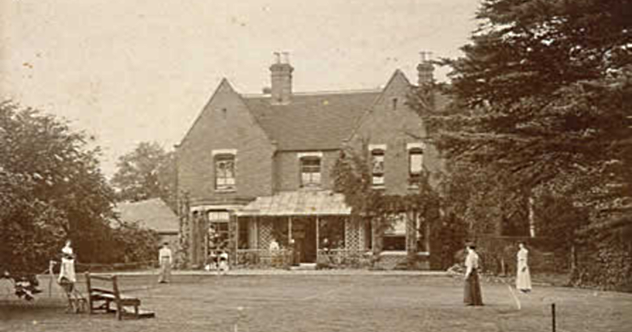
Price was part investigator, part showman, and part archive-building machine. He exposed fraudulent claims, including controversial spirit photography cases, and he also became famous for his investigation of Borley Rectory, often called one of England’s most haunted houses.
Not everyone accepted Price’s conclusions, and his work has been debated for decades. Still, his importance is undeniable. He helped create the modern image of the paranormal researcher: notebooks, equipment, witnesses, newspapers, dramatic houses, and just enough theatrical flair to keep everyone awake.
9. J. B. Rhine: The Laboratory Pioneer of ESP
Joseph Banks Rhine, better known as J. B. Rhine, helped move paranormal research into the laboratory. At Duke University, Rhine and his colleagues developed experiments involving extrasensory perception, often using card-guessing tests associated with symbols such as stars, circles, waves, squares, and crosses.
Rhine’s work popularized the term “ESP” and helped establish parapsychology as a more formal research field. His books, including Extra-Sensory Perception, brought the subject to a wide audience. To supporters, Rhine was the father of modern parapsychology. To critics, his methods raised questions about statistics, controls, replication, and interpretation.
Either way, Rhine changed the game. Instead of waiting for ghosts to arrive on schedule, which they rarely do because apparently the afterlife has terrible calendar management, he tried to test psychic ability under controlled conditions.
10. Louisa E. Rhine: The Researcher of Spontaneous Psychic Experiences
Louisa E. Rhine, trained in botany, became one of the most important figures in American parapsychology. Working alongside J. B. Rhine and later developing her own focus, she studied spontaneous psychic experiences: the dreams, impressions, warnings, and sudden knowings reported by ordinary people.
Her approach widened the field. Laboratory tests could measure card guesses, but many people who claimed paranormal experiences did not describe tidy experiments. They described a dream before a death, a sudden feeling before bad news, or a vision that arrived without invitation. Louisa Rhine collected and categorized thousands of such reports to look for patterns.
Her work showed that paranormal research is not only about haunted mansions and dramatic séances. It is also about the private moments people remember for the rest of their lives, even when they cannot prove them to anyone else.
Why These Researchers Still Matter
The history of paranormal research is not a straight road to proof. It is more like a foggy lane with interesting footprints, several wrong turns, and at least one suspicious person selling “genuine spirit photographs” from a suitcase. Yet these researchers still matter because they shaped the questions we continue to ask.
They Created Methods for Investigating Weird Claims
Before organized psychical research, paranormal stories were often handled as either religious testimony, entertainment, or local legend. Researchers such as Henry Sidgwick, Eleanor Sidgwick, and Edmund Gurney tried to introduce structure: interviews, documentation, comparison, and analysis.
They Connected Paranormal Claims to Psychology
William James, Frederic Myers, and others linked paranormal experiences to larger questions about consciousness. Even when their supernatural interpretations were rejected, their curiosity helped keep attention on dreams, dissociation, altered states, memory, and perception.
They Made Skepticism Part of the Story
Paranormal history is not only about believers. Fraud exposure was central to the field. Harry Price, Eleanor Sidgwick, and other investigators understood that one fake medium could contaminate an entire debate. Good paranormal research needs a locked door, a second witness, decent lighting, and someone in the room who is willing to say, “Wait a minute.”
Common Themes in Historical Paranormal Research
Looking across these ten figures, several themes appear again and again. First, the paranormal often attracted people already interested in the boundaries of science. Chemists, psychologists, philosophers, physicians, and mathematicians were drawn to the unknown because it challenged the limits of existing explanations.
Second, the field was shaped by grief. Many reports involved deathbed visions, crisis apparitions, and attempts to contact the dead. The nineteenth and early twentieth centuries saw intense public interest in spiritualism, partly because families wanted comfort in eras marked by war, illness, and high mortality.
Third, the field constantly wrestled with fraud. Mediumship, spirit photography, table movements, and physical manifestations created ideal conditions for trickery. A good researcher had to be part scientist and part stage magician, because sometimes the “spirit world” looked suspiciously like a hidden wire.
Finally, paranormal research forced scholars to confront uncertainty. Not every strange story is true. Not every witness is lying. Not every coincidence feels like a coincidence when it happens to you. That gray zone is where the subject continues to live.
Experience-Based Reflections on Studying Paranormal Researchers
Reading about historical paranormal researchers is a surprisingly practical experience. At first, it feels like entering a dusty archive where every drawer contains a ghost, a skeptical footnote, and possibly a moth. But the deeper you go, the more the subject becomes less about proving ghosts and more about understanding people.
One experience many readers have is surprise at how serious these early investigators were. The word “paranormal” today can bring to mind jump scares, reality TV, and dramatic music that arrives three seconds before someone says, “Did you hear that?” Historical psychical research was often much quieter. It involved letters, interviews, tables of data, witness statements, and long arguments about whether a report had been recorded before or after the event it described. In other words, the real ghost hunt often looked like paperwork.
Another striking experience is realizing how emotionally complicated the topic is. Many paranormal claims are tied to grief, longing, fear, and hope. A person who believes they saw a deceased loved one is not merely reporting an odd visual event. They may be describing one of the most meaningful moments of their life. Researchers such as Louisa Rhine understood this human side. She treated spontaneous experiences as data, but also as personal stories that mattered to the people who reported them.
There is also a useful lesson in skepticism. The best paranormal researchers were not professional scoffers. They did not simply roll their eyes and go home. They investigated. They asked what conditions were present, who had access to information, whether witnesses had compared stories, whether the room was controlled, and whether a clever trick could explain the event. That kind of skepticism is not cynicism. It is respect for truth.
At the same time, studying these researchers teaches humility. Even intelligent people can be fooled. Sir William Crookes was a brilliant scientist, yet his paranormal conclusions remain disputed. Charles Richet won a Nobel Prize, yet critics accused him of being too credulous in psychical matters. The lesson is not that smart people are silly. The lesson is that intelligence does not make anyone immune to expectation, emotion, or a well-timed illusion.
For modern readers, the most valuable takeaway may be balance. You can be curious without being gullible. You can be skeptical without being smug. You can listen to a strange story without immediately turning it into either proof of the afterlife or proof that the witness needs a nap. The history of paranormal research invites us to slow down, ask better questions, and admit that human experience is sometimes stranger than our categories.
That may be why these researchers remain fascinating. They stood at the border between the known and unknown with notebooks in hand. Some brought measuring devices. Some brought philosophical arguments. Some brought an impressive talent for finding fraud. None solved the mystery completely, but all helped map the territory. And in a world where people still report eerie coincidences, haunted places, prophetic dreams, and unexplained experiences, that map remains oddly useful.
Conclusion: The Haunted History of Serious Inquiry
The ten notable paranormal researchers from history were not all alike. Some were cautious philosophers. Some were laboratory experimenters. Some were skeptical investigators. Some were convinced that the mind reached beyond the body. Others spent their careers separating possible evidence from obvious trickery.
Together, they built the foundations of psychical research and parapsychology. They gave us terms like telepathy and ESP, created archives of strange experiences, investigated mediums and hauntings, and challenged both believers and skeptics to raise their standards.
Whether you approach the paranormal as a believer, a skeptic, or a curious reader who prefers the lights on, their stories are worth knowing. They remind us that the unknown has always attracted serious minds, not just creaking doors and suspiciously cold drafts. The real mystery is not only whether ghosts exist. It is why humans keep askingand why some of our sharpest thinkers decided the question deserved a closer look.