
Converting kilometers to miles sounds like the kind of tiny math task that should be simpleuntil you are staring at a road sign overseas, checking a race distance, reading a car manual, or trying to figure out whether a “quick” 12-kilometer hike is actually quick or secretly plotting against your knees. The good news is that learning how to convert kilometers to miles is easier than remembering where you put your measuring tape, and you only need a few reliable methods.
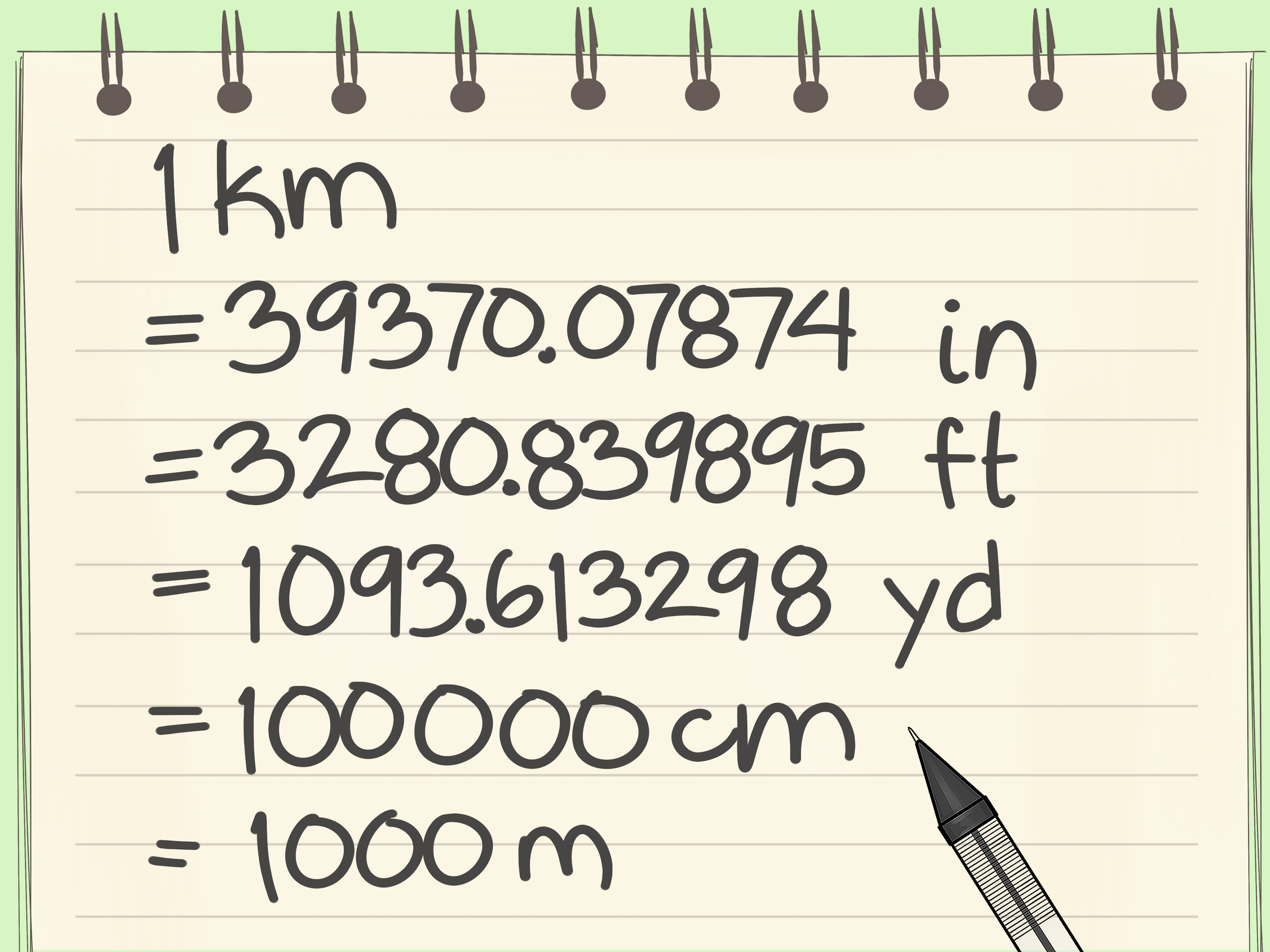
The main conversion is this: 1 kilometer is approximately 0.621371 miles. In everyday life, most people round that to 0.62 miles. For more precise calculations, use the full number. For quick mental math, use a smart estimate. For travel, running, cycling, schoolwork, or work projects, knowing several conversion methods helps you choose the right tool for the moment.
Below are four practical ways to convert kilometers to miles, complete with formulas, examples, shortcuts, and real-world tips. No math wizard robe required.
Quick Answer: The Kilometers to Miles Formula
The standard formula for converting kilometers to miles is:
miles = kilometers × 0.621371
For example, if you want to convert 10 kilometers to miles:
10 × 0.621371 = 6.21371 miles
So, 10 kilometers is about 6.21 miles.
You can also reverse the relationship by remembering that 1 mile equals 1.609344 kilometers. That gives you another useful formula:
miles = kilometers ÷ 1.609344
Both formulas work. The first one is often faster because multiplying by 0.621371 directly gives you miles.
Why Kilometers and Miles Are Different
A kilometer belongs to the metric system, which is based on powers of 10. One kilometer equals 1,000 meters. Nice and tidy. Very organized. The kind of unit that alphabetizes its spice rack.
A mile belongs to the U.S. customary system and equals 5,280 feet. That number is less tidy, but it is deeply familiar in the United States, especially for road distances, speed limits, running routes, and everyday travel.
Because kilometers and miles come from different measurement systems, they do not convert into each other with a neat whole number. That is why we use a conversion factor. Once you know the factor, you can move between the two units quickly and confidently.
Way 1: Multiply Kilometers by 0.621371
The most direct way to convert kilometers to miles is to multiply the number of kilometers by 0.621371. This method is accurate enough for travel, fitness tracking, school assignments, professional writing, mapping, and most everyday calculations.
Formula
miles = kilometers × 0.621371
Example: Convert 5 Kilometers to Miles
5 × 0.621371 = 3.106855
So, 5 kilometers is about 3.11 miles.
Example: Convert 25 Kilometers to Miles
25 × 0.621371 = 15.534275
So, 25 kilometers is about 15.53 miles.
This is the best method when accuracy matters. If you are writing an article, checking a distance on a map, converting race distances, or preparing directions for an audience that uses miles, this formula gives you clean and reliable results.
For most web content, you do not need to show six decimal places. Rounding to two decimal places is usually enough. For example, 8 kilometers becomes 4.97 miles, not 4.970968 miles. Unless you are engineering a bridge or guiding a spacecraft, your readers will probably appreciate the shorter number.
Way 2: Divide Kilometers by 1.609344
Another accurate way to convert kilometers to miles is to divide the number of kilometers by 1.609344. This method uses the fact that one mile equals 1.609344 kilometers.
Formula
miles = kilometers ÷ 1.609344
Example: Convert 16 Kilometers to Miles
16 ÷ 1.609344 = 9.9419
So, 16 kilometers is about 9.94 miles.
Example: Convert 42.195 Kilometers to Miles
42.195 ÷ 1.609344 = 26.2188
That is why a marathon is commonly known as 26.2 miles.
This method is especially useful if you already remember the mile-to-kilometer conversion. Many people know that 1 mile is about 1.6 kilometers. If that number is already in your head, dividing kilometers by 1.6 can give you a fast estimate, while dividing by 1.609344 gives you a more precise answer.
However, for quick everyday use, multiplication by 0.621371 is usually easier. Dividing by 1.609344 can feel like asking your calculator to do taxes. Still, it is a reliable method and worth knowing.
Way 3: Use a Mental Math Shortcut
Sometimes you do not need an exact answer. You just need a good estimate before your coffee gets cold. That is where mental math comes in.
Shortcut 1: Multiply by 0.6
The fastest rough estimate is:
miles ≈ kilometers × 0.6
For example:
20 km × 0.6 = 12 miles
The accurate answer is about 12.43 miles, so the estimate is close enough for casual use.
Shortcut 2: Multiply by 0.62
If you want a better estimate without using a long decimal, multiply by 0.62.
20 km × 0.62 = 12.4 miles
That is very close to the accurate result of 12.43 miles.
Shortcut 3: Use the “Half Plus a Bit” Trick
Here is a fun mental approach: take half of the kilometers, then add about one-fifth of that half.
For 50 kilometers:
Half of 50 is 25.
One-fifth of 25 is 5.
25 + 5 = 30 miles.
The accurate answer is about 31.07 miles, so this gives you a close estimate. If you want to get even closer, add a little extra.
Mental math is best for travel conversations, casual fitness planning, and quick comparisons. If someone says a city is 100 kilometers away, you can quickly think, “That is a little over 60 miles.” You do not need to pull out a calculator and look like you are negotiating with a tiny robot.
Way 4: Use a Converter, Calculator, Map App, or Spreadsheet
The fourth way to convert kilometers to miles is to let technology do the heavy lifting. This is not cheating. This is civilization.
Use a Calculator
Type the number of kilometers, multiply by 0.621371, and you have your answer. For example:
72 × 0.621371 = 44.7387
So, 72 kilometers is about 44.74 miles.
Use a Search Engine or Online Converter
You can type a phrase such as “72 kilometers to miles” into a search engine or unit converter. This is the fastest option when you need a single answer.
Use a Map App
Map apps are useful because they often let you switch between kilometers and miles. This helps when you are traveling in another country, comparing driving distances, or planning a route for walking, cycling, or running.
Use a Spreadsheet
If you need to convert many values at once, a spreadsheet is your best friend. Put the kilometer value in one column and use a formula in the next column.
For example, if cell A2 contains kilometers, use:
=A2*0.621371
This method is ideal for reports, product specifications, travel guides, logistics, sports data, and SEO content that includes multiple distance conversions.
Kilometers to Miles Conversion Table
Use this quick reference table for common distances:
| Kilometers | Miles |
|---|---|
| 1 km | 0.62 mi |
| 2 km | 1.24 mi |
| 5 km | 3.11 mi |
| 10 km | 6.21 mi |
| 15 km | 9.32 mi |
| 20 km | 12.43 mi |
| 25 km | 15.53 mi |
| 50 km | 31.07 mi |
| 100 km | 62.14 mi |
Common Mistakes When Converting Kilometers to Miles
Mistake 1: Multiplying by 1.609344
Multiplying kilometers by 1.609344 converts in the wrong direction. That formula turns miles into kilometers, not kilometers into miles. If your answer is larger than the kilometer number, pause and check. Miles should be fewer than kilometers because one mile is longer than one kilometer.
Mistake 2: Rounding Too Early
Rounding is useful, but rounding too early can make your final answer less accurate. If you are doing a multi-step calculation, keep extra digits until the final result, then round.
Mistake 3: Mixing Up Miles and Nautical Miles
A regular mile and a nautical mile are not the same. Road distances in the United States use statute miles. Nautical miles are used in aviation and marine navigation. For everyday driving, running, walking, and travel articles, use standard miles.
Mistake 4: Using Too Many Decimal Places for Casual Content
Precision is great, but nobody needs a grocery-store walking route listed as 1.8641135767 miles. For general readers, two decimal places are usually perfect. For example, write 3 kilometers as 1.86 miles.
When You Might Need to Convert Kilometers to Miles
Kilometer-to-mile conversions appear in more places than you might expect. Travelers use them when reading road signs in countries that use the metric system. Runners use them when comparing 5K, 10K, half-marathon, and marathon distances. Drivers use them when reading car manuals, checking odometer information, or comparing fuel efficiency. Students use them in math and science assignments. Writers use them to make content clearer for American audiences.
For example, a travel guide might say a scenic viewpoint is 8 kilometers from town. For U.S. readers, adding “about 5 miles” makes the distance easier to understand. A fitness article might mention a 10K race and explain that it equals about 6.2 miles. A product description might list a maximum range of 40 kilometers and convert it to about 24.85 miles.
The goal is not just math accuracy. The goal is reader understanding. A good conversion helps people picture distance in familiar terms.
Which Conversion Method Should You Use?
Choose the method based on your situation:
- For accuracy: Multiply by 0.621371.
- For another exact method: Divide by 1.609344.
- For quick estimates: Multiply by 0.62 or 0.6.
- For large batches: Use a spreadsheet formula.
- For travel: Use a map app or online converter.
In most everyday situations, the best balance is multiplying by 0.621371 and rounding to two decimal places. It is simple, accurate, and easy to explain.
Real-Life Experiences With Converting Kilometers to Miles
One of the most common real-life moments for converting kilometers to miles happens during travel. Imagine landing in a country where every road sign is in kilometers. Your hotel is 18 kilometers away, the beach is 7 kilometers from town, and a mountain viewpoint is 42 kilometers up the road. If you are used to miles, those numbers can feel oddly mysterious, like the road signs are speaking politely but in riddles. Once you know the basic conversion, the fog clears. Eighteen kilometers becomes about 11 miles. Seven kilometers becomes about 4.35 miles. Forty-two kilometers becomes about 26 miles. Suddenly, planning the day feels less like math homework and more like an actual vacation.
Fitness is another area where this conversion becomes surprisingly useful. Many running events use kilometers, especially 5K and 10K races. A beginner might hear “5K” and wonder whether that is a friendly jog or a punishment invented by people with expensive shoes. Converting it helps: 5 kilometers is about 3.1 miles. That sounds manageable. A 10K is about 6.2 miles, which feels more serious but still understandable. For runners, walkers, and cyclists, converting kilometers to miles helps with pacing, training plans, and goal setting.
Road trips create their own conversion stories. A car’s navigation system may show the next turn in kilometers, while the driver thinks in miles. If the app says to continue for 3 kilometers, that is about 1.86 miles. If it says the next fuel stop is 80 kilometers away, that is roughly 50 miles. Knowing the conversion gives you a better sense of timing and distance, especially in rural areas where missing a turn can turn into an unwanted sightseeing tour of cornfields, forests, or suspiciously empty roads.
Students also benefit from learning multiple methods. In class, the accurate formula is usually best. On a test, multiplying by 0.621371 or dividing by 1.609344 shows that you understand the relationship between the units. But outside class, mental shortcuts are often more practical. If someone says a city is 200 kilometers away, estimating it as around 124 miles is useful. Even saying “a little over 120 miles” is good enough for casual conversation.
Writers, bloggers, and editors should also care about conversions. If an article targets American readers, distances in miles can make content easier to scan and understand. For example, “The trail is 14 kilometers long” is accurate, but “The trail is 14 kilometers, or about 8.7 miles, long” is more helpful. It removes friction. It answers the reader’s silent question before they open a new tab to search for it.
The best experience-based advice is simple: use precision when it matters and estimation when it helps. For a race result, product specification, school assignment, or technical guide, use the accurate conversion factor. For travel chats, quick planning, and everyday comparisons, a rounded number is usually perfect. The point of converting kilometers to miles is not to impress anyone with decimals. It is to make distance feel familiar.
Conclusion
Converting kilometers to miles is a small skill with big everyday value. Whether you are planning a trip, training for a race, writing for U.S. readers, studying measurement systems, or simply trying to understand how far “just 12 kilometers” really is, the conversion is easy once you know the main factor.
The most accurate everyday method is to multiply kilometers by 0.621371. You can also divide kilometers by 1.609344. For quick mental estimates, multiply by 0.62 or use 0.6 when close enough is good enough. For repeated conversions, let a calculator, converter, map app, or spreadsheet do the work.
In short: kilometers may look different from miles, but they are not difficult to translate. With these four methods, you can convert distances quickly, explain them clearly, and avoid the classic mistake of making your answer larger when it should be smaller. Math crisis avoided. Everyone may now return to snacks.
Note: For general web publishing, distances in this article are rounded to reader-friendly decimal places. Use the full conversion factors when exact precision is required.
SEO Tags