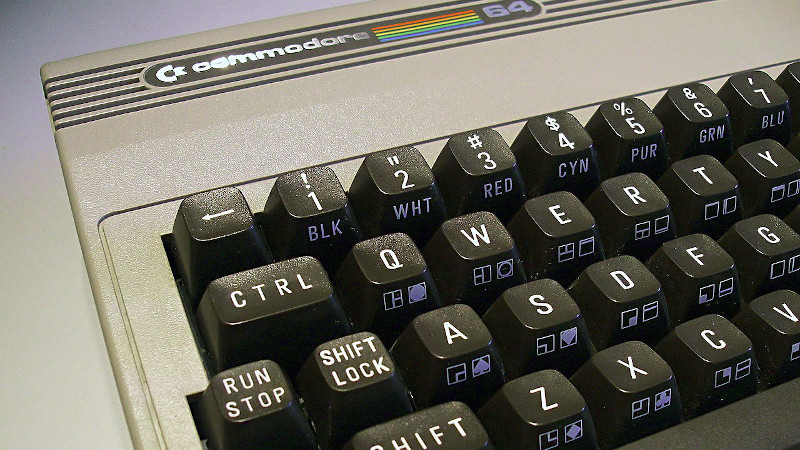

The Commodore 64 was not designed to be polite to modern programmers. It was designed to be cheap, powerful enough to embarrass the neighbors, and charmingly stubborn. Released in 1982, the C64 became one of the most beloved home computers ever made, partly because it placed 64 KB of RAM, colorful graphics, memorable sound, and built-in BASIC into a beige keyboard-shaped box that looked like it might also make toast.
But what happens when programmers try to put the “C” in C64not just Commodore, but the C programming language? That is where things get spicy. C was born for systems programming, but the Commodore 64’s MOS Technology 6510 processor belongs to the 6502 family, a world of tiny registers, tight memory, quirky stack behavior, and hardware that expects you to know exactly where every byte is hiding. C likes structure. The C64 likes secrets.
Today, thanks to cross-compilers such as cc65 and newer optimizing projects like Oscar64, writing C and even parts of C++ for the Commodore 64 is not only possibleit is surprisingly practical. The result is a fascinating collision between modern development habits and 1980s hardware discipline. Think of it as asking a typewriter to run a startup. Against all odds, it might say yes.
Why The Commodore 64 Still Matters
The Commodore 64 was introduced at the Consumer Electronics Show in January 1982 and reached the market later that year. Its name came from its 64 kilobytes of RAM, which sounded generous at the time and now sounds like the amount of memory your refrigerator uses to remember it has cheese. Under the hood, it used the MOS Technology 6510 processor running at roughly 1 MHz, along with a VIC-II graphics chip and the legendary SID sound chip.
Those chips gave the C64 a personality. The VIC-II produced 16 colors, hardware sprites, scrolling tricks, and raster effects that demo coders still squeeze like a lemon at a county fair. The SID chip delivered three voices, filters, envelopes, and enough gritty musical character to launch a chiptune religion. The machine supported BASIC 2.0 out of the box, meaning a curious kid could plug it into a TV, type a few lines, and feel like NASA had lost a junior employee.
The C64 also had reach. Estimates vary, but it is widely recognized as the best-selling single desktop computer model of all time. Its long production life, affordable pricing, massive game library, and active user culture made it more than a product. It became a platform, a classroom, a toy chest, and for many future engineers, the first computer that made programming feel like a superpower.
The Problem: C Was Not Invited To This 8-Bit Party
C is comfortable when a CPU has a helpful stack, enough registers, reasonable memory space, and instructions that make common operations convenient. The 6510, bless its silicon heart, offers a very different experience. It has an accumulator and two index registers, a small hardware stack fixed in page one of memory, no native multiply or divide instruction, and no built-in floating-point hardware. That is not a criticism; it is a design reality from an era when every transistor had to justify its rent.
Assembly language fits this world beautifully. A skilled 6510 assembly programmer can count cycles, place data in zero page for speed, time routines against the video beam, and make the C64 do things that appear illegal in at least three jurisdictions. BASIC, meanwhile, is easy to access but slow. It is wonderful for learning, experimenting, and printing “HELLO” forever, but less wonderful for fast arcade action unless you enjoy watching pixels stroll across the screen like they are window-shopping.
C sits awkwardly between those two worlds. It promises structure, portability, functions, arrays, pointers, and a more modern development flow. But compiling C to efficient 6502-family machine code is difficult. A simple 16-bit operation may turn into several 8-bit instructions. Function calls and local variables can become expensive. Stack-heavy code can feel like trying to move a sofa through a cat door.
cc65: The Classic Cross-Compiler Workhorse
For many developers, cc65 is the familiar gateway into C programming on the Commodore 64. It is a cross-development toolchain for 6502-based systems, including the C64, Apple II, Atari 8-bit computers, and others. Instead of writing code directly on the C64, programmers use a modern computer to write, compile, assemble, and link programs, then run the resulting file in an emulator or on real hardware.
This workflow changes everything. You can write code in a comfortable editor, use version control, organize files properly, and test quickly. The output can be a C64 program with a small BASIC stub that lets the user type RUN, after which the machine language portion takes over. That is a neat compromise: the old machine gets a familiar launch ritual, while the modern toolchain does the heavy lifting backstage.
cc65 is especially useful for utilities, menu systems, text adventures, turn-based games, educational projects, file tools, and programs where performance is important but not brutally cycle-perfect. It also allows developers to mix C with assembly, which is often the ideal strategy. Write the general logic in C, then drop into assembly for the hot loops, sprite multiplexing, custom loaders, music routines, or anything that must run faster than a caffeinated ferret.
Oscar64: A Newer Approach To Fast C On Old Iron
Oscar64 has attracted attention because it aims to make C and C++ development on 6502-family machines more practical without forcing programmers to abandon performance. It is a modern cross-compiler focused heavily on Commodore systems such as the C64, PET, and VIC-20. It supports C99 and many C++ features, and it can generate native machine code for performance-sensitive programs.
The interesting promise behind Oscar64 is not merely “you can write C for the C64.” That has been true for years. The bigger promise is that C can be more than a convenience layer for slow utilities. With the right compiler strategy, optimization, and runtime design, developers can build fast games, demos, and tools while keeping much of the readability and structure of C or C++.
This matters because retro programming is not just nostalgia. It is also a practical exercise in constraints. Modern software often gets away with waste because hardware is powerful. The C64 does not forgive waste. It sends waste a strongly worded letter, then crashes. A compiler that helps developers write structured code while respecting the machine’s limitations is genuinely valuable.
How C Changes The C64 Development Experience
1. It Makes Projects Easier To Organize
Large assembly projects can become difficult to maintain, especially when code grows beyond a few routines. C allows functions, headers, modules, data structures, and clearer program flow. That makes it easier to revisit a project months later without wondering whether “TEMP2_REAL_FINAL” is a variable or a cry for help.
2. It Lowers The Entry Barrier
Many modern hobbyists know C better than 6510 assembly. C offers a friendlier path into C64 programming while still requiring enough hardware awareness to keep things honest. You will still need to understand memory addresses, screen RAM, color RAM, interrupts, sprites, and registers. But you can learn those concepts while writing code that looks less like a secret message from a submarine.
3. It Encourages Hybrid Programming
The best C64 C projects often use a hybrid model. C handles game states, menus, input logic, scoring, data tables, and general structure. Assembly handles raster timing, decompression, sprite multiplexing, music playback, and tight graphics loops. This is not cheating. This is teamwork. C brings the clipboard; assembly brings the wrench.
4. It Supports Modern Workflows
Cross-compiling brings the C64 into a modern development pipeline. Developers can use editors like VS Code, run builds from scripts, test in VICE, keep source code in Git, and transfer finished programs to real hardware using cartridges, SD-based storage devices, or disk images. The result is still vintage computing, but without pretending that typing an entire game on a rubbery 1980s keyboard is a sacred ritual. Some rituals deserve retirement.
The Hardware Still Calls The Shots
Even with a strong C compiler, the Commodore 64 remains a machine of hard limits. Its standard 64 KB memory space is complicated by ROM, I/O regions, character data, screen memory, and chip registers. The 6510 can switch memory banks, exposing RAM underneath ROM areas, but that power comes with responsibility. Flip the wrong bit at the wrong time and the machine may look at you with a blue screen of quiet disappointment.
Graphics programming also requires direct communication with the VIC-II. Sprites live in specific memory regions. Screen memory and color RAM are separate concerns. Raster interrupts can be used to change colors, scroll values, or graphics modes at precise moments during screen drawing. In other words, the C64 is not an abstract platform. It is a living room dragon with memory-mapped scales.
Sound is similarly hands-on. The SID chip is famous because it is expressive, not because it is automatic. To create music or effects, a program must control waveforms, frequencies, envelopes, filters, and timing. C can help organize sound routines, but great SID work still requires musical taste and technical nerve.
Where C Makes Sense On The C64
C is an excellent choice for many C64 projects. It works well for strategy games, puzzle games, role-playing systems, text tools, adventure engines, editors, educational software, data converters, and prototypes. It is also a strong option for developers who want to build a project first, then optimize only the pieces that actually need help.
For example, a tile-based dungeon crawler can benefit from C’s structure. The map data, inventory system, enemy logic, menu navigation, and save routines can all be clearer in C. If drawing the map becomes slow, that specific rendering function can be rewritten in assembly. This targeted approach saves time and keeps the project readable.
C can also be useful for demo tools and content pipelines. A developer might write a C64-side viewer, editor, or test harness in C while producing graphics and music data on a modern PC. The C64 becomes part of a larger creative workflow rather than an isolated beige island.
Where Assembly Still Wins
There are still cases where assembly is the right tool from the start. If you are writing a high-speed side-scrolling shooter with heavy sprite multiplexing, cycle-perfect raster bars, custom disk loading, and music playback fighting for timing, assembly will likely be necessary. C can be optimized, but it cannot magically remove every cost of abstraction.
Assembly also gives direct control over instruction timing and memory layout. On the C64, that can be the difference between smooth scrolling and a screen that jitters like it drank six cans of supermarket cola. Serious demo coders often need exact cycle counts, and compilers rarely promise that level of artistic micromanagement.
Still, the choice is not religious. It is practical. Use C when it helps. Use assembly when it matters. The C64 does not care about your ideology; it cares about bytes, cycles, and whether you remembered to disable interrupts at the correct moment.
Why Retro Developers Love The Challenge
Putting C into the C64 is fun because it creates a productive tension. You get the comfort of a higher-level language, but the machine constantly reminds you that hardware is real. Every decision has weight. An array is not just an array; it is memory. A function call is not just a function call; it is overhead. A pointer is not just a pointer; it is a tiny loaded potato cannon.
This makes C64 development strangely refreshing. Modern programming can sometimes feel abstract, layered, and distant from the machine. On the C64, there is nowhere to hide. If the program is slow, you must understand why. If the screen glitches, you must learn how the VIC-II reads memory. If the sound misbehaves, you must negotiate directly with SID. The computer teaches through consequences, which is rude but effective.
Experiences Related To Putting The C In C64
Working with C on the Commodore 64 feels like visiting a tiny workshop where every tool is sharp, every shelf is crowded, and the owner refuses to label anything because “real programmers remember addresses.” The first experience many developers have is surprise. A simple C program that prints text to the screen works quickly enough, and suddenly the whole idea seems easy. Then you add sprites, input, music, and a game loop, and the C64 politely removes its mask. Underneath is a machine that demands respect.
One of the best habits is to start small. A “hello world” program is fine, but a better first project is a moving character on the screen. Read joystick input, change a sprite position, update a score, and learn how the compiler maps your neat C code into real behavior. This small project teaches the practical rhythm of C64 development: write, compile, run in an emulator, test, swear gently, adjust, repeat.
Emulators such as VICE make this process much easier. You can reset quickly, inspect memory, load disk images, and test variations without wearing out original hardware. But running the finished program on a real C64 is still special. The keyboard, the video signal, the drive sounds, the slight delay after loadingit all gives the project a physical presence. A program feels different when it exists on the machine it was meant for. It is no longer just code. It is a little time-traveling appliance.
Another useful experience is learning to profile by instinct. On modern systems, developers may reach for advanced profiling tools. On the C64, you often learn by watching. Does the screen update smoothly? Does joystick input feel responsive? Does music stutter? Does the program fit in memory after adding one more enemy type, or has your “small feature” become a memory-eating raccoon? These observations guide optimization.
Hybrid coding becomes a natural next step. You may write the main game logic in C, then identify a slow drawing routine and replace it with assembly. The moment that routine becomes faster is deeply satisfying. It feels like tuning an old bicycle until it suddenly thinks it is a motorcycle. This is where the C64 teaches a valuable lesson: optimization is most powerful when it is specific. Do not rewrite everything in assembly because someone on a forum raised an eyebrow. Measure the pain, then treat the painful spot.
The community experience is equally important. Retro computing forums, GitHub projects, emulator documentation, old manuals, and modern tutorials all form a living library. The C64 scene has a generous culture of sharing discoveries, code snippets, memory maps, music routines, graphics tricks, and warnings about things that will absolutely ruin your afternoon. Someone, somewhere, has already fought the bug you are fighting. They may even have named it.
Perhaps the biggest lesson from putting C in C64 is that convenience and constraint can coexist. C does not erase the machine’s personality. It gives you a cleaner way to talk to it. You still need to understand the hardware, but you can build larger ideas without drowning in labels and jumps from the first line of code. That balance is the charm. The C64 remains old, stubborn, and weird. C simply gives it a fresh conversation partner.
Conclusion
Putting the C in C64 is not about replacing the old ways. Assembly remains essential for the fastest and most precise Commodore 64 programming. BASIC remains part of the machine’s approachable charm. But C adds another path: structured, modern, practical, and surprisingly capable when paired with smart compilers and hardware awareness.
The Commodore 64 continues to matter because it rewards curiosity. It teaches how computers really work, one byte and one cycle at a time. Whether you use cc65, Oscar64, assembly, BASIC, or a mix of everything, the machine keeps offering the same invitation it gave in the 1980s: type something, run it, and see what happens. Just remember to save your work. The C64 is charming, not merciful.