
Imagine booking a hotel room where the wake-up view is not a beach, a skyline, or a suspiciously motivational wall quote, but Earth itself rolling silently below your window. That was the glittering promise behind Russia’s plan to build a luxury hotel on the International Space Station, a proposal that sounded like science fiction with a room-service menu. In 2017, reports surfaced that Russia’s space industry, through RKK Energia and Roscosmos-related planning, had explored a commercial module attached to the ISS for ultra-wealthy space tourists.
The idea was bold: create a dedicated orbital suite with private sleeping cabins, larger windows, personal hygiene areas, exercise equipment, Wi-Fi, and even the possibility of a guided spacewalk. The price tag was equally bold. A short stay was expected to cost around $40 million, while a longer visit with extra experiences could push the total even higher. In other words, this was not exactly a weekend deal you would find by refreshing a travel app at midnight.
Still, the proposal mattered. It captured a turning point in space tourism, where government-built infrastructure and private adventure began drifting toward the same docking port. Russia’s ISS hotel plan was never simply about fancy cabins in orbit. It was about funding, national prestige, commercial spaceflight, and the question of whether low Earth orbit could become a destination instead of just a laboratory.
What Was Russia’s ISS Luxury Hotel Plan?
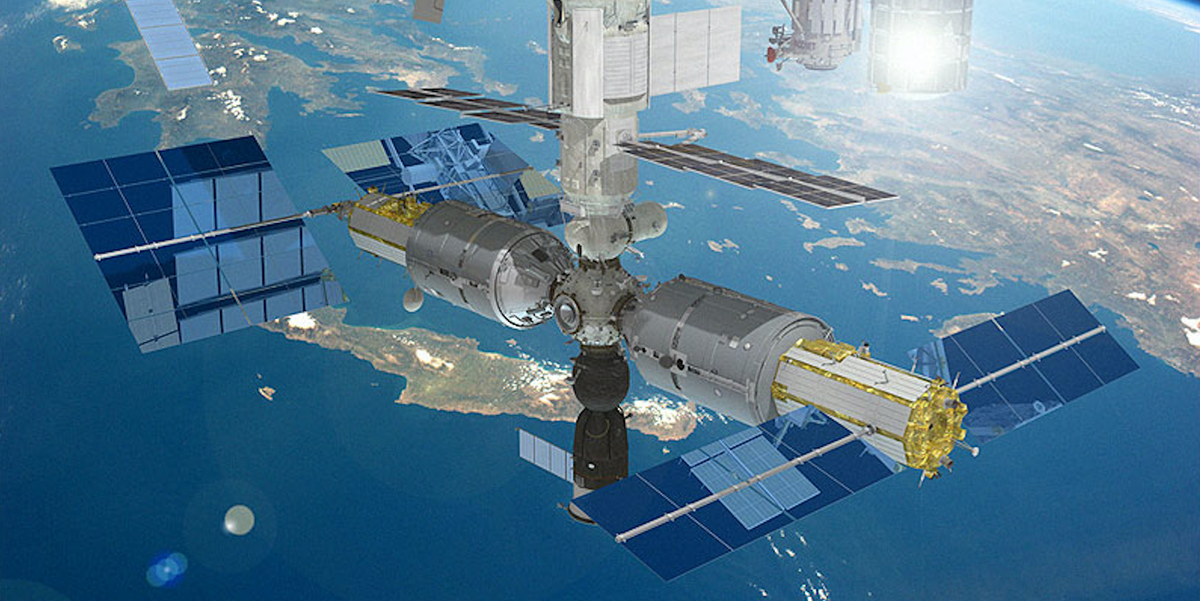
Russia’s proposed space hotel was described as a commercial module that would attach to the International Space Station. It was reportedly based on design ideas connected to Russia’s Science and Power Module, often discussed as a large station addition. The hotel-like module was expected to be roughly 51 feet long and weigh around 20 tons, making it far more than a decorative space closet with mood lighting.
The proposed layout included four private sleeping quarters, two hygiene and medical stations, a lounge area, exercise equipment, and internet access. The biggest selling point, of course, was the view. Larger windows would have allowed paying visitors to look down on Earth from roughly 250 miles above the surface. That is the kind of view that makes even the fanciest rooftop bar on Earth suddenly feel like a basement.
The Amenities: Luxury, Space-Station Style
The word “luxury” needs a little gravity check here. On Earth, luxury might mean marble bathrooms, a pillow menu, and someone folding your towel into a swan. On the ISS, luxury means privacy, a place to wash, a window bigger than a dinner plate, and enough personal space to not accidentally float into someone’s science experiment before breakfast.
By space standards, however, those features were genuinely premium. A private cabin aboard the ISS would be a major improvement over the normal compact, equipment-packed environment astronauts use every day. Personal hygiene facilities would also be a big deal, because life in microgravity makes simple tasks surprisingly complicated. Even brushing your teeth becomes a tiny choreography of water droplets, towels, and not launching toothpaste into an air filter.
How Much Would a Stay Have Cost?
The proposed price was staggering but not random. Reports placed a one- to two-week stay at about $40 million. A longer stay, possibly up to a month, plus a cosmonaut-accompanied spacewalk, could add another $20 million. That means the full experience could approach $60 million, before you even consider the intense training, medical screening, and logistics required to keep a non-professional astronaut alive, functional, and preferably not pressing mysterious buttons.
At first glance, the price sounds absurd. But orbital travel is not expensive because someone embroidered the towels. It is expensive because launching humans into orbit requires rockets, spacecraft, ground control teams, life-support systems, emergency planning, training, docking operations, and a mountain of safety checks. A space hotel room is not just a room. It is a room attached to a spacecraft traveling around Earth at about 17,500 miles per hour.
The Funding Strategy Behind the Dream
One of the most interesting parts of the proposal was the business model. The module was expected to be funded through a mixture of state and private investment, with prospective tourists potentially paying in installments before their flights. In simple terms, future customers would help finance the facility they hoped to visit.
That approach showed both creativity and risk. Space infrastructure is expensive upfront, and demand for orbital tourism is still narrow. The target customer was not the average adventure traveler. It was the ultra-high-net-worth individual who had already done the private island, the polar expedition, the submarine dive, and perhaps wanted a vacation story that begins with, “So, after launch…”
Why Russia Was Interested in Space Tourism
Russia had a strong reason to take space tourism seriously: it had already done it. In the early 2000s, private spaceflight participants flew to the ISS aboard Russian Soyuz spacecraft through arrangements involving Space Adventures. Dennis Tito became the first self-funded visitor to the ISS in 2001, and later travelers followed. Russia demonstrated that there was a market, however small, for civilians willing to pay enormous sums for orbital access.
For years, Soyuz seats were among the only practical routes for private individuals to reach the ISS. That gave Russia valuable experience in training and transporting non-career astronauts. A dedicated hotel module would have turned that experience into a more visible commercial product. Instead of simply selling transportation to the station, Russia could have offered a destination with branded comfort.
A Hotel Was Also a Marketing Machine
The phrase “luxury hotel on the ISS” was marketing gold. It transformed an engineering proposal into a headline people could instantly understand. Most readers may not know the difference between a node, laboratory module, docking adapter, or propulsion segment. But a hotel? Everyone gets that. A hotel has rooms, guests, prices, and reviews. Hopefully no one would leave a one-star review saying, “Great view, but the bathroom floated away.”
This language helped the public imagine space as a place to visit, not just a place where astronauts work. That shift matters. Before people buy into a new market, they need a story. The ISS hotel proposal gave space tourism a simple story: orbit could become a premium travel experience.
Why the Hotel Was Never Built
Despite the excitement, Russia’s ISS luxury hotel did not become reality. The reasons are not mysterious. Building a new module for the ISS is a long, expensive, technically demanding process. It requires design approval, manufacturing, testing, launch capacity, docking compatibility, international coordination, safety certification, and a clear business case. That is a lot of hurdles before anyone even gets to complain about the Wi-Fi speed.
The timeline also worked against the idea. The ISS is an aging platform, and its future has been repeatedly discussed in terms of retirement and transition. NASA now plans to move from the ISS toward commercially owned and operated low Earth orbit stations around 2030. Attaching a major new tourist hotel to a station nearing the end of its operational life would be a difficult investment to justify.
Technical and Political Reality
The ISS is not an ordinary building where a contractor can simply add a new wing. Every module affects mass, power, thermal control, docking traffic, crew operations, safety procedures, and emergency planning. A hotel module would need to integrate with a complex international spacecraft that already serves as a research laboratory, crew habitat, maintenance site, and diplomatic symbol.
Politics also complicates the story. The ISS has been one of the most successful international partnerships in history, involving the United States, Russia, Europe, Japan, and Canada. But cooperation in space does not exist in a vacuum. Earth-based tensions can affect budgets, timelines, agency priorities, and commercial partnerships. A Russian luxury module attached to an international station would have required broad coordination during a period when the future of space cooperation was becoming less predictable.
How NASA’s Commercial ISS Policy Changed the Game
Russia’s hotel proposal looked futuristic in 2017, but by 2019 NASA had also opened the door wider to commercial activity on the ISS. NASA began allowing private astronaut missions organized by commercial providers. These missions were not simple vacations; private astronauts are expected to conduct science, outreach, commercial work, or educational activities during their stay.
This shift changed the space tourism conversation. Instead of one country trying to sell an orbital hotel experience, the industry began moving toward broader commercial access. Companies like Axiom Space started flying private astronaut missions to the ISS, while also planning future commercial space station infrastructure. The idea of paying customers in orbit went from novelty to early market experiment.
From Space Hotel to Commercial Space Stations
Today, the bigger trend is not building a hotel on the old ISS. It is building the next generation of commercial stations. NASA’s plan is to become a customer in low Earth orbit rather than the sole owner and operator of a government station. That creates room for private stations that may combine research labs, manufacturing facilities, astronaut housing, media production, and yes, tourism.
In that sense, Russia’s plan was ahead of its time but attached to the wrong clock. The ISS hotel concept imagined luxury tourism on a legacy platform. The market is now drifting toward purpose-built commercial stations, where hospitality could be designed into the architecture from day one rather than bolted onto an aging orbital laboratory.
What Would Guests Actually Do in an ISS Hotel?
A stay aboard a space hotel would not look like a normal vacation. There would be no pool, no spa, and absolutely no buffet where soup behaves itself. Guests would spend much of their time adapting to microgravity, following strict schedules, communicating with mission control, participating in research or outreach activities, and learning how to move without becoming a human pinball.
The main attraction would be Earth observation. From orbit, visitors would see sunrises and sunsets roughly every 90 minutes. They could watch deserts, oceans, storms, city lights, mountain ranges, and thin blue atmosphere sliding beneath the station. Many astronauts describe this view as emotionally powerful, even life-changing. It is the kind of experience that makes national borders look imaginary and your email inbox look deeply unserious.
The Spacewalk Upsell
The proposed guided spacewalk was perhaps the most dramatic part of the plan. A spacewalk is not a casual excursion. It requires intense training, specialized suits, careful choreography, and constant safety monitoring. Even professional astronauts treat extravehicular activity with enormous respect.
For a private visitor, a spacewalk would be the ultimate luxury adventure. But it would also introduce serious risk and cost. That is why the extra price made sense. You would not simply be buying a better view. You would be buying access to one of the most complex human activities ever performed.
The Business Case: Brilliant, Risky, or Both?
From a business perspective, Russia’s ISS hotel plan was both brilliant and fragile. It was brilliant because it recognized that space tourism needs more than transportation. A true tourism market needs destinations, experiences, packages, and stories. Nobody says, “I vacationed in an airplane.” They say where they went. A hotel module would have made orbit feel like a place.
It was fragile because the customer base was extremely small. Even if thousands of wealthy people could theoretically afford the trip, only a much smaller group would pass medical screening, accept the risk, commit the time for training, and actually sign the check. Space tourism is glamorous in headlines but demanding in reality.
Why Timing Matters
The ISS hotel proposal also depended on timing. If the module had launched quickly, it might have had several useful years before the station’s retirement. But delays in space development are common, and every year lost would shrink the commercial window. A hotel attached to the ISS could only make money while the ISS remained operational and politically supported.
That is one reason future commercial stations may be better suited for hospitality. They can be designed with tourists, researchers, and private astronauts in mind from the beginning. Instead of adapting a research station into a hotel, companies can build flexible habitats where comfort, media, science, and commercial services share the same blueprint.
What Russia’s ISS Hotel Plan Tells Us About the Future
Russia’s plan to build a luxury hotel on the ISS never opened for business, but it was not a silly idea. It was an early signal of where human spaceflight was heading. The proposal showed that space agencies and aerospace companies were beginning to think beyond flags, firsts, and government missions. They were thinking about customers.
The plan also revealed the tension at the heart of space tourism. The experience sounds magical, but the infrastructure is brutally practical. A hotel in orbit must solve air, water, power, waste, radiation, pressure, docking, emergency return, and crew coordination. On Earth, a hotel manager worries about late checkout. In orbit, late checkout might involve orbital mechanics.
The Real Legacy of the Proposal
The real legacy of Russia’s space hotel concept may be its imagination. It helped make orbital tourism feel understandable to the public. It suggested that private citizens might one day choose between different kinds of space experiences: short suborbital hops, orbital station stays, research missions, entertainment projects, or luxury observation trips.
Even though the ISS hotel did not happen, the broader idea is still alive. Private astronaut missions are already happening. Commercial station projects are moving forward. The future may not include a Russian hotel bolted to the ISS, but it may include orbital destinations where travelers can sleep in private cabins, look through panoramic windows, and pay a truly heroic amount of money for the privilege of chasing floating socks.
Experience Section: What Staying in a Russian ISS Hotel Might Have Felt Like
The experience of staying in Russia’s proposed ISS luxury hotel would probably begin long before launch. Guests would not simply pack sunglasses and a toothbrush. They would go through medical checks, survival training, spacecraft safety lessons, emergency drills, and microgravity preparation. The first lesson of space tourism would be humility. The second would be that every object needs Velcro, a strap, or a very clear plan.
On launch day, the visitor would climb into a spacecraft after months of preparation. The rocket would turn the idea of “vacation travel” into something loud, physical, and unforgettable. Instead of reclining in seat 14A and pretending to enjoy airline pretzels, the traveler would feel acceleration press through the body as Earth fell away. Minutes later, weightlessness would arrive. A pen might float. A checklist might drift. Someone would probably smile like a child who just discovered physics has a secret comedy department.
Docking with the ISS would be another emotional peak. The station would appear not as an abstract laboratory but as a bright, fragile structure suspended above Earth. Entering the hotel module would feel surreal: a private room in orbit, a window facing the planet, and silence broken by fans, equipment hum, and the voices of trained crew members keeping everything safe.
Daily life would be both wonderful and awkward. Sleeping in microgravity can feel cozy once the body adapts, but there is no pillow-flopping drama because there is no real “down.” Meals would be carefully packaged. Drinks would require special containers. Showering in the normal Earth sense would not happen. Personal hygiene would be more like a camping trip planned by aerospace engineers. Still, the private cabin and dedicated facilities would make the experience feel far more comfortable than a standard station visit.
The highlight would be the window. A guest could watch the Amazon, the Sahara, the Himalayas, the Pacific, and glowing city grids pass below in a single day. Sunrises would come so often they might stop feeling rare and start feeling impossible. A traveler might arrive expecting luxury and leave remembering perspective. From orbit, Earth looks thin-skinned, bright, and shared. That view is the true five-star feature.
If the guest chose the spacewalk option, the experience would become even more intense. Training would dominate the schedule. Every motion outside the station would need planning. The visitor would step into a suit that is less clothing than personal spacecraft. Outside, with Earth beneath and the station beside them, the word “luxury” would probably disappear. The experience would be too large for that. It would be fear, wonder, discipline, and awe blended into one unforgettable moment.
Returning home would likely feel strange. Gravity would be heavy. Normal rooms would seem enormous. A regular hotel window might look almost rude for showing only a parking lot. The traveler would carry home more than photos. They would bring back a story about the moment space stopped being a distant idea and became a place where humans can live, work, dream, and maybe someday check in for the strangest vacation in history.
Conclusion
Russia’s plan to build a luxury hotel on the ISS was never completed, but it remains one of the most fascinating ideas in the history of space tourism. The proposal combined real aerospace engineering with a travel-industry fantasy: private rooms, orbital views, Wi-Fi, exercise equipment, hygiene areas, and the possibility of a guided spacewalk. It was ambitious, expensive, and complicated, but it also helped push public imagination toward a future where space is not only explored by professionals but visited by private citizens.
The plan also teaches a practical lesson. Space tourism is not just about rockets. It is about destinations, comfort, safety, training, economics, and timing. The ISS hotel concept may have missed its moment, but the dream behind it is still moving forward through private astronaut missions and commercial space station projects. One day, travelers may really check into an orbital room with Earth outside the window. Just do not expect complimentary breakfast to float politely on the tray.