
Introduction: Yes, This Can Feel AwkwardAnd Yes, You Can Handle It
Getting your period at school can feel like the universe picked the most dramatic possible moment to test your confidence. One minute you are taking notes, and the next your brain is running a full emergency broadcast: Do I have a pad? Can anyone see? What do I say? Why is the clock suddenly moving like a sleepy turtle?
First, breathe. Having your period is normal. Menstruation is a regular part of the menstrual cycle, and students deal with it at school every single day. Teachers, school nurses, counselors, and office staff have heard period-related requests before. You are not the first person to need the restroom, a pad, a change of clothes, a heating pad, or a quiet minute because cramps are acting like tiny angry drummers in your lower belly.
The tricky part is not the period itself. The tricky part is knowing how to say something clearly without feeling like you just announced breaking news to the entire classroom. This guide explains four practical ways to tell your teacher you are having your period, with exact phrases you can use, what to do if you feel embarrassed, and how to prepare for next time.
Why It Is Okay to Tell a Teacher About Your Period
Teachers are responsible for helping students stay safe, healthy, and able to learn. If you need to leave class because of your period, you are not asking for special treatment. You are asking for a reasonable chance to take care of your body. That might mean going to the restroom, visiting the school nurse, getting menstrual products, calling home, or taking a short break if cramps are strong.
You also do not have to share every detail. A period is personal, and you can keep the conversation short. A simple “I need to go to the nurse for a personal health reason” is enough in many situations. If your teacher asks for clarification, you can still answer privately and calmly.
The goal is not to deliver a speech worthy of a student council campaign. The goal is to get what you need with as little stress as possible.
1. Tell Your Teacher Privately Before or After Class
When this works best
This is a good option if you already know your period started, you need supplies, or you are having cramps but can wait a minute to speak privately. Talking before or after class helps you avoid saying anything in front of other students.
What to say
You can keep it simple:
- “Can I talk to you privately for a second?”
- “I started my period and need to go to the restroom.”
- “I’m having period cramps. May I go to the nurse?”
- “I need a pass to the bathroom for a personal reason.”
If you are worried about using the word “period,” you can say “personal health issue” or “girl problem.” However, saying “period” is perfectly fine. It is a normal word, not a cursed spell from a dusty old textbook.
Why this method helps
Speaking privately lets your teacher respond without making you feel watched. It also gives you a chance to ask for exactly what you need. For example, you might need the restroom, the nurse, permission to carry your bag, or extra time if you missed part of an assignment because you were handling a leak or pain.
Example conversation
You: “Can I speak to you privately?”
Teacher: “Sure, what’s going on?”
You: “I just started my period and need to go to the restroom. May I take my bag?”
Teacher: “Yes, go ahead.”
Notice how short that was? No dramatic violin music required.
2. Ask to Go to the Restroom or Nurse Without Overexplaining
When this works best
This method is useful when you are in the middle of class and need to act quickly. Maybe you feel a leak, your cramps suddenly get worse, or you realize you need to change a pad or tampon. In that moment, you do not need a long explanation. You need a pass.
What to say in class
Raise your hand or walk quietly to the teacher if that is allowed in your classroom. Then say:
- “May I please go to the restroom? It’s urgent.”
- “I need to go to the nurse for a personal health reason.”
- “I’m not feeling well and need to use the restroom.”
- “This is a private issue. May I step out?”
If your school has a bathroom pass rule, follow the normal process as much as you can. But if it is urgent, say that it is urgent. A teacher may not understand the situation unless you are direct enough.
What if the teacher says no?
If a teacher says no, stay calm and repeat yourself more clearly. Try:
“I understand, but this is a health issue and I need to go now.”
If you still are not allowed to leave, ask to go to the nurse, counselor, or front office. You can say:
“I need to speak with the nurse about a private health issue.”
Most teachers do not want to embarrass students. Sometimes they are trying to manage classroom rules and do not realize the situation is period-related. A clear, calm phrase usually helps.
3. Use a Note, Email, or Message If Speaking Feels Too Embarrassing
When this works best
Some students freeze when they have to say personal things out loud. That does not mean you are immature. It means you are human. If speaking feels impossible, writing can be easier.
Simple notes you can write
Write one sentence on paper or in a school-approved message system:
- “I started my period and need to go to the restroom.”
- “I need to visit the nurse for period supplies.”
- “I’m having bad cramps and need help.”
- “This is private, but I need to leave class for a period-related issue.”
Then hand it to your teacher quietly. You can also point to the note if you feel too nervous to talk. This can be especially helpful if your classroom is quiet, your classmates are nearby, or you are worried someone will overhear.
Email example for recurring period problems
If your periods often cause strong cramps, heavy bleeding, migraines, nausea, or anxiety, you might email a teacher before class or at the start of the semester. Keep it respectful and practical:
Hi [Teacher’s Name], I sometimes have difficult period symptoms and may need to use the restroom or visit the nurse during class. I will try not to miss important instruction, but I wanted to let you know in advance. Thank you for understanding.
You do not have to send this to every teacher. You might choose one trusted teacher, your homeroom teacher, the nurse, or a counselor. If symptoms often interfere with school, it is also a good idea to talk with a parent, guardian, or healthcare professional.
4. Ask a Trusted Adult at School to Help You Communicate
When this works best
If you feel too embarrassed, your teacher is strict, or you need more than a quick restroom trip, ask another trusted adult for help. This could be the school nurse, counselor, office staff member, coach, librarian, or another teacher you trust.
What to say to the nurse or counselor
- “I got my period and need supplies.”
- “I had a leak and need help.”
- “My cramps are really bad. Can I rest for a few minutes?”
- “Can you help me explain this to my teacher?”
School nurses are often the best people to ask because they may have pads, tampons, clean clothes, pain-relief guidance according to school policy, and a private place to sit. They can also help decide whether you should call home.
Getting help is not weakness
Some students feel like they should handle everything alone. But asking for help is a life skill, not a failure. If your backpack has become a crime scene, your cramps are making it hard to stand, or you are panicking because you forgot supplies, you deserve support.
What to Do If You Have a Leak at School
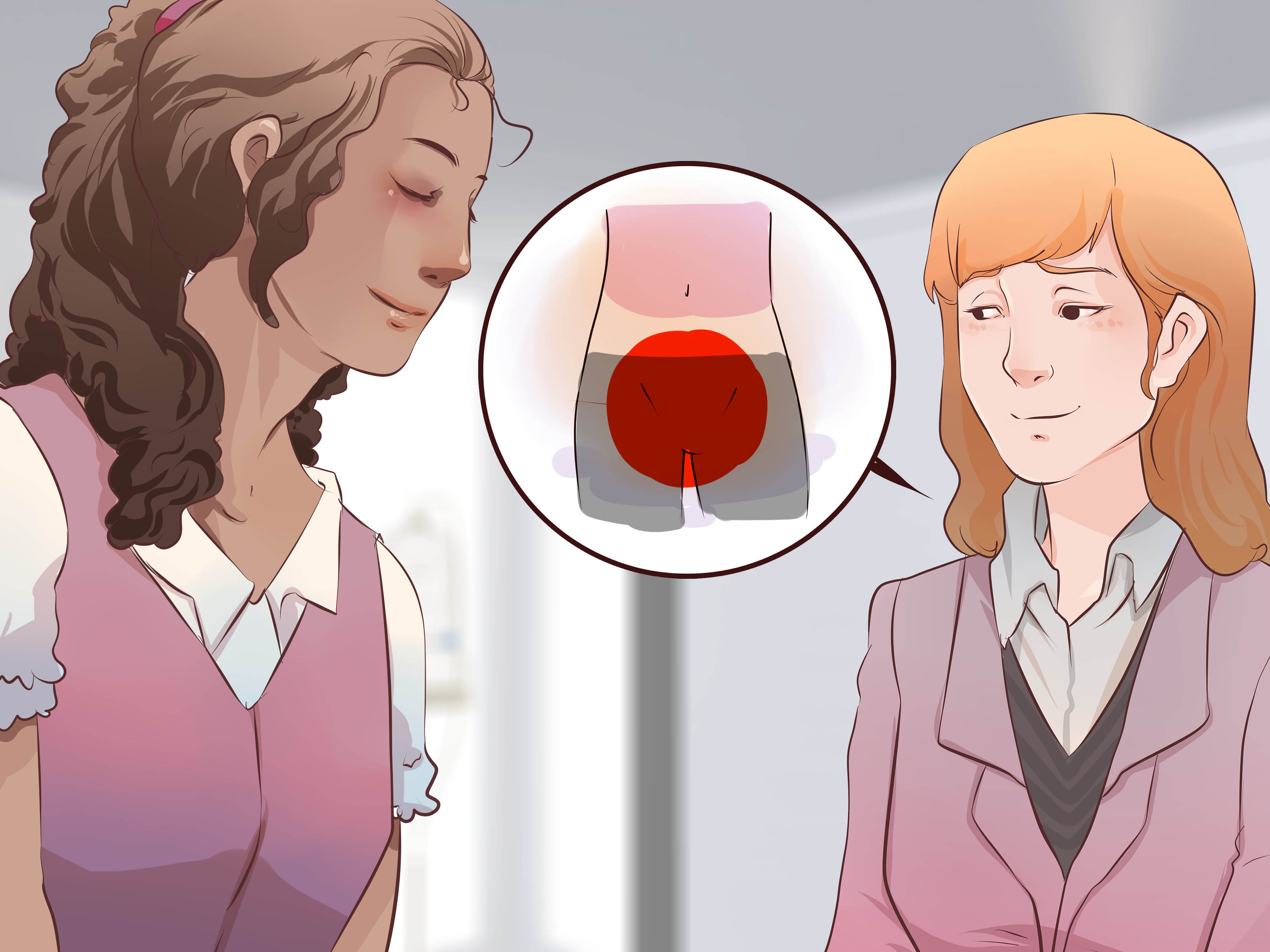
Period leaks happen. They are annoying, but they are not the end of your social life. Most people are too busy thinking about themselves to inspect your outfit like fashion detectives.
Step-by-step leak plan
- Go to the restroom or nurse. Ask to leave class quickly and privately.
- Check the stain. Sometimes it is smaller than it feels.
- Use a jacket or sweater. Tie it around your waist if needed.
- Ask for supplies. The nurse, office, or a friend may have pads or tampons.
- Call home if necessary. If you need clean clothes, ask the nurse or office for help contacting a parent or guardian.
If you are worried someone saw, try not to spiral. A leak is a laundry problem, not a character flaw.
How to Prepare a Period Kit for School
A small period kit can turn a stressful surprise into a manageable five-minute problem. Keep it in your backpack, locker, sports bag, or purse.
What to pack
- Two or three pads or tampons
- A spare pair of underwear
- A small pack of wipes or tissues
- A zip-top bag for stained underwear
- Dark leggings or shorts if you have room
- A small note with emergency contacts
If cramps are common for you, talk with a parent or guardian about what your school allows for pain relief. Many schools have rules about medication, so it is better to plan ahead than to discover the policy while doubled over during algebra.
When Period Symptoms Need Extra Attention
Some discomfort during a period can be common, especially cramps during the first few days. But severe symptoms should not be ignored. Talk with a parent, guardian, school nurse, or healthcare provider if your cramps keep you from normal activities, your bleeding is very heavy, your period lasts longer than usual, you feel dizzy or faint, or your symptoms suddenly change.
Your menstrual cycle can give clues about your overall health. Tracking your period, flow, cramps, mood changes, headaches, and missed school days can help you explain what is happening if you need medical advice. You do not need a fancy app. A calendar note works fine. Your future self may thank you with imaginary confetti.
Real-Life Experiences: What It Can Feel Like and How to Handle It
Here are a few realistic school situations that show how different students might tell a teacher they are having their period. These examples are not about being perfect. They are about getting through the moment with a little more confidence.
The “I Was Not Prepared” Moment
Imagine you are in science class, and you realize your period started early. You check your backpack and find old gum, three pencils, and a snack wrapper that belongs in a museum, but no pad. Your first instinct might be to panic. Instead, you raise your hand and say, “May I go to the nurse? It’s a personal health issue.” That sentence gives enough information without inviting questions. At the nurse’s office, you ask for a pad and explain that your period came unexpectedly. The problem is handled, and you return to class with your dignity fully intact.
The “Strict Teacher” Situation
Now picture a teacher who rarely lets students leave during lessons. You feel a leak starting, and waiting is not an option. You walk up quietly and say, “I need to use the restroom. It’s urgent.” If the teacher hesitates, you add, “It’s a private health issue.” This gives the teacher a clear signal that the request is serious. If the teacher still says no, ask to go to the nurse or office. You do not need to announce your period in front of everyone, but you can advocate for yourself firmly.
The “Cramps Are Winning” Day
Some days, cramps are mild. Other days, they arrive like they paid rent and own the place. If cramps make it hard to focus, tell your teacher, “I’m having period cramps and need to visit the nurse.” At the nurse’s office, you may be able to rest, call home, or follow your school’s plan for pain relief. If cramps often make you miss class, it is worth talking to a parent, guardian, or healthcare provider. Pain that regularly interrupts school deserves attention.
The “I’m Too Embarrassed to Say It” Experience
Maybe you know what to say, but your mouth refuses to cooperate. In that case, write a note: “I started my period and need to go to the restroom.” Hand it to your teacher. This is quiet, clear, and mature. You are solving the problem, even if your cheeks are doing their best tomato impression.
The “Friend Saves the Day” Moment
Sometimes a friend can help. You might whisper, “Do you have a pad?” or “Can you come with me to the nurse?” A good friend will not make a big deal out of it. If someone does tease you, remember that the embarrassing behavior belongs to them, not you. Periods are normal. Mocking someone for a normal body function is the real cringe.
The Lesson from All These Experiences
The best approach is the one that gets you help quickly and privately. You can speak directly, use a note, ask for the nurse, or get support from another trusted adult. With practice, the conversation becomes less scary. You may still feel awkward, but awkward is not dangerous. It is just a feeling, and feelings pass. A period at school is manageable, especially when you know your words, your options, and your right to take care of yourself.
Conclusion
Telling your teacher you are having your period does not have to be a big dramatic event. You can keep it short, private, and clear. Ask to speak privately, request the restroom or nurse, write a note if talking feels hard, or ask a trusted adult to help. The most important thing is to take care of your body without shame.
Periods are normal. Needing supplies is normal. Having cramps is normal. Asking for help is normal. Whether you say “I started my period,” “I need the nurse,” or “This is a private health issue,” you are doing exactly what you should: handling the situation responsibly.
Pack a small period kit, learn your school’s rules, and remember that teachers and nurses are there to help. Your period may show up uninvited, but it does not get to ruin your school day.
SEO Tags