
Note: This is an original, publication-ready article synthesized from real information about origami, habit change, mindfulness, and creative routines.
Three hundred days ago, I did something that looked almost embarrassingly small: I picked up a square of paper and folded it. That was it. No dramatic sunrise montage. No expensive planner. No heroic speech in front of a mirror. Just one little paper square, my sleepy face, and a quiet promise that I would make one origami piece every morning instead of letting another day slide into the swamp of bad habits.
At the time, my routine had the structural integrity of wet cardboard. I woke up late, wasted hours asking myself what I should do, and then somehow ended the day tired from doing absolutely nothing. My phone had become a tiny glowing vending machine for distraction. My motivation was missing, probably hiding under a pile of laundry. I did not need a complete life makeover. I needed one reliable action that could interrupt the pattern.
Origami became that action. It was simple, cheap, portable, and impossible to fake. A finished fold either existed on the table or it did not. In a world full of vague goals like “be better,” “stop procrastinating,” and “fix your life before lunch,” origami gave me something physical: one crease, then another, then another. Slowly, the folds became less about paper and more about discipline, mindfulness, creativity, and the weirdly powerful art of showing up.
Why Origami Was the Perfect Weapon Against Bad Habits
Bad habits are not usually defeated by one thunderclap of willpower. They are sneaky little raccoons. They dig through your mental trash at night, return in the morning, and act offended when you ask them to leave. The better strategy is often replacement: put a new routine where the old one used to live.
Origami works beautifully for habit replacement because it is both structured and creative. It gives your hands a job, your eyes a target, and your brain a tiny puzzle. You are not just “avoiding scrolling.” You are folding a crane, a mask, a box, a butterfly, or some mysterious creature that was supposed to be a fox but now looks like a nervous napkin. That still counts. Progress is allowed to be funny-looking.
The process also creates a clear habit loop. The cue is the paper waiting on the desk. The routine is the fold. The reward is a finished object you can hold. That reward matters. A checkmark on a to-do list is nice, but a row of 300 small paper creations is harder to ignore. It says, “Look. You were here. You tried. You made something.”
The 300-Day Origami Challenge: My Simple Rules
I did not start with a complicated system because complicated systems are where motivation goes to wear a tiny funeral hat. My rules were intentionally simple:
- Fold one origami piece every morning.
- Use a small square of paper so the task feels approachable.
- Focus on one bad habit at a time for about 30 days.
- Do the fold before falling into the usual distractions.
- Keep every finished piece as visible proof of effort.
The first target was waking up earlier. Instead of trying to become a 5 a.m. productivity wizard overnight, I used origami as the first action of the day. Wake up. Sit down. Fold. No negotiating with the blanket. No “just five more minutes,” which is the official national anthem of failure. The paper square became my morning anchor.
At first, the results were modest. I woke up a little earlier. Then earlier again. I began to notice that the first small win of the day made the next responsible choice less painful. After folding, it felt easier to clean the desk, answer a message, start work, or go outside. The origami did not magically solve my life. It simply opened the door before my bad habits could lock it from the inside.
What Origami Teaches About Patience
Origami is a patient teacher, though not always a polite one. It will immediately expose whether you are rushing. Fold slightly off-center in step two, and by step twelve your elegant paper bird may look like it has been through airport security. This is annoying, humbling, and useful.
Bad habits often thrive on impatience. We want quick comfort, quick distraction, quick escape. Origami slows everything down. You cannot yell a crease into accuracy. You have to align the edges, press the fold, turn the paper, and pay attention. The paper does not care about your excuses. It only responds to what you actually do.
That daily practice taught me to tolerate small frustrations without quitting. If a model failed, I could unfold it and try again. If a morning felt heavy, I could make something simple. If I missed a perfect result, I could still complete the ritual. This mattered because breaking bad habits is not about becoming flawless. It is about becoming someone who returns.
The Mindfulness Hidden Inside Paper Folding
People often imagine mindfulness as sitting perfectly still on a mountain while your thoughts float away like obedient clouds. My thoughts do not float away. They bring snacks and invite friends. Origami gave me a more practical kind of mindfulness: attention through action.
When folding paper, your mind has a specific place to land. The texture of the sheet, the sharpness of the crease, the symmetry of the corners, the small suspense before the final revealall of it pulls you into the present moment. You notice when your attention wanders because the paper immediately becomes crooked. It is meditation with receipts.
This helped with stress, too. A bad habit often begins as a coping tool. We procrastinate because a task feels scary. We scroll because silence feels uncomfortable. We snack mindlessly because the day has been rude. Origami offered a gentler pause between feeling and reacting. Before I reached for the old habit, I could fold one model. By the end, the craving was usually smaller, or at least less bossy.
From Laziness to Creative Momentum
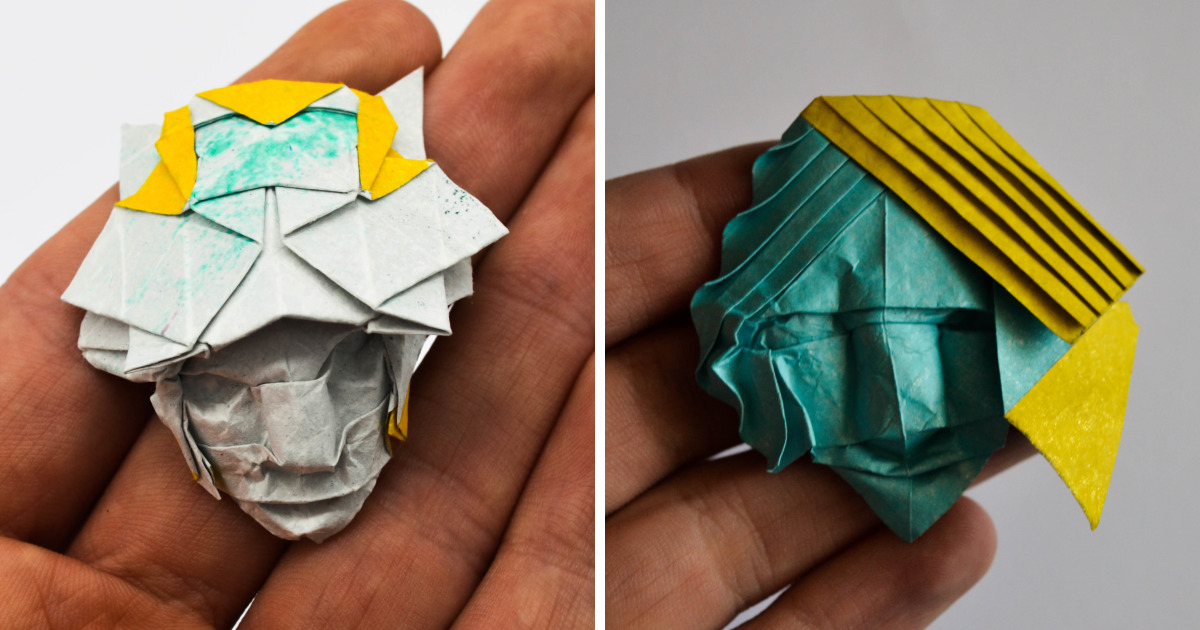
The most surprising part of the challenge was not that I made origami. It was that origami made other things possible. A tiny morning fold turned into a collection. A collection turned into experiments with masks, tessellations, colors, and patterns. The table that once collected dust and excuses began collecting creatures, faces, and geometric designs.
Creativity has a way of producing momentum. When you make one thing, you start wondering what else you can make. When you solve one small design problem, another problem feels less intimidating. That is the secret magic of a creative habit: it trains your identity. You stop saying, “I am lazy,” and start saying, “I am someone who makes things, even when I do not feel ready.”
That identity shift is powerful for fighting bad habits. Shame says, “You failed, so why try?” Creativity says, “Interesting. What can we make from this mess?” One voice traps you. The other hands you a square of paper and says, “Fold here.”
The Setback in the Middle
Of course, the challenge was not a straight line upward. Around the middle, I tried to change too much at once. This is a classic mistake. You start with one healthy habit and suddenly decide you will wake at dawn, drink green smoothies, exercise daily, answer all emails, learn a language, organize your closet, and become emotionally available before breakfast. Naturally, the brain files a formal complaint.
I burned out. Origami, which had felt playful, started feeling like pressure. I woke up late again. The old laziness returned, wearing sunglasses like it had never left. For a while, even folding paper felt painful because it reminded me of the version of myself I thought I was losing.
That low point became one of the most important lessons of the entire 300 days: a challenge should support your life, not become another stick to hit yourself with. The purpose was not to produce perfect art or maintain a heroic streak at all costs. The purpose was to build a better relationship with effort. Once I understood that, I softened the rules, returned to simpler models, and let the practice become friendly again.
How to Start Your Own Origami Habit Challenge
If you want to fight bad habits using origami, start small enough that your excuses feel embarrassed. Do not begin with a dragon that requires 97 steps and the calm hands of a museum conservator. Begin with a boat, a cup, a butterfly, a bookmark, or a simple crane. The goal is not to impress the internet. The goal is to create a repeatable action.
1. Choose One Bad Habit
Pick one habit to work on first: waking up late, doomscrolling, procrastinating, emotional snacking, skipping study time, or avoiding creative work. One habit is enough. Trying to fight ten bad habits at once is not self-improvement; it is a circus with spreadsheets.
2. Attach Origami to a Clear Cue
Place your paper where the bad habit usually begins. If you scroll in bed, put paper on your nightstand. If you procrastinate at your desk, place a square beside your keyboard. If you snack when stressed, keep paper near the kitchen table. Make the new action visible.
3. Keep the First Fold Easy
The first two weeks should feel almost too easy. This is how you build trust with yourself. A two-minute fold done daily beats a two-hour masterpiece attempted once and abandoned forever.
4. Track the Evidence
Save every finished piece in a jar, box, string display, or wall grid. The growing collection becomes a visual record of consistency. It also looks charmingly dramatic, as if a tiny paper civilization has chosen your room as its capital.
5. Reflect Once a Week
Ask three questions: What habit am I interrupting? What emotion usually triggers it? What did folding help me notice? This turns origami from a craft project into a self-awareness practice.
Why This Challenge Works for Students, Creators, and Busy Adults
Origami is especially useful because it does not require expensive tools, a large space, or a perfect schedule. Students can fold before studying. Remote workers can fold before opening email. Artists can fold as a warm-up. Parents can fold with children. Anyone can use a small paper ritual to mark the transition from chaos to intention.
It also combines several helpful elements at once: focus, hand movement, creativity, visible progress, and emotional regulation. You are practicing attention while making something. You are building patience while seeing results. You are giving your brain a reward that is not another hour lost to a screen.
And because origami has deep connections to math, design, engineering, and education, it never has to stay “just a hobby.” The same folding principles that create paper cranes also inspire solar panels, medical devices, architecture, and space technology. That fact delighted me. On the days my model looked like a confused potato, I could still say, “Technically, I am participating in an ancient art form with aerospace applications.” Confidence restored.
What 300 Days Taught Me About Bad Habits
After 300 days, I no longer think of bad habits as enemies to destroy. I think of them as signals. A bad habit usually points to a need: rest, comfort, stimulation, control, connection, or escape. The problem is not that we have needs. The problem is that some routines meet those needs badly.
Origami helped me build a better routine. When I felt restless, I folded. When I felt unfocused, I folded. When I wanted to avoid the day, I folded one small thing and let that action pull me forward. The paper did not judge me. It simply waited.
I also learned that confidence is not something you find before beginning. Confidence is something that accumulates afterward. Every fold was a tiny vote for the person I wanted to become. Some votes were crooked. Some were late. Some were made with grumpy hands and questionable lighting. But they still counted.
Extra Reflections: The Personal Experience Behind the Paper
Looking back, the most emotional part of the origami challenge was watching my environment change. In the beginning, one paper model on my desk looked lonely, almost silly. By day ten, there was a small group. By day fifty, the collection had weight. By day one hundred, the pieces no longer felt like decorations. They felt like witnesses.
Each model carried a memory. One reminded me of a morning when I wanted to quit but folded anyway. Another came from a day when I woke up early and felt proud before the coffee even understood its assignment. A messy little mask reminded me of a stressful week when I did not make anything beautiful, but I did make something. That distinction became important. Beauty was optional. Showing up was the real project.
I began to understand why physical rituals matter. Digital progress disappears too easily. Apps reset, tabs close, notifications bury your effort under noise. Paper stays. It wrinkles, stacks, leans, and occupies space. My origami pieces made my progress visible in a way my brain could not argue with. On days when I felt stuck, I could look at the collection and see evidence that I had moved before. That made moving again feel possible.
The challenge also changed my relationship with failure. Before, a ruined attempt felt like proof that I lacked discipline. During the challenge, a bad fold became information. Maybe I rushed. Maybe I chose a model too difficult for my energy level. Maybe I needed sleep more than ambition. Origami made feedback immediate but not cruel. The paper showed the mistake without turning it into an identity crisis.
Another unexpected experience was how often people responded to the project. Friends who had no interest in productivity advice were curious about the tiny masks and shapes. Some asked how to fold their own. Others shared the habits they were trying to change. Origami became a conversation starter because it was less intimidating than saying, “Hello, would you like to discuss your self-sabotage?” Paper is polite like that.
There were also boring days. This is important to admit. Not every morning felt meaningful. Sometimes the fold was just a fold. Sometimes I was tired, annoyed, or uninspired. But those boring days may have been the most valuable because habits are built in ordinary weather. Anyone can feel motivated during a dramatic fresh start. The real test is whether you can keep a promise on a dull Tuesday when nothing sparkles and your brain wants to negotiate with a pillow.
By the end of 300 days, I had not become a perfect person. I still wasted time sometimes. I still had lazy mornings. I still occasionally treated my phone like it contained the secrets of the universe, when mostly it contained emails and people arguing about sandwiches. But I had changed. I had a tool. I had proof. I had a ritual that could bring me back to myself.
Most importantly, I learned that transformation does not always roar. Sometimes it folds quietly. Sometimes it begins with a square of paper, a small decision, and the willingness to repeat that decision long enough for your life to take a new shape.
Conclusion: Small Folds, Big Change
The 300-day origami challenge taught me that fighting bad habits does not require hating yourself into improvement. It requires designing a better path. Origami gave me a cue, a routine, and a reward. It gave my hands something useful to do while my mind learned to slow down. It turned mornings into practice, setbacks into lessons, and ordinary paper into proof of resilience.
If you are stuck in a bad habit, do not wait for a perfect personality transplant. Start with one small replacement. Put a square of paper where your excuse usually begins. Fold something simple. Do it again tomorrow. Let the tiny ritual become a bridge between who you have been and who you are practicing to become.
After all, a flat sheet of paper does not look like much at first. Neither does a new habit. But with enough careful folds, both can become something surprisingly strong.