
Note: This article is written for web publishing and synthesizes real technical guidance from MQTT standards, broker documentation, IoT security recommendations, cloud IoT references, and practical home/edge automation patterns.
Introduction: The Tiny Protocol With Big Main-Character Energy
Minimal MQTT sounds like something you would find in a hacker’s backpack next to a soldering iron, three mystery resistors, and a USB cable that only works when threatened. But behind the tiny name is a serious idea: connected devices do not need to shout, overshare, or burn through batteries just to say, “The room is 72 degrees.” MQTT gives small devices a calm, efficient way to send and receive messages without dragging the entire internet into the living room.
MQTT, short for Message Queuing Telemetry Transport, is a lightweight publish/subscribe messaging protocol widely used in the Internet of Things. It was designed for constrained devices, unreliable networks, and low-bandwidth environments. That makes it ideal for sensors, microcontrollers, smart home devices, factory equipment, weather stations, solar monitors, and all the other little machines that mostly want to report small bits of data and then go back to sleep like a cat with a battery pack.
The phrase “Minimal MQTT” is not about doing less because we are lazy. It is about doing only what matters. A minimal MQTT setup sends fewer bytes, wakes devices less often, keeps data local when possible, limits who can subscribe, and avoids the modern habit of forwarding every sneeze to five cloud dashboards. Done well, MQTT offers two excellent gifts: power efficiency and privacy. Done badly, it becomes a tiny megaphone broadcasting your home, habits, and device states to anyone who guessed the password “admin.” Please do not be that person.
What Makes MQTT Minimal?
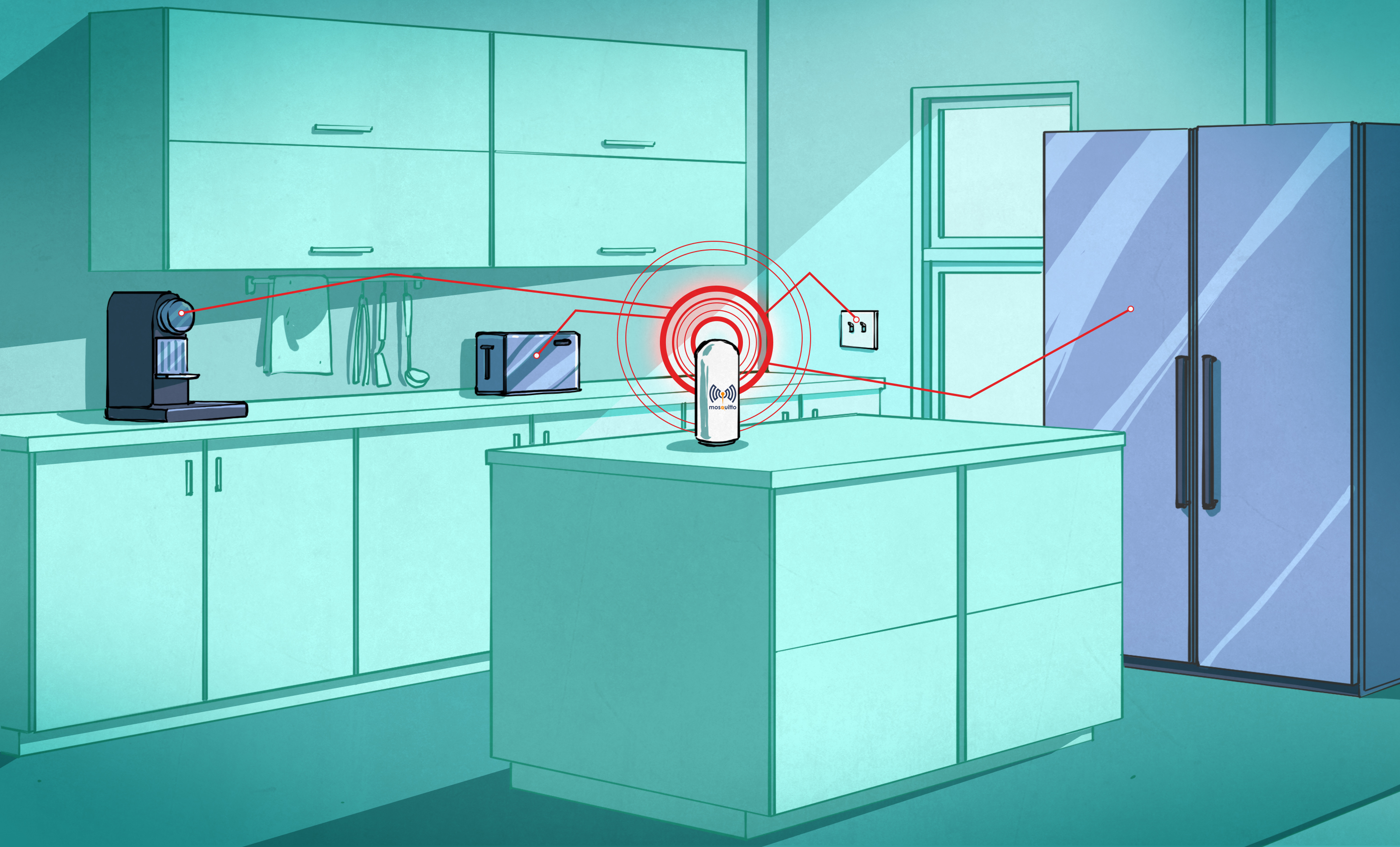
MQTT works through three main players: publishers, subscribers, and a broker. A device publishes a message to a topic, such as home/livingroom/temperature. Another device or application subscribes to that topic and receives updates. The broker sits in the middle and routes messages. The publisher does not need to know who is listening. The subscriber does not need to know who sent the message. This loose coupling is one of MQTT’s superpowers.
Compared with request-heavy patterns like constantly polling a web API, MQTT can be refreshingly quiet. A temperature sensor does not need to ask, “Are we there yet?” every second. It can publish only when the value changes meaningfully, or on a schedule, then disconnect. That small design choice can reduce network traffic, extend battery life, and make the whole system easier to reason about.
A minimal MQTT architecture usually includes a local broker, simple topic naming, disciplined payloads, modest Quality of Service settings, and strict access control. It avoids the temptation to publish every raw reading forever. It also treats data as something valuable, not confetti. When your smart home knows when you wake up, when the garage opens, and when the bedroom light turns off, that is not just “telemetry.” That is a diary with timestamps.
MQTT and Power: Why Small Messages Matter
For battery-powered devices, radio time is expensive. Wi-Fi, cellular, LoRa gateways, and other network interfaces often consume far more energy than the sensor reading itself. Measuring temperature may be cheap. Waking the radio, joining a network, negotiating security, sending data, and waiting for acknowledgments can be the real battery buffet.
MQTT helps by keeping messages compact. A typical sensor payload might be a tiny JSON object like {"temp":72.4}, or an even smaller plain value like 72.4. The device can publish, receive confirmation if needed, and go back into deep sleep. For microcontrollers such as ESP8266, ESP32, STM32, or low-power cellular boards, this pattern can make the difference between a project that runs for weeks and one that politely dies before lunch.
Deep Sleep: The Unsung Hero
Minimal MQTT becomes especially powerful when combined with deep sleep. In a typical battery sensor workflow, the device wakes up, reads a sensor, connects to Wi-Fi or another network, publishes an MQTT message, optionally receives a command or retained configuration, and then sleeps again. It does not stay online to look fashionable.
This approach is excellent for slow-changing data: soil moisture, mailbox state, freezer temperature, attic humidity, water tank level, door status, or outdoor weather readings. The device does not need a permanent socket unless the application requires real-time control. A sleeping sensor is a secure sensor in one important sense: it is not sitting online all day waiting to be poked by troublemakers.
Use QoS Carefully
MQTT supports three Quality of Service levels. QoS 0 is “at most once,” meaning the message is sent without guaranteed delivery. QoS 1 is “at least once,” meaning the message may be delivered more than once but should not be lost if the connection survives long enough for acknowledgment. QoS 2 is “exactly once,” with extra handshake overhead.
Minimal systems should choose the lowest QoS that fits the risk. A living room temperature update can often use QoS 0 because another reading is coming soon. A water leak alert may deserve QoS 1. QoS 2 is valuable in some business and industrial workflows, but for small IoT devices it may be overkill. More reliability usually means more packets, more state, and more battery use. As always, the engineering answer is: “It depends,” which is less satisfying than magic but much more accurate.
Retained Messages: Useful, But Not a Junk Drawer
MQTT retained messages let the broker store the latest message on a topic and deliver it immediately to new subscribers. This is handy for device discovery, last-known states, and configuration. For example, a home automation dashboard can subscribe to home/garage/door and instantly learn whether the garage was last reported open or closed.
But retained messages should not become a dusty attic full of stale secrets. If a topic contains sensitive information, do not retain it unless there is a clear reason. If a retained message is outdated, clear it. If a device publishes discovery data, use unique identifiers and avoid publishing unnecessary details. Minimal MQTT means the broker remembers what it must, not everything it has ever heard at the neighborhood barbecue.
MQTT and Privacy: Your Broker, Your Rules
The privacy advantage of MQTT is not automatic. MQTT can be private, but only if the architecture is private. A local broker on a Raspberry Pi, mini PC, NAS, or home server can keep most automation traffic inside the building. Your motion sensors, switches, plugs, and thermostats can talk locally without sending every event to a remote platform.
That matters because IoT data is often more revealing than people expect. A motion sensor can suggest occupancy. Power monitoring can reveal appliance usage. Door sensors show routines. Temperature and humidity data can hint at whether people are home. Even harmless-looking topics can become sensitive when combined over time.
A privacy-first MQTT setup follows three rules: collect less, store less, and share less. Instead of publishing home/master-bedroom/motion/occupied-by-steven, publish a generic state like home/bedroom/motion. Instead of forwarding all raw events to a cloud database, forward only alerts or daily summaries. Instead of giving every device permission to publish and subscribe everywhere, use topic-level access control.
Local Broker vs. Cloud Broker: The Great Indoor-Outdoor Debate
A local MQTT broker gives you speed, resilience, and privacy. If the internet connection drops, your lights, switches, local automations, and dashboards can still work. That is not just convenient; it is civilized. Nobody wants a lamp that requires a round trip to another data center before deciding whether the room should stop looking like a cave.
Cloud MQTT brokers are useful when devices are spread across locations, mobile apps need remote access, or data must feed analytics and alerting systems. The trick is not to treat cloud as the default destination for everything. A good minimal design often uses a local broker first, then bridges selected topics outward. For example, a greenhouse controller might keep all raw sensor data local but bridge only farm/greenhouse/alerts/# to a cloud endpoint for notifications.
This hybrid model gives you power and privacy together. Local messages stay local. Important remote events still escape the building when needed. The cloud becomes a tool, not a vacuum cleaner with a terms-of-service agreement.
Security Basics for Minimal MQTT
Privacy without security is just wishful thinking wearing a hoodie. A minimal MQTT setup should still include serious protections. The goal is not to make the system complicated. The goal is to make unsafe defaults disappear.
Disable Anonymous Access
Do not allow anonymous clients unless you are running a temporary lab on an isolated network. Every client should have an identity. Even in a home lab, usernames and passwords are better than “come on in, mysterious packet stranger.”
Use Strong Passwords or Certificates
For small deployments, strong unique passwords may be enough. For larger or higher-risk systems, client certificates and mutual TLS are stronger. Cloud IoT services often rely on X.509 certificates for device authentication, and the same model can be used in private deployments when the extra management is justified.
Encrypt Traffic With TLS
MQTT commonly uses port 1883 for unencrypted traffic and 8883 for MQTT over TLS. On a trusted local lab network, plain MQTT may be acceptable for testing. For production, remote access, shared networks, or anything involving sensitive data, TLS is the adult in the room. It helps protect credentials and payloads from being read in transit.
Apply Topic-Level ACLs
Access control lists decide who can publish or subscribe to which topics. A soil sensor should be allowed to publish to garden/soil1/moisture, not subscribe to home/doors/#. A dashboard may subscribe broadly but should not necessarily publish commands. A device that controls a relay should listen only to its command topic, not the entire universe.
Avoid Wildcards for Devices
MQTT wildcards are useful for dashboards and debugging. They are dangerous when casually handed to devices. Subscribing to # means “give me everything,” which is convenient in the same way leaving your front door open is convenient for guests. Use narrow subscriptions whenever possible.
Smart Topic Design: Privacy Starts With Naming
Topic names are easy to overlook, but they shape the entire system. A clean MQTT topic hierarchy is readable, predictable, and not too revealing. For example:
These topics are organized without being melodramatic. They avoid personal names, precise routines, and unnecessary labels. A bad topic hierarchy might expose more than the payload itself. For instance, home/steven-bedroom/sleep-sensor/in-bed is technically descriptive, but perhaps a little too eager to tell stories.
For privacy, separate command topics from state topics. Use names like home/lamp1/cmd and home/lamp1/state. This makes permissions easier. The lamp can subscribe to commands and publish state. The dashboard can publish commands and subscribe to state. Random sensors do neither.
Payloads: JSON, Plain Text, or Binary?
MQTT does not force a payload format. That freedom is wonderful and slightly dangerous, like being handed a label maker and no supervision. JSON is popular because humans can read it, tools can parse it, and debugging is easy. A temperature sensor might publish:
For ultra-minimal devices, plain text or binary may be better. Publishing 72.4 is smaller than JSON. Binary formats can be smaller still, though harder to debug. A practical compromise is to use JSON for development and dashboards, then optimize only when power, bandwidth, or cost requires it.
The privacy rule is simple: do not include fields you do not need. If the subscriber does not need a MAC address, serial number, GPS coordinate, user name, or exact timestamp, leave it out. Minimal payloads are not only efficient; they leak less.
MQTT 5 Features That Help Minimal Design
MQTT 5 added features that can make systems cleaner and more efficient when used thoughtfully. Message expiry can prevent stale retained messages from living forever. Session expiry gives better control over how long the broker stores client state. Topic aliases can reduce repeated topic overhead in long-lived connections. Reason codes and improved metadata can make debugging easier.
But MQTT 5 also introduces more knobs. Minimal MQTT does not mean turning every knob because the spec gave you a shiny toolbox. Use features that solve real problems. Message expiry is excellent for temporary alerts. Topic aliases can help chatty devices. User properties can add context, but they can also become a privacy footgun if developers start attaching personal or sensitive metadata.
Specific Example: A Battery-Powered Mailbox Sensor
Imagine a small sensor in a mailbox. It wakes when the door opens, connects to Wi-Fi, publishes home/mailbox/state with the value opened, and goes back to sleep. The broker receives the event. A local automation sends a phone notification. A dashboard updates the last-opened time.
A minimal version publishes only the event and battery level:
A not-so-minimal version publishes GPS coordinates, Wi-Fi network name, device serial number, full firmware build data, and a timestamp every ten seconds until the battery gives up and enters witness protection. The first version respects power and privacy. The second version is a tiny surveillance intern with poor boundaries.
The mailbox sensor probably needs QoS 1 because missing the one message could matter. It does not need to stay connected. It does not need to subscribe to all home topics. It does not need to publish to the cloud unless remote alerts are required. This is the spirit of Minimal MQTT: do the useful thing, then stop.
Specific Example: A Local Energy Monitor
Now consider a home energy monitor publishing wattage every few seconds. Power data can reveal when appliances run, when people cook, when HVAC cycles, and when the house is empty. That does not mean you should avoid energy monitoring; it means you should design it carefully.
Keep high-resolution data local. Use TLS if the network is shared. Store only the retention period you need. Send cloud summaries rather than raw readings. For instance, publish local real-time data to home/energy/live, but bridge only daily totals to cloud/energy/daily. The result is useful analytics without turning your home into a documentary narrated by your electric meter.
Common Minimal MQTT Mistakes
Mistake 1: Publishing Too Often
If temperature changes by 0.1 degrees, does anyone need to know immediately? Maybe in a laboratory. Probably not in a hallway. Publish on meaningful change or reasonable intervals. Fewer messages save power, storage, and attention.
Mistake 2: Using One Password for Every Device
Shared credentials are convenient until one device leaks them. Give each device its own credentials where possible. That way, a compromised sensor does not become a master key.
Mistake 3: Retaining Sensitive Topics
Retained messages are helpful for state, but dangerous for secrets and personal data. Never retain tokens, credentials, private diagnostics, or anything you would not want a future subscriber to receive instantly.
Mistake 4: Exposing the Broker to the Internet
If remote access is needed, consider a VPN, private tunnel, reverse proxy with strong authentication, or a carefully secured cloud bridge. Exposing a broker directly to the internet requires careful TLS, authentication, ACLs, monitoring, and updates. “It works from my phone” is not the same as “it is safe.”
Best Practices for Power-Efficient MQTT
Use deep sleep for battery devices. Publish only when values change enough to matter. Prefer QoS 0 for frequent, replaceable telemetry and QoS 1 for important events. Keep payloads small. Avoid long connection sessions for devices that do not need commands. Use retained configuration sparingly so waking devices can fetch settings without extra chatter. Batch readings when real-time updates are unnecessary.
For cellular IoT, every byte and connection setup can affect cost and battery life. MQTT is helpful, but connection strategy matters just as much as protocol choice. A device that wakes every minute, negotiates TLS, sends one reading, and disconnects may still consume more power than expected. Sometimes the better design is to wake less often and send several readings together.
Best Practices for Private MQTT
Start local. Use a local broker for local automation. Bridge outward only what must leave. Disable anonymous access. Use unique credentials. Apply ACLs. Encrypt remote traffic. Keep topics boring and non-personal. Minimize payloads. Avoid long-term storage of raw behavioral data. Log enough to troubleshoot, not enough to build a biography.
Privacy also means documenting your own system. Keep a simple list of devices, topics, credentials, and data flows. You do not need a corporate compliance department. A plain text file is fine. Future you will be grateful, especially when a mystery topic appears at 2:00 a.m. and the house starts behaving like it read a ghost story.
Where Minimal MQTT Fits Best
Minimal MQTT is excellent for smart homes, workshops, gardens, greenhouses, off-grid cabins, weather stations, small industrial monitoring, environmental sensing, and edge computing. It is especially strong where devices are low-power, messages are small, and local control matters.
It is not perfect for everything. High-volume video streams, large file transfers, complex transactional workflows, and public web APIs may need different tools. MQTT is a messaging protocol, not a universal sauce. Use it where publish/subscribe communication makes sense. Do not force it to become a database, file server, identity platform, and therapist.
The Minimal MQTT Mindset
The best MQTT systems feel quiet. Sensors report what matters. Commands go only where they should. The broker routes messages without drama. Devices sleep when they can. Data stays local unless there is a reason to leave. Security is built in, not bolted on after someone notices the garage door topic is public.
Minimal MQTT is not about using the fewest features. It is about using the right features. A small payload, a clear topic, a proper ACL, and a sleeping device can be more powerful than a bloated platform with fifteen dashboards and a privacy policy long enough to qualify as cardio.
Experience Notes: Lessons From Building Minimal MQTT Systems
The first practical lesson from working with minimal MQTT designs is that the broker becomes the quiet center of the universe. When it is stable, everything feels simple. When it is messy, every device becomes a suspect. A clean broker configuration, predictable topic tree, and separate credentials for each device save enormous time later. The setup may feel slower on day one, but it prevents the classic day-thirty problem: “Why is the porch sensor publishing to the fish tank topic?”
Another lesson is that battery life is won in boring places. Beginners often obsess over the payload size while ignoring connection behavior. Yes, a smaller payload helps. But the real savings often come from sleeping longer, reducing Wi-Fi reconnects, avoiding unnecessary acknowledgments, and publishing only meaningful changes. In one typical home sensor pattern, sending temperature every ten seconds feels impressive during testing. In real life, it mostly creates a beautiful graph of wasted battery. A five-minute interval, plus immediate publishing on major change, is usually more useful.
Debugging also teaches humility. Retained messages are wonderful until an old retained configuration resurrects a device you thought you deleted. Wildcard subscriptions are convenient until a dashboard starts receiving private diagnostic topics it never needed. Shared credentials are easy until you need to revoke one device and realize the whole system is wearing the same hat. Minimal MQTT rewards small acts of discipline: clear retained messages, name topics carefully, and treat credentials like house keys.
Privacy lessons tend to arrive quietly. At first, a motion sensor seems harmless. Then you notice it creates a pattern of when people wake up, leave, return, and sleep. Energy readings show appliance routines. Door sensors show habits. None of this requires paranoia; it requires respect. The most privacy-friendly systems are not necessarily the most locked down. They are the ones that avoid collecting unnecessary detail in the first place. Data that was never published cannot leak from the broker, the database, the backup, or the cloud integration.
Cloud bridging is another area where experience changes the design. The tempting approach is to bridge everything because future analytics might be useful. The better approach is to bridge only what has a purpose. Alerts, summaries, and device health checks often provide enough remote visibility. Raw local telemetry can stay local. This keeps bandwidth low, reduces exposure, and makes cloud dashboards easier to understand. A dashboard with every sensor update is not intelligence; sometimes it is just a very expensive lava lamp.
Finally, minimal MQTT works best when it remains understandable. A good test is whether you can explain the system in one paragraph: which devices publish, which services subscribe, what leaves the local network, and who can control what. If that explanation becomes a maze, simplify. The power of MQTT is not only technical efficiency. It is mental efficiency. A system you understand is easier to secure, easier to repair, and far less likely to surprise you at midnight by turning on a lamp named test-device-final-v2.
Conclusion: Small Messages, Strong Boundaries
Minimal MQTT is a practical philosophy for building connected systems that are efficient, private, and pleasant to maintain. It respects the limits of small devices and the sensitivity of personal data. It keeps messages compact, devices sleepy, topics clear, and permissions narrow. It also reminds us that the smartest smart system is not the one that talks the most. It is the one that says the right thing, to the right listener, at the right time.
For developers, makers, homeowners, and IoT teams, MQTT offers a powerful foundation. But the real magic comes from restraint. Keep local traffic local. Use TLS and authentication when data crosses trust boundaries. Choose QoS with intention. Retain only what should be remembered. Publish less, protect more, and let your devices nap with dignity.
{ “meta_title”: “Minimal MQTT: Power and Privacy Guide”, “meta_description”: “Learn how Minimal MQTT improves IoT power efficiency, privacy, security, and local control with practical examples and best practices.”, “sapo”: “Minimal MQTT is more than a lightweight messaging protocol choice; it is a smarter way to design connected devices that sip power, protect privacy, and avoid unnecessary cloud dependence. This guide explains how MQTT helps sensors publish small messages, sleep longer, and keep automation local while using practical safeguards such as TLS, access control, clean topic design, retained-message discipline, and selective cloud bridging. With real-world examples like mailbox sensors and energy monitors, the article shows how to build IoT systems that are efficient, secure, readable, and refreshingly low-drama.”, “keywords”: [ “Minimal MQTT”, “MQTT privacy”, “MQTT power efficiency”, “IoT messaging protocol”, “MQTT security”, “local MQTT broker”, “battery powered IoT” ]}