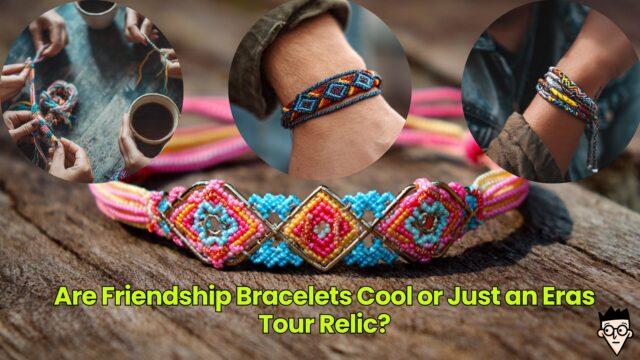

Once upon a very recent time, friendship bracelets were everywhere. They were on wrists, in stadium parking lots, in craft store aisles stripped cleaner than a grocery shelf before a snowstorm, and probably in the glove compartment of at least one mom who got roped into bead duty. Then the Taylor Swift Eras Tour ended, and the obvious question arrived right on schedule: are friendship bracelets still cool, or are they now just tiny plastic souvenirs from a giant pop-cultural moment?
Here’s the honest answer: friendship bracelets are still cool, but the reason they’re cool has changed. At the height of the Eras craze, they were a fandom badge. Now, the best ones work because they feel personal, playful, nostalgic, and a little bit defiantly uncynical. In an era when so much style is polished, monetized, and overthought, a bracelet that looks like it was made on a kitchen table with alphabet beads and good intentions feels weirdly refreshing. It says, “Yes, I have taste. I also have a personality.”
That does not mean every stack of random plastic beads automatically qualifies as fashion greatness. Some friendship bracelets look sentimental and stylish. Others look like your summer camp memories got trapped in a vending machine. The difference is all in how they’re worn, why they’re worn, and whether they still carry meaning beyond “remember when everyone lost their minds over stadium merch?”
The short verdict: not a relic, but definitely no longer a costume
If you wear friendship bracelets now, you are not late. You are just no longer hiding inside the safety of a massive trend wave. And honestly, that may be better. Trends are loud. Personal style is smarter.
In 2023 and 2024, friendship bracelets were pure public ritual. You made them before a concert, traded them with strangers, and walked away with a wrist full of tiny memories and at least one bracelet that spelled something unhinged like “CRYING IN SECTION 212.” That version of the bracelet was communal, chaotic, and genuinely sweet. In 2026, the bracelet still works, but it works best when it feels edited. Think fewer “I bought a 400-piece kit and saw God” vibes, and more “this means something to me” energy.
So no, friendship bracelets are not dead. They have simply graduated. They’re less about proving you attended a cultural event and more about expressing taste, humor, nostalgia, and connection. In other words, they’ve gone from uniform to accessory.
Why the Eras Tour made friendship bracelets impossible to ignore
The lyric that launched a thousand bead trays
Friendship bracelets did not begin with the Eras Tour, but the tour absolutely supercharged them. Swift’s fans turned a lyric from “You’re on Your Own, Kid” into a full-blown social ritual, making and trading bracelets at concerts across the tour. And because Swift fandom doesn’t really do anything halfway, the practice exploded into a culture of its own: bracelets with song titles, album references, inside jokes, favorite lyrics, city names, and the occasional message that made total sense only after three hours of emotional singing and one overpriced stadium lemonade.
What made the trend stick was that it was fan-created, not just handed down from a merch team in a conference room. That matters. People are much more attached to traditions they build themselves. By the time the concert film hit theaters, bracelets had become part of the whole experience. You didn’t just watch the show. You dressed for it, sang through it, and traded tiny handmade symbols of belonging.
The bead boom was real
This wasn’t just a social media illusion. Craft retailers saw major jumps in bead and jewelry-making sales around tour stops. That tells you something important: friendship bracelets were not merely photogenic. People were actually making things again. In a culture where “DIY” often means buying a preassembled kit and pretending it counts, friendship bracelets brought back the radical act of sitting down and using your hands.
That hands-on factor is part of why the bracelets resonated far beyond Swifties. They felt affordable. They felt creative. They felt social. And maybe most importantly, they felt human. No algorithm can replicate the exact charm of a slightly crooked bracelet made by someone who cared enough to spell your favorite song correctly on the second try.
Friendship bracelets were cool before Taylor, and they’ll be cool after Taylor
They have real history
The modern friendship bracelet has a longer story than most people realize. Histories of the style often trace its roots to woven bracelet traditions connected to Central America, before the look migrated into American youth culture. Later, friendship bracelets became embedded in camp life, school friendships, handmade gift culture, and even other music scenes. If you ever spent a summer tying embroidery floss into diagonal stripes while pretending you were not secretly offended that your best friend made a prettier one for somebody else, congratulations: you were participating in a deep American social ritual.
There is also a cousin in rave culture: kandi bracelets. Those brightly colored beaded trades worked as a kind of social language, too. Different scene, same essential idea. The bracelet becomes more than jewelry. It becomes proof of participation, a small portable symbol that says, “I was there, and I belonged.”
Nostalgia is part of the appeal, but not the whole story
It’s easy to dismiss friendship bracelets as childish because they are deeply nostalgic. But nostalgia is not automatically unserious. In fashion, it often becomes valuable precisely because it reconnects people with a less filtered version of themselves. Friendship bracelets tap into that beautifully. They remind people of camp cabins, sleepovers, messy handwriting, digital cameras, first concerts, and the kind of friendship that felt important enough to knot into string.
But the bracelets only stay relevant if they move beyond nostalgia. That’s what has happened. What was once a childhood token became a concert ritual, and then a broader style language: color, humor, memory, identity, softness, and irony all wrapped around your wrist.
So are friendship bracelets cool in 2026?
Yes, with one condition: they need intention. Right now, the coolest friendship bracelets are not the ones screaming “I survived a trend cycle.” They’re the ones that feel specific.
A bracelet is cool when it carries a private joke, a meaningful phrase, a favorite place, or a memory you’d rather wear than explain. It is cool when it sits next to a watch, a vintage chain, or a simple gold bangle and softens the whole look. It is cool when it feels a little handmade in a world obsessed with perfection. It is cool when it makes someone smile.
That’s also why upgraded friendship-bracelet styles have stuck around in fashion coverage. Designers and editors keep returning to beads, charms, braided cords, and colorful wrist stacks because those pieces can be playful without being sloppy. Even when the loudest version of a trend cools off, the underlying idea often remains. The big idea here is personalized jewelry. And personalized jewelry never really disappears; it just changes costumes.
What makes them feel current
- Personalization: initials, inside jokes, short phrases, or symbols that mean something beyond fandom.
- Layering: pairing a friendship bracelet with more grown-up jewelry keeps it from reading like a middle-school flashback.
- Material contrast: thread, beads, pearls, metal, leather, and charms all playing together makes the look feel deliberate.
- Restraint: one or two great bracelets often look better than a forearm that resembles a craft store clearance bin.
- Story: the best accessories always have one.
When friendship bracelets do feel dated
Now for the tough love. Friendship bracelets can absolutely look dated when they are worn exactly the way they were at peak Eras fever, with no update and no personality beyond fandom leftovers. If the whole look depends on a specific moment that has already passed, then yes, it can read like a relic.
Here’s when they miss:
- when the bracelet exists only to reference a trend everyone has already moved on from,
- when the colors and phrases feel random rather than meaningful,
- when the stack is so big it becomes costume instead of style,
- when the bracelet is trying too hard to say “I’m fun” instead of simply being fun.
That last one matters. Cool can smell desperation from a mile away. Friendship bracelets work best when they seem effortless, sentimental, a little cheeky, and fully owned by the person wearing them.
How to wear friendship bracelets now without looking stuck in 2023
1. Mix them with real jewelry
Pair one beaded bracelet with a sleek watch, a chain bracelet, or a few simple metal cuffs. This gives the friendship bracelet contrast and prevents it from dominating the entire look.
2. Choose a tighter color story
Neons still have their place, especially if you love a loud look. But if you want the bracelet to feel more style-forward, try a more edited palette: soft pastels, monochrome beads, black-and-white letter beads, metallic accents, or a single bright pop against neutrals.
3. Keep the message smart
Song titles are fine. But clever phrases, nicknames, travel references, bookish words, or tiny personal mottos can feel fresher. Think less “mass trend” and more “this could only belong to me.”
4. Use them as social objects, not just accessories
Part of the magic is still the exchange. Make one for a friend. Trade one on a trip. Bring a few to a birthday dinner, reunion, or girls’ weekend. The object gets cooler when it creates an actual memory.
5. Let a little imperfection show
The tiny flaws are the point. A friendship bracelet should not look like it was engineered by a Swiss watchmaker. The handmade quality is what gives it warmth.
Why friendship bracelets still matter in a hyper-digital culture
One reason friendship bracelets keep surviving every eye-roll is that they solve a very modern problem: most connection now is invisible. We text. We react. We send memes. We “like” each other professionally and emotionally and occasionally by accident. Friendship bracelets do the opposite. They make care visible.
You can hold one. You can wear one. You can remember who gave it to you. You can glance at it in a boring meeting or while standing in line somewhere and be transported to a concert, a trip, a summer, a breakup recovery weekend, or a friendship that got you through a weird chapter.
That’s why the bracelet endures. Not because it is expensive. Not because it is timeless in the polished luxury sense. But because it is tangible. It is proof that someone thought of you long enough to make something. That kind of gesture never really goes out of style.
The real experience of friendship bracelets: why people keep coming back to them
Let’s talk about the actual experience, because that’s where friendship bracelets stop being a trend report and become something more interesting. The appeal is not just how they look in a photo. It’s the weirdly emotional process around them.
You start with a pile of beads or thread that looks innocent enough. Then suddenly you are making decisions that feel larger than they should. Which colors fit your friend best? Should the bracelet say her nickname, her favorite album, the city where you met, or that ridiculous phrase you both repeat every time life falls apart? Why are there never enough vowels in these kits? Why does one letter “S” disappear every time it is needed most? This is the bracelet-making experience: part craft, part tiny identity crisis, part therapy session with elastic cord.
And then there’s the giving of it. This is where friendship bracelets punch above their weight. A bracelet is small, cheap, and easy to underestimate. But when someone hands you one that clearly has a thought behind it, it lands differently. It says, “I know you.” It says, “I remembered.” It says, “This made me think of you, and I wanted you to carry that around for a while.” That is not relic behavior. That is emotional efficiency.
At concerts, the experience becomes even better because the bracelet works like a social shortcut. You do not need a long introduction. You see someone’s outfit, swap a grin, point at a bracelet, and suddenly you are having a five-minute conversation with a stranger like you’ve known each other since sophomore year. It turns awkward public space into temporary community. Stadiums, theaters, museum events, birthday parties, girls’ trips, bachelorette weekends, long flights, sleepovers, road trips, summer camps, and college dorm rooms all become a little warmer when there’s a small exchange ritual involved.
Even wearing old friendship bracelets has its own specific feeling. You find one in a drawer and immediately remember the version of yourself who first wore it. Maybe you were fourteen and dramatic. Maybe you were twenty-three and heartbroken. Maybe you were thirty and just needed something unserious during a serious year. The bracelet holds that version of you without judgment. It doesn’t ask you to be polished. It just asks you to remember.
That is why people keep returning to friendship bracelets long after any one trend peaks. They are memory objects. They are conversation starters. They are affordable style with actual emotional content. And frankly, that is a lot more than most accessories manage. A handbag can be chic. A necklace can be elegant. But a friendship bracelet can be funny, sentimental, handmade, socially useful, and weirdly moving at the same time. That’s a strong résumé for a tiny object made of string and plastic.
So are friendship bracelets cool? When they’re worn with intention, humor, and meaning, absolutely. When they are exchanged, they become even better. And when they survive long enough to carry memories, they stop being trendy at all. They become personal history you can wear.
Final answer: cool, if you make them yours
Friendship bracelets are not just an Eras Tour relic unless you treat them like one. The trend may have exploded because of a once-in-a-generation concert phenomenon, but the object endured because it already had deeper roots: craft, community, nostalgia, identity, and the pleasure of giving something small that means a lot.
Right now, friendship bracelets are coolest when they feel personal rather than performative. Wear one because it reminds you of someone. Make one because a text message is not enough. Stack one with nicer jewelry and let it add softness to the look. Keep one old and frayed because it still matters. That’s the thing about friendship bracelets: they’re not cool because they’re perfect. They’re cool because they’re human.