
Some hotels announce themselves with marble lobbies, gold elevators, and a front desk so polished you worry about breathing near it. Tuba Club, thankfully, does something far better. It sits above the Mediterranean in Les Goudes, the rocky edge of Marseille, and lets the sea do the showing off. The result is part boutique hotel, part restaurant, part sun-dazed hideaway, and part “how did everyone else on Instagram find this before I did?”
Tuba Club has become one of Marseille’s most stylish addresses because it understands a rare travel truth: luxury does not always need to shout. Sometimes it wears white linen, smells faintly of salt, serves seafood beside the water, and gives you a room small enough to make your suitcase question its life choices. This is not a hotel for travelers who need ballroom-sized bathrooms and twelve decorative pillows. It is for people who want atmosphere, design, sea views, and the feeling of being invited to a very cool friend’s seaside cabin.
Located in the fishing village of Les Goudes, at the southern end of Marseille, Tuba Club captures the city’s wilder personality. Marseille is not the polished postcard version of the French Riviera. It is louder, older, saltier, sunnier, and much more interesting. Tuba Club fits that spirit perfectly: casual but intentional, chic but never stiff, glamorous without trying too hard.
What Is Tuba Club?
Tuba Club is a boutique restaurant and hotel in Marseille, France, set directly on the Mediterranean in Les Goudes. The property is known for its small collection of sea-facing rooms, its stylish restaurant terrace, and its laid-back coastal design. It occupies a building with a former life tied to diving culture, which explains the name, the marine mood, and the refreshing lack of generic hotel blandness.
The concept is simple: sleep close to the sea, eat beautifully, swim when the water calls, and repeat until your inbox feels like a rumor from another lifetime. Tuba Club is often described as a “restaurant with rooms,” and that phrase makes sense. The restaurant and terrace are the beating heart of the place. The rooms are intimate, minimal, and designed around the view rather than around excessive square footage.
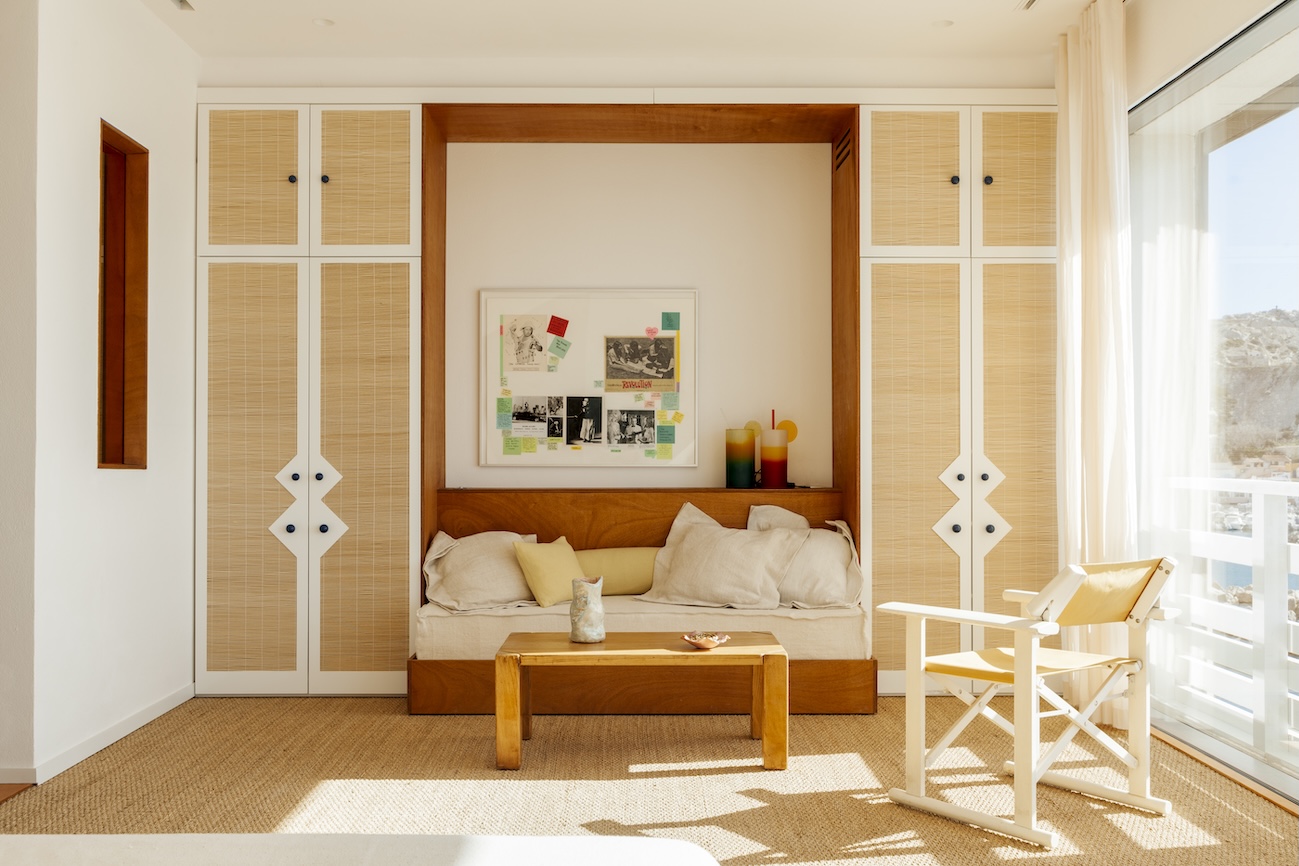
Instead of trying to compete with grand palace hotels, Tuba Club wins by doing the opposite. It celebrates the cabanon, the traditional Marseille seaside cabin. The design draws from local architecture, Mediterranean simplicity, and a dose of 1970s beach-club cool. Think plywood, rope lamps, white linens, sea grass textures, vintage touches, and colors that seem borrowed from sunset, stone, and old postcards.
Where Tuba Club Is Located: Les Goudes, Marseille’s Seaside Secret
Les Goudes is not the Marseille most first-time visitors imagine. It is not the busy Vieux-Port, the grand boulevards, or the museum-lined waterfront. It is a small fishing village at the edge of the city, where the urban energy starts to dissolve into cliffs, coves, limestone, and open water. The landscape feels almost cinematic, as if the Mediterranean decided to hire a set designer and said, “Make it rugged, but make it chic.”
This location is essential to Tuba Club’s appeal. The hotel is not merely near the sea; it feels attached to it. Tables overlook the water. Rooms face the blue horizon. The surrounding rocks and coves create a sense of escape, even though central Marseille is still reachable by car or seasonal transport. It is close enough for a city break, yet far enough to make you feel as though you have discovered a private corner of the South of France.
Les Goudes is also a natural gateway to the Calanques, the dramatic limestone inlets that make this part of Provence so unforgettable. For travelers who enjoy coastal walks, swimming, boating, photography, or simply staring at beautiful scenery while pretending it counts as meditation, the area is ideal.
Design: Minimalist, Nostalgic, and Effortlessly Cool
The design of Tuba Club is one of the main reasons it attracts creative travelers, style lovers, and design editors. The interiors were shaped with a respect for the building’s history and the local cabanon tradition. Instead of erasing the past, the property leans into it. The atmosphere feels handmade, sun-bleached, and personal.
The rooms are compact, but they are not careless. They are designed with restraint: white sheets, natural materials, marine-inspired details, plywood, rope, and a few playful touches. The mood is not “expensive showroom.” It is more like “brilliant friend with perfect taste renovated a fisherman’s cabin and somehow made a garden hose look stylish.” That is a very specific talent, and Tuba Club has it.
The aesthetic also connects Marseille to broader design history. There are echoes of Le Corbusier-style minimalism, Mediterranean utility, and vintage seaside living. Nothing feels overdecorated. The rooms are built around the view, the light, and the idea that when the Mediterranean is outside your window, nobody needs a giant velvet headboard shouting for attention.
The Rooms: Small, Sea-Facing, and Made for Slow Mornings
Tuba Club is not a large hotel. That is part of the charm. Its cabanons are limited, highly sought after, and directly oriented toward the water. The experience is closer to staying in a private seaside hideout than checking into a conventional hotel.
Travelers should know one thing before booking: the rooms are intimate. This is not a place where you unpack five suitcases, practice yoga beside the bed, and host a family reunion in the bathroom. The point is not indoor sprawl. The point is waking up to the sea, stepping outside, eating well, and spending most of the day in the landscape.
For many guests, that is exactly the magic. A small room with a perfect view can feel more luxurious than a large suite with no personality. At Tuba Club, the luxury is sensory: morning light on the water, the sound of waves, salt in the air, clean design, and the wonderful absence of hotel carpeting that looks like it has seen too many business conferences.
The Restaurant: The Social Heart of Tuba Club
If the rooms are the retreat, the restaurant is the stage. Tuba Club’s restaurant is one of the reasons the property has become a Marseille institution. It brings together locals, travelers, designers, food lovers, and people who somehow look elegant while eating by the sea in the wind. This is deeply unfair, but also part of the entertainment.
The menu focuses on Mediterranean flavors, seafood, raw preparations, grilled fish, seasonal produce, and coastal simplicity. The best dishes at places like this do not need theatrical tricks. When the fish is fresh, the olive oil is good, and the view is doing half the emotional labor, restraint becomes a virtue.
The restaurant also reflects Marseille’s food culture: lively, sunlit, generous, and connected to the sea. Expect a setting where lunch can easily stretch into afternoon, and dinner can turn into the kind of memory that makes every future desk salad feel like a personal attack.
What to Expect From the Dining Atmosphere
The dining experience is relaxed but stylish. It is not the kind of place where you whisper nervously over a foam-covered appetizer while wondering which fork has emotional authority. Tuba Club feels more social, more open, more alive. The terrace, the rocks, and the water all shape the meal.
That said, Tuba Club is popular. Reservations are wise, especially in high season. The setting is intimate, the tables are in demand, and the location is the sort of place people plan entire afternoons around. Showing up at peak sunset expecting instant seating is bold. Marseille may admire confidence, but restaurants still have capacity limits.
Why Tuba Club Became a Style Destination
Tuba Club’s rise says a lot about modern travel. Travelers are increasingly drawn to places that feel specific rather than standardized. They want hotels with a point of view, restaurants with local identity, and design that tells a story. Tuba Club delivers all three.
It also benefits from Marseille’s growing status as one of France’s most exciting cultural cities. Once overlooked by travelers rushing toward Nice, Cannes, or Saint-Tropez, Marseille now attracts artists, chefs, designers, and curious visitors who prefer texture over polish. The city has grit, history, color, and confidence. Tuba Club offers a softer, seaside expression of that same energy.
Part of its appeal is also visual. Let us be honest: Tuba Club photographs beautifully. The blue water, rocky coast, vintage details, and golden-hour terrace are extremely camera-friendly. But unlike many photogenic places, it is not just a backdrop. The hospitality concept has substance. The food, location, design, and atmosphere work together.
How to Spend a Day at Tuba Club
A perfect Tuba Club day should not be overplanned. This is not the place for a spreadsheet itinerary titled “Mediterranean Efficiency Plan v4.” Start slowly. Wake up to the sea. Have coffee. Look at the water long enough to forget at least three passwords. Take a swim if conditions allow. Walk around Les Goudes. Let the landscape reset your nervous system.
Lunch is a natural centerpiece. Book a table, order around the seafood and seasonal dishes, and let the meal unfold. Afterward, explore nearby coves, take photographs, or simply sit with the view. If staying overnight, evening is when Tuba Club becomes especially atmospheric. The light softens, the water darkens, and the whole place seems to understand why people have been romanticizing the Mediterranean for centuries.
Nearby Things to Do in Marseille
Although Tuba Club feels like an escape, it also works well as part of a broader Marseille itinerary. Visitors can explore the Vieux-Port, visit the Mucem, wander through Le Panier, see Notre-Dame de la Garde, or take a boat trip toward the Calanques. Design lovers may want to visit Le Corbusier’s Cité Radieuse, while food-focused travelers can explore Marseille’s lively restaurants, bakeries, markets, and casual seafood spots.
For a balanced trip, spend time in both sides of Marseille: the energetic city center and the quieter coastal edge. Tuba Club is especially rewarding after a day of urban exploring. After the noise, scooters, markets, museums, and hills of Marseille, arriving in Les Goudes feels like pressing the “exhale” button.
Who Should Stay at Tuba Club?
Tuba Club is ideal for couples, design-conscious travelers, food lovers, solo travelers seeking a stylish retreat, and anyone who values atmosphere over amenities by the acre. It is also perfect for people who understand that a small room can be a feature, not a flaw, when the sea is right outside.
It may not be the best match for travelers who require large rooms, extensive resort facilities, or a central location within walking distance of every major Marseille attraction. Families with small children may also prefer more spacious accommodations. Tuba Club’s beauty lies in its intimacy, and intimacy sometimes means you cannot bring your entire closet “just in case.”
Best Time to Visit Tuba Club
The warm months bring the classic Mediterranean fantasy: swimming, terrace meals, long evenings, and sunlit photographs that make friends at home suddenly very quiet in the group chat. Summer is also the busiest season, so planning ahead matters.
Shoulder seasons can be especially appealing. Spring and early fall often offer softer weather, fewer crowds, and a calmer mood. The sea may still be inviting, the restaurant atmosphere remains strong, and Marseille feels easier to explore. Winter has its own charm too, especially for travelers who prefer moodier coastlines, quieter tables, and the pleasure of experiencing a famous summer spot without the full seasonal buzz.
Practical Tips Before You Go
Book early if you want to stay overnight. With so few rooms, availability can disappear quickly. For the restaurant, reserve ahead, especially for weekends, holidays, and high season. If driving, allow extra time; parking in Les Goudes can be challenging when the area is busy. Comfortable shoes are also useful because the surrounding coastal terrain is rocky and uneven.
Pack lightly if staying in one of the cabanons. The rooms are beautiful but compact, and oversized luggage may become a decorative obstacle. Bring swimwear, sun protection, a light layer for breezy evenings, and clothes that can handle a relaxed but stylish setting. Tuba Club is chic, yes, but it is still Marseille by the sea. The best dress code is “effortless,” even if achieving effortless takes, ironically, effort.
Why Tuba Club Feels So Marseille
Tuba Club works because it does not try to turn Marseille into Monaco. It does not smooth away the rocks, the salt, the wind, or the local character. Instead, it frames them. The property respects the rawness of Les Goudes while adding design intelligence, good food, and a sense of sociable ease.
That balance is what makes it special. It is not rustic in a fake way. It is not luxurious in a cold way. It is not trendy in a way that feels disposable. It feels like a place built from friendship, memory, landscape, and taste. That may sound poetic, but honestly, the sea does half the writing here.
Extra Travel Experience: What a Stay at Tuba Club Can Feel Like
Imagine arriving in Les Goudes after the organized chaos of Marseille. The city has already given you its greatest hits: scooters buzzing past, the smell of bread and grilled fish, steep streets, bright laundry, old stone, new restaurants, and the kind of sunshine that makes every wall look like it has been art-directed. Then the road bends toward the coast, and suddenly the rhythm changes. The buildings thin out. The rocks appear. The water opens up. Your shoulders drop before you even notice.
At Tuba Club, the first impression is not grand. That is the point. It feels modest from the outside, almost secretive, like a place that does not need to advertise because the sea has already handled marketing. Then you step closer and understand the appeal: the terrace, the view, the scale, the casual confidence. Everything is edited, but nothing feels sterile.
The best experience here is slow. You check in, put down your bag, and immediately realize the room is not asking you to stay inside. It is asking you to look out. The bed, the textures, the clean lines, the marine detailsall of it points toward the water. You open a window or step outside, and there it is: the Mediterranean, doing that impossible blue thing it does, as if someone adjusted the saturation but forgot to stop.
By lunch, the terrace begins to feel like its own little theater. Plates arrive. People lean into conversation. Sunglasses come on and off. Someone nearby is clearly explaining something very passionately, because this is France and lunch is not merely a meal; it is a civic event. The food matches the setting: bright, coastal, unfussy, and deeply satisfying. A simple fish dish can feel luxurious when the backdrop looks like a film still.
In the afternoon, you might walk through Les Goudes, swim if the sea is calm, or find a quiet place to watch the light move across the rocks. There is not much pressure to “do” in the usual tourist sense. The experience is more about being in the right place at the right pace. That can feel strange at first if you are used to trips packed with tickets, time slots, and confirmation emails. Then it starts to feel like the whole point.
Evening is when Tuba Club becomes most memorable. The sun drops lower, the terrace glows, and the coast turns softer. The place feels social without becoming chaotic, fashionable without becoming ridiculous. You may see travelers, locals, creative types, and people who seem to have mastered the mysterious art of looking relaxed in linen. Do not be intimidated. Linen wrinkles for everyone. It is democracy in fabric form.
After dinner, the return to your room is short, quiet, and lovely. There is no long hotel corridor, no elevator music, no lobby fountain trying too hard. Just the sea, the night air, and the sense that you are staying somewhere with a real identity. That is what makes Tuba Club linger in memory. It is not only the design, the food, or the view. It is the combination: a small Marseille hideaway where everything points back to the water.
For travelers planning a South of France itinerary, Tuba Club offers an alternative to the obvious glamour of the Riviera. It is more intimate, more local, and more textured. It gives you Marseille’s coastal soul without removing the rough edges that make the city compelling. And while it may be small, it delivers the kind of experience that feels larger afterward, when you are back home wondering why your morning coffee does not come with limestone cliffs and a sea breeze.
Conclusion: Is Tuba Club Worth Visiting?
Tuba Club is worth visiting if you want Marseille at its most stylish, salty, and cinematic. It is a chic restaurant and boutique hotel that understands the power of place. The rooms are small, the views are huge, the restaurant is central to the experience, and the design feels rooted in the local seaside culture of Les Goudes.
This is not a conventional luxury hotel, and that is exactly why it stands out. Tuba Club offers a more modern kind of luxury: intimacy, atmosphere, excellent location, thoughtful design, and the chance to spend time beside one of the most beautiful stretches of the Mediterranean coast near Marseille. For travelers who love boutique hotels, coastal restaurants, and places with genuine character, Tuba Club deserves a spot on the itinerary.