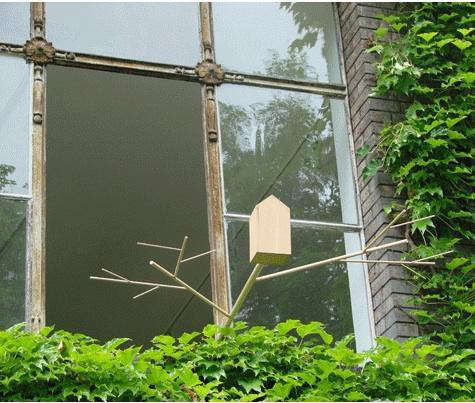

Some outdoor objects shout for attention. Others politely clear their throat, perch on a balcony, and wait for a chickadee to discover them. The Birdhouse by Emilie Cazin at Vlaemsch belongs to the second group, though it is hardly shy. Designed for urban living, it takes a humble birdhouse and turns it into a tiny architectural statement: part nesting box, part balcony sculpture, part gentle joke about city life and all those satellite dishes staring into the sky like confused metal sunflowers.
This is not the rustic birdhouse your uncle nailed together after one optimistic trip to the hardware store. Cazin’s Birdhouse is a modern outdoor design object created with apartment dwellers in mind. It speaks to people who do not have sprawling gardens, old apple trees, or a private meadow full of bluebirds waiting for a lease agreement. Instead, it offers a smarter idea: even a balcony can become a small wildlife lookout, a place where design, nature, and daily life meet over coffee.
A Birdhouse Made for the Balcony Generation
The genius of Emilie Cazin’s design is that it understands a modern problem: many people love nature, but they live several floors above it. City apartments often repeat the same visual patternwindow, wall, balcony, railing, repeat until the building starts to look like a spreadsheet with rent. Cazin’s Birdhouse interrupts that sameness. It gives the balcony personality and purpose.
The form has often been described as echoing urban equipment, especially the satellite dish or antenna. That comparison matters. Instead of pretending the city is a cottage garden, the Birdhouse accepts the city for what it is: dense, vertical, a little noisy, and full of strange objects bolted to buildings. Then it adds one more objectbut this one is for birds, not cable packages.
In a funny way, the Birdhouse feels like a diplomatic mission between humans and urban wildlife. It says, “Hello, birds. We know we built a lot of concrete. Here is a small apology with a roof.”
Who Is Emilie Cazin?
Emilie Cazin is a French designer whose work crosses product design, scenography, and thoughtful environmental ideas. Her portfolio shows an interest in objects that do more than sit prettily on a shelf. They create relationships: between a person and a room, a visitor and an exhibition, or in this case, a balcony and the birds outside.
The Birdhouse was edited by Vlaemsch and appeared in design contexts including Maison&Objet, one of the best-known international design and lifestyle fairs. That background helps explain why the piece feels more refined than a standard garden accessory. It was not simply made to fill a retail category. It was made to ask a design question: what if outdoor living is not limited to people with lawns?
Why Vlaemsch Was the Right Fit
Vlaemsch was associated with contemporary Belgian and Flemish design culture, a world known for mixing practicality with dry wit. That is exactly the territory this Birdhouse occupies. It is functional, but not boring. Minimal, but not cold. Playful, but not childish.
At Vlaemsch, the Birdhouse sat comfortably among objects that treated domestic life as something worth rethinking. A birdhouse is usually considered a country item, the kind of thing you imagine hanging from an oak tree. Cazin’s version moves it into the city and gives it a new visual language. It is an outdoor accessory for people whose “yard” may be three feet deep and legally described as a balcony.
Design Analysis: Small Object, Big Idea
1. It Turns the Balcony Into a Habitat
The first lesson from the Birdhouse is that outdoor design does not need much space to matter. A balcony, terrace, fire escape garden, or narrow patio can become part of a larger ecological network. Add a nesting structure, a pot of native plants, and a shallow water source, and suddenly the balcony is not just where you keep a folding chair and one heroic basil plant. It becomes a tiny living station.
2. It Makes Birdwatching Personal
Birdwatching can sound like a hobby requiring binoculars, boots, and the emotional patience of a saint. But urban birdwatching often starts with one simple moment: a bird lands nearby, and you stop scrolling for ten seconds. Cazin’s Birdhouse invites that pause. It brings the possibility of nesting and observation close to the window, turning everyday domestic life into a small nature documentaryminus the dramatic orchestra.
3. It Respects the Urban Landscape
Many outdoor products try to import countryside nostalgia into the city. This design does something smarter. It borrows from the language of urban infrastructure. Its dish-like reference makes it feel at home among railings, antennas, façades, and apartment blocks. Rather than hiding city life, it converts it into a design advantage.
Modern Birdhouse Design Is Not Just Decoration
A beautiful birdhouse can absolutely improve a balcony or garden, but style should never be the only goal. Birds are not tiny interior design clients. They do not care whether the silhouette is magazine-worthy, although one likes to imagine a wren saying, “The proportions are strong, but I would have preferred walnut.”
Good birdhouse design must consider safety, ventilation, drainage, mounting, entrance size, and species suitability. Many cavity-nesting birds, such as wrens, chickadees, bluebirds, and some swallows, may use nest boxes when the size and location match their needs. Other birds, such as cardinals and hummingbirds, generally do not use traditional enclosed birdhouses because they prefer different nesting conditions.
That is where the Birdhouse by Emilie Cazin becomes especially interesting. It is both a design object and a conversation starter. It encourages homeowners and apartment dwellers to think beyond decoration. A birdhouse should look good, yesbut it should also function responsibly.
How to Use a Design Birdhouse Responsibly
Choose the Right Location
Placement is everything. A birdhouse should be mounted securely, away from heavy foot traffic, and positioned where birds feel safe. On a balcony, that may mean attaching it to a stable wall or railing rather than leaving it somewhere it can wobble in the wind like a nervous intern.
Avoid Direct Overheating
Urban balconies can become surprisingly hot, especially on south- or west-facing sides. A birdhouse in direct afternoon sun may overheat. Partial shade is often a better choice, particularly in warmer regions. If the balcony feels like a pizza oven at 3 p.m., it is probably not a luxury nesting address.
Think About Predators
Predator protection matters. Cats, raccoons, squirrels, and larger birds may investigate nest boxes. Avoid placing a birdhouse where predators can easily reach the entrance. Decorative perches may look cute, but they are often unnecessary and can make it easier for predators or aggressive birds to bother nesting birds.
Keep It Clean
Responsible birdhouse ownership includes seasonal cleaning. After nesting season, old nesting material should usually be removed, and the box should be checked for damage. A clean, dry, well-maintained birdhouse is far more useful than a neglected one that has become a tiny haunted attic.
Styling the Birdhouse in an Outdoor Space
The Birdhouse by Emilie Cazin works best when treated as part of a larger outdoor composition. On a balcony, pair it with matte planters, climbing vines, or grasses that soften the edges of concrete and metal. On a patio, place it near shrubs or container plants that offer birds cover and insects. In a small urban courtyard, it can become a focal point that feels sculptural without screaming, “Look at me, I went to design school.”
For a modern look, keep surrounding materials simple: wood, galvanized metal, terracotta, stone, or neutral ceramic. The Birdhouse already carries a strong concept, so it does not need a circus of accessories around it. Let the object breathe. Birds appreciate calm, and frankly, so do most humans with email inboxes.
Bird-Friendly Outdoor Living Starts With Plants
A birdhouse is only one piece of the puzzle. To attract birds, the surrounding environment should offer food, water, and shelter. Native plants are especially valuable because they support native insects, berries, seeds, and seasonal habitat. A balcony with native grasses, flowering perennials, and shrubs in containers can become far more inviting than a bare platform with one plastic chair and the emotional energy of a parking garage.
Even small changes help. Add a shallow birdbath. Grow nectar-rich flowers. Avoid pesticides. Keep cats indoors. Use window treatments or decals where collisions are a risk. These decisions turn outdoor design into environmental design. The result is not just a prettier balconyit is a more generous one.
Why This Birdhouse Still Feels Relevant
Although the Birdhouse by Emilie Cazin emerged years ago, its idea feels more current than ever. Cities are denser. Apartments are smaller. Outdoor access is precious. People want homes that feel connected to nature, even when the nearest “forest” is a street tree bravely surviving next to a bus stop.
The Birdhouse captures that desire beautifully. It does not require a large yard or a countryside address. It suggests that nature can be invited back in modest ways. A balcony can become a perch. A railing can become a threshold. A design object can become a daily reminder that outdoor living is not measured only in square footage.
Experience Notes: Living With a Birdhouse Outdoors
Spending time with a birdhouse changes the way you look at outdoor space. At first, you may think of it as an accessory, something to make the balcony or garden look more finished. Then one morning, you notice movement near the entrance. A small bird pauses, tilts its head, and studies the opening with the seriousness of a home inspector holding a clipboard. Suddenly, the birdhouse is no longer décor. It is a possibility.
The best experience comes from patience. Birds rarely move in just because a human has decided the house is charming. They inspect, ignore, return, disappear, and sometimes choose the least impressive corner of the property instead. This is humbling. You may have selected a designer birdhouse with excellent taste, but the birds are still the final approval committee.
One practical lesson is to avoid over-managing the setup. Do not stuff the birdhouse with nesting material. Do not keep tapping on it to “check progress.” Do not stand beside it whispering encouragement like a sports coach. Birds prefer privacy. Offer the right conditions, then step back.
A second lesson is that the surrounding habitat matters more than the object alone. A balcony with a birdhouse but no plants feels exposed. Add container shrubs, native flowers, or even tall grasses, and the space becomes more comfortable for both birds and people. The change is emotional as much as visual. Greenery softens the hard edges of urban life. It makes morning coffee feel less like a caffeine transaction and more like a ritual.
There is also a surprisingly strong design benefit. A well-placed birdhouse creates a focal point at eye level. It draws attention upward and outward, which is especially useful in small spaces. On a compact balcony, where every object has to earn its keep, the birdhouse brings charm without taking up floor space. That alone deserves applause from anyone who has ever tried to fit two chairs, a planter, and a laundry rack into six square feet.
The most memorable part, however, is the sound. Even if birds never nest in the box, a bird-friendly balcony often attracts visits. A flutter, a chirp, a quick landing on the railingthese tiny events make the space feel alive. They interrupt the routine in the best way. You look up from your phone. You notice the weather. You realize the outdoor world has been doing interesting things all along without asking for a meeting invite.
That is the real charm of the Birdhouse by Emilie Cazin at Vlaemsch. It is not merely about giving birds a place to nest. It is about changing the relationship between apartment life and nature. It makes the outdoors feel closer, even in the city. It reminds us that good design can be witty, useful, and quietly generous. And if a bird eventually moves in? Congratulations. You have tenants. They will not pay rent, but they may sing.
Conclusion
The Birdhouse by Emilie Cazin at Vlaemsch is a clever example of modern outdoor design because it solves a real problem with humor and elegance. It recognizes that not everyone has a garden, yet almost everyone can create a small connection to nature. With its urban-inspired form and balcony-friendly concept, the Birdhouse turns a simple nesting box into a poetic object for contemporary living.
For homeowners, renters, design lovers, and casual birdwatchers, its message is refreshingly clear: outdoor living does not have to be grand to be meaningful. Sometimes it begins with one well-designed object, a few plants, a quiet morning, and a bird deciding your balcony might just be the neighborhood’s next hot address.