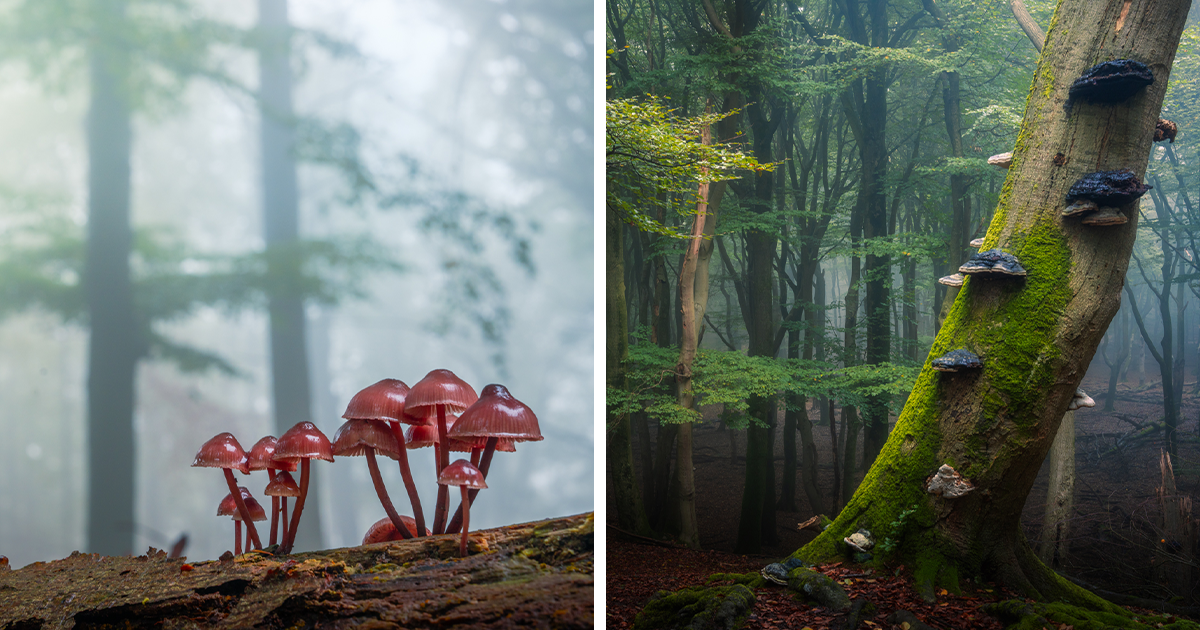
My 12 Photos Of Mushrooms Showing The Magical World Of The Forest That Lies Around Them

Some people go into the forest looking for grand views: waterfalls, mountain ridges, dramatic sunsets, the kind of scenery that makes your camera roll feel like it deserves its own agent. I went looking down. That is where the tiny miracles were hiding.
This collection, “My 12 Photos Of Mushrooms Showing The Magical World Of The Forest That Lies Around Them,” is a visual love letter to the small, strange, and quietly hardworking fungi that turn a walk through the woods into a treasure hunt. Mushrooms appear like little forest lanterns, umbrellas for beetles, buttons on fallen logs, or suspiciously elegant pastries nobody should eat without expert confirmation. They are beautiful, yes, but they are also ecological powerhouses.
Behind every mushroom photo is a larger story: the damp smell of leaf litter, the hush under old trees, the moss that looks like velvet, the logs slowly returning to soil, and the hidden fungal networks that help forests breathe, feed, and renew themselves. Mushrooms are not just decorations sprinkled across the forest floor. They are evidence of an underground world doing serious work while looking adorable in a beret.
Why Mushroom Photography Feels Like Finding a Secret Door
Photographing mushrooms changes the way you move through the woods. You slow down. You stop stepping over “nothing.” You notice the curl of a leaf, the bead of water on a cap, the tiny insect using a mushroom stem as a climbing wall. The forest becomes less like a landscape and more like a neighborhood.
That is the magic of mushroom photography: it rewards patience. A mushroom does not shout for attention. It waits under a fern, behind a stump, beside a root, or in the shadow of a fallen branch. When you finally see it, the moment feels like the forest let you in on a private joke.
In these 12 mushroom photos, the goal is not simply to show fungi as pretty subjects. It is to show the world around them: the textures, colors, moisture, decay, new growth, and miniature drama that make forest fungi so fascinating. A mushroom is often the visible fruiting body of a much larger organism, with threadlike mycelium spreading through soil, wood, or leaf litter. In other words, the mushroom is the “hello” above ground; the real conversation is happening below.
The Hidden Forest Work Behind Every Beautiful Mushroom
Fungi may look delicate, but they are not forest freeloaders. Many are decomposers, breaking down fallen leaves, dead wood, pine needles, and other organic matter. Without fungi, forests would be buried under their own leftovers. Saprobic fungi help recycle nutrients back into the soil, supporting microbes, insects, plants, and future trees. That means the pretty mushroom on a rotting log is not just posing for the camera. It is helping run the forest’s recycling department, and frankly, doing it with more style than most municipal services.
Other fungi form partnerships with plant roots. These are called mycorrhizal fungi, and they help many plants absorb water and nutrients such as nitrogen and phosphorus. In exchange, plants provide fungi with carbon-rich sugars made through photosynthesis. It is one of nature’s great trade deals: trees get a better underground supply chain, fungi get snacks, and the forest gets resilience.
Some fungi are parasitic, some are mutualistic, and some are decomposers. Some grow on living trees, others on dead logs, and others directly from soil. This variety is one reason mushroom photos can feel so different from one frame to the next. One mushroom may look like a polished orange shelf. Another may resemble a tiny white parasol. Another may burst from moss like a fantasy cottage chimney. The forest does not repeat itself; it improvises.
Photo 1: The Tiny Umbrella in the Moss
The first photo in this imagined series captures a small mushroom rising from a cushion of moss. Its cap is pale, almost translucent, with a stem so thin it looks like it was drawn with a single brushstroke. Around it, the moss glows green and soft, like the forest decided to install carpet.
This kind of image works because of scale. By getting low, the mushroom becomes architectural. It is no longer a small object; it is a tower in a miniature city. The background blurs, the moss becomes a landscape, and suddenly the viewer feels the way an ant might feel on a very fancy vacation.
Photo 2: The Log That Became a Gallery Wall
Dead wood is one of the best places to find mushrooms. A fallen log may look finished to us, but to fungi, insects, and microbes, it is just getting interesting. In the second photo, clusters of small shelf fungi line the side of a decaying log, creating repeating patterns like natural tiles.
The beauty here comes from rhythm. The fungi overlap in rows, each one slightly different, each one shaped by moisture, age, and the texture of the wood. It is a reminder that decomposition is not ugly. In the forest, decay is design.
Photo 3: A Mushroom Wearing Last Night’s Rain
Rain is a mushroom photographer’s best assistant, though it rarely accepts calendar invitations. After a wet night, mushroom caps hold droplets that catch the light. In this photo, a brown mushroom cap shines with tiny beads of water, while the forest floor around it is dark, rich, and full of fallen leaves.
Moisture is part of the mood. Mushrooms often appear after rain because fungal fruiting bodies respond to humidity and environmental conditions. For photographers, this means the best mushroom walks often happen when everyone else is waiting for “better weather.” Bring waterproof shoes and a willingness to look slightly ridiculous crouching in mud. The mushrooms will not judge you.
Photo 4: The Orange Surprise Under the Leaves
Few things wake up a forest floor like orange mushrooms. They can appear beneath brown leaves like sparks from a hidden campfire. In the fourth photo, a bright orange cluster peeks through leaf litter, surrounded by muted tones of bark, soil, and shadow.
Color contrast is the hero here. The forest in autumn and early winter often gives photographers a palette of browns, grays, greens, and golds. A vivid mushroom cuts through that calm like a tiny exclamation point. It says, “Yes, the forest is peaceful, but also I brought drama.”
Photo 5: The Fairy Ring Feeling
Some mushrooms grow in arcs or circles, sometimes called fairy rings. Scientifically, these patterns can form as the fungal organism expands outward underground and produces fruiting bodies around the active edge. Artistically, they look like the forest is about to host a tiny secret meeting.
In this fifth photo, several mushrooms curve through grass and leaf litter. The composition leads the eye from one cap to the next, creating movement. A good mushroom photo does not always need one perfect subject. Sometimes the magic is in the pattern.
Photo 6: The Mushroom and the Beetle
Mushrooms are not alone in their little worlds. Insects visit them, climb them, nibble on them, hide beneath them, and occasionally photobomb them with absolute confidence. The sixth photo shows a beetle on the edge of a mushroom cap, turning a quiet scene into a tiny wildlife encounter.
This is where forest macro photography becomes storytelling. The mushroom is the stage, the beetle is the actor, and the leaf litter is the set design. Nothing needs to be arranged. In fact, the best rule is usually: do not rearrange anything. Nature has already hired an excellent art director.
Photo 7: The Ghostly White Mushroom in Deep Shade
White mushrooms can be visually stunning, especially in deep shade. In the seventh photo, a pale mushroom rises from a dark background, almost glowing. The contrast gives the image a mysterious, moonlit feeling even if it was taken at two in the afternoon while mosquitoes were treating the photographer like a buffet.
White mushrooms also offer a useful reminder: beauty is not the same as safety. Some edible mushrooms have toxic look-alikes, and some poisonous mushrooms look harmless. Folklore is not a reliable identification tool. If you are photographing mushrooms, enjoy them with your eyes and camera. If you are foraging, learn from qualified experts, consult regional field guides, and never eat a wild mushroom unless it has been positively identified as edible.
Photo 8: The Shelf Fungus Staircase
Shelf fungi growing on trees and logs can look like staircases for forest sprites with excellent balance. In this eighth image, bracket fungi climb the side of a trunk, their edges forming layers of cream, brown, and gray.
These fungi are often associated with wood decay. They help break down tough materials in wood, returning nutrients to the ecosystem. From a photographer’s point of view, they offer texture and structure. From the forest’s point of view, they are part of the long process that turns fallen trees into soil, habitat, and new life.
Photo 9: The Mushroom Hiding in Plain Sight
Not every mushroom is colorful. Some blend perfectly with bark, soil, or leaves. The ninth photo is about camouflage: a small brown mushroom nearly invisible until the angle of light reveals its cap.
This kind of image teaches a valuable lesson: the forest is not empty just because nothing immediately jumps out. When you slow down, what seemed like a plain patch of ground becomes layered with organisms, textures, and relationships. Mushroom photography is part art, part science, and part “wait, has that been there the whole time?”
Photo 10: The Cluster That Looks Like a Tiny Village
Clusters of mushrooms are irresistible because they feel social. In the tenth photo, several caps grow close together, leaning at different angles like neighbors discussing weather, taxes, and the suspicious squirrel down the path.
Photographically, clusters allow depth. One mushroom can be sharp in the foreground while others soften into the background. This creates a dreamy, layered effect. It also hints at the larger fungal body beneath or within the substrate, reminding us that what we see above ground is only one chapter of the story.
Photo 11: The Golden Hour Mushroom
Golden hour is not just for portraits of people pretending not to know they are being photographed. It also works beautifully for mushrooms. Low, warm light can illuminate cap edges, reveal gill textures, and turn the forest floor into a glowing stage.
The eleventh photo uses side light to highlight the shape of a mushroom against soft leaves. The effect is cinematic without being forced. When photographing fungi, natural light is often enough. A reflector, a small flashlight, or even a white card can help, but the real trick is patience. Let the light do its slow forest dance.
Photo 12: The Mushroom That Made Me Stop Walking
The final photo is the emotional anchor: the mushroom that stopped the walk. Maybe it was perfectly shaped. Maybe it grew from a mossy stump. Maybe the background opened behind it in a soft blur of green. Maybe it simply appeared at the right moment, when the forest felt quiet enough to listen.
That is the joy of photographing mushrooms. The best image is not always the rarest species or the most colorful cap. Sometimes it is the one that makes you kneel down, breathe slower, and remember that wonder does not need to be enormous. Sometimes wonder is two inches tall and wearing a damp hat.
How to Photograph Mushrooms Without Disturbing the Forest
Get Low and Respect the Subject
Mushrooms are small, so the camera usually needs to meet them at their level. Shooting from above can work for patterns, but side angles often create a more immersive world. Place the lens close to the forest floor, focus on the cap edge or gills, and let the background fade naturally.
Use Natural Light Whenever Possible
Cloudy days are excellent for mushroom photography because soft light reduces harsh shadows. After rain, colors deepen and surfaces shine. If the forest is too dark, a small diffused light can help, but avoid blasting the scene. Mushrooms are magical, not suspects in an interrogation room.
Leave the Mushroom Where It Is
The best nature photography respects the living scene. Avoid pulling mushrooms, scraping away too much leaf litter, or damaging moss and nearby plants. Take the picture, admire the details, and let the forest keep its tiny masterpiece.
Do Not Use Photos Alone for Edible Identification
Photography and foraging are different activities. A beautiful photo may not show key identification details such as spore print color, bruising reactions, habitat, gill attachment, scent, or microscopic traits. Apps and online communities can be helpful learning tools, but they should not replace expert confirmation when food safety is involved.
The Magical World Around Mushrooms
The phrase “mushroom photo” sounds simple, but mushrooms are rarely alone in the frame. They are surrounded by mosses, lichens, roots, beetles, fallen leaves, needles, bark, water droplets, and soil. Each element adds context. Together, they show a forest in motion.
A mushroom growing from a log tells us that wood is being transformed. A mushroom beside tree roots hints at underground exchange. A mushroom in moss suggests moisture and shade. A cluster after rain tells us something about timing, season, and habitat. The photograph becomes more than a portrait. It becomes a small ecological clue.
This is why forest fungi photography has such emotional pull. It combines beauty with mystery. We can see the mushroom, but we cannot see the full mycelial network. We can admire the cap, but we know it represents something larger, older, and mostly hidden. The image invites curiosity, and curiosity is the best hiking companion after snacks.
Why Mushrooms Make Forests Feel Alive
Forests can feel still, especially on quiet mornings, but mushrooms reveal constant change. Leaves fall. Wood softens. Roots trade resources. Insects feed. Soil forms. New plants rise from old matter. Mushrooms make that invisible work visible for a brief moment.
Many fruiting bodies last only days, sometimes less. That temporary quality gives mushroom photography urgency. A flower may bloom in a garden you pass every day, but a mushroom might appear overnight and vanish before the weekend. Capturing it feels like receiving a short message from the forest: “I was here. Were you paying attention?”
Personal Experiences: What These 12 Mushroom Photos Taught Me
The first thing I learned while photographing mushrooms is that walking slowly is harder than it sounds. Most of us enter the forest with destination energy. We want the overlook, the lake, the big tree, the sign that says we completed the trail and therefore deserve a sandwich. Mushrooms ask for a different pace. They ask you to wander like you misplaced something important, which in my case is often true.
On one walk, I nearly missed a perfect cluster of tiny mushrooms because I was busy looking for a larger subject. They were growing at the base of a stump, no taller than a paperclip, surrounded by moss and pine needles. When I crouched down, the whole scene changed. The stump became a cliff. The moss became a forest within the forest. The mushrooms looked like a village built by extremely introverted architects.
Another time, I found a single mushroom after a night of rain. It was plain brown at first glance, the sort of mushroom most people would pass without a second thought. But the cap held three perfect droplets of water, each reflecting a tiny upside-down version of the trees above. That photograph reminded me that “ordinary” is often just a word we use before we pay attention.
There were also comic failures. I have slipped in mud while trying to frame a mushroom. I have taken 40 photos of what turned out to be a very photogenic acorn cap. I have whispered “wow” at fungi only to realize another hiker was standing nearby, probably wondering whether the forest had claimed me emotionally. It had, but politely.
The most meaningful part of the experience was learning to see the surroundings, not just the subject. Early on, I tried to isolate every mushroom like a studio portrait. Over time, I began to include the curled leaves, broken twigs, moss, bark, and insects. The photos became better because they felt more honest. A mushroom belongs to its place. Remove the context, and you lose half the magic.
I also learned that mushroom photography is a good antidote to rushing. You cannot bully the forest into revealing its details. You have to earn them with patience. Some days I found bright caps everywhere. Other days I found almost nothing, except a nice patch of moss and a mosquito with impressive ambition. Even then, the walk was never wasted. The search itself made me more observant.
These 12 mushroom photos are not just about fungi. They are about attention. They are about kneeling in wet leaves, laughing at your own muddy shoes, noticing the way light touches a cap, and realizing that the forest is full of small worlds operating without applause. Mushrooms make excellent teachers because they do not perform. They simply appear, do their work, and disappear back into the cycle.
That is why I keep photographing them. Each mushroom feels like a tiny invitation to look closer. And every time I accept, the forest gets bigger.
Conclusion: The Forest Is Full of Small Magic
“My 12 Photos Of Mushrooms Showing The Magical World Of The Forest That Lies Around Them” is more than a photo collection. It is a reminder that nature’s most enchanting scenes are not always sweeping or loud. Sometimes they are hidden under leaves, growing from old wood, shining after rain, or standing quietly in moss.
Mushrooms help forests recycle nutrients, support plant life, create habitat, and reveal the beauty of decay and renewal. For photographers, they offer endless opportunities for creative composition, macro detail, and storytelling. For walkers, they offer something even better: a reason to slow down.
The next time you enter the woods, look down. The forest may be holding a tiny umbrella, a golden shelf, a ghostly cap, or a whole miniature village at your feet. Just remember to step carefully. Magic, as it turns out, is sometimes very small.
Note: This article is written for publication as original SEO content and synthesizes real information from reputable U.S. nature, forestry, botanical, university extension, and citizen-science resources. Always consult qualified local experts before identifying or consuming wild mushrooms.