
Elevators are wonderful on an ordinary Tuesday. You press a button, stand quietly with strangers, pretend not to read the inspection certificate, and arrive at your floor without climbing 19 flights of stairs. But during a fire emergency, that friendly metal box becomes a serious piece of life-safety equipment. That is where elevator fire service mode enters the story.
Fire service mode, also called firefighters’ emergency operation or elevator fire recall, is designed to remove elevators from normal public use and give trained emergency responders controlled access during an incident. It is not a secret “express mode,” not a shortcut for building staff in a hurry, and definitely not something curious occupants should try because the panel looks interesting. In a fire, curiosity should take the stairs.
This guide explains how fire service mode works, what Phase I and Phase II mean, who should operate it, what safety checks matter, and why every building team should treat elevator emergency operation as a training topic rather than a mystery switch behind a little red door.
What Is Elevator Fire Service Mode?
Fire service mode is a special elevator operating condition used during fire alarms, smoke detector activation, or emergency response. Its main purpose is simple: keep the public from using elevators when conditions may be unsafe and allow firefighters to control selected cars when they need to move equipment, personnel, or rescue occupants.
Most modern systems divide firefighters’ emergency operation into two major parts:
Phase I: Emergency Recall Operation
Phase I elevator recall removes the elevator from normal service. When activated, the elevator returns to a designated recall floor, often the main lobby or another approved level of exit discharge. If smoke or fire conditions are detected near the main recall floor, the elevator may be sent to an alternate recall floor instead. The goal is to prevent occupants from being delivered into danger and to make the car available for emergency responders.
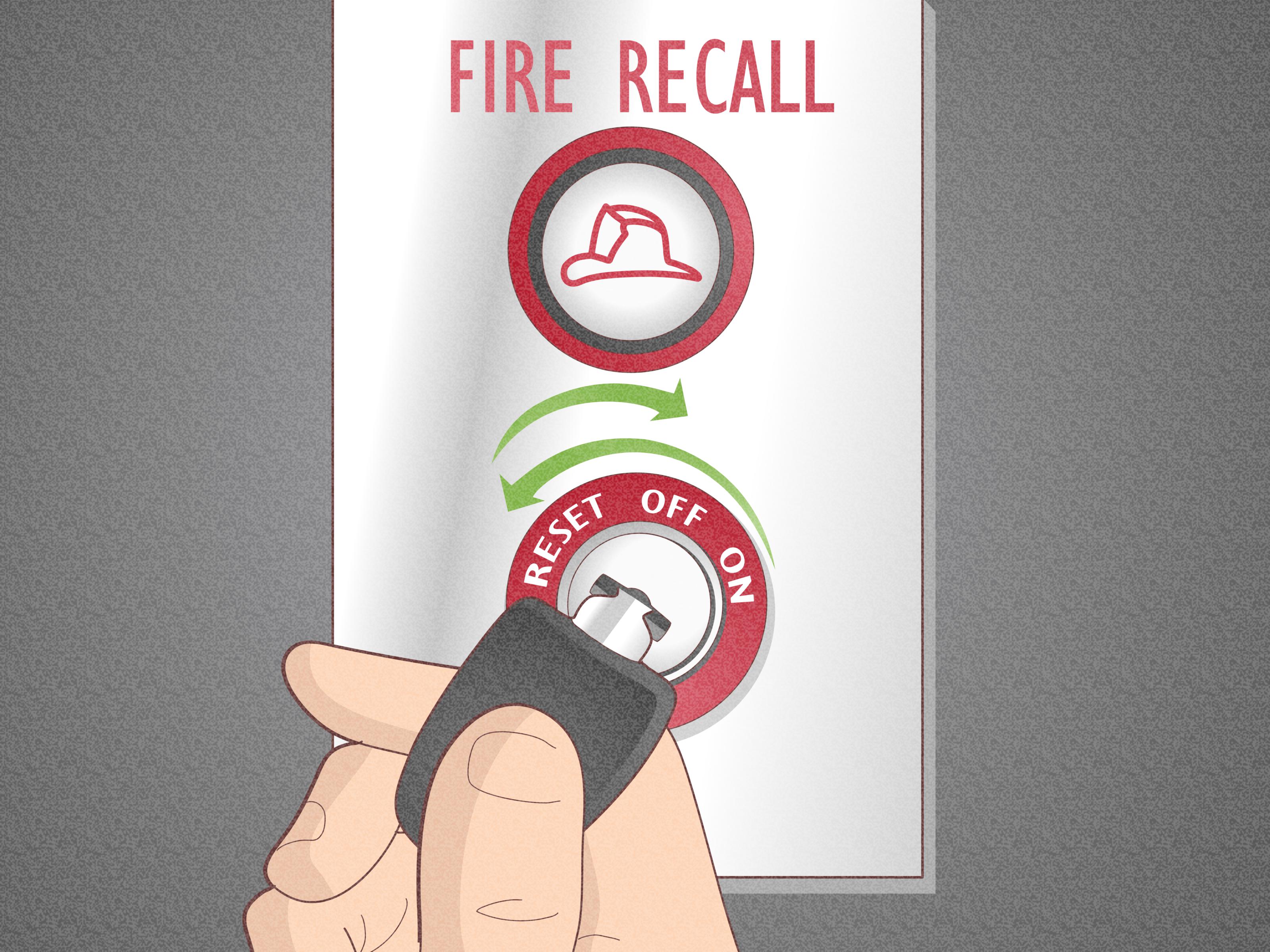
Phase I can be activated automatically by fire alarm initiating devices, such as smoke detectors in elevator lobbies, hoistways, or machine rooms, depending on the system design. It can also be activated manually by authorized fire department personnel using the approved fire service key switch. Once Phase I is active, regular hall calls are canceled or ignored. Translation: the elevator stops acting like a polite public taxi and starts acting like emergency equipment.
Phase II: Emergency In-Car Operation
Phase II elevator operation is the manual mode used by firefighters from inside the elevator car. After Phase I recall has occurred and the car is at the recall level, trained responders may place an individual elevator into Phase II. In this mode, the car does not operate like a normal passenger elevator. It responds only to firefighter controls inside the cab, and door movement often requires constant pressure on the appropriate control.
Phase II is meant for emergency personnel only. The operator must understand the building, the alarm condition, the elevator’s indicators, departmental procedures, and the risks of using a hoistway during a fire. It is not “push button, go upstairs, hope for the best.” Hope is not a standard operating procedure.
Who Is Allowed to Operate Fire Service Mode?
Fire service mode should be operated only by trained, authorized personnel. That usually means firefighters and, in limited non-emergency testing situations, qualified elevator technicians, approved inspectors, or designated building personnel working under local rules. Codes, local ordinances, manufacturer instructions, and the authority having jurisdiction determine exact responsibilities.
For building occupants, the rule is much simpler: do not use elevators during a fire unless directed by emergency personnel or a building system specifically designed for occupant evacuation. Use the stairs, close doors behind you, and follow the building’s emergency plan. The elevator may be recalled, disabled, reserved for firefighters, or affected by smoke, heat, water, or power issues.
Why Elevators Need Fire Service Operation
Fire changes the elevator environment. Smoke can enter hoistways. Water from sprinklers or hoses can affect equipment. Power may fluctuate. People may press buttons in panic. Without fire service controls, an elevator could stop at the wrong floor, open into smoke, or trap occupants between levels.
Fire service mode solves several problems at once:
- It recalls elevator cars to a safer landing.
- It removes elevators from normal public use.
- It gives firefighters controlled access to selected cars.
- It prevents random hall calls from interrupting emergency operations.
- It supports high-rise firefighting when stairs alone may be impractical.
In tall buildings, elevators can save responders valuable time and energy. Carrying hose packs, tools, air cylinders, medical gear, and rescue equipment up dozens of floors is not exactly a relaxing cardio class. However, using elevators during fire operations requires discipline, communication, and constant evaluation of conditions.
How Fire Service Mode Works in Practice
The exact procedure varies by building, elevator model, local code adoption, and fire department standard operating guidelines. The following overview explains the general concept, not a substitute for hands-on training or manufacturer-specific instructions.
1. Confirm the Emergency and Establish Control
Before anyone relies on an elevator, the incident commander or assigned personnel must evaluate the alarm information, reported fire floor, building layout, smoke conditions, and available stairwells. In many high-rise responses, a lobby control function is established to manage elevators, building systems, keys, stair access, and communication with crews.
The first question is not “Can the elevator move?” The better question is, “Should this elevator be used at all?” If the hoistway, machine room, elevator lobby, or related equipment may be compromised by smoke, heat, or water, the safest elevator is often the one nobody rides.
2. Activate or Verify Phase I Recall
During Phase I, the elevator is recalled to the designated level or alternate recall level. Firefighters verify that cars have arrived, doors have opened, passengers have exited, and the cars are no longer serving public hall calls. This is the point where the elevator stops being a building convenience and becomes part of the emergency scene.
In many buildings, Phase I may already be active when firefighters arrive because the fire alarm system initiated recall automatically. If not, authorized personnel may manually activate recall according to local procedures. Either way, the goal is to capture the elevator system safely before anyone considers in-car operation.
3. Check Indicators, Conditions, and Communications
Before using an elevator in Phase II, crews should check visible indicators, alarm information, smoke conditions, and communications. A flashing firefighter helmet symbol or other warning indicator may signal that a detector associated with the elevator equipment area has activated. That does not automatically answer every tactical question, but it raises a large red flagone that should not be treated like decorative lighting.
Teams should also confirm radio communication, building communication systems, stair locations, standpipe access, and the planned exit floor. If communication is unreliable, using the elevator becomes riskier. Elevators are useful, but they are not magic capsules immune to the fire building around them.
4. Place the Car in Phase II Only When Appropriate
Once the elevator has recalled and conditions support use, trained firefighters may place a selected car into Phase II from inside the cab. In Phase II, the operator controls car movement manually. The elevator should not respond to public calls, and door controls may require continuous pressure. This prevents doors from automatically opening or closing at unsafe times.
The firefighter operating the car should remain focused on the panel, the indicators, radio traffic, and crew movement. It is not the moment to discuss lunch, check a phone, or admire the elevator’s brushed stainless steel interior. A cab in Phase II is a tactical work area.
5. Avoid Taking the Elevator Directly to the Fire Floor
A common fire service practice is to stop below the reported fire floor rather than riding directly into the hazard area. Many departments teach crews to exit at least two floors below the fire floor, depending on conditions and local procedures. This allows firefighters to approach by stairs, check conditions, connect to standpipes, and avoid the nightmare scenario of elevator doors opening directly into smoke, heat, or fire.
The “two floors below” idea is not a universal magic number. The incident commander, building conditions, fire location, and department policy matter. The main principle is universal: do not let the elevator deliver crews into a hazard they have not evaluated.
6. Maintain Control Until Operations End
Once a car is being used for fire operations, someone must remain responsible for it. Elevator control should not become a game of “who had the key last?” Crews need clear communication about which car is being used, where it is positioned, who is operating it, and whether conditions have changed.
When the elevator is no longer needed, authorized personnel return it according to departmental procedures, building requirements, and instructions from the incident commander. Restoration to normal service should be coordinated with fire alarm reset, elevator inspection if needed, and confirmation that the system is safe for public use.
Important Safety Rules for Elevator Fire Service Mode
Never Operate Without Training
Fire service mode is not a “learn as you go” feature. Building managers should not assume that a quick glance at the panel is enough. Firefighters, engineers, inspectors, and elevator contractors all need proper training for their roles. The elevator panel may look simple, but the conditions around it may be anything but simple.
Never Use an Elevator When the Hoistway May Be Compromised
Smoke, heat, water, electrical faults, or activated equipment-area detectors can make elevator use dangerous. If there is evidence that the hoistway or machine space is affected, responders must reassess. A working elevator can become an unsafe elevator quickly.
Never Allow Civilians to Ride During Fire Operations
Once fire service mode is active, the elevator is not available for ordinary passenger service. Occupants should be directed to stairs unless emergency personnel decide otherwise or the building has a specifically designed occupant evacuation elevator system. “But I only need to go down three floors” is not a fire strategy.
Never Bypass Local Procedures
Elevator codes and fire procedures vary by jurisdiction. Local fire departments may have detailed rules for when elevators can be used, who controls them, where crews should exit, and how cars are tested during ascent. The local authority having jurisdiction has the final say.
Fire Service Mode vs. Occupant Evacuation Elevators
Fire service elevators and occupant evacuation elevators are related but not identical. Standard fire service mode is mainly designed to recall elevators and give firefighters control. Occupant evacuation elevator systems, where permitted and designed under strict code requirements, are intended to help evacuate occupants under managed conditions.
Most people should assume that ordinary elevators are off-limits during a fire. If a building has an occupant evacuation system, it should provide clear signage, voice instructions, protected lobbies, emergency power, and coordinated fire alarm controls. Without those features and official instructions, the stairwell is still the star of the show.
Common Mistakes Building Teams Make
Assuming the Fire Department Knows Every Building
Firefighters train hard, but they do not memorize every elevator panel, recall floor, machine room, lobby layout, and key box location in every building. Good pre-incident planning helps. Building teams should provide accurate diagrams, access information, elevator bank identification, and emergency contacts.
Ignoring Testing and Maintenance
Fire service operation should be inspected and tested as required by code, local rules, and maintenance programs. A feature that fails only when needed is not a feature; it is a future incident report wearing a little red hat.
Letting Keys Become a Treasure Hunt
Authorized emergency keys must be controlled, available to responders, and managed according to local law. During an emergency, nobody should be searching through a desk drawer labeled “miscellaneous stuff from 2016.” Key control is boring until it becomes critical, which is basically the motto of building safety.
Forgetting About Alternate Recall
If the fire condition affects the main recall floor, elevators may go to an alternate floor. Building personnel should understand this possibility so they do not assume the system failed simply because the cars did not appear where expected.
Best Practices for Building Owners and Facility Managers
Building owners and facility managers may not operate elevators in emergency fire service mode during an incident, but they play a major role before the alarm ever sounds. Preparation makes emergency operation safer and faster.
- Keep elevator inspection and testing records current.
- Coordinate with licensed elevator contractors.
- Invite the local fire department for familiarization visits when appropriate.
- Label elevator banks clearly.
- Maintain fire alarm devices connected to elevator recall.
- Keep fire command centers, key boxes, and access routes unobstructed.
- Train staff on what not to do during a fire.
The best building teams do not treat fire service mode as a once-a-year checkbox. They treat it as part of a larger life-safety ecosystem that includes alarms, sprinklers, stairwells, smoke control, emergency power, signage, communications, and human behavior.
Best Practices for Firefighters
For firefighters, elevator use should be deliberate and disciplined. Crews should know local procedures, understand the difference between Phase I and Phase II, identify warning indicators, and communicate constantly. They should also train in real buildings when possible, because elevator panels have a funny way of looking less familiar when alarms are sounding and everyone is wearing gear.
Important firefighter considerations include:
- Use elevators only when approved by command and conditions support it.
- Confirm Phase I recall before Phase II operation.
- Check for smoke, heat, water, or warning indicators.
- Maintain radio communication.
- Do not ride directly to the reported fire floor.
- Control the elevator until relieved or operations change.
- Coordinate with lobby control and building personnel.
The elevator can be a powerful tool in high-rise operations, but only when it is used with respect. Treat it casually and it can become a trap. Treat it professionally and it can move crews, tools, and rescue capacity where they are needed most.
Example Scenario: A High-Rise Alarm on the 18th Floor
Imagine a fire alarm reported on the 18th floor of an office tower. The lobby is filling with arriving occupants, the alarm panel indicates smoke detector activation on an upper floor, and the elevators have recalled to the lobby. Firefighters establish command, assign lobby control, check alarm information, and verify that the elevator cars are empty and removed from public use.
Before using an elevator, the crew checks conditions, confirms communications, reviews the planned route, and identifies the stairwell they will use after exiting. Instead of riding straight to the 18th floor, they may take the elevator to a lower floor, then proceed by stairs to investigate and connect to building systems. If smoke is found in the hoistway, warning indicators activate, or communication fails, the plan changes.
This example shows the heart of elevator fire service operation: the elevator supports the strategy, but it does not replace judgment. The safest button is sometimes the one nobody presses.
Experience Notes: What Real-World Fire Service Mode Teaches
Anyone who has spent time around building emergency systems learns one thing quickly: the equipment may be engineered, but the emergency is always human. Elevator fire service mode looks neat on paper. Phase I recalls the car. Phase II gives firefighters manual control. The doors obey the operator. The building behaves. Everyone nods. Then reality walks in wearing smoke, noise, stress, and a radio message that cuts out halfway through.
One practical experience from fire drills and building familiarization visits is that layout matters more than people expect. Two buildings can have similar elevator equipment but feel completely different during an alarm. In one building, the fire command center is obvious, the elevator bank is clearly labeled, and the key box is right where responders expect it. In another, the elevator lobby resembles a design magazine photoshoot, but nobody can quickly explain which bank serves which floors. Pretty stone walls are nice. Clear emergency information is nicer.
Another lesson is that small maintenance issues become big emergency questions. A missing sign, a sticky cabinet door, a burned-out indicator, or an outdated contact list may seem minor during normal business hours. During an incident, those details slow decisions. If firefighters must pause to interpret a confusing panel or locate the correct access point, the building has already spent valuable time it did not need to spend.
Training also changes behavior. When building engineers, security staff, and fire department personnel walk through elevator recall procedures together, everyone becomes calmer during real alarms. Staff understand why occupants must be kept away from elevators. Firefighters understand the building’s elevator zones, alternate recall floor, machine room access, and communication limitations. The elevator contractor can explain equipment-specific features before anyone is breathing through a facepiece. That kind of preparation is not glamorous, but neither is flossing, and both prevent painful problems later.
Fire service mode also teaches humility. A responder may know the general concept perfectly, yet still need to slow down and read the actual panel instructions. Elevators differ by age, manufacturer, modernization history, and local code edition. Older cars may not behave exactly like newer cars. Some buildings have destination dispatch systems, multiple elevator banks, service elevators, freight elevators, or fire service access elevators with additional features. Confidence is useful; overconfidence is a bad passenger.
For facility managers, the biggest experience-based takeaway is to practice the non-heroic tasks. Keep records organized. Make sure emergency phones work. Confirm that signage is visible. Walk stairwells. Check that doors close properly. Review alarm panel messages. Know who to call. Keep elevator service contracts current. The dramatic part of an emergency belongs to responders; the quiet preparation belongs to building management.
For firefighters, the lesson is equally direct: use the elevator only as part of a coordinated plan. Assign control, communicate the destination, monitor conditions, and always maintain an exit strategy. The elevator is a tool, not a promise. It can reduce fatigue and speed access in a high-rise, but it must be paired with stairwell awareness, standpipe planning, crew accountability, and command supervision.
For civilians, the experience note is refreshingly simple: when the fire alarm sounds, do not try to solve the elevator mystery. Do not wait in the lobby pressing the button like it owes you money. Move to the stairs, follow instructions, close doors behind you, and let trained personnel use the systems designed for emergency response.
Conclusion
Operating an elevator in fire service mode is not about memorizing a cool switch sequence. It is about understanding a life-safety system built around control, caution, and coordination. Phase I recall removes elevators from public service and positions them for emergency response. Phase II allows trained firefighters to manually operate selected cars when conditions and command decisions support elevator use.
The safest approach is simple: civilians should avoid elevators during fire emergencies, building teams should maintain and document elevator fire service systems, and firefighters should use elevators only within training, local procedures, and real-time incident conditions. When everyone respects the limits of the system, the elevator becomes what it was meant to be in an emergency: a controlled tool, not a gamble with doors.