
Somewhere in America, at this very moment, a perfectly good wire coat hanger is hanging sadly in a closet, holding up a jacket it never really liked. That hanger could be doing something far more heroic: pulling free over-the-air TV from the sky, helping a ham radio operator test a VHF project, or becoming the wiry backbone of a weekend antenna build. In other words, it could stop being closet hardware and start being radio hardware.
The phrase “Beat your coat hangers into antennas, not plowshares” sounds like something a garage inventor would mutter while holding pliers, coax cable, and a questionable amount of confidence. But behind the joke is a real idea: antennas do not have to be mysterious, expensive, or wrapped in marketing claims about “150-mile crystal-clear miracle reception.” At their core, antennas are shaped pieces of conductive material designed to receive or transmit electromagnetic energy. A coat hanger, being stiff metal wire, is not magicbut it is absolutely usable for experimentation.
This article explains how coat hanger antennas work, what kinds of designs make sense, where they perform well, where they flop like a wet noodle, and how to build smarter without turning your living room into a porcupine. We will look at TV antennas, bow-tie antennas, Yagi antennas, dipoles, practical placement, safety, and the wonderful truth that sometimes the best DIY project begins with something hiding behind your winter coat.
Why Coat Hangers Make Surprisingly Useful Antenna Material
A wire coat hanger is conductive, rigid, cheap, easy to bend, and already shaped like it has been waiting for a second career. That makes it attractive for simple antenna experiments. For receiving signals, especially local over-the-air TV or short-range radio signals, a homemade antenna made from coat hangers can work better than expected when it is sized, aimed, and connected properly.
The key word is “properly.” A random hanger jammed into a TV port is not an antenna design; it is a cry for help. Antennas care about length, shape, spacing, direction, frequency, height, cable loss, and obstructions. The coat hanger is just the metal. The design is what turns scrap wire into a useful signal catcher.
Most modern broadcast TV in the United States uses UHF and VHF bands. UHF channels have shorter wavelengths, which makes them friendlier to compact DIY designs such as bow-tie antennas. VHF signals have longer wavelengths, so a tiny homemade antenna may struggle unless it includes longer elements. This is why some “HD antennas” work beautifully for one household and miserably for another. The antenna is not reading the channel logo; it is responding to the actual RF channel, the transmitter location, and the physics of wavelength.
The Basic Science: Antennas Are Not Decorative Spaghetti
An antenna works because electromagnetic waves interact with conductive elements. When a radio wave reaches the antenna, it induces tiny electrical currents in the metal. Those currents travel through the feedline, usually coaxial cable, into a receiver such as a television tuner, software-defined radio, scanner, or amateur radio receiver.
For a simple dipole antenna, each side is often close to one-quarter wavelength, making the full antenna roughly one-half wavelength at the target frequency. For amateur radio dipoles, a common quick formula is total dipole length in feet equals 468 divided by frequency in MHz. This is an approximation, but it gives builders a practical starting point. For TV reception, the exact calculation can get messy because TV covers a wide range of frequencies, but the principle remains: element length matters.
Bow-tie antennas broaden the usable frequency range by using angled elements instead of a single thin straight wire. That makes them popular for UHF television reception. A Yagi antenna uses a driven element, a reflector, and one or more directors to focus reception in a particular direction. A ground-plane antenna uses a vertical element and radial wires to create a simple omnidirectional pattern. Each design has a personality. The dipole is simple. The bow-tie is forgiving. The Yagi is focused and slightly bossy. The random hanger shoved behind the entertainment center is chaos wearing a wire hat.
Popular Coat Hanger Antenna Designs
1. The DIY Bow-Tie TV Antenna
The classic coat hanger TV antenna is usually a multi-bay bow-tie design. Builders straighten several wire hangers, cut them to equal lengths, bend them into V shapes, and mount them on a wood board with screws and washers. The V-shaped elements are connected in a pattern, then attached to a 300-ohm to 75-ohm matching transformer, also called a balun, which connects to coaxial cable and then to the TV.
This design is popular because it can receive UHF channels well when local signals are strong enough. Adding a reflector behind the bow ties, such as metal mesh or a wire grid, can improve signal pickup from the front and reduce interference from behind. That does not mean it will pull in stations from three states away while making coffee. It means it can be a capable, low-cost antenna when the towers are reasonably nearby and the antenna is aimed correctly.
2. The Coat Hanger Yagi
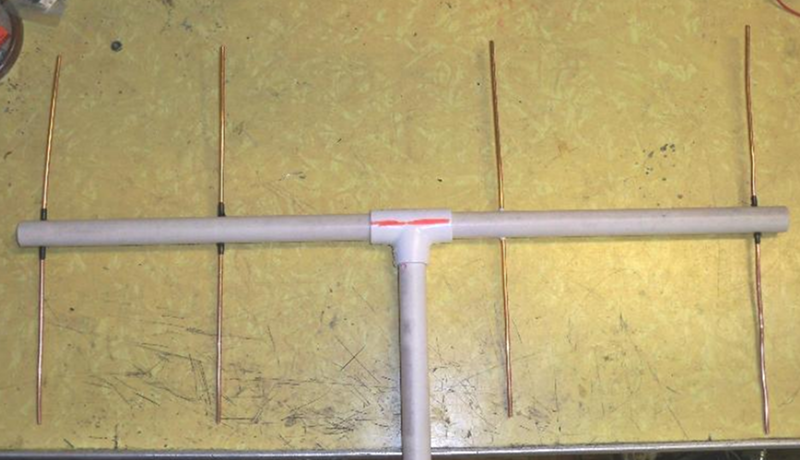
A Yagi antenna made from coat hangers is a more directional project. It typically uses a boomoften wood, PVC, or another nonconductive supportwith metal elements mounted across it. The driven element connects to the feedline, a reflector sits behind it, and directors sit in front. The result is an antenna that favors signals from one direction.
This is useful when your desired transmitter is in a specific direction or when you want to experiment with VHF or UHF radio. The tradeoff is aiming. A high-gain directional antenna is like a flashlight: wonderful when pointed correctly, unimpressed by your feelings when pointed at the wrong wall.
3. The Simple Dipole
A dipole is one of the easiest antennas to understand and build. Two conductive elements extend in opposite directions from the feed point. For receiving FM radio, VHF signals, or certain scanner frequencies, a properly sized dipole can be extremely useful. Coat hangers can serve as stiff dipole arms, although copper wire, brass rod, or aluminum tubing may be easier to solder and may resist corrosion better.
4. The Ground-Plane Antenna
A basic ground-plane antenna can be built with one vertical element and several radial elements sloping downward from the feed point. This style is common in amateur radio and scanner projects. Coat hangers can work as radials or as the vertical element for experimentation. The design is simple, inexpensive, and surprisingly educational because you can see how element length and angle affect performance.
How to Build Smarter: Practical Tips Before You Bend Metal
Before attacking your closet with wire cutters, identify your goal. Are you trying to receive free local TV channels? Listen to weather radio? Build a ham radio antenna for a specific band? Test an SDR receiver? The answer determines the design.
For TV reception, start by checking local tower direction and signal strength using a reliable reception map. Look for the real RF channel, not just the familiar virtual channel displayed on the screen. A station that appears as channel 7.1 may not actually transmit on RF channel 7. The physical RF channel tells you whether you need VHF, UHF, or both.
Next, consider placement. Antennas generally perform better when they are higher, near a window, outdoors, or in an attic with fewer obstructions. Walls, metal roofs, foil-backed insulation, trees, hills, nearby buildings, and household electronics can all reduce or distort signals. Sometimes moving an antenna three feet to the left does more than buying a louder-looking antenna with thunderbolt graphics on the box.
Use coaxial cable carefully. Long cable runs introduce signal loss, especially at UHF frequencies. Splitters also reduce signal strength. If you are testing a homemade antenna, connect it directly to one TV first. Once it works, then think about splitters, amplifiers, distribution systems, and the advanced wizardry of making every room happy.
Amplifiers: Helpful Tool or Tiny Signal Gremlin?
An amplifier can help when the signal is weak but present, especially when the cable run is long or the signal is split among multiple TVs. However, amplification cannot create a signal that the antenna does not receive. It can also overload a tuner if you are close to strong transmitters. In that case, the picture may break up even though you technically have “more signal.” More is not always better. Ask anyone who added too much hot sauce to chili.
For a coat hanger antenna, test without an amplifier first. Aim, raise, rotate, and rescan. If the signal is still marginal but detectable, a modest preamplifier may help. If the TV sees nothing, improve the antenna design or location before blaming the amplifier for not performing miracles.
Rescanning Matters More Than People Think
After connecting or moving an antenna, run a fresh channel scan on the TV. Digital tuners need to map available channels. If local stations change frequencies, add subchannels, or adjust broadcast equipment, a rescan may restore missing channels. This is one of those boring steps that feels optional until it solves the problem in four minutes and makes everyone in the room pretend they believed in it all along.
If reception is inconsistent, scan again after adjusting the antenna position. Keep notes. Record which direction worked, which channels appeared, and whether certain channels vanish at night, during wind, or when someone stands near the antenna like a suspicious human reflector. Antenna testing rewards patience and mildly obsessive note-taking.
Safety First: The Sky Is Full of Signals, Not Second Chances
Never install any antenna near power lines. This rule is not negotiable, not rustic, and not improved by confidence. Metal antennas and overhead electrical lines are a deadly combination. Outdoor antennas should be mounted securely, weatherproofed, and installed according to local building and electrical rules. If grounding is required, do it properly. If the installation involves climbing onto a roof, consider hiring a qualified installer unless you have the right equipment and experience.
For indoor projects, watch for sharp wire ends. Coat hangers can become tiny metal spears after cutting. File the ends, cover them with tape or heat-shrink tubing, and keep the project away from children, pets, and anyone who believes “I’ll just touch it once” is a safety strategy.
Also, do not transmit with a homemade antenna unless you understand the rules, your equipment, your license requirements, and the antenna’s match. Receiving TV or radio is one thing. Transmitting into a poorly matched mystery sculpture is another. Your radio may not appreciate being connected to modern art.
Coat Hanger Antenna vs. Store-Bought Antenna
A homemade antenna can be excellent for learning and surprisingly good for reception. A store-bought antenna can offer cleaner construction, weather resistance, tested impedance matching, easier mounting, and support for multiple bands. The better choice depends on your goal.
If you want the most reliable household TV setup with minimal tinkering, a properly selected commercial antenna is often the better long-term answer. If you want to understand how antennas work, save money, solve a specific reception problem, or enjoy the noble sport of making useful things from junk, a coat hanger antenna is hard to beat.
One warning: avoid judging antennas by exaggerated mileage claims. Reception depends on terrain, transmitter power, antenna height, direction, frequency band, obstructions, and local interference. A “100-mile” indoor antenna sticker does not repeal physics. It merely proves that marketing departments own printers.
Where Coat Hanger Antennas Work Best
Coat hanger antennas are best suited for experimentation, local signal reception, and educational builds. They can work very well for urban or suburban TV viewers who are within reasonable distance of broadcast towers, especially when those towers are in the same general direction. They are also useful for radio hobbyists testing VHF and UHF designs.
They are less ideal for deep rural reception, heavily obstructed locations, weak VHF stations, or permanent outdoor installations exposed to weather. Steel hangers can rust. Painted or coated hangers may need sanding at connection points. Soldering to steel can be annoying. Mechanical connections with screws and washers may be easier, but they must be tight and corrosion-resistant.
If you need a serious outdoor antenna, use materials designed for outdoor service. Aluminum, copper, stainless hardware, UV-resistant plastic, weatherproof coax fittings, and proper mounting hardware exist for a reason. Coat hangers are wonderful, but they are not immortal.
The Fun Part: Tuning, Testing, and Tiny Victories
The best part of a DIY antenna project is the first successful scan. You connect the coax, run the TV’s channel search, and suddenly local stations appear. Maybe it is PBS. Maybe it is a weather subchannel. Maybe it is a shopping channel selling cookware with the emotional intensity of a playoff game. Whatever appears, it feels like you pulled invisible threads out of the air with something that used to hold a blazer.
That moment teaches more than a product review ever could. You learn that radio is physical. You learn that direction matters. You learn that a wall can be an enemy, a window can be a friend, and the person standing next to the antenna may accidentally become part of the system. You also learn that small changes matter. A bend angle, a loose screw, a bad coax connector, or a poorly placed reflector can change results dramatically.
Specific Example: A Simple Weekend TV Build
Imagine a viewer living 18 miles from local broadcast towers. The major stations are mostly UHF and clustered southeast of the home. A basic four-bay bow-tie antenna made from eight straightened coat hanger pieces, mounted on a wood board and connected through a matching transformer, could be placed near an upstairs window facing southeast. After a channel scan, the TV receives local ABC, CBS, NBC, FOX, PBS, and several subchannels.
Now imagine the same antenna placed in a basement behind a refrigerator. The result may be pixel soup. The antenna did not suddenly become worse; the location did. Move it higher, reduce obstructions, aim it toward the towers, and scan again. DIY antenna work is often less about buying parts and more about giving the signal a fighting chance.
Experience Section: What Building a Coat Hanger Antenna Teaches You
Building a coat hanger antenna is one of those projects that looks silly until it works. The first experience is usually humbling. You start with confidence, because how complicated can bending wire be? Then you discover that all the little details matter. Straightening hangers is harder than expected. The wire springs back. The bends are never as symmetrical as the diagram. One screw refuses to tighten. The matching transformer dangles like a nervous tail. At some point, you realize the antenna is not just a craft projectit is a measuring project wearing a craft-project disguise.
The second lesson is patience. A homemade antenna rarely performs perfectly in the first position. You may place it behind the TV and receive nothing. Then you move it near a window and receive seven channels. Rotate it slightly and get twelve. Raise it on a bookshelf and lose two but gain three better ones. This is when the project becomes oddly addictive. You are not just watching television; you are negotiating with the atmosphere.
The third lesson is skepticism. After using a coat hanger antenna, exaggerated antenna advertising becomes much easier to spot. You understand that an antenna is not powerful because it looks futuristic or has a dramatic plastic shell. It is powerful because its size, shape, placement, and direction fit the signals you want. A homemade antenna with ugly screws can outperform a sleek indoor model if the homemade design is better matched to the local situation. On the other hand, a quality commercial antenna can outperform a coat hanger build because it uses better materials, weatherproofing, and tested engineering. The point is not that DIY always wins. The point is that physics always gets a vote.
The fourth lesson is respect for old-school tinkering. Before streaming apps, smart TVs, and endless subscription bundles, people routinely adjusted rabbit ears, climbed into attics, and experimented with antenna placement. The coat hanger antenna brings back that hands-on relationship with technology. It reminds you that signals are not abstract. They travel, bounce, fade, strengthen, and disappear. Your job is to build a better handshake between the air and your receiver.
The fifth lesson is that small successes feel big. Pulling in a local station with a homemade antenna is satisfying in a way that clicking “subscribe” will never be. You made something functional from scrap. You learned a little radio theory without falling asleep in a textbook. You got free broadcast TV without another monthly bill. And you gave a retired coat hanger a glorious second act.
Most importantly, the project changes how you look at ordinary objects. A hanger is not just a hanger. A length of copper wire is not just clutter. A scrap board is not automatically trash. The garage, closet, and junk drawer become a small parts warehouse. That mindset is the real reward. Whether your antenna becomes a permanent setup or just a fun afternoon experiment, it teaches curiosity, problem-solving, and the fine art of asking, “What else could this become?”
Conclusion
“Beat your coat hangers into antennas, not plowshares” is funny because it sounds absurd, but it works because it points to something true: useful technology does not always begin in a factory box. Sometimes it begins with wire, curiosity, and the willingness to learn why one bend works better than another.
A coat hanger antenna will not defeat every reception problem. It will not ignore mountains, fix a bad tuner, or turn a basement into a broadcast tower. But it can teach the fundamentals of antenna design, help receive local signals, and give makers a low-cost way to explore TV and radio reception. Start with the signal map, choose the right design, place the antenna high and clear, rescan often, and keep safety at the center of the project.
The next time you see a lonely wire hanger, do not underestimate it. With a little measuring, bending, and testing, it might become a bow-tie antenna, a dipole, a ground plane, or a tiny monument to practical curiosity. Your closet may lose one hanger, but your inner tinkerer gains a victory.
Note: This article synthesizes real antenna principles, U.S. broadcast reception guidance, amateur radio fundamentals, and practical DIY antenna-building experience. Always follow local rules, use safe mounting practices, and keep any antenna far away from power lines.