
Cut flowers are dramatic little travelers. One minute they look like they belong in a luxury wedding editorial; the next, after a hot car ride and one bad bump, they resemble a salad with regrets. The good news is that transporting cut flowers is not complicated. It simply requires cool temperatures, clean water, smart packing, gentle handling, and a little respect for the fact that flowers are still living plant tissue after they have been cut.
Whether you are moving a bridal bouquet, farmer’s market bunches, grocery-store roses, garden-grown dahlias, sympathy arrangements, or flowers for a dinner party, the same basic rules apply. Flowers lose water, use stored energy, react badly to heat, bruise easily, and dislike bacteria even more than humans dislike group texts that start with “quick question.”
This guide explains how to transport cut flowers in 10 practical steps, using real postharvest flower-care principles from university extension programs, professional florist handling guides, and floral industry best practices. The goal is simple: get your blooms from point A to point B looking fresh, hydrated, upright, and ready for their close-up.
Why Proper Flower Transport Matters
Transport is one of the most important moments in the life of cut flowers. A bouquet can be harvested beautifully, conditioned properly, and arranged with care, but if it sits in a hot car, gets crushed in a trunk, or rides beside ripening bananas, vase life can drop quickly. Flowers respond to heat by increasing respiration, which means they use up stored sugars faster. They also lose moisture through petals and leaves, and once stems dry out, air can block water uptake.
Humidity is another balancing act. Flowers need enough moisture to avoid wilting, but too much trapped moisture can encourage gray mold, especially when blooms are packed tightly. Ethylene gas is also a major enemy. It comes from ripening fruit, decaying plant material, exhaust, and stressed flowers themselves. Exposure can cause petal drop, bud drop, yellowing leaves, and shorter vase life.
In plain English: flowers want a cool, clean, calm ride. Give them that, and they will reward you by not collapsing five minutes before the party starts.
How to Transport Cut Flowers: 10 Steps
Step 1: Start With Fresh, Healthy Flowers
Successful transport begins before the flowers enter the car. Choose blooms with firm stems, healthy foliage, and petals that are not bruised, slimy, brown-edged, or drooping. If you are harvesting from a garden, cut flowers in the morning after they have had the night to hydrate. Avoid cutting during the hottest part of the day, when stems are already stressed.
Different flowers should be cut at different stages. Sunflowers, gladiolus, lilies, and peonies often travel well when partially open or still in bud. Zinnias and dahlias usually need to be more open because they do not continue opening as dramatically after harvest. Roses should feel firm at the base of the bloom, not loose and floppy. Tulips can be transported fairly tight because they continue to grow and open after cutting.
If you are buying flowers, inspect them before leaving the store or florist. A bargain bouquet that already looks tired may not survive a long trip, no matter how lovingly you buckle it into the passenger seat.
Step 2: Use Clean Tools, Buckets, and Water
Bacteria are one of the fastest ways to ruin cut flowers. Dirty buckets, old vase water, dull scissors, and slimy stems can clog the vascular tissue that moves water upward. Before transport, wash buckets, vases, jars, or floral containers with hot, soapy water. Rinse well so soap residue does not remain. Use clean pruners, floral knives, or sharp scissors when trimming stems.
For loose bunches, fill clean buckets with fresh water. If you have commercial flower food, use it according to the packet directions. More is not better. A full packet dumped into too little water can harm flowers instead of helping them. Flower food typically contains sugar for energy, an acidifier to improve water uptake, and an antimicrobial ingredient to slow bacterial growth.
If you do not have flower food, clean water is still better than mystery water. Never transport fresh flowers in a bucket that previously held mop water, fertilizer, paint, or anything that sounds like it belongs in a garage instead of a bouquet.
Step 3: Recut the Stems Before Hydrating
Before travel, recut the bottom half-inch to one inch of each stem at a 45-degree angle. This increases the surface area for water uptake and removes dried or blocked stem ends. Use a sharp blade or pruner rather than smashing the stems with dull scissors. Crushed stems cannot drink efficiently.
For best results, place the stems into water immediately after cutting. If flowers have been out of water for a while, let them hydrate for at least one to two hours before transport. This is especially helpful for roses, hydrangeas, lisianthus, snapdragons, stock, and other flowers that can wilt dramatically when thirsty.
Some flowers require special conditioning. Daffodils, for example, release sap that can shorten the life of other flowers in a mixed bouquet. They are usually best conditioned separately before joining the group. Woody stems may benefit from a longer hydration period. Delicate stems may need extra support. The more valuable or event-critical the flowers are, the less you should rely on “eh, they’ll probably be fine.” That sentence has ruined many centerpieces.
Step 4: Remove Leaves Below the Waterline
Any foliage that sits below the waterline should be removed before transport. Leaves submerged in water decay quickly, creating bacteria and cloudy water. That bacteria can block stems and shorten vase life. Strip only the lower leaves, not every leaf on the stem. Flowers still benefit from some foliage for appearance and natural structure, but the underwater leaves have to go.
This step is especially important when transporting flowers in buckets. A bucket packed with leafy stems can turn into a swampy science project by the time you arrive. Clean lower stems keep the water clearer and make later arranging faster.
Also remove broken petals, yellowing leaves, and mushy plant material before packing. Damaged tissue can invite decay and ethylene production. Think of it as editing the bouquet before the bouquet starts editing itself.
Step 5: Choose the Right Transport Method
The best method depends on how far the flowers are traveling and whether they are arranged or loose. For short trips, wrapped bouquets can be transported with damp paper towels around the cut ends, covered by a plastic bag or wrap to hold moisture. For longer trips, flowers should travel in water whenever possible.
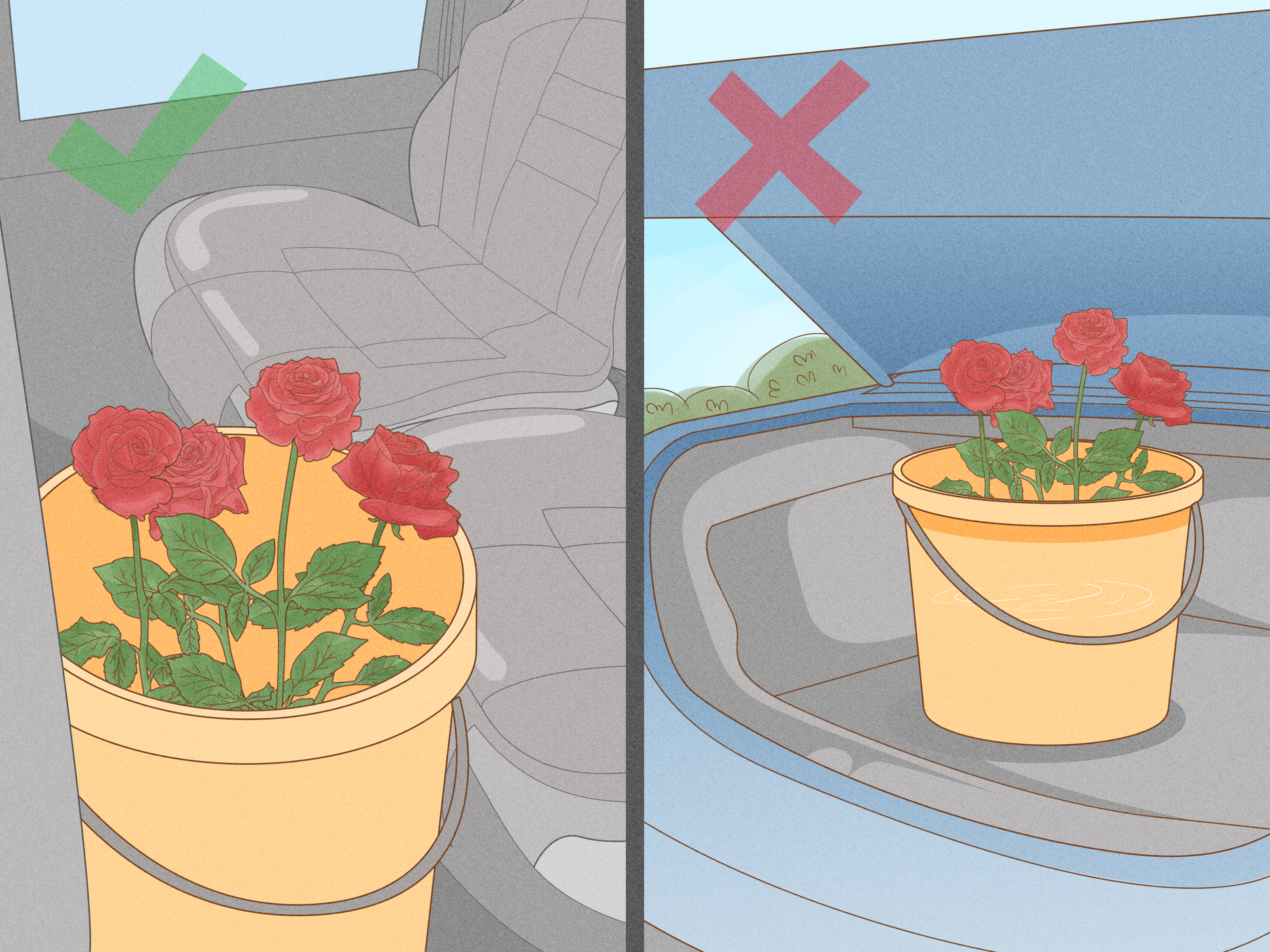
Loose stems are usually safest in buckets with a few inches of clean water. Do not overfill the buckets; sloshing water can soak leaves, damage petals, and turn your car floor into a floral pond. For arrangements already designed in vases, use boxes, crates, towels, or non-slip mats to prevent tipping. For bridal bouquets, corsages, boutonnieres, or delicate event flowers, keep them in a cool container or flower box and avoid stacking anything on top.
If flowers must travel dry-packed, keep the trip short, cool, and shaded. Wrap stems with damp towels, secure the wrap, and place the flowers in water as soon as possible after arrival.
Step 6: Pack Flowers So They Cannot Shift, Rub, or Tip
Movement is the silent flower destroyer. Petals bruise when they rub against cardboard, buckets, plastic sleeves, or other blooms. Stems snap when buckets slide. Arrangements tip when drivers brake suddenly. To prevent this, stabilize everything before the vehicle moves.
Use boxes with holes cut into the top to hold vases upright. Place towels around buckets to keep them from sliding. Use crates, cup holders, floral delivery trays, or cardboard dividers to separate containers. Keep blooms facing upward or slightly angled, not mashed sideways. Do not overstuff boxes; compression can leave damage that may not show immediately but appears later as browning, creasing, or drooping.
For tall flowers like gladiolus, delphinium, snapdragons, or lilies, support the stems so they do not bend. For heavy-headed flowers like hydrangeas, dahlias, or peonies, give the blooms enough room. Flowers are not luggage. They do not appreciate being “squeezed in real quick.”
Step 7: Keep Flowers Cool During the Trip
Temperature control is the heart of flower transport. Most temperate cut flowers prefer cool conditions, and professional floral coolers are often kept in the mid-30s Fahrenheit range. For everyday transport, you do not need a commercial cooler, but you do need to avoid heat.
Pre-cool the car before loading flowers on a warm day. Use air conditioning, but do not blast cold air directly onto delicate petals. Never leave flowers in a parked vehicle in summer heat, even for a quick errand. A “five-minute stop” can become a flower sauna faster than expected. In cold weather, protect blooms from freezing temperatures, icy wind, and direct contact with frozen surfaces.
For longer drives, insulated boxes or coolers can help, but avoid placing flowers directly against ice packs. Wrap cold packs in towels and keep them separated from petals and stems. The goal is cool and stable, not frozen and traumatized.
Step 8: Keep Flowers Away From Sun, Fruit, Exhaust, and Strong Drafts
Direct sunlight heats flowers quickly and can cause petals to wilt. Place flowers in the shaded part of the vehicle, not on the dashboard or back shelf. Avoid the trunk if it is hot, poorly ventilated, or likely to jostle the flowers. The passenger floor or cargo area is often better, especially when containers are secured.
Keep cut flowers away from ripening fruit such as apples, bananas, pears, peaches, and tomatoes. These release ethylene gas, which can speed aging and cause sensitive flowers to drop petals or buds. Also avoid cigarette smoke, vehicle exhaust, decaying leaves, and old flowers. If you are transporting flowers and groceries, do not let the bouquet cuddle with the fruit bag. It is not a romantic comedy; it is a vase-life problem.
Strong drafts can dry petals and leaves, so keep flowers away from direct air vents. Stable, indirect cooling is best.
Step 9: Unload and Rehydrate Immediately
Once you arrive, unload flowers promptly. Do not leave them sitting in the vehicle while you set up tables, answer texts, or debate where the cake should go. Move them into a cool indoor space, away from sun and heat sources.
Check water levels, recut stems if needed, and place loose flowers into clean water. If water became dirty during the trip, replace it. If stems traveled dry, unwrap them, recut the ends, and hydrate them right away. Give wilted flowers time before panicking. Some blooms perk up after a fresh cut and a good drink.
For event flowers, inspect arrangements for bent stems, bruised petals, or loose mechanics. Small fixes are easier early. Remove any damaged blooms before they affect the overall display.
Step 10: Let Flowers Rest Before Displaying
After transport, flowers benefit from a short recovery period. Place them in a cool room with clean water and let them rest before arranging or displaying. This is especially important for wedding flowers, market bouquets, or flowers that traveled more than an hour.
If blooms are too tight, allow them to open gradually at room temperature. If they are already wide open, keep them cooler until needed. Remove fading flowers as they appear. Change cloudy water, refresh flower food, and make new stem cuts every couple of days to extend vase life.
The final step is patience. Flowers are not furniture; they respond to the environment. A little recovery time can turn “uh-oh” into “wow, those look amazing.”
Best Ways to Transport Different Types of Cut Flowers
Roses
Transport roses upright in clean water whenever possible. Keep them cool and protected from bruising. Remove lower leaves and thorns that fall below the waterline. If rose heads begin to droop, recut the stems and hydrate in clean water in a cool room.
Tulips
Tulips continue growing after being cut, so wrap them snugly in paper to help keep stems straight during transport. Use cool water and keep them away from heat. They often bend toward light, which is charming in a vase but less charming when you need a formal arrangement.
Hydrangeas
Hydrangeas are thirsty and dramatic. Transport them in water, keep them cool, and avoid crushing the blooms. If they wilt, recut stems and rehydrate. Some florists also use hydration solutions for difficult stems.
Dahlias
Dahlias bruise easily and do not love long dry trips. Give the blooms space, transport them upright, and avoid extreme temperatures. They are beautiful, but they travel like celebrities with delicate luggage.
Lilies
Transport lilies cool and upright. If blooms are open, protect petals from rubbing. Remove pollen anthers carefully once flowers open to prevent staining, especially for event work.
Common Mistakes When Transporting Cut Flowers
The biggest mistake is heat exposure. A hot car can undo hours of careful flower preparation. The second mistake is skipping hydration. Even short dry periods can stress delicate blooms. The third mistake is dirty water or dirty containers, which encourage bacteria and shorten vase life.
Other common problems include overpacking buckets, letting flowers rub against cardboard, placing arrangements near fruit, using too much flower food, forgetting to secure vases, and leaving flowers in direct sun. Another sneaky mistake is transporting flowers with wet petals packed tightly together. Surface moisture plus poor airflow can encourage mold, especially on roses and other dense blooms.
A good rule: if the transport setup looks like flowers might tip, bake, dry out, freeze, or get squished, fix it before driving.
Quick Checklist for Transporting Cut Flowers
- Choose fresh, healthy blooms.
- Use clean buckets, vases, tools, and water.
- Recut stems before hydration.
- Remove leaves below the waterline.
- Transport in water for longer trips.
- Secure buckets and arrangements so they cannot slide.
- Keep flowers cool but not frozen.
- Avoid direct sun, fruit, exhaust, and strong drafts.
- Unload flowers immediately after arrival.
- Recut, rehydrate, and let flowers rest before display.
Real-World Experience: What Actually Works When Moving Cut Flowers
In real life, transporting cut flowers is rarely as elegant as the florist photos make it look. There is usually a car seat involved, at least one towel, someone saying “hold this carefully,” and a bucket that seems determined to slosh at the exact wrong moment. After moving flowers for home arrangements, gifts, small events, and garden harvests, one lesson becomes obvious: preparation matters more than panic.
The most reliable method for loose flowers is the bucket-and-box system. Place clean buckets with a modest amount of water inside sturdy boxes or crates, then pack towels around the buckets so they cannot slide. The water should be deep enough to cover stem ends but not so deep that every turn creates a tiny indoor wave pool. This setup works well for roses, sunflowers, snapdragons, zinnias, stock, and mixed garden flowers.
For wrapped bouquets, damp paper towels around the stems make a major difference on short trips. Cover the damp towel with a plastic bag or wrap to hold moisture, then keep the bouquet shaded and cool. This is useful when taking flowers to a friend, carrying a bouquet into a restaurant, or moving flowers from a grocery store to home. However, for long drives, water is better. Flowers can tolerate a short dry trip, but they should not be asked to prove their toughness like contestants on a survival show.
One practical trick is to load flowers last and unload them first. Do not put flowers in the car and then spend 20 minutes gathering shoes, snacks, phone chargers, and someone who swears they were ready. Flowers should spend the least possible time in the vehicle, especially in summer. Pre-cooling the car helps, and so does placing flowers on the floor rather than on a sunny seat.
Another lesson: towels are heroes. They stabilize buckets, cushion vases, block sunlight, absorb small spills, and protect delicate containers. Keep a few old towels in the car when transporting flowers. Cardboard boxes are equally useful, especially for vase arrangements. A box with towels around the vase can save an arrangement from tipping during one enthusiastic brake tap.
For event flowers, label everything. “Bride bouquet,” “ceremony aisle,” “cake flowers,” and “centerpieces table 1-5” may seem obvious at home, but at the venue, chaos puts on comfortable shoes and starts jogging. Labels reduce handling time and prevent flowers from being moved repeatedly. Less handling means fewer bruised petals and snapped stems.
The final experience-based tip is to give flowers recovery time. Even well-transported blooms may look slightly tired right after arrival. A fresh cut, clean water, and 30 to 60 minutes in a cool room can revive many flowers. Do not judge them too soon. Flowers are like people after a road trip: give them a drink, a calm corner, and a little time before expecting them to look cheerful.
Conclusion
Learning how to transport cut flowers is really learning how to protect freshness. The formula is simple: hydrate early, pack gently, keep temperatures cool, avoid ethylene, prevent crushing, and rehydrate immediately after arrival. You do not need a professional refrigerated truck for everyday flower transport, but you do need a plan.
Fresh flowers are fragile, but they are not helpless. With clean water, smart packing, shade, airflow, and careful unloading, bouquets can survive car rides, event deliveries, market mornings, and gift trips beautifully. Treat them like living things rather than decorations, and they will hold their color, shape, and charm much longer.
Note: This article is based on synthesized guidance from university extension flower-care resources, professional florist handling manuals, floral industry research, and postharvest best practices. It is intended for home, retail, garden, and small-event flower transport rather than specialized commercial freight logistics.