“She Was The Woman He Cheated With”: Dad’s Mistress-Turned-Wife Demands Baby Name, Daughter Refuses

Note: This article is written for web publication and synthesizes widely accepted U.S.-based guidance on blended families, stepfamily boundaries, infidelity recovery, family therapy, adult-child relationships, and baby-naming etiquette.
Few family arguments can turn a happy pregnancy announcement into a full-contact emotional sport faster than a baby name debate. Add a father’s former mistress, now his wife, demanding naming rights over her stepdaughter’s unborn child, and suddenly the baby shower has the energy of a courtroom drama with cupcakes.
The story behind the headline “She Was The Woman He Cheated With”: Dad’s Mistress-Turned-Wife Demands Baby Name, Daughter Refuses taps into several issues at once: betrayal, blended family tension, unresolved grief, adult boundaries, stepmother resentment, and the deeply personal meaning behind a child’s name. On the surface, it sounds like a simple family fight. Underneath, it is a layered example of what happens when someone tries to skip the hard work of trust-building and go straight to the “grandma privileges” aisle.
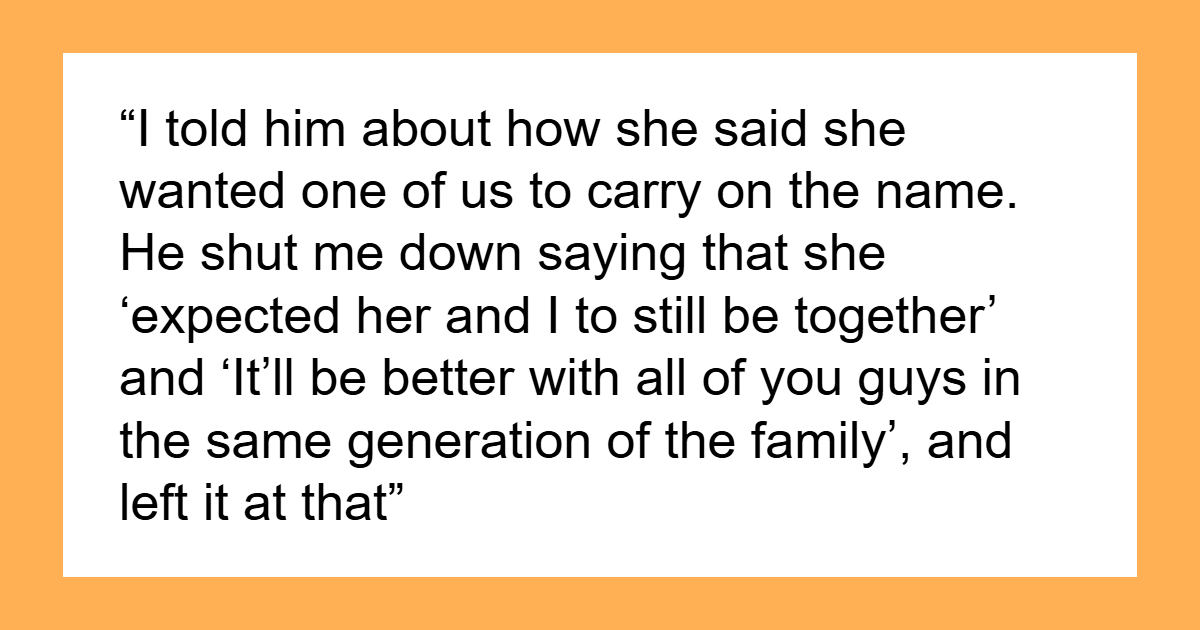
At the center is a daughter who remembers the affair that hurt her mother, changed her family, and reshaped her relationship with her father. Years later, her dad’s affair partner has become his wife. The new wife now wants influence over the daughter’s baby name, possibly hoping the child will symbolize a fresh start. The daughter refuses. And honestly? That refusal is not just about a name. It is about history, boundaries, and the right to decide who gets emotional access to the next generation.
Why Baby Names Are Never “Just Names”
A baby name can carry family history, cultural identity, religious meaning, personal taste, and sometimes one grandparent’s dream of finally getting a little “Gertrude” into the family tree. Names are intimate. Parents may choose a name to honor a loved one, celebrate heritage, mark a new beginning, or simply because it sounds beautiful when yelled across a playground.
That is why demands around baby names can feel so invasive. Suggestions are normal. A casual “Have you considered Emma?” is harmless. A demand is different. When a relative insists that a baby must be named after them, their family, or their preferred legacy, the conversation stops being about the child and starts being about control.
In this situation, the stepmother’s request lands with extra force because she is not an emotionally neutral family member. She is the woman connected to the father’s betrayal. Whether she views herself as a healed, changed, misunderstood person or not, the daughter’s memory of her is attached to pain. A baby name demand from that person is not likely to feel sweet. It may feel like another attempt to rewrite the family story.
The Affair Still Matters, Even Years Later
One common mistake in families affected by infidelity is assuming that time automatically equals healing. It does not. Time can help, but only when paired with accountability, honesty, changed behavior, and respect for the people who were hurt. Without those ingredients, time mostly becomes a storage unit for resentment.
For a child, parental infidelity can be especially destabilizing. The affair is not only a romantic betrayal between adults. It can change where the child lives, how holidays work, whether they trust a parent, and how they understand love and loyalty. Even adult children may struggle with the emotional aftershocks because they are old enough to understand the betrayal but still deeply connected to the family that was damaged.
So when the daughter says no to the mistress-turned-wife, she may not be “holding a grudge” in the petty sense. She may be protecting a boundary that was never properly respected in the first place. The affair may be old news to the dad and his wife, but for the daughter, it is part of the foundation of the relationship. You cannot build a nursery on top of emotional rubble and then act surprised when the floor creaks.
Blended Families Need Patience, Not Instant Authority
Blended families can be loving, stable, and deeply meaningful. Many stepparents become trusted mentors, bonus parents, and beloved grandparents. But the successful ones usually have something in common: they do not demand closeness before earning it.
Healthy stepfamily relationships often develop slowly. Children and adult children need time to adjust to the new family structure. They may feel loyalty conflicts, especially if the new relationship began in a way that hurt one of their parents. A stepparent who enters the family through an affair faces an even steeper hill because the relationship begins with an emotional debt. That debt cannot be paid with cheerful holiday photos and a “we’re all family now” speech.
In a blended family, respect is a reasonable expectation. Forced affection is not. The daughter can be civil without offering intimacy. She can acknowledge her father’s marriage without granting his wife grandmother-level influence over her child. Those are different things, and confusing them is how family dinners become dramatic enough to deserve commercial breaks.
The Daughter’s Boundary Is Reasonable
The daughter’s refusal is not cruel simply because it disappoints someone. A boundary is not an attack. It is a line that defines what a person is willing to accept. In this case, the daughter is saying that the baby’s name belongs to the parents, not to her father’s wife.
This is especially important because pregnancy can make family pressure louder. Relatives may suddenly feel entitled to opinions about names, birth plans, feeding choices, hospital visits, parenting styles, and whether the nursery should feature woodland animals or beige minimalism. But becoming pregnant does not mean becoming public property. The parents still get to make the decisions.
In practical terms, the daughter has every right to say, “We are choosing our baby’s name ourselves.” She does not need to justify that decision with a 42-slide presentation titled “Why You Are Not In Charge.” A simple no is enough.
Why the Stepmother’s Demand Feels So Tone-Deaf
The mistress-turned-wife may believe she has earned a place in the family. She may see herself as the father’s spouse, a future grandmother figure, or someone who wants to be included. Those feelings may be real. But real feelings do not automatically create rights.
Her demand is tone-deaf because it ignores the emotional context. If she wants a healthier relationship with her stepdaughter, the first step is not asking for naming power. It is acknowledging the pain connected to her role in the family history. Even if the father bears the greater responsibility for cheating on his marriage, the stepmother is still part of the story. Pretending otherwise only deepens mistrust.
A better approach would sound like this: “I know our relationship is complicated, and I respect that you and your partner will choose the name. I hope to be supportive in whatever way feels comfortable for you.” That sentence may not fix everything, but it does something powerful: it gives control back to the person who was hurt.
Where the Father Went Wrong
The father’s role matters. In many family conflicts, the loudest person gets the attention, but the quiet enabler may be doing just as much damage. If the father pressures his daughter to include his wife, he is asking his daughter to absorb the emotional cost of his choices.
A parent who cheated and later remarried the affair partner has a responsibility to manage the fallout with humility. That means not demanding that the child “move on” for everyone else’s comfort. It means not using guilt to force acceptance. It means understanding that the new spouse’s desire to be included does not outweigh the child’s need for emotional safety.
The father should be the one setting expectations with his wife. He could say, “The baby’s name is their decision. We will respect it.” That is not rejection. That is leadership. And frankly, it is overdue leadership if his past choices already caused family pain.
The Difference Between Forgiveness and Access
Families often misuse the word forgiveness. They treat it like a magic key that unlocks every door. But forgiveness, if it happens, does not mean unlimited access. It does not mean pretending the affair never happened. It does not mean the daughter must let her father’s wife influence major life decisions.
Someone can forgive and still keep distance. Someone can be polite and still decline a relationship. Someone can attend the same holiday dinner and still say, “No, you do not get a vote on my child’s name.” These are not contradictions. They are mature boundaries.
This matters because adult children are often pressured to keep peace at their own expense. They are told to be “the bigger person,” which sometimes means “please make yourself smaller so the people who caused harm do not feel awkward.” That is not peace. That is emotional furniture rearrangement.
What This Story Says About Family Roles
The conflict also reveals a common blended-family problem: role confusion. Is the father’s wife a stepmother? A grandmother figure? A relative by marriage? A person the daughter tolerates for her dad’s sake? Different people in the family may answer differently.
The daughter’s answer is the one that matters when it comes to her baby. She decides who is close to her child, who gets invited into intimate milestones, and who is kept at a respectful distance. Her father’s wife may hope for a warmer role, but she cannot assign herself one.
That is the key lesson: family titles do not automatically create emotional bonds. “Stepmother” is a label. Trust is a relationship. “Grandma” is not a promotion someone receives because they married the baby’s grandfather. It is a role built through love, respect, reliability, and consent from the parents.
How the Daughter Could Respond Without Escalating
The daughter does not need to argue endlessly. In fact, the more she explains, the more room she gives others to debate her decision. A calm, repeatable statement is often best.
For example: “We appreciate that people are excited, but we are choosing the baby’s name ourselves. We are not taking requests or votes.”
If the stepmother pushes, the daughter can add: “This is not up for discussion. Please respect our decision.”
If the father joins the pressure campaign, she can be even clearer: “Dad, I want you in my child’s life, but I need you to respect my boundaries. Pressuring me about your wife’s wishes is damaging our relationship.”
The tone matters. Firm does not have to mean cruel. Calm does not have to mean weak. A boundary delivered without fireworks is still a boundary. Sometimes the most powerful sentence in a family argument is not a dramatic speech; it is a steady “No.”
What the Stepmother Should Do Instead
If the father’s wife genuinely wants a better relationship, she should stop asking for symbolic rewards and start practicing emotional accountability. That may include apologizing without excuses, respecting distance, accepting that trust may never look the way she wants, and supporting the daughter’s pregnancy without trying to control it.
She should also avoid competing with the daughter’s mother. Nothing will inflame the situation faster than acting like she deserves the same emotional status as the parent who was betrayed. Even if the biological mother is no longer present, no longer married to the father, or not involved in the same way, the stepmother does not get to erase her.
A supportive role might include sending a kind card, offering help once, and accepting the answer. It might mean being pleasant at family gatherings without demanding closeness. It might mean celebrating the baby’s arrival without expecting a special title. In other words: less “name the baby after me” and more “I brought diapers and will now sit quietly like a helpful adult.” Revolutionary, yes.
Why Online Readers Usually Side With the Daughter
Stories like this often attract strong reactions because readers recognize the emotional math immediately. The daughter did not create the original betrayal. She did not choose the affair. She did not ask for the family structure that followed. Now, during her own pregnancy, she is being asked to honor or include someone connected to that pain.
Most people understand that this is unfair. A baby should not be used as a bridge adults demand to cross before repairing the road. If the stepmother wants connection, she needs to build it directly and respectfully, not through a newborn’s birth certificate.
Readers also tend to notice entitlement. Asking for consideration is one thing. Demanding a baby name is another. The first is human. The second is a red flag wearing a monogrammed onesie.
Lessons for Anyone in a Blended Family
This story offers several useful lessons beyond the drama itself. First, adults who create family pain cannot control the timeline of healing. Second, stepparents should focus on trust before influence. Third, adult children are allowed to define how close they want to be. Fourth, parents-to-be do not owe relatives naming rights, delivery-room access, or emotional performances.
Most importantly, a child should never be treated as a tool for repairing adult relationships. Babies are people, not peace treaties. If a family wants healing, the adults need to do the work themselves: honest conversations, therapy if needed, accountability, changed behavior, and consistent respect for boundaries.
Related Experiences: When Family History Crashes Into Pregnancy
Many people who have experienced similar family conflicts say the hardest part is not the single demand itself. It is the feeling that everyone expects them to pretend the past did not happen. Pregnancy often brings old family wounds to the surface because it raises questions about legacy, safety, belonging, and who gets access to the next generation.
For example, an adult daughter whose father left the family for another woman may feel calm for years, only to become fiercely protective once she is pregnant. That reaction is not irrational. Pregnancy can sharpen a person’s awareness of what kind of family environment they want for their child. Someone who tolerated uncomfortable holidays for herself may decide she does not want her baby pulled into the same emotional tension.
Another common experience involves relatives using the baby as a “fresh start” without addressing the past. A stepmother may say, “Let’s put everything behind us for the baby,” but that can feel like pressure rather than healing. A healthier version would be, “I know there has been pain, and I will respect whatever boundaries help you feel comfortable as a parent.” The difference is consent. One statement grabs for closeness; the other makes room for it.
Some parents-to-be also face guilt from their own relatives. A father may say, “You are punishing my wife,” when the daughter is simply choosing not to give his wife a special role. This kind of guilt can be confusing because it frames boundaries as cruelty. But refusing a baby name demand is not punishment. It is parental decision-making. The baby’s parents are responsible for choosing a name that feels right to them, not for soothing every adult’s insecurity.
In blended families, titles can become another battleground. A stepmother may want to be called “Grandma,” while the daughter may prefer her first name. The best approach is to let the parents decide what titles feel appropriate. A grandparent nickname should not be seized like a parking spot at Costco on a Saturday. It should reflect the relationship that actually exists.
There are also cases where stepparents do earn a beloved role over time. The difference is usually humility. The stepparent does not demand equal status. They show up consistently, avoid bad-mouthing the other parent, respect the adult child’s pace, and accept boundaries without sulking. Over years, that steadiness can soften resentment. But it cannot be rushed, especially when the relationship began with betrayal.
For daughters in this situation, the practical advice is simple: decide your boundary with your partner first, communicate it clearly, and do not negotiate under pressure. If relatives continue pushing, reduce the amount of information you share. You do not have to reveal the baby name before birth. You do not have to discuss your shortlist. You do not have to attend every argument you are invited to.
For fathers, the lesson is equally clear: protect your relationship with your child by respecting their limits. Do not ask your child to repair the discomfort created by your choices. If your spouse feels excluded, support her privately, but do not pressure your child into emotional closeness. Love does not grow well under a spotlight and a deadline.
For the mistress-turned-wife, the path forward requires patience and humility. The daughter may never see her as a mother figure. She may never want her deeply involved. That reality may hurt, but it must be respected. The best chance of any future peace comes from releasing entitlement and becoming a safe, low-pressure presence.
In the end, the daughter’s refusal is not about being dramatic. It is about protecting one of the first major decisions she makes as a parent. A baby name is a gift from the parents to the child. It is not a family ballot, not a loyalty test, and definitely not a consolation prize for unresolved adult drama.
Conclusion
The headline may sound like internet drama, but the emotional issue is very real. When a dad’s mistress-turned-wife demands a say in the baby name, the daughter’s refusal is not petty; it is a boundary rooted in family history. Infidelity can leave long shadows, and blended families require care, patience, and respect to move forward.
The daughter has the right to choose her baby’s name without pressure from someone tied to a painful chapter of her life. The father has the responsibility to respect that choice. The stepmother has the opportunity to step back, show humility, and understand that trust cannot be demanded through a baby name.
Families heal best when adults stop trying to force symbolic gestures and start practicing accountability. A newborn should arrive surrounded by love, not used as a tiny mediator in a decades-old emotional lawsuit. Let the baby have a name chosen with joy. Let the adults handle their own unfinished business.