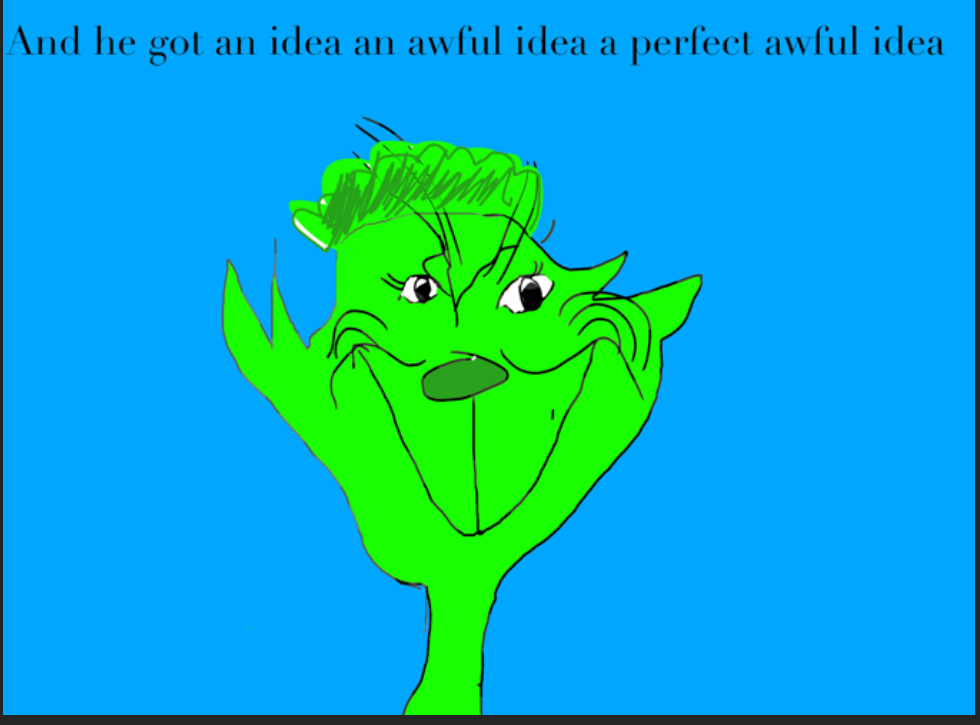

There is something wonderfully suspicious about a doodle. It often appears in the margins of meeting notes, on the back of receipts, beside a grocery list, or across a school notebook that was absolutely, definitely supposed to contain algebra. One minute you are “paying attention,” and the next minute a tiny dragon is wearing sunglasses next to the words “quarterly budget review.” Congratulations: your brain has started a side quest.
“Doodles Just Load Your Doodles On This One” sounds like a playful internet invitation, but it also captures a bigger cultural truth: doodles are no longer throwaway scribbles. They are personal, funny, calming, shareable, and surprisingly powerful. In an online world full of polished photos, perfect branding, and captions that sound like they were approved by seven committees, doodles feel refreshingly human. They are messy in the best way. They say, “Here is a small idea I caught before it ran away.”
Whether you are uploading a sketch to a community thread, filling a digital canvas, decorating a bullet journal, or turning random squiggles into a character with emotional baggage and excellent eyebrows, doodling gives creativity a low-pressure place to land. You do not need an art degree, a fancy tablet, or a dramatic window view during a thunderstorm. You need a line, a shape, a tiny spark of curiosity, and permission to be imperfect.
What Is a Doodle, Really?
A doodle is usually a simple drawing made casually, often while thinking, listening, waiting, or letting the mind wander. It can be a pattern, a cartoon face, a flower, a tiny alien, a maze, a monster, a spiral, a robot cat, or a mysterious blob that later becomes a potato with opinions. The point is not technical perfection. The point is motion, expression, and discovery.
Doodle art sits in a delightful space between “I am just messing around” and “Wait, this actually looks cool.” That looseness is exactly what makes it accessible. Unlike formal drawing, doodling does not demand clean perspective, perfect anatomy, or museum-level shading. It welcomes repetition, mistakes, weird proportions, and happy accidents. Sometimes the accidental coffee stain becomes a planet. Sometimes the badly drawn hand becomes a mitten. Sometimes the mitten becomes a villain. Art is flexible like that.
Why Doodles Have Taken Over the Internet
Doodles are ideal for the web because they are quick to understand and easy to share. A simple cartoon can communicate a feeling faster than a paragraph. A tiny sketch of a tired coffee cup can say, “I am alive, but barely,” with more emotional accuracy than most productivity apps.
Online communities love doodles because they invite participation. A polished illustration may make viewers admire from a distance, but a doodle makes people think, “I could try that.” That is the magic of the phrase “load your doodles on this one.” It is not asking for a masterpiece. It is opening the door and saying, “Bring your notebook gremlins, your five-minute monsters, your lunch-break flowers, your oddly confident stick figures. They all belong here.”
Doodles Are Shareable Because They Feel Personal
A doodle is often more intimate than a finished artwork. It reveals how someone thinks in real time. The repeated stars in the corner of a notebook, the nervous spirals during a long phone call, the dramatic eyebrows added to every object in sightthese little marks become personality fingerprints. They are small visual jokes between the artist and the page.
Doodles Are Fast Content Without Feeling Empty
In content culture, speed often produces shallow work. Doodles are different. They can be quick but still expressive. One small drawing can capture boredom, joy, confusion, stress, nostalgia, or that special kind of panic that happens when your laptop battery says 3% during a video call.
The Science-Backed Side of Doodling
Doodling may look like distraction, but research and education discussions have repeatedly suggested that simple drawing can support attention, memory, and thinking. One well-known study on doodling and recall found that participants who doodled during a dull listening task remembered more information afterward than those who did not. The idea is not that doodling magically turns people into geniuses. It is that a light, repetitive drawing task may keep the mind from drifting completely away.
Educators also use visual note-taking, sketch notes, concept maps, and quick drawings to help students organize ideas. When a learner turns information into images, arrows, symbols, and small diagrams, they are not just copying words. They are processing meaning. A doodle of a lightbulb next to an idea, a ladder beside a process, or a storm cloud beside a problem can make abstract information easier to remember.
There is also a wellness angle. Creative arts activities, including drawing and coloring, are often discussed as tools for relaxation and emotional expression. Doodling is not the same as clinical art therapy with a trained professional, and it should not be marketed as a cure for mental health conditions. Still, as a self-directed creative habit, it can be calming, playful, and grounding. Sometimes a page full of tiny leaves is not “just” a page full of tiny leaves. Sometimes it is a five-minute vacation for a tired brain.
From Margins to Mainstream: Doodles as Culture
The modern internet has helped doodles graduate from private scribbles to public mini-art. Google Doodles turned temporary logo changes into a global habit of celebrating culture, history, science, holidays, and notable people. Google’s first Doodle appeared in 1998 as a playful out-of-office-style message connected to Burning Man, and the format eventually grew into thousands of creative homepage designs. That matters because it showed the world that even a small, playful alteration can become memorable digital culture.
Other projects have pushed doodles into technology and machine learning. Google’s Quick, Draw! experiment collected millions of user drawings and showed how simple sketches could help train AI systems to recognize visual patterns. In other words, your rough drawing of a bicycle may look like a potato with handlebars, but to a machine learning researcher, it is data. Fancy data, even.
Online art communities, social media feeds, classroom projects, and drawing challenges have expanded the doodle universe even further. Doodles now appear on stickers, apparel, journal spreads, explainer videos, web comics, packaging, whiteboards, and digital portfolios. A quick sketch can become a brand mascot, a comic series, a classroom activity, or the start of a visual identity.
How to “Load Your Doodles” Without Overthinking It
If the phrase “load your doodles” makes you hesitate, you are not alone. Many people hide their sketches because they think they are too simple, too silly, or too imperfect. But doodle-sharing works best when the pressure stays low. The goal is not to prove you are the next legendary illustrator. The goal is to participate, connect, and let your imagination stretch its legs.
Start With a Theme
A theme gives your doodles a friendly starting point. Try “things on my desk,” “creatures with tiny hats,” “foods with feelings,” “cloud monsters,” “five-minute flowers,” or “what Monday feels like.” Themes reduce the terrifying emptiness of the blank page. A blank page says, “Create something brilliant.” A theme says, “Draw a sandwich having a rough day.” Much kinder.
Use Simple Shapes
Most doodles begin with circles, squares, triangles, lines, dots, waves, and blobs. A circle becomes a face. A rectangle becomes a robot. A triangle becomes a mountain, a party hat, or a very judgmental nose. Simple shapes are the building blocks of doodle art because they let you move quickly without getting trapped in perfectionism.
Add One Funny Detail
Humor makes doodles memorable. Add a tiny crown to a frog. Give a cloud sneakers. Put a mustache on a cactus. Draw a slice of pizza looking emotionally unavailable. One unexpected detail can turn a basic sketch into something people want to comment on, save, or share.
Digitize It Cleanly
If you draw on paper, take a photo in bright natural light or scan it. Crop out distractions, adjust contrast, and make sure the lines are visible. If you draw digitally, save a clean version and a smaller web-friendly version. Clear uploads help viewers enjoy the doodle instead of wondering whether your shadow is part of the artwork.
Doodle Ideas Anyone Can Try
Need a starting point? Try a row of tiny plants with different personalities. Draw ten coffee cups, each reacting to a different mood. Turn random scribbles into animals. Make a “daily monster” based on how your morning went. Create a map of an imaginary neighborhood where every building is shaped like a snack. Draw household objects as dramatic movie characters. The remote control can be a detective. The toaster can be a retired superhero. The laundry basket is obviously a villain.
You can also use doodles for practical creativity. Make visual to-do lists with icons. Turn meeting notes into sketch notes. Create little symbols for recurring ideas. Decorate journal headers. Design personal stickers. Make birthday cards. Build a mini comic about your pet. Draw your goals as a silly treasure map. Doodling becomes more useful when it stops being treated like a distraction and starts being used as a thinking tool.
Doodles and Personal Style
Your doodle style develops naturally through repetition. Some people draw soft, cute characters. Others make sharp graphic patterns. Some love chaotic notebook pages packed with eyeballs, lightning bolts, mushrooms, arrows, planets, and at least one suspicious duck. None of these styles is wrong. Style is not something you force overnight. It is what happens when your hand keeps making choices your brain enjoys.
To find your style, notice what you repeat. Do you draw rounded shapes or angular ones? Do you prefer tiny details or bold outlines? Are your characters expressive or mysterious? Do you use patterns, words, arrows, or symbols? Your doodles already contain clues. You are not starting from zero. You are starting from the weird little habits your pen has been practicing behind your back.
How Doodles Build Community
Doodle-sharing threads, drawing prompts, and community galleries work because they remove the intimidating velvet rope around creativity. Everyone can contribute something. Beginners can post next to experienced artists. Kids, students, office workers, designers, parents, and people who only own one pen that barely works can all join in.
That shared imperfection creates warmth. When people upload doodles, they are not just sharing images. They are sharing moods, jokes, memories, and tiny windows into how they see the world. A doodle thread can become a gallery of human attention: what people notice, what they exaggerate, what they laugh at, what they turn into a cartoon when reality gets too boring.
Common Mistakes When Sharing Doodles Online
The first mistake is apologizing too much. “Sorry this is bad” is the mosquito of art captions: tiny, unnecessary, and somehow everywhere. Let the doodle exist. People respond better to confidence, curiosity, or humor than to self-roasting before they have even looked at the work.
The second mistake is over-editing. A doodle can lose charm if you polish it until every spontaneous line disappears. Clean presentation is helpful, but keep the liveliness. The wobble is often the good part.
The third mistake is copying without credit. Inspiration is everywhere, but direct copying should be handled honestly. If your doodle is based on someone else’s character, prompt, tutorial, or photo, credit the source where appropriate. Online creativity is more fun when people respect each other’s work.
Turning Doodles Into Bigger Creative Projects
A single doodle can become a larger idea. A funny character can grow into a comic strip. A pattern can become wrapping paper. A set of food doodles can become stickers. A page of plant sketches can become a printable planner. A classroom doodle challenge can become a student gallery. A personal doodle habit can become a portfolio that shows your voice more clearly than a perfectly polished but personality-free design.
If you want to expand a doodle, ask three questions: What is the strongest part of this sketch? What emotion does it communicate? Where else could it live? The answer might be a social post, poster, animation, notebook cover, greeting card, logo concept, or short comic. Doodles are seeds. Not every seed becomes a forest, but some become surprisingly confident shrubs.
Experience Section: What Doodling Feels Like in Real Life
The best doodling experiences often begin when nothing impressive is supposed to happen. Imagine sitting through a long meeting with a pen in your hand and a notebook open to a page that says “Important Strategy Notes.” At first, you draw a small square beside a bullet point. Then the square gets eyes. Then it gets arms. Ten minutes later, it is holding a tiny briefcase and looking more prepared than anyone in the room. Strangely, you may still remember the main points of the meeting because your hand kept your mind from floating away into lunch plans.
Another common doodle experience happens during stress. You are waiting for news, sitting in an airport, killing time before an appointment, or trying not to refresh your email every twelve seconds like a raccoon pressing a vending machine button. So you draw loops. Then leaves. Then little stars. The page fills slowly. Nothing dramatic happens, but your breathing settles. The doodle does not solve the problem, but it gives your nervous energy somewhere harmless to go. That matters.
Doodling can also become a memory device. A travel notebook with quick sketches of a coffee shop, a funny street sign, a hotel lamp, or a sandwich that changed your life can feel more vivid than a camera roll of 400 nearly identical photos. The doodle does not need to be accurate. In fact, the inaccurate parts often make it better. A crooked building, a giant croissant, or a dramatic pigeon can carry the feeling of a moment more honestly than a perfect image.
For people who share doodles online, the experience can be unexpectedly encouraging. You post a tiny drawing you nearly deleted, and someone comments, “This is exactly how my week feels.” That is the secret power of simple art. It does not need to be grand to connect. A doodle can be a little flag planted in the internet saying, “I noticed this feeling. Did you notice it too?” When someone answers yes, the doodle has done its job.
There is also joy in watching a personal doodle habit evolve. The first week might be awkward blobs. The second week, the blobs gain faces. By the third week, one blob has a name, a backstory, and suspiciously strong opinions about soup. Over time, your lines become more confident. You learn which pens you like. You discover that drawing badly is not fatal. You begin to see ideas everywhere: in clouds, receipts, shadows, spilled cereal, cracked sidewalks, and the shape of your cat judging you from across the room.
Loading your doodles onto a shared space can feel vulnerable, but it can also be freeing. You stop treating creativity like a final exam and start treating it like a conversation. Some doodles will be funny. Some will be odd. Some will flop magnificently and deserve a tiny funeral. But each one keeps the creative engine warm. The more you doodle, the less precious each drawing becomes, and the easier it is to make the next one.
Conclusion
“Doodles Just Load Your Doodles On This One” is more than a quirky title. It is an invitation to make creativity casual again. Doodles remind us that art does not always need a frame, a deadline, or a dramatic origin story. Sometimes it starts with a bored hand, a wandering mind, and a line that becomes something unexpectedly alive.
In a culture obsessed with polished output, doodles are refreshingly honest. They help people think, relax, remember, joke, experiment, and connect. They can become visual notes, personal comics, digital posts, community prompts, or simply a private page of marks that made a difficult day feel a little lighter. So load your doodles. Share the tiny monsters. Upload the anxious spirals, the happy plants, the sarcastic snacks, and the clouds wearing boots. The world has enough perfect content. It could use more playful lines with personality.
Note: This article is based on synthesized public information about doodling, creativity, visual note-taking, art-based wellness practices, digital doodle culture, and online creative sharing. It has been rewritten as original web content in standard American English.
SEO Tags


