
Note: This article is written from synthesized scientific and public information, including peer-reviewed solar-irradiance research, astronomy-site data, NASA Earth science explanations, and global solar-resource references. Source links are intentionally omitted for clean web publishing.
Some places are sunny. Some places are “bring-a-hat” sunny. And then there is a patch of high desert in northern Chile where scientists measured sunlight so intense that it briefly rivaled what you would expect closer to Venus. Yes, Venusthe planet that sounds less like a vacation destination and more like a pressure cooker with ambition.
So, where is the sunniest spot on Earth? According to scientific measurements, the answer is the Altiplano of the Atacama Desert, especially the region around the Chajnantor Plateau in northern Chile. This high, dry, cloud-scrubbed landscape near the Andes has been identified as the place on Earth with the highest surface solar irradiance. In plain English: it gets an extraordinary amount of sunlight at ground level.
This is not simply a case of “it is hot, therefore it is sunny.” The Atacama’s record-breaking sunshine comes from a rare combination of altitude, atmosphere, geography, dryness, seasonal timing, and even certain cloud conditions that can temporarily boost sunlight instead of blocking it. The result is a natural solar laboratoryone that makes sunscreen feel less like a suggestion and more like a survival contract.
The Sunniest Spot on Earth Is in Chile’s Atacama Desert
The Atacama Desert stretches along the western edge of South America, between the Pacific Ocean and the Andes Mountains. It is already famous as one of the driest non-polar deserts on Earth. In some areas, rain is so rare that weather stations have recorded little to none for extremely long periods. But scientists have now added another title to its trophy shelf: the most irradiated place on Earth.
The most important area in this discovery is not the coastal desert floor but the elevated plateau region known as the Altiplano. More specifically, the spotlight falls on the Chajnantor Plateau, a high-altitude zone roughly 13,000 to 16,400 feet above sea level, depending on the exact location. That altitude matters. The higher you go, the less atmosphere sunlight must pass through before reaching the ground.
Researchers studying solar extremes found that the Chilean Altiplano can receive an average shortwave solar irradiance of about 308 watts per square meter. During extreme events, measurements reached around 2,177 watts per square meter, a stunning figure for Earth’s surface. For comparison, the solar constant at the top of Earth’s atmosphere is about 1,360 watts per square meter. So how can the ground sometimes receive an even higher short-term reading? That is where the science gets interesting.
Why the Atacama Altiplano Gets So Much Sunlight
At first glance, the Atacama does not look like a place designed by a committee of solar physicists. It looks empty, rugged, and brutally dry. But from a sunlight perspective, it is nearly perfect. Several natural conditions stack together like a cosmic cheat code.
1. High Altitude Means Less Air Above You
Sunlight loses energy as it travels through Earth’s atmosphere. Molecules, dust, aerosols, water vapor, and clouds can absorb, scatter, or reflect solar radiation. At high elevation, there is simply less atmosphere between the Sun and the ground. The Chajnantor Plateau sits so high that solar radiation has a shorter and cleaner path to the surface.
This is one reason high mountains and plateaus often experience stronger sunlight than lowland areas. Anyone who has ever gone skiing and returned with a surprise sunburn understands the concept. The Atacama Altiplano takes that idea and turns the dial up.
2. The Air Is Extremely Dry
Water vapor is one of the atmosphere’s major absorbers of solar radiation, especially in the infrared part of the spectrum. The Atacama is famously dry, and the high plateau is even more atmospheric minimalist. There is very little moisture in the air to absorb incoming energy.
The dryness also helps explain why this region hosts some of the world’s most advanced astronomical observatories. Telescopes love dry skies because water vapor interferes with many wavelengths of astronomical observation. The same dry air that helps astronomers look deep into space also helps sunlight reach the ground with unusual intensity.
3. Clouds Are Rarebut Sometimes They Help
Usually, clouds are sunlight’s security guards. They block, reflect, and soften the Sun’s rays. But under specific conditions, broken clouds can do something surprising: they can enhance sunlight at the surface through a process called forward scattering.
Imagine sunlight hitting the edges of scattered clouds and being redirected downward. Instead of a smooth shade blanket, you get a brightening effect, almost like nature briefly adjusting a giant mirror. This does not happen all the time, but when it does, solar irradiance can spike dramatically. In the Atacama study, these broken-cloud moments helped explain the extreme values measured on the plateau.
4. The Region Sits Near the Tropic of Capricorn
The Atacama Altiplano lies in the Southern Hemisphere near the Tropic of Capricorn, where the Sun can appear very high in the sky during austral summer. A higher Sun angle means sunlight travels through less atmosphere and hits the ground more directly.
There is also a seasonal orbital bonus. Earth reaches perihelionits closest point to the Sunin early January, during the Southern Hemisphere summer. That timing gives southern summer locations a modest boost in incoming solar energy compared with northern summer locations. It is not the whole story, but in a record-setting environment, every percentage point matters.
5. Low Ozone, Low Aerosols, and Clean Skies
The Atacama’s atmosphere often contains relatively low levels of ozone, aerosols, and precipitable water. These factors help more radiation, including ultraviolet radiation, reach the surface. That is scientifically fascinating and personally humbling, especially if you are the kind of traveler who thinks “I tan easily” is a weather strategy. In the Atacama, confidence is not sunscreen.
Sunniest by Irradiance vs. Sunniest by Hours
Here is where many readers get confused: the “sunniest spot on Earth” can mean different things depending on what is being measured.
If you measure sunshine hours, places such as Yuma, Arizona are often celebrated for receiving an extraordinary percentage of possible daylight hours under sunny conditions. Yuma is widely known as one of the sunniest cities on Earth by annual sunshine duration.
But the Atacama discovery is about solar irradiance, not simply the number of sunny hours. Solar irradiance measures how much solar power reaches a given area. In that category, the Atacama Altiplano stands out. It may not be the place with the most comfortable beach weather, the longest picnic season, or the most cheerful patio brunches. It is the place where sunlight can hit with record-breaking intensity.
Think of it this way: sunshine hours tell you how often the lights are on. Irradiance tells you how powerful those lights are when they hit you. The Atacama Altiplano is not just well-lit. It is dramatically, scientifically, “please respect the photons” lit.
Why Scientists Were Studying This Region
The Atacama Desert has long been a favorite location for scientists. Astronomers build observatories there because the skies are clear, dry, dark, and stable. Climate scientists study it because its extreme dryness offers clues about atmospheric circulation, ancient climate, and desert formation. Solar-energy researchers study it because it provides one of the best natural laboratories for understanding solar power potential.
The Chajnantor Plateau is home to major astronomical infrastructure, including the Atacama Large Millimeter/submillimeter Array, better known as ALMA. The same environmental conditions that make it ideal for studying distant galaxies also make it ideal for measuring intense sunlight. High elevation, little water vapor, minimal cloud cover, and clean air create a rare opportunity to observe solar radiation at the edge of what Earth’s surface can experience.
For solar scientists, the Atacama is not merely a strange desert. It is a benchmark. Understanding how much solar energy can reach Earth’s surface helps improve climate models, solar-energy planning, satellite validation, and atmospheric science. In other words, the Atacama is doing more than getting a cosmic suntan. It is helping researchers understand the planet.
How Can Earth Briefly Feel Like Venus?
The comparison to Venus is catchy, but it deserves careful explanation. Scientists are not saying that the Atacama Desert has Venus-like surface conditions overall. Venus has crushing atmospheric pressure, extreme heat, and an environment that would ruin your day before you finished saying “bad travel choice.”
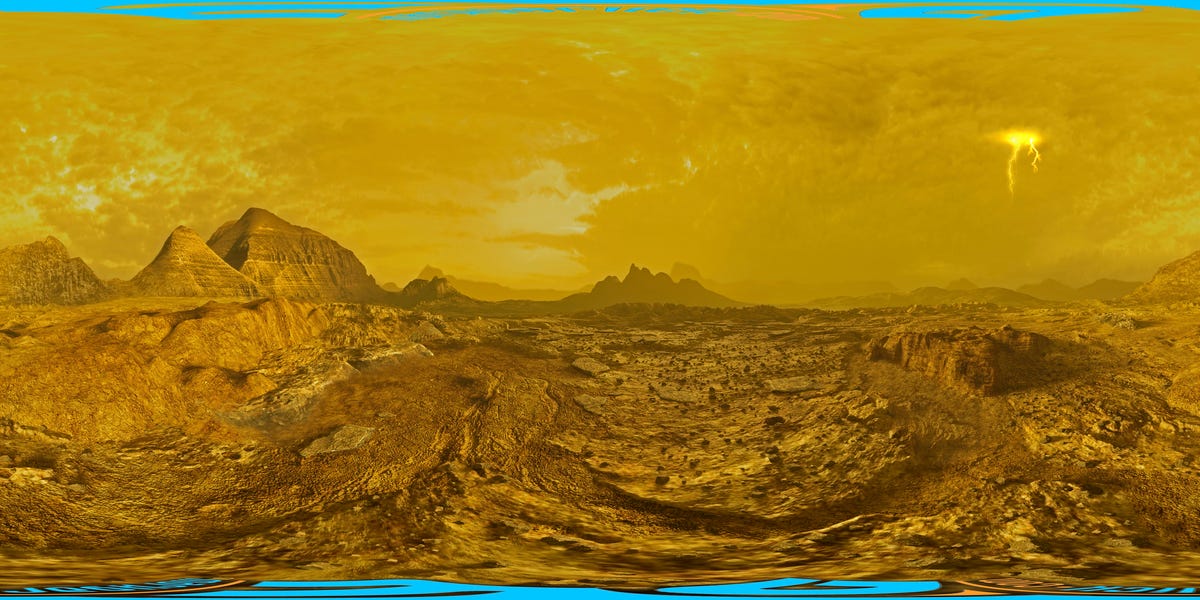
The comparison refers specifically to incoming solar radiation levels. Because Venus is closer to the Sun than Earth is, it receives more solar energy at the top of its atmosphere. During extreme irradiance events in the Atacama, the amount of solar energy measured at Earth’s surface approached levels associated with being closer to the Sun, like Venus’s orbital neighborhood.
That does not mean standing in the Atacama is the same as standing on Venus. It means that for short periods, under special atmospheric conditions, the sunlight hitting this high Chilean plateau can be shockingly intense. For scientists, that is a remarkable natural event. For hikers, it is a reminder that the phrase “just a short walk” should include a hat, water, sunglasses, and enough sunscreen to make a dermatologist nod approvingly.
Why the Atacama Is Also So Dry
The Atacama’s sunlight story is inseparable from its dryness. The desert exists because of a powerful combination of geographic and atmospheric factors.
To the east, the Andes Mountains block moist air from the Amazon Basin. This creates a rain shadow, leaving the western side extremely dry. To the west, the cold Humboldt Current flows along the Pacific coast, cooling the air and helping suppress rainfall. The region also sits within subtropical high-pressure patterns that discourage rising air and cloud formation.
Put these factors together and you get a desert that is dry on an almost theatrical level. It is the kind of place where clouds appear to have read the terms and conditions and declined participation. That lack of clouds is a major reason the Sun can dominate the landscape so completely.
What This Means for Solar Energy
The Atacama’s solar intensity is not only a scientific curiosity. It has enormous implications for renewable energy. Northern Chile is already one of the world’s most promising regions for solar power generation. Strong solar resources make photovoltaic and concentrated solar power projects especially attractive.
However, “more Sun” does not automatically mean “easy energy.” Solar projects still require transmission lines, storage systems, grid planning, maintenance, financing, environmental review, and responsible land use. Dust can reduce panel performance. Remote locations can make infrastructure expensive. Energy demand may be far from where the sunlight is strongest.
Still, the Atacama offers a glimpse of what world-class solar potential looks like. In an age when countries are racing to reduce carbon emissions, deserts like the Atacama are not empty wastelands. They are strategic energy landscapes. The Sun is sending invoices made of photons, and Chile is one of the countries best positioned to cash them.
What This Means for Travelers
For travelers, the Atacama Desert is breathtaking, but it demands respect. The landscape includes salt flats, volcanoes, geysers, lagoons, rock formations, and skies so clear they seem professionally polished. San Pedro de Atacama is a popular base for visitors exploring the region.
But the same conditions that make the desert beautiful also make it physically demanding. High elevation can cause altitude discomfort. Dry air can dehydrate you faster than expected. UV exposure can be extreme, even when temperatures feel cool. The Sun does not need tropical heat to burn skin; it only needs access.
Visitors should bring high-SPF sunscreen, UV-blocking sunglasses, a wide-brimmed hat, layered clothing, and plenty of water. The Atacama can be cold in the morning, hot under direct Sun, and chilly again after sunset. It is a desert with mood swings, but at least the views are spectacular.
Common Myths About the Sunniest Spot on Earth
Myth 1: The sunniest place must be the hottest place
Not necessarily. The Atacama Altiplano can be cold because of its elevation. High solar irradiance does not always equal high air temperature. Thin, dry air can heat and cool quickly, creating sharp temperature swings.
Myth 2: The equator must get the strongest sunlight
The equator receives strong sunlight, but it also often has more humidity, clouds, and atmospheric moisture. The Atacama’s high elevation and dry air allow more solar radiation to reach the surface.
Myth 3: Clouds always reduce sunlight
Usually they do. But broken clouds can sometimes scatter sunlight forward and increase surface irradiance for short periods. This is one of the key reasons the Atacama can experience extreme solar spikes.
Myth 4: If it is sunny, it is safe
Sunshine can be beautiful and dangerous at the same time. Strong ultraviolet exposure increases the risk of sunburn and long-term skin damage. The Atacama is a reminder that the Sun is not just lighting. It is energy.
Why This Discovery Matters
The discovery of Earth’s sunniest spot by irradiance gives scientists a better understanding of solar extremes. It helps answer a deceptively simple question: how intense can sunlight get at the surface of our planet?
That answer matters for several fields. Climate researchers need accurate solar-radiation data to understand energy balance. Solar-energy planners need it to estimate power generation. Atmospheric scientists use it to study clouds, aerosols, ozone, and water vapor. Astronomers use the region’s atmospheric clarity to explore the universe. Even public-health experts can learn from extreme UV environments when communicating sun-safety risks.
The Atacama Altiplano is more than a record holder. It is a natural testing ground where Earth shows what happens when geography and atmosphere cooperate to create maximum sunlight. It is beautiful, harsh, valuable, and slightly intimidatingbasically the planet’s way of saying, “I hope you brought sunglasses.”
Experience Section: What It Feels Like to Understand the Sunniest Place on Earth
Learning about the sunniest spot on Earth changes the way you think about sunlight. Most of us treat sunshine as background scenery. It is the thing that makes a morning cheerful, ruins a phone screen with glare, or gives houseplants the confidence to keep living. But the Atacama Altiplano turns sunlight into the main character.
Imagine standing on a high desert plateau where the horizon seems endless and the sky looks almost unnaturally clean. There is no thick humidity softening the air, no leafy canopy filtering the light, and often no cloud deck offering polite shade. The Sun feels direct, sharp, and serious. Even if the air is cool, your skin understands immediately that something powerful is happening. It is a place where you stop thinking of sunlight as “weather” and start thinking of it as raw energy.
One of the most interesting experiences related to this topic is realizing that extreme sunshine does not always look the way people expect. Many imagine the sunniest place on Earth as a hot tropical island, with palm trees, bright beaches, and people sipping cold drinks under umbrellas. The real answer is much stranger and more dramatic: a cold, dry, high-altitude desert near the Andes, surrounded by volcanic landscapes and astronomical observatories. It feels less like a postcard and more like a science-fiction film that hired a geologist as art director.
This topic also gives travelers a practical lesson. When visiting high deserts, comfort can be misleading. A cool breeze may trick you into thinking the Sun is gentle. It is not. The atmosphere is thinner, the UV can be intense, and dehydration can sneak up quickly. People who have visited places like the Atacama often describe the light as clean and dazzling, but also exhausting after long exposure. Good preparation is not overreacting; it is simply respecting the environment.
The Atacama’s sunlight also creates emotional contrast. During the day, the landscape can feel exposed and almost lunar. At night, the same dryness and clarity reveal astonishing stars. The place that receives some of the strongest sunlight on Earth also offers some of the clearest windows into deep space. That poetic balance is hard to ignore. By day, the Sun dominates. By night, the universe answers back.
For anyone writing, traveling, teaching, or simply daydreaming about extreme places, the Atacama Altiplano is a perfect reminder that Earth still has surprises. The sunniest spot is not just a trivia answer. It is a story about atmosphere, geography, astronomy, renewable energy, and human curiosity. Scientists discovered the record by measuring carefully, but the wonder is easy to feel: our planet still contains places where ordinary thingslike sunlightbecome extraordinary.
Conclusion
The sunniest spot on Earth, measured by surface solar irradiance, is the Altiplano of the Atacama Desert in northern Chile, especially around the Chajnantor Plateau. Scientists discovered that this high, dry region can receive more intense sunlight than anywhere else on the planet, with extreme measurements reaching around 2,177 watts per square meter.
The secret is a rare blend of high elevation, extremely dry air, low atmospheric water vapor, low aerosols, strong seasonal Sun angle, and occasional broken-cloud effects that can intensify radiation at the surface. It is not simply sunny; it is scientifically extraordinary.
For researchers, the Atacama is a natural laboratory. For solar-energy planners, it is a world-class resource. For travelers, it is a stunning but demanding destination. And for the rest of us, it is proof that even something as familiar as sunshine can still surprise us. The Sun may rise everywhere, but in the Atacama Altiplano, it arrives with a spotlight, a megaphone, and absolutely no chill.