
Note: This original article synthesizes real information from reputable U.S. space-science sources, including NASA research, Mars mission data, human spaceflight studies, and habitat-development programs. No source links are included by request.
Introduction: Building a Home Where the Weather Wants to Delete You
Imagine moving into a new house where the view is spectacular, the rent is technically free, and the neighborhood has no traffic, no mosquitoes, and no loud upstairs neighbors. Now add one tiny catch: the air is unbreathable, the soil is toxic, the temperature can drop lower than Antarctica’s worst mood, and a simple walk outside requires a spacesuit that costs more than most mansions. Welcome to the dream, danger, and engineering puzzle of a Mars habitat.
The idea of life on Mars has lived in human imagination for more than a century. Today, it is no longer just science fiction with dramatic music and suspiciously attractive astronauts. Space agencies, engineers, architects, biologists, doctors, and robotics experts are studying how humans could live on the Red Planet for months or even years. A future Mars habitat would not simply be a tent with a solar panel and a motivational poster that says “Hang in there.” It would be a complete survival system: shelter, laboratory, farm, power station, recycling plant, medical clinic, gym, workshop, and psychological comfort zone all rolled into one pressurized home.
Creating a habitable base on Mars is one of the most complex challenges in human exploration. It requires solving problems in radiation protection, oxygen production, water recycling, food growth, waste management, construction, communication, energy, health, and crew psychology. In other words, Mars is the ultimate group project, and nobody gets to skip the hard parts.
What Makes Mars So Hard to Live On?
A Thin Atmosphere That Refuses to Help
Mars has an atmosphere, but calling it “air” is generous. It is extremely thin compared with Earth’s and is made mostly of carbon dioxide. Humans cannot breathe it, and it provides very little protection from radiation or temperature swings. On Earth, the atmosphere acts like a cozy security blanket. On Mars, it is more like a napkin in a snowstorm.
This means any Mars surface habitat must be sealed, pressurized, and constantly monitored. Even a small leak could become a major emergency. The habitat would need sensors to detect changes in pressure, oxygen, carbon dioxide, humidity, and airborne particles. The structure must also handle the pressure difference between the safe indoor environment and the hostile outside world.
Extreme Cold and Wild Temperature Swings
Mars can be surprisingly warm in direct sunlight near the equator, but it can also become brutally cold, especially at night. Because the atmosphere is thin, heat escapes quickly. A habitat must therefore include strong insulation, reliable heating systems, and smart thermal design. It is not enough to keep people alive; the habitat must keep equipment, water systems, batteries, plants, and scientific instruments within safe operating ranges.
Radiation: The Invisible Houseguest Nobody Invited
Earth has a magnetic field and thick atmosphere that help shield life from space radiation. Mars has neither in the same protective way. Astronauts living on Mars would face exposure from galactic cosmic rays and solar particle events. Radiation can affect human health, electronics, materials, and food supplies over time.
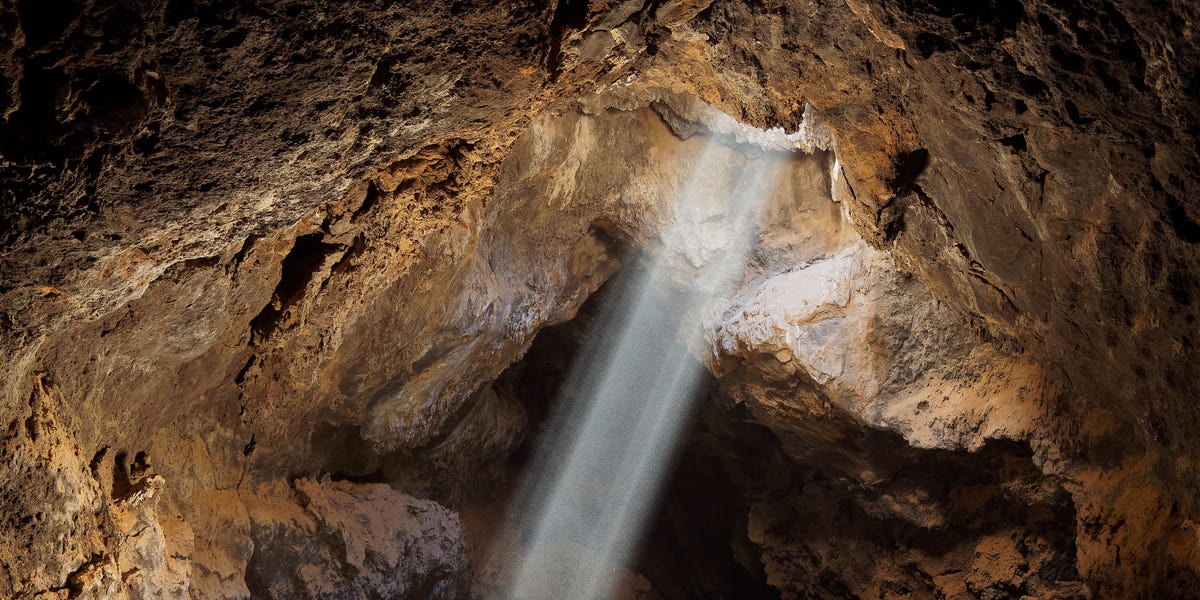
For that reason, a serious Mars habitat would likely use shielding. Options include burying part of the habitat under Martian regolith, building inside natural lava tubes, stacking protective materials around living quarters, or using water and supplies as part of the shielding design. The safest room might be a compact storm shelter where astronauts could wait during solar radiation events. It may not be glamorous, but neither is arguing with the Sun.
What Would a Mars Habitat Look Like?
Not One Building, but a Miniature World
A functional Mars habitat design would likely be modular. Instead of one giant building, early Mars bases may use connected units: living quarters, laboratories, airlocks, storage modules, greenhouse areas, power systems, and maintenance workshops. This modular layout reduces risk. If one section has a problem, the rest of the base can continue operating.
The habitat would need private sleeping quarters, shared workspaces, exercise equipment, food preparation areas, hygiene stations, medical equipment, and emergency shelters. Privacy may sound like a luxury, but on a long Mars mission, it becomes a survival tool. A crew of four or six people trapped together for months cannot simply “take a walk around the block” to cool off. The block is a frozen desert planet.
3D-Printed Mars Habitats
One of the most exciting ideas for future Mars settlement is 3D-printed habitats on Mars. Since launching heavy construction materials from Earth is extremely expensive, engineers are studying how robots could use local Martian soil, also called regolith, to build protective shells before humans arrive. NASA-backed habitat competitions and analog projects have explored 3D-printed structures designed for long-duration missions.
On Earth, NASA’s Mars Dune Alpha habitat has been used for CHAPEA missions, where crews live in a simulated Mars environment. The habitat is about 1,700 square feet and is designed to study how people perform under Mars-like limits, including restricted resources, communication delays, equipment problems, and isolation. It is not actually on Mars, but it gives researchers valuable data without requiring anyone to pack a rocket lunchbox.
Aboveground, Underground, or Both?
There are three main ideas for Mars habitat placement. The first is an aboveground habitat, which is easier to deploy and access but requires strong radiation shielding. The second is a buried or partially buried habitat, using regolith as natural protection. The third is a lava tube or underground cave habitat, where Mars itself provides shielding from radiation, micrometeorites, and temperature swings.
Each option has trade-offs. Aboveground habitats provide better access to sunlight and surface operations. Underground habitats are safer but harder to build, inspect, and connect. A practical early base may combine both: pressurized surface modules covered with regolith, plus sheltered emergency areas and storage zones below ground.
Air, Water, and Food: The Holy Trinity of Not Dying
Making Oxygen on Mars
Any long-term plan for human survival on Mars must include in-situ resource utilization, often shortened to ISRU. That simply means using local resources instead of shipping everything from Earth. Mars has a carbon dioxide-rich atmosphere, and NASA’s MOXIE experiment aboard the Perseverance rover successfully demonstrated that oxygen can be extracted from Martian carbon dioxide.
That oxygen could support breathing, but the bigger prize may be rocket propellant. A crewed Mars mission needs a way home, and launching from Mars requires fuel and oxidizer. Producing oxygen locally could reduce the amount of material that must be launched from Earth. In Mars planning, every pound matters. Rockets are basically the universe’s most expensive moving trucks.
Finding and Recycling Water
Water is essential for drinking, hygiene, plant growth, oxygen production, and fuel manufacturing. Mars has water ice in several regions, including near-surface deposits that future missions may target. A smart habitat site would likely be chosen partly for access to water resources.
However, finding ice is only step one. Astronauts would need systems to extract, purify, store, and recycle water. A Mars habitat would recycle moisture from breath, sweat, urine, plant systems, and equipment. The goal would be to waste as little as possible. On Mars, “reduce, reuse, recycle” is not a cute slogan on a grocery bag. It is the difference between mission success and a very awkward call to Earth.
Growing Food in a Martian Habitat
Food will not be delivered fresh every Friday by interplanetary takeout. Early crews will bring packaged meals, but long-term life on Mars needs food production. NASA has studied plant growth in controlled space environments using systems such as plant growth chambers, LED lighting, carefully managed water delivery, and nutrient control.
A Mars greenhouse would not look like a sunny backyard garden. It would be sealed, monitored, and artificially lit or filtered through radiation-safe materials. Crops would need to be chosen for nutrition, growth speed, reliability, and psychological value. Fresh lettuce may not sound heroic, but after months of shelf-stable meals, a crunchy leaf could feel like a five-star restaurant wearing a cape.
Martian soil cannot simply be scooped into a pot and used like garden soil. It may contain reactive chemicals such as perchlorates, and it lacks the living ecosystem found in Earth soil. Future agriculture may rely on hydroponics, aeroponics, treated regolith, composted waste, microbial systems, or hybrid methods.
Powering a Mars Habitat
Solar Energy and the Dust Problem
Solar panels are an obvious energy source on Mars, but they face challenges. Mars receives less sunlight than Earth, and dust can cover panels, reducing performance. Mars also has dust storms that can grow large and last for long periods. A habitat relying on solar power would need energy storage, dust-removal strategies, backup systems, and careful energy budgeting.
Every watt would count. Heating, air circulation, water recycling, computing, communications, food production, science equipment, and rover charging all require power. Future crews may need to plan their daily activities around available energy, much like checking a phone battery before leaving the houseexcept the “phone” is a planet base, and the charger is 140 million miles away.
Nuclear Power for Reliability
Small nuclear power systems are another strong candidate for Mars. They can operate day and night, during dust storms, and in locations where sunlight is weaker. A realistic Mars base may combine solar arrays, batteries, fuel cells, and nuclear systems to create redundancy. Mars is not a place where you want your only power source to say, “Oops.”
Human Health Inside a Mars Habitat
Low Gravity and the Body
Mars has about 38 percent of Earth’s gravity. That is more than the Moon but much less than what our bodies evolved for. Over time, low gravity may affect muscles, bones, balance, circulation, and overall physical performance. Exercise equipment would be mandatory, not optional. A Mars gym would not be for beach season; it would be medical equipment with handlebars.
Crewmembers would need daily resistance and cardio exercise. Medical monitoring would track bone density, muscle condition, sleep, stress, nutrition, immune function, and mental health. Since real-time medical evacuation is impossible, the crew would need strong medical training and equipment for emergencies.
Isolation and Communication Delays
Depending on planetary positions, messages between Earth and Mars can take several minutes each way. That delay means no normal phone calls, no instant troubleshooting, and no live video chats. Crews must solve problems independently and follow preplanned procedures when communication is limited.
Psychological health may become one of the biggest challenges of life on Mars. Astronauts will live in a confined space with the same people for a long time. They will face monotony, stress, risk, distance from family, and limited privacy. Habitat design must include quiet zones, flexible lighting, meaningful work, recreation, plants, personal storage, and ways to create a sense of normal life.
Daily Life on Mars: Not Exactly a Space Vacation
Morning in the Habitat
A typical day in a Mars habitat would begin with system checks. Before coffee, before breakfast, before anyone complains about the playlist, the crew would confirm that air pressure, oxygen levels, carbon dioxide removal, temperature, power, and water systems are stable. The habitat is not just a house. It is a machine keeping everyone alive.
Breakfast might include packaged foods, rehydrated ingredients, and perhaps fresh greens from the greenhouse. After that, the crew would review mission tasks: science experiments, habitat maintenance, rover operations, exercise, medical checks, and communication updates from Earth.
Working Outside
Leaving the habitat would be a serious operation. Astronauts would enter an airlock, put on spacesuits, check seals, test communications, and follow strict procedures. Surface tasks might include collecting rock samples, inspecting equipment, maintaining solar panels, operating robots, or checking construction systems.
Every step outside carries risk. Dust can cling to suits and equipment. Tools must work with gloves. Visibility can change. A simple repair that takes ten minutes on Earth might take hours on Mars. If you have ever dropped a screw behind a desk, imagine doing it while wearing a spacesuit on another planet. That is Mars maintenance.
Evening and Crew Culture
After work, the crew would exercise, prepare meals, write reports, send messages, and relax. Entertainment matters. Music, books, games, movies, personal hobbies, and shared rituals could help maintain morale. Crews may celebrate “Earth holidays,” mission milestones, birthdays, or the successful repair of a stubborn valve named Kevin.
Small comforts would become powerful. Good lighting, familiar smells, personal photos, fresh herbs, soft materials, and private time could help make the habitat feel less like a survival bunker and more like a home.
Science: Why Live on Mars at All?
Searching for Ancient Life
Mars is one of the most important places in the solar system for studying whether life ever existed beyond Earth. Evidence shows that ancient Mars had water, river channels, lakebeds, and environments that may once have been more habitable than today. Human explorers could study rocks, drill below the surface, collect samples, and make decisions faster than robots.
The search is not necessarily for little green neighbors waving from a crater. Scientists are more interested in possible microbial life, chemical biosignatures, and clues about ancient habitability. Finding evidence of past life on Mars would be one of the greatest discoveries in history. It would also make every science textbook suddenly need a very dramatic update.
Learning How Planets Change
Mars can teach us how rocky planets evolve. Why did Earth remain wet and life-friendly while Mars became cold and dry? What happened to the Martian atmosphere? How did volcanic activity, impacts, water, and climate change shape the planet? A human-tended Mars research station could help answer these questions with deeper fieldwork and advanced instruments.
The Future of Mars Habitats
From First Base to Settlement
The first Mars habitat will probably be small, cautious, and heavily mission-focused. It will support science, survival, and technology testing. Over time, if missions succeed, habitats could expand into larger bases with more crew, better food systems, manufacturing, medical capability, and surface mobility.
Long-term settlement would require far more than landing astronauts. It would require reliable transportation, radiation solutions, spare parts, local manufacturing, governance, emergency planning, ethical rules, planetary protection, and a sustainable reason to stay. Mars settlement is not just an engineering question. It is a human question.
Why Mars Will Not Replace Earth
Even if humans build successful habitats on Mars, the Red Planet will not be a backup Earth anytime soon. Earth already has breathable air, liquid oceans, forests, farms, magnetic shielding, and an ecosystem that does a shocking amount of free work for us. Mars has dust, radiation, cold, and rocks that look amazing in photographs.
Exploring Mars can inspire technology, science, and global cooperation, but it should also remind us how precious Earth is. Learning to live on Mars may teach us how to recycle better, conserve resources, design closed-loop systems, and think more carefully about survival. The best Mars habitat may help humans become better caretakers of the planet we already have.
Experience Section: What Living in a Mars Habitat Might Really Feel Like
Life inside a Mars habitat would be a strange mix of adventure, discipline, routine, and constant awareness. The first feeling might be wonder. You wake up, look through a protected window or camera feed, and see a copper-red landscape stretching into silence. The sky is pale, the horizon feels close, and Earth is not a place outside the doorit is a bright dot somewhere in space. That emotional reality would shape every day.
The second feeling would be responsibility. In a Mars habitat, ordinary actions become mission actions. Taking a shower, cooking breakfast, cleaning a filter, opening an airlock, watering plants, or charging a tool all connect to survival. Nothing is casual in the way it is on Earth. Waste must be tracked. Water must be recovered. Food must be rationed carefully. Equipment must be maintained before it fails. A messy room is annoying on Earth; on Mars, loose objects and clogged vents could become operational problems.
The third experience would be teamwork under pressure. Crewmembers would depend on one another completely. A Mars crew would need technical skill, emotional maturity, patience, humor, and the ability to apologize before a small disagreement grows into a habitat-wide weather system. The most valuable person on Mars may not be the loudest genius, but the person who fixes a pump, shares the last good snack, and knows when to let someone sit quietly for ten minutes.
Food would become a major emotional event. Packaged meals would provide calories, but fresh crops would provide morale. The first tomato grown in a Mars greenhouse might be treated like a celebrity. Astronauts might gather around it, photograph it, measure it, discuss it, and then divide it into pieces so small they look like red confetti. Still, that tiny bite would taste like Earth. In a closed habitat surrounded by desert, a leaf of basil could feel like a forest.
The soundscape would also be unforgettable. Instead of birds, rain, traffic, or wind through trees, the habitat would hum. Fans, pumps, air recyclers, computers, exercise machines, and life-support systems would create the background music of survival. Silence might be rare indoors and absolute outdoors. Step outside in a suit, and the world becomes a place of radio voices, breathing sounds, and the crunch of boots on regolith.
Personal space would become precious. Even in a well-designed habitat, everyone would know everyone’s habits. Who uses too much hot sauce? Who talks to the plants? Who labels their tools like they are naming pets? Small private quarters, noise control, personal schedules, and respectful crew culture would matter as much as technology.
There would also be moments of boredom. Real Mars life would not be nonstop heroic flag-planting. Much of it would be maintenance, data logging, cleaning, testing, exercising, waiting, and repeating procedures exactly. The romance of exploration would live alongside checklists. Many days would be less “epic space destiny” and more “please recalibrate sensor array B again.”
Yet that is what makes the experience powerful. A Mars habitat would turn survival into a shared craft. Every repaired seal, recycled liter of water, harvested crop, completed experiment, and safe return from a surface walk would be a victory. Life on Mars would not be easy, spacious, or carefree. But it would be meaningful. It would prove that humans can carry a tiny bubble of Earth across space, protect it, live inside it, and use it to learn more about the universeand ourselves.
Conclusion: The Mars Habitat Is a Mirror
A Mars habitat is more than a futuristic building. It is a test of human intelligence, patience, cooperation, and respect for limits. To live on Mars, humans must learn how to build safe shelters, recycle nearly everything, produce oxygen, grow food, manage radiation, maintain health, and stay emotionally strong in isolation.
The Red Planet is not waiting with open arms. It is cold, dry, dusty, and deeply uninterested in our comfort. But that is exactly why Mars matters. Building a home there forces us to ask better questions: How little can we waste? How well can we cooperate? How carefully can we design? How far can curiosity take us?
Life on Mars may begin with a small habitat, a handful of explorers, and a long checklist. But it will represent something enormous: humanity learning how to live beyond Earth while finally understanding how miraculous Earth really is.
SEO Tags