Woman Finds Baby Buried Alive While Jogging, Here’s How He Looks 20 Years Later When They Reunite

Some headlines feel like they were raised on caffeine and dramatic music. This one, somehow, is still real. In 1998, a woman named Azita Milanian was out jogging in Altadena, California, when her dogs started acting strangely near a patch of dirt. What happened next sounds less like a routine evening run and more like the opening scene of a movie nobody would believe if it were pitched too aggressively. Buried in that dirt was a newborn baby boy, still alive.
Twenty years later, that baby returned as a grown young man named Matthew Whitaker, and the two finally met again. That reunion became the kind of viral story people share with captions like “faith in humanity restored” and “I’m not crying, you’re crying.” But beneath the dramatic headline is a deeper, more important story about survival, adoption, identity, and the systems society creates to protect children when adults are overwhelmed, frightened, or desperate.
So yes, this is a story about a woman who found a baby buried alive while jogging. But it is also a story about what came after the sirens, the hospital stay, the adoption papers, and the emotional television reunion. And frankly, that is where the real substance begins.
What Happened on That Trail in 1998
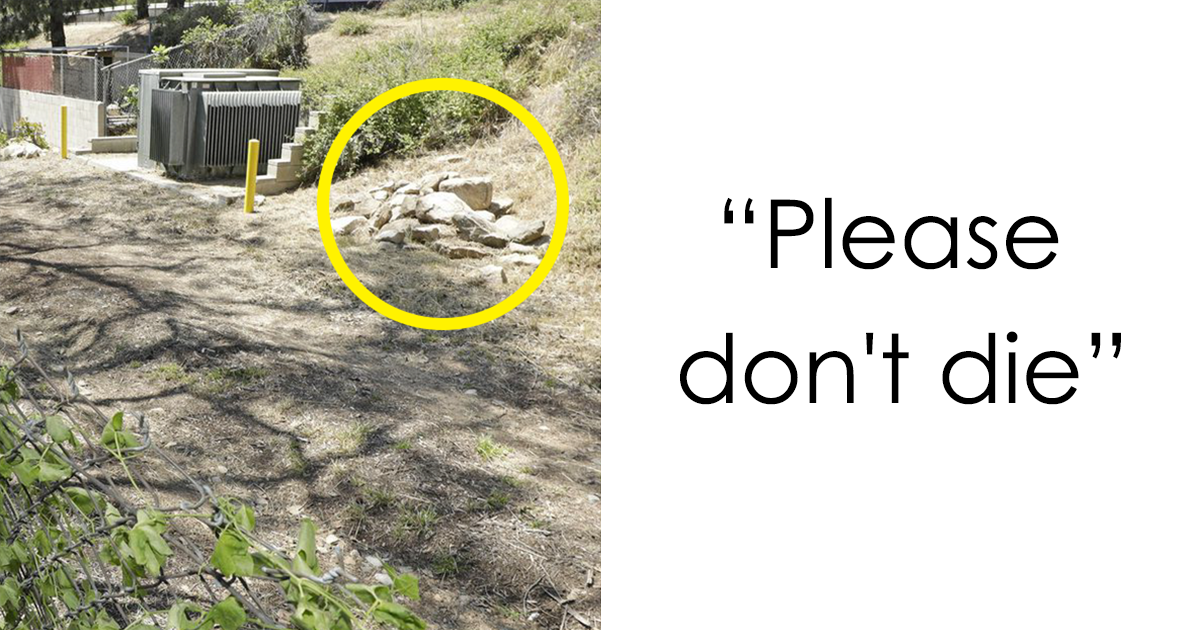
On a spring evening in May 1998, Milanian was jogging with her dogs near the foothills of Altadena. According to reports from the time, the dogs noticed something unusual in the dirt and refused to move on. Milanian looked closer and found a newborn infant partially buried, with dirt covering much of his body and his umbilical cord still attached.
That detail matters. This was not a child who had been gone for days. He had been born only hours earlier. He was rushed to Huntington Memorial Hospital in Pasadena in critical condition, where medical staff stabilized him and kept him alive. News reports later noted that Milanian never forgot the baby she found that night. You can understand why. Most people go for a jog and come back with sore calves and maybe a slightly inflated opinion of their discipline. She came back having saved a life.
The baby became known in early reports as “Baby Christian.” He survived, was eventually placed for adoption, and began life again with a family who raised him out of the public spotlight. For years, Milanian wondered what had happened to him. She had seen him at the very beginning of his life, in the most terrifying possible way, and then he disappeared into the private world of family, healing, and growing up.
Twenty Years Later, the Reunion Finally Happened
Two decades later, Matthew Whitaker learned more about his adoption story and the extraordinary circumstances surrounding his birth. That search for answers eventually led to a reunion arranged with Milanian. Their meeting was emotional, immediate, and unmistakably human. There was no Hollywood polish needed. The facts were already doing all the heavy lifting.
And how did he look 20 years later? Not like a headline. Not like a miracle poster. Not like a symbol manufactured for social media. He looked like what every rescue story hopes for but cannot always promise: alive, grown, healthy, smiling, and fully himself. He was no longer the newborn fighting for survival in the dirt. He was a 20-year-old man standing face-to-face with the woman who had given him his first chance at life.
That is what makes the reunion so powerful. It was not just a dramatic “before and after.” It was a reminder that survival can stretch into adulthood, that one act of intervention can echo for decades, and that the end of a crisis is not the end of a story. Sometimes it is only the prologue.
Why This Story Hit So Hard
The internet loves a transformation, but this story landed because it carried more than shock value. It had three emotional engines working at once: the horror of abandonment, the relief of rescue, and the closure of reunion. That is a potent combination. It is also why so many readers reacted so strongly when the story resurfaced years later.
First, there is the simple fact of survival. Newborns are incredibly vulnerable. Exposure, lack of medical care, and hypothermia can become life-threatening very quickly. A baby left outdoors for even a short period can face catastrophic consequences. In other words, Matthew did not merely survive a bad start. He survived something that easily could have ended his life within hours.
Second, there is the role of chance. Milanian happened to go jogging. Her dogs happened to notice something. She happened to stop. Stories like this make people confront an uncomfortable truth: survival sometimes depends on whether one person pays attention at exactly the right moment. That can feel miraculous, but it can also feel unsettling, because luck is not a social policy.
Third, there is the reunion itself. Many adoption stories carry unanswered questions. Many people live with blank spaces around their beginnings. When a person who was once abandoned meets the stranger who first kept them alive, those blank spaces do not disappear, but they do take a more human shape.
The Part Viral Headlines Usually Skip: Safe Haven Laws
If this story makes people gasp, it should also make them think. One of the most important lessons in Matthew Whitaker’s story is not just that he survived. It is that a safer option exists now, and more people need to know it.
Today, every state, the District of Columbia, and Puerto Rico have some form of safe haven legislation. These laws are designed to prevent infants from being abandoned in dangerous places by allowing a parent or lawful custodian to surrender a newborn legally and confidentially at approved sites. In California, the current safely surrendered baby law allows a baby 72 hours old or younger to be relinquished at designated locations such as hospitals or other approved safe-surrender sites.
That timing matters here. California’s safely surrendered baby law was created after the late-1990s wave of highly publicized infant abandonment cases. In other words, stories like this one did not just break hearts. They helped shape policy.
That does not mean the problem disappeared. Public-health data still show that the first day of life carries the highest risk for infant homicide, even though rates have fallen substantially over the years. Safe haven laws are part of the solution, but they work best when people know they exist. A law hidden in a statute book is not much comfort to a panicked person in crisis at 2 a.m.
So one practical takeaway from this emotional reunion story is not merely “wow.” It is “tell people about safe surrender.” Real prevention is less cinematic than a reunion, but a lot more useful in the moment that counts.
What Survival Does Not Automatically Erase
Here is where the story deserves more depth than a shareable headline usually gives it. Being rescued at birth does not mean the emotional complexities vanish. Adoption can provide stability, safety, and love, but experts in child welfare and pediatrics have long noted that adoption also exists alongside loss, questions, and identity work.
Even adoptees who were placed as infants may later feel curious about their origins, medical history, birth family, or the circumstances of their first days. That curiosity is not a sign of unhappiness or disloyalty. It is often a normal part of building a coherent life story. Emerging adulthood, in particular, can become a time when those questions grow louder.
That helps explain why reunions like Matthew’s resonate so deeply. They are not always about replacing one family with another or rewriting the past. Often, they are about context. A person wants to know where the story started, even if the answer is painful, incomplete, or complicated.
At the same time, adoptive families can play a powerful role in helping children and young adults make sense of those questions. Trauma-informed support matters. So does openness, honesty, and the recognition that a person can feel gratitude, confusion, love, grief, curiosity, and relief all at once. Human beings are talented like that. We can carry six emotions into one conversation and still ask if anyone wants coffee.
What This Reunion Really Says About Azita Milanian
It is easy to treat Milanian as the heroine in a clean, polished way. She saved the baby. She waited 20 years. They reunited. Roll credits. But what stands out most is not just that she acted bravely. It is that she remained emotionally connected to the child long after the emergency was over.
Many rescuers never learn what happened next. They live with uncertainty. Milanian spent years wondering if the boy survived, if he was loved, if he grew up well, and whether he would ever know that someone fought for him from the first moment she saw him. That kind of unanswered concern is its own emotional burden.
When the reunion finally happened, the emotion was not performative. It felt earned. She was not greeting a symbol. She was meeting the living result of the choice she made on that trail. In a culture that often celebrates heroism for about twelve seconds before moving on to the next shiny object, there is something refreshing about a story that honors long memory.
What Matthew Whitaker’s Story Says About the Rest of Us
Matthew Whitaker’s life cannot be reduced to the awful thing that happened to him at birth. That may be the part that made headlines, but it is not the sum of who he is. In fact, one of the most moving things about the reunion is that it pulls attention away from the dirt and toward the dignity of adulthood. He survived, yes. But he also grew, learned, searched, and chose to step into the story of his own beginning.
That choice is significant. Many people would want distance from such a traumatic origin story. Others would want answers. Some would want both at the same time. Whitaker’s reunion suggests a desire not merely to revisit pain, but to reclaim narrative. There is power in that. There is also generosity in showing up to meet the person who once held your life in her hands.
For readers, the story works best when it pushes us past passive emotion. It should make us ask better questions. Do people know where safe surrender sites are? Are young parents educated about confidential options? Are adoptive families getting trauma-informed support? Are adoptees given room to ask about their origins without guilt or pressure?
Those questions are less flashy than a reunion photo. They are also more likely to save lives.
Related Experiences That Echo This Story
Stories like this one often strike people as rare, almost unreal, but the emotions around them are not rare at all. Across adoption, child welfare, emergency response, and family healing, there are recurring experiences that help explain why this reunion touched so many people.
One common experience is the rescuer’s memory. People who intervene in life-or-death moments often describe time slowing down. They remember tiny details for years: the sound of crying, the weight of a body, the weather, the smell of the air, the exact sentence they said while waiting for help. A rescue can last minutes and still shape someone for decades. Milanian’s long memory fits that pattern. The body may leave the scene, but the mind does not always clock out so neatly.
Another common experience is the adopted adult’s search for missing information. Research on adoptees shows that many people eventually want to know more about their beginnings, even when they are deeply loved by their adoptive families. Sometimes they want medical information. Sometimes they want names. Sometimes they simply want to understand the blank chapter at the start of the book. That search is not about rejecting the life they have. It is often about making that life feel more complete.
Adoptive families also live with a layered reality. Love can be solid and secure while questions about origin remain open. Good adoptive parenting is not threatened by curiosity; in many cases, it makes room for it. Families who approach adoption with honesty and emotional flexibility often help children grow into their stories more comfortably. That does not mean everything is easy. It means the conversation stays human.
Then there is the experience of public reaction. When stories of abandoned infants appear in the news, the public often swings between outrage and sentimentality. Outrage asks, “How could this happen?” Sentimentality asks, “Isn’t it amazing that he survived?” Both reactions are understandable. Neither is enough. The more useful response is prevention: better awareness of safe haven laws, stronger support for parents in crisis, accessible medical care, mental-health care, and practical help before panic turns into danger.
There is also the experience of reunion itself, which is rarely simple even when it is beautiful. Reunions can bring joy, relief, grief, gratitude, confusion, and fresh questions all at once. They may offer closure in one area while opening emotion in another. That does not make them less meaningful. It makes them real. Real healing is often messier than the neat little emotional bow people prefer on social media.
Finally, stories like Matthew Whitaker’s remind communities that compassion is not just a feeling. It is a structure. It looks like a jogger stopping to investigate. It looks like hospital staff acting fast. It looks like adoptive parents raising a child with care. It looks like policy that creates a safe place for surrender. It looks like giving people in crisis an option other than panic. And sometimes, if life decides to be cinematic for once, it looks like two people meeting again 20 years later and realizing that one desperate night did not get the final word.
Conclusion
The headline promises a shocking discovery and an emotional reunion, and on those terms, it delivers. But the real value of this story is not that it feels unbelievable. It is that it reveals what survival actually depends on: alertness, compassion, medical care, adoption support, and policies that give frightened adults a safer alternative before tragedy happens.
Azita Milanian did something extraordinary on an ordinary jog. Matthew Whitaker grew into the proof that her choice mattered. Twenty years later, when they reunited, the most moving part was not simply how he looked. It was what his life represented. He was not a cautionary tale frozen in a news archive. He was a person who lived, grew up, and came back to meet the woman who helped make that possible.
That is why this story still resonates. It is dramatic, yes. But more than that, it is useful. It reminds us that lives can change in a moment, that systems matter, and that the right intervention at the right time can echo for decades. Not every miracle needs a soundtrack. Sometimes it just needs someone to stop running and pay attention.