
If math had a “most useful in real life” award, unit rate would be a serious contender. It shows up at the grocery store, at the gas pump, in your paycheck, in recipe conversions, and even when you are trying to decide whether your internet plan is a bargain or a beautiful scam. In plain English, a unit rate tells you how much of something happens for one unit of something else. That “for one” part is the whole magic trick.
Once you understand how to calculate unit rate, a lot of everyday math becomes less mysterious and more manageable. Suddenly, “12 ounces for $3.60” becomes “$0.30 per ounce,” and “150 miles in 3 hours” becomes “50 miles per hour.” The numbers stop being random roommates and start acting like a team.
In this guide, you will learn what a unit rate is, how to calculate it step by step, how to handle decimals and fractions, and how to use unit rates to compare deals like a calm, rational genius in aisle seven.
What Is a Unit Rate?
A rate compares two quantities measured in different units. For example:
- 60 miles in 1 hour
- $4 for 2 pounds
- 180 words in 3 minutes
A unit rate is a rate where the second quantity is 1 unit. That means the comparison is simplified so you can easily understand or compare it. Examples include:
- 60 miles per 1 hour
- $2 per 1 pound
- 60 words per 1 minute
So, if a regular rate is the rough draft, the unit rate is the edited version that actually makes life easier.
Why Unit Rate Matters
Learning how to calculate unit rate is not just a school exercise designed to keep calculators emotionally fulfilled. It helps you make smart comparisons in real life. Unit rates are useful when you want to:
- Compare grocery prices
- Find speed, pay, or productivity
- Understand cost per item or per ounce
- Compare phone plans, subscriptions, or fuel efficiency
- Solve ratio and proportion problems more quickly
In many cases, the unit rate is the clearest way to answer the question, “Which option is better?”
The Basic Formula for Unit Rate
The formula is simple:
Unit Rate = Total Amount ÷ Number of Units
In most problems, you divide the first quantity by the second quantity so the second quantity becomes 1.
Here is the usual setup:
- If 24 cookies cost $6, then the unit rate is $6 ÷ 24 = $0.25 per cookie.
- If a car travels 180 miles in 3 hours, then the unit rate is 180 ÷ 3 = 60 miles per hour.
- If you earn $72 for 8 hours of work, then the unit rate is 72 ÷ 8 = 9 dollars per hour.
The key is to ask yourself: what do I want “per 1” of?
How to Calculate Unit Rate Step by Step
Step 1: Identify the two quantities
Look for the two values being compared. They should have different units, such as dollars and pounds, miles and hours, or words and minutes.
Step 2: Decide which unit should become 1
In most real-world problems, you want the rate expressed in a familiar form such as dollars per item, miles per hour, or ounces per serving.
Step 3: Divide
Divide the quantity you care about by the number of units that should become 1.
Step 4: Write the answer with units
Never leave a unit rate floating around without units. “4.5” by itself is mysterious. “4.5 dollars per pound” is useful.
Step 5: Interpret the result
Make sure your answer makes sense in the context of the problem. If the result looks odd, check whether you divided in the wrong direction.
Unit Rate Examples You Can Actually Use
Example 1: Finding Unit Price
A 12-pack of sparkling water costs $7.20. What is the unit price?
Calculation:
$7.20 ÷ 12 = $0.60
Answer: The unit rate is $0.60 per can.
This is useful because if another brand costs $5.50 for 8 cans, you can compare:
$5.50 ÷ 8 = $0.6875 per can
That means the first brand is the better deal at $0.60 per can.
Example 2: Speed
A cyclist travels 45 miles in 3 hours. What is the unit rate?
Calculation:
45 ÷ 3 = 15
Answer: The cyclist’s speed is 15 miles per hour.
Example 3: Hourly Pay
A student earns $84 for 7 hours of tutoring. What is the unit rate?
Calculation:
84 ÷ 7 = 12
Answer: The pay rate is $12 per hour.
Example 4: Unit Rate with Decimals
A bag of almonds costs $5.49 for 1.5 pounds. What is the cost per pound?
Calculation:
5.49 ÷ 1.5 = 3.66
Answer: The unit rate is $3.66 per pound.
Decimals are not scary. They are just regular numbers wearing tiny shoes.
Example 5: Unit Rate with Fractions
A recipe uses 3/4 cup of sugar for 1/2 batch of cookies. How much sugar is needed per full batch?
Calculation:
(3/4) ÷ (1/2) = (3/4) × (2/1) = 3/2 = 1.5
Answer: The unit rate is 1.5 cups of sugar per batch.
When fractions appear, divide by multiplying by the reciprocal. Yes, math loves a dramatic entrance.
How to Compare Unit Rates
Once you convert different rates into unit rates, comparison becomes much easier. Suppose you are choosing between two snack bags:
- Bag A: 18 ounces for $4.50
- Bag B: 12 ounces for $3.24
Find each unit price:
- Bag A: $4.50 ÷ 18 = $0.25 per ounce
- Bag B: $3.24 ÷ 12 = $0.27 per ounce
Bag A has the lower unit rate, so it is the better deal.
This is why stores often display shelf labels with unit prices. It saves you from doing mental gymnastics near the cereal aisle.
Unit Rate vs. Ratio vs. Proportion
These terms are related, but they are not identical.
Ratio
A ratio compares two quantities, often with the same unit. Example: 3 red marbles to 5 blue marbles.
Rate
A rate compares two quantities with different units. Example: 150 words in 5 minutes.
Unit Rate
A unit rate is a rate with the second quantity equal to 1. Example: 30 words per minute.
Proportion
A proportion states that two ratios or rates are equivalent. Example: 2/3 = 4/6.
Think of it this way: a unit rate is the cleanest version of a rate, and proportions help prove equivalent relationships.
Common Mistakes to Avoid
1. Dividing in the wrong order
If the question asks for dollars per pound, divide dollars by pounds. If it asks for miles per hour, divide miles by hours. The word “per” matters.
2. Forgetting the units
Without units, your answer is incomplete. A rate is not just a number; it is a number tied to meaning.
3. Comparing totals instead of unit rates
A larger package is not always the better deal. Bigger can be cheaper, or bigger can just be bigger with attitude.
4. Rounding too early
When comparing close numbers, keep enough decimal places until the final step. Early rounding can change the result.
5. Freezing when fractions appear
Fractions are still just division problems. Convert carefully, multiply by the reciprocal, and keep going.
Tips for Solving Unit Rate Word Problems
- Circle the numbers and underline the units.
- Look for the word per in the question.
- Ask what quantity should become 1.
- Write the division expression before calculating.
- Label the final answer clearly.
For example, if a problem asks, “How many pages per minute?” you already know the unit rate should be pages ÷ minutes.
How Unit Rate Connects to Proportional Relationships
Unit rate is also an important bridge to more advanced math. In proportional relationships, the unit rate often becomes the constant of proportionality. If one notebook costs $2.50, then five notebooks cost 5 × 2.50 = $12.50. The price grows in direct proportion to the number of notebooks because the unit rate stays constant.
Later in math, this idea shows up in tables, graphs, and equations. In some cases, the unit rate becomes the slope. So yes, unit rate may look innocent in middle school, but it has a long career ahead of it.
Real-Life Situations Where Unit Rate Helps
- Shopping: cost per ounce, pound, or item
- Travel: miles per hour or kilometers per hour
- Work: dollars per hour, tasks per day
- Cooking: ingredients per serving
- Fitness: reps per minute, miles per workout
- Technology: gigabytes per month, download speed
When you understand unit rate, everyday comparisons become much easier. It is like giving your brain a “compare mode” button.
Quick Practice Problems
1. A runner completes 24 miles in 4 hours.
Unit rate: 24 ÷ 4 = 6 miles per hour
2. A 15-ounce jar costs $3.75.
Unit rate: 3.75 ÷ 15 = $0.25 per ounce
3. You read 90 pages in 3 hours.
Unit rate: 90 ÷ 3 = 30 pages per hour
4. A 2.5-pound bag of rice costs $4.50.
Unit rate: 4.50 ÷ 2.5 = $1.80 per pound
5. A machine makes 120 parts in 8 minutes.
Unit rate: 120 ÷ 8 = 15 parts per minute
Experience Section: Everyday Lessons From Calculating Unit Rate
One of the most interesting things about learning how to calculate unit rate is that it quickly stops feeling like “school math” and starts feeling like a practical life skill. A lot of people first meet unit rate in a classroom worksheet, but they really understand it later in everyday experiences. The grocery store is often the first place where the lesson hits home. Two cereal boxes may look similar, but one might cost less per ounce. That tiny shelf label suddenly becomes more powerful than the bright packaging, the smiling cartoon mascot, and the dramatic promise that breakfast will apparently change your destiny.
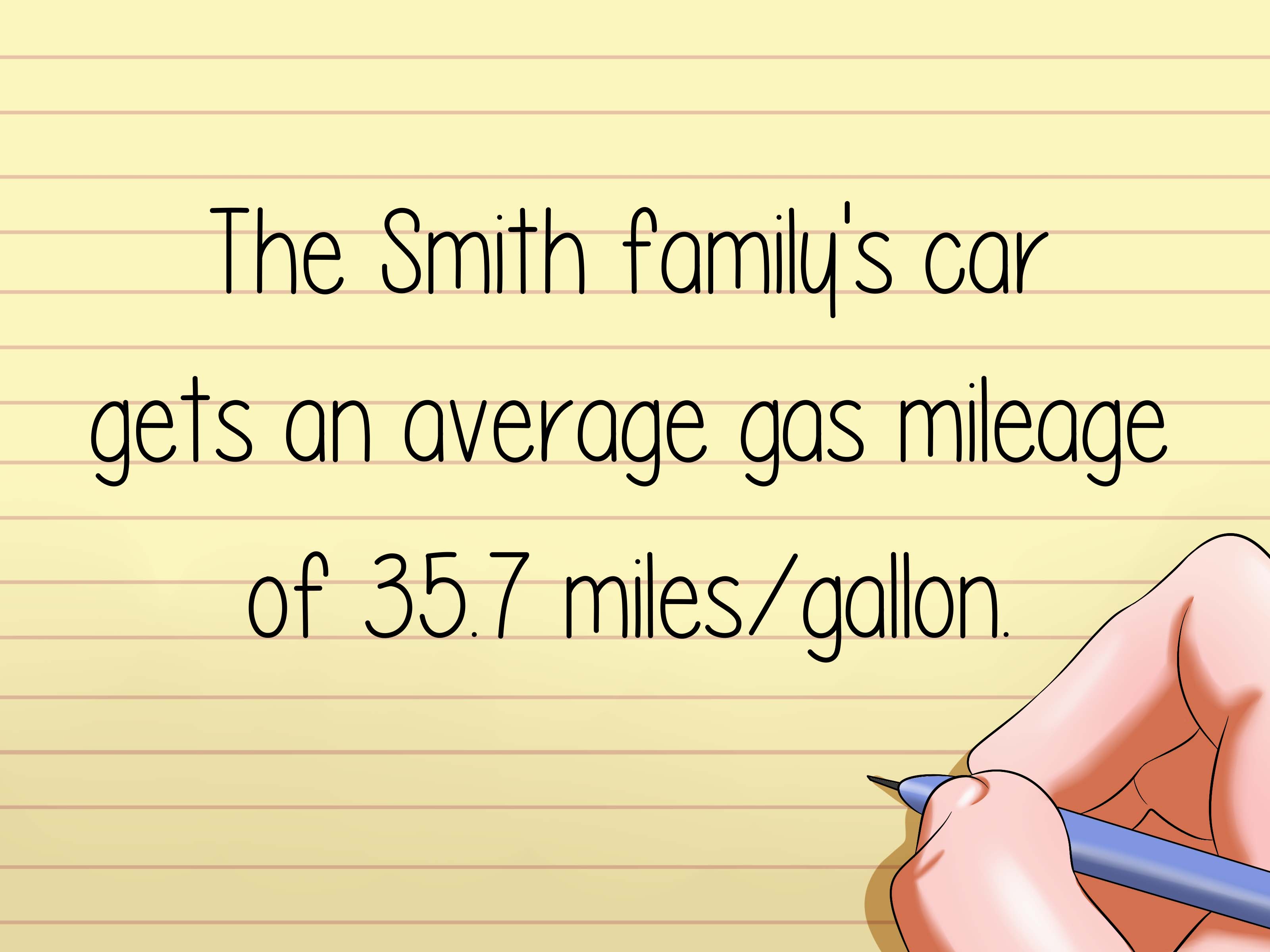
Another common experience happens when people start driving. Gas mileage is a unit rate. If one car gets 32 miles per gallon and another gets 24, the difference matters over time. Suddenly, unit rate is not just a math problem; it is part of a monthly budget. The same thing happens with hourly pay. Many students get their first part-time job and realize that “I made $96 today” is useful, but “I made $16 per hour” is the number that really helps compare jobs, shifts, and opportunities.
Unit rate also shows up in technology more than people expect. Internet speeds, data plans, battery usage, and streaming costs all involve some version of “how much per one.” A plan that sounds cheap each month may be less impressive when you calculate the cost per gigabyte. A subscription that seems expensive may actually be reasonable when you divide the price by the number of people using it or the number of months in a discounted annual plan.
Cooking offers another surprisingly friendly lesson in unit rates. When doubling or shrinking a recipe, you are often thinking in “ingredient per serving” terms. If a recipe uses 2 cups of broth for 4 servings, that is 1/2 cup per serving. That makes it much easier to cook for 2 people, 6 people, or an entire crowd that mysteriously appeared at dinner time.
Even small experiences build confidence. Once someone learns to calculate one reliable unit rate, they begin to trust their reasoning. They stop guessing which deal is better and start proving it. They stop seeing numbers as clutter and start seeing patterns. That is one of the best things about this topic: it trains you to slow down, organize information, and make smarter decisions.
In real life, people rarely announce, “Greetings, citizen, this is a unit rate problem.” Instead, the math is hidden inside ordinary choices. Which brand is cheaper? Which route is faster? Which job pays more per hour? Which package gives more value? Unit rate helps answer all of those questions with clarity. And once you get used to using it, you start spotting it everywhere. It is like learning a secret code, except the code mostly helps you save money and avoid bad snack deals.
Final Thoughts
If you want the simplest possible rule, here it is: to calculate unit rate, divide so one quantity becomes 1. That is the whole idea. From there, everything else gets easier. You can compare prices, solve word problems, understand speed, and make sense of proportional relationships without getting trapped in a jungle of mismatched numbers.
The more you practice, the faster unit rates become. Soon, “$8 for 5 pounds” automatically turns into “$1.60 per pound” in your mind, and “210 miles in 3 hours” calmly becomes “70 miles per hour.” That is when you know the concept has clicked.
And honestly, that is a pretty good feeling. Math does not always hand out tiny trophies, so we have to celebrate the wins ourselves.