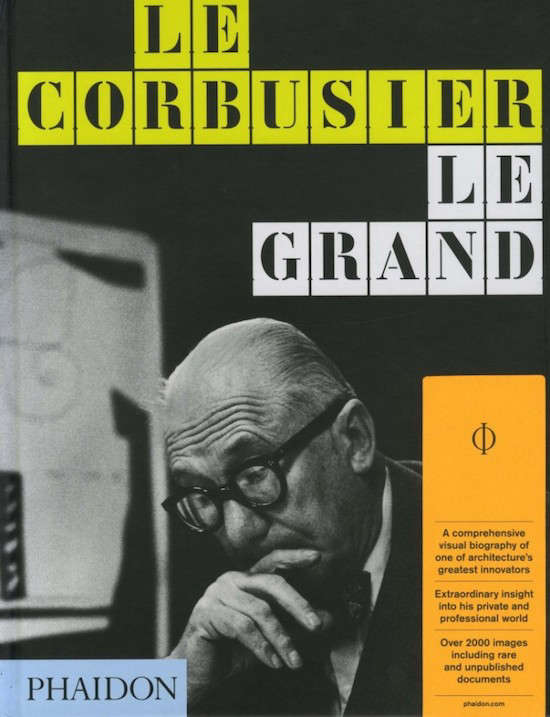

If architecture books had personality types, Le Corbusier Le Grand: New Format would be the brilliant friend who arrives overdressed, says something unforgettable, and then casually changes the mood of the whole room. This title is not just another glossy monograph for people who alphabetize concrete samples for fun. It is a more approachable version of a famously monumental book about one of the most influential, debated, admired, and occasionally eyebrow-raising architects of the twentieth century.
That is exactly why the new format matters. Le Corbusier was never a small thinker. He designed houses, furniture, chapels, museums, urban plans, and entire civic visions with the confidence of a man who had clearly never once said, “Maybe I’ll keep this modest.” A book about him was always going to be large in spirit. But when a classic architecture monograph becomes easier to hold, browse, study, and revisit, it stops being a museum object and becomes what great design books should be: a working companion for curious readers, architecture students, design lovers, and anyone who has ever stared at a concrete building and thought, “Why do I kind of love this?”
In this article, we will look at what makes Le Corbusier Le Grand: New Format such a compelling architecture book, why Le Corbusier still dominates conversations about modern architecture, and how this edition gives readers a fresh way to experience a designer whose ideas still echo through contemporary homes, cities, museums, and visual culture.
What Is Le Corbusier Le Grand: New Format?
At its core, Le Corbusier Le Grand is a sweeping visual biography and architectural survey. It is the kind of book that tries to do justice to a creator whose output was too expansive for a polite little summary. The new format version makes that ambition more usable. Instead of feeling like a publication you admire from a distance, it feels like one you can actually open on a desk, return to after dinner, and mine for ideas without needing both a large table and emotional support.
The book gathers sketches, archival photographs, correspondence, and project material to chart the life and work of Le Corbusier in a broad chronological arc. That matters because Le Corbusier was never just “the Villa Savoye guy” or “the concrete modernist guy” or “the chair guy.” He was also a painter, writer, polemicist, urban planner, and relentless self-editor of his own public image. In other words, he was not content to design buildings. He wanted to design how modern life thought about itself.
That is why the phrase Le Corbusier book understates the experience. This is really a map of modernism told through one outsized personality.
Who Was Le Corbusier, and Why Does He Still Matter?
Born Charles-Édouard Jeanneret, Le Corbusier became one of the defining figures of modern architecture. He was Swiss-born, later based primarily in Paris, and active internationally. He also worked across disciplines with unusual force, moving between architecture, painting, furniture design, and urban theory with the sort of confidence most people reserve for choosing pizza toppings. Lightly. Effortlessly. Possibly too effortlessly.
His importance comes from both his buildings and his ideas. Le Corbusier helped define a modern architectural language built around clean geometry, rational planning, reinforced concrete, industrial thinking, and the belief that design could improve daily life. He wrote provocatively, designed systematically, and helped spread the vocabulary of modern architecture around the world. Even people who have never read a page by him often live in places shaped by his influence.
The Famous Ideas Behind the Fame
One of Le Corbusier’s most discussed contributions is the “five points” of architecture: pilotis, free facade, open floor plan, ribbon windows, and roof garden. That list became a framework for rethinking how modern buildings could stand, breathe, and organize space. In practical terms, it helped move architecture away from heavy, compartmentalized, load-bearing traditions and toward flexible, light-filled structures.
He also promoted the idea of the house as a “machine for living in.” That phrase still gets quoted because it captures the ambition and the problem of his legacy in one tidy line. On one hand, it expresses a belief in clarity, efficiency, and design logic. On the other hand, it makes some readers want to ask whether they are expected to live in a home or a particularly elegant toaster. The tension is the point. Le Corbusier’s architecture is always balancing humanity and system, poetry and control.
His collaboration with artistic movements such as Purism adds another layer to the story. He was not simply designing containers for life; he was actively shaping a visual philosophy. That is one reason why a serious monograph on him works so well as an image-driven book. His drawings, diagrams, and paintings are not side notes. They are part of the main argument.
Why the New Format Makes Sense for Modern Readers
The phrase new format may sound like a publishing detail, but for a book like this, format is part of the meaning. Le Corbusier dealt in scale. His buildings could feel monumental, but they were also designed around movement, proportion, and sequence. A book about him should communicate grandeur, yes, but it should also invite repeated use. That is where the new format wins.
It lowers the barrier to entry. Readers who may have admired the original giant tome from afar can engage more comfortably with the material. Students can annotate it. Designers can keep it nearby as a reference. Casual readers can browse it without feeling as though they are lifting a small section of a parking garage.
Just as importantly, the new format aligns with how people consume design history now. Today’s readers want books that are rich but usable, serious but not punishing, scholarly but visually rewarding. Le Corbusier Le Grand: New Format sits in that sweet spot. It still feels authoritative, yet it behaves better on an actual bookshelf. A minor miracle.
What the Book Reveals About Le Corbusier’s Range
One of the best things about this volume is that it refuses to flatten Le Corbusier into a single style or slogan. Yes, it covers the canonical masterpieces. But it also shows how broad his output really was, from early villas to dense urban visions, from furniture to museums, from houses of radical clarity to religious architecture that surprises people who assumed he only knew how to speak fluent right angle.
Villa Savoye: The Manifesto House
No discussion of Le Corbusier is complete without Villa Savoye. It is often treated as the textbook demonstration of his five points, and with good reason. The house turns abstract architectural theory into a built experience. It rises on pilotis, opens space through plan and facade, stretches horizontal windows across the elevation, and makes the roof part of the life of the house.
But what makes Villa Savoye memorable is not just theory. It is rhythm. You move through it. You encounter light, curve, frame, and proportion. In a good book on Le Corbusier, Villa Savoye is never just presented as a diagram with windows. It becomes the moment where the architect’s ideas click into full physical confidence.
Unité d’Habitation: The Apartment Block That Became a Legend
Then there is the Unité d’Habitation in Marseille, one of the twentieth century’s most important experiments in collective housing. It is massive, confident, and still startling. This project expanded Le Corbusier’s ideas from the single house to the question of how modern people might live together. It treated housing not as rows of boxes but as a vertical community with shared services and a strong architectural identity.
For contemporary readers, this remains one of the most relevant parts of the Le Corbusier story. Debates about density, social housing, livability, and urban community are still with us. Reading about the Unité now feels less like a history lesson and more like joining a very old argument that somehow never left the room.
Ronchamp: The Curveball That Keeps Hitting
If Villa Savoye represents order, Chapelle Notre-Dame-du-Haut at Ronchamp represents surprise. Ronchamp is one of those buildings that makes people rethink what they thought they knew about Le Corbusier. Instead of strict machine logic, you get sculptural walls, emotional light, dramatic massing, and a sense of spiritual gravity. It is lyrical, strange, and unforgettable.
This is where Le Corbusier Le Grand: New Format becomes more than a catalog of famous works. A strong monograph helps readers see continuity inside contrast. Ronchamp is not a random detour. It is evidence that Le Corbusier’s imagination was broader than the clichés about him.
Chandigarh: Architecture at the Scale of a City
Chandigarh pushes the story outward again. Here, Le Corbusier was involved in shaping a new capital city in India, a project that placed modern architecture and urban planning inside a newly independent national context. It was not merely about buildings. It was about institutions, civic order, symbolism, and the promise of modernity on a giant public stage.
This is part of why Le Corbusier remains such a compelling and controversial figure. His work was visionary, but it also operated within real political, social, and cultural conditions. A serious reader today cannot separate the elegance of the forms from the complexity of the contexts. The best architecture books do not hide that tension. They illuminate it.
The Contradictions That Make the Book Worth Reading
Let’s be honest: nobody keeps talking about Le Corbusier more than half a century after his death because he was simple. He was influential and divisive, elegant and domineering, visionary and sometimes maddeningly certain of himself. That combination is exactly what makes a large-format architecture monograph so useful. It gives readers room to see the whole picture instead of a flattened hero poster.
He believed design could improve life, yet some of his urban ideas strike modern readers as too abstract or too controlling. He created furniture of remarkable clarity, yet his buildings often provoke debates about comfort and maintenance. He embraced industry, yet his work also reveals artistic intuition and deep visual memory. He sought universal systems, yet many of his best projects are highly specific in atmosphere.
In other words, Le Corbusier was not one thing. And that is good news for readers. A book that preserves his contradictions is more valuable than one that turns him into a tidy legend with perfect glasses and better concrete.
Who Should Read Le Corbusier Le Grand: New Format?
This book works for several audiences at once. Architecture students will appreciate the project range, the archival richness, and the chance to study modern architecture in visual sequence. Designers and artists will enjoy the cross-disciplinary material, especially the relationship between drawing, painting, proportion, and built form. General readers with an interest in design history will find it surprisingly engaging because Le Corbusier’s life and work were never dull.
It also makes sense for collectors of architecture books who want a serious volume without the impractical drama of oversized publishing theater. You still get the authority, the sweep, and the visual pleasure. You just do not need to clear an entire dining table and announce, “Tonight we read modernism.”
Final Thoughts on Le Corbusier Le Grand: New Format
Le Corbusier Le Grand: New Format succeeds because it matches subject and format with unusual intelligence. Le Corbusier deserves a book of scale, but readers deserve a book they can actually live with. This edition bridges that gap beautifully. It captures the sweep of a designer who helped shape the modern world while making the material feel accessible, study-friendly, and visually alive.
More than a coffee-table object, it is a gateway into the ideas, forms, arguments, and contradictions that still define conversations about Le Corbusier architecture, modernist design, Villa Savoye, Ronchamp, Chandigarh, and the broader history of the modern movement. If you want an architecture book that offers both beauty and brainpower, this one earns its shelf space the hard way: by being genuinely worth reopening.
Extended Experience: Living With the Book, and With Le Corbusier’s World
Reading Le Corbusier Le Grand: New Format is not quite like reading a normal book. It feels more like entering a conversation between paper, memory, and concrete. You begin by flipping through it casually, telling yourself you will just “look at a few pages,” which is the design-book equivalent of saying you will only watch one episode. Thirty minutes later, you are staring at a drawing of a facade, wondering why a ribbon window can look both calm and slightly bossy.
The experience is especially enjoyable because the new format makes the book feel less ceremonial. Instead of approaching it like a sacred object, you approach it like an active workspace. You pause over sketches. You compare a villa to a chapel. You notice how often Le Corbusier returns to proportion, movement, and light. Then, without warning, you are mentally reorganizing your living room and judging every chair in your house with alarming confidence.
There is also a strange pleasure in seeing how broad his imagination really was. One page suggests discipline and geometry; another reveals travel, painting, or an unexpectedly human messiness. That variety changes the experience from admiration to discovery. You stop seeing Le Corbusier as a frozen icon of modern architecture and start seeing him as a restless maker who kept revising his own vocabulary. That makes the book feel alive.
What stays with many readers is the physical sensation of moving from project to project. Villa Savoye feels airy and manifesto-like. Ronchamp feels emotional and sculptural. Chandigarh feels civic, ambitious, and loaded with historical weight. The Unité d’Habitation feels like a wager on how society might live together. When these works appear in sequence, the effect is powerful. You are not just looking at famous buildings. You are watching one mind wrestle with how modern life should be organized, dignified, and staged.
The book also changes how you look at the world outside its pages. After spending time with it, ordinary things begin to feel newly architectural: the line of a balcony, the shadow under a raised structure, the way a window frames the sky, the logic of circulation in a public building. Le Corbusier had that effect on people. Even when you disagree with him, he sharpens your eye. He teaches you to see architecture not as background but as argument.
That may be the greatest achievement of Le Corbusier Le Grand: New Format. It does not simply document a legendary architect. It trains attention. It invites readers to notice how design ideas travel across buildings, furniture, cities, and daily habits. It turns looking into a more serious and more enjoyable activity.
And yes, there is something funny about that. You open a book expecting handsome photographs and a little cultural enrichment. Instead, you come away evaluating handrails, roof terraces, and apartment blocks like an unpaid jury member in the court of modernism. But that is part of the charm. The best architecture books do not just show objects. They alter perception. This one does exactly that, and the new format makes the transformation easier to live with, return to, and enjoy.